
 Worksheets
Brake Fundamentals
Total questions: 54
Worksheet time: 1hrs 8mins
A vibration when braking felt in the steering wheel can be caused be warped front rotors.
True
False
A vibration felt in the vehicle while driving can be caused by?
Out of Balanced tires
Warped front rotors
Warped rear rotors
Stuck caliper pins
What is the principle/Law that helps us apply greater hydraulic force to the calipers?
Lemon's
Ohm's
Pascal's
Newton's
Which one of these is used to assist the driver by increasing the force applied to the brake calipers?
Master Cylinder
Brake Caliper
Brake booster
Brake Drum
Drum brakes are more effective than Disc brakes.
True
False
A faulty brake booster will cause?
uneven brake pad wear
A soft brake pedal
Noisy brakes
A hard brake pedal
The thickness of brake pads really doesn't matter as long as there is enough pad to grip the rotor.
True
False
Stuck guide pins will most often cause?
Uneven brake pad wear
Soft brake pedal
Squeaking
Hard brake pedal
A brake booster operates by the use of?
Water
Pressure
Magic
Engine vacuum
A vibration felt in the seat when braking can be caused by?
Out of balanced tires
Warped front rotors
Warped rear rotors
Stuck caliper pins
What tool would be used to measure brake rotor lateral runout?
Ruler
Micrometer
Dial Indicator
Tape Measure
What tool is used to measure pad thickness?
Tape measure
Micrometer
Dial indicator
Tread Depth Gauge

Serviceable -or- Sealed
Serviceable
Sealed

Serviceable -or- Sealed
Serviceable
Sealed


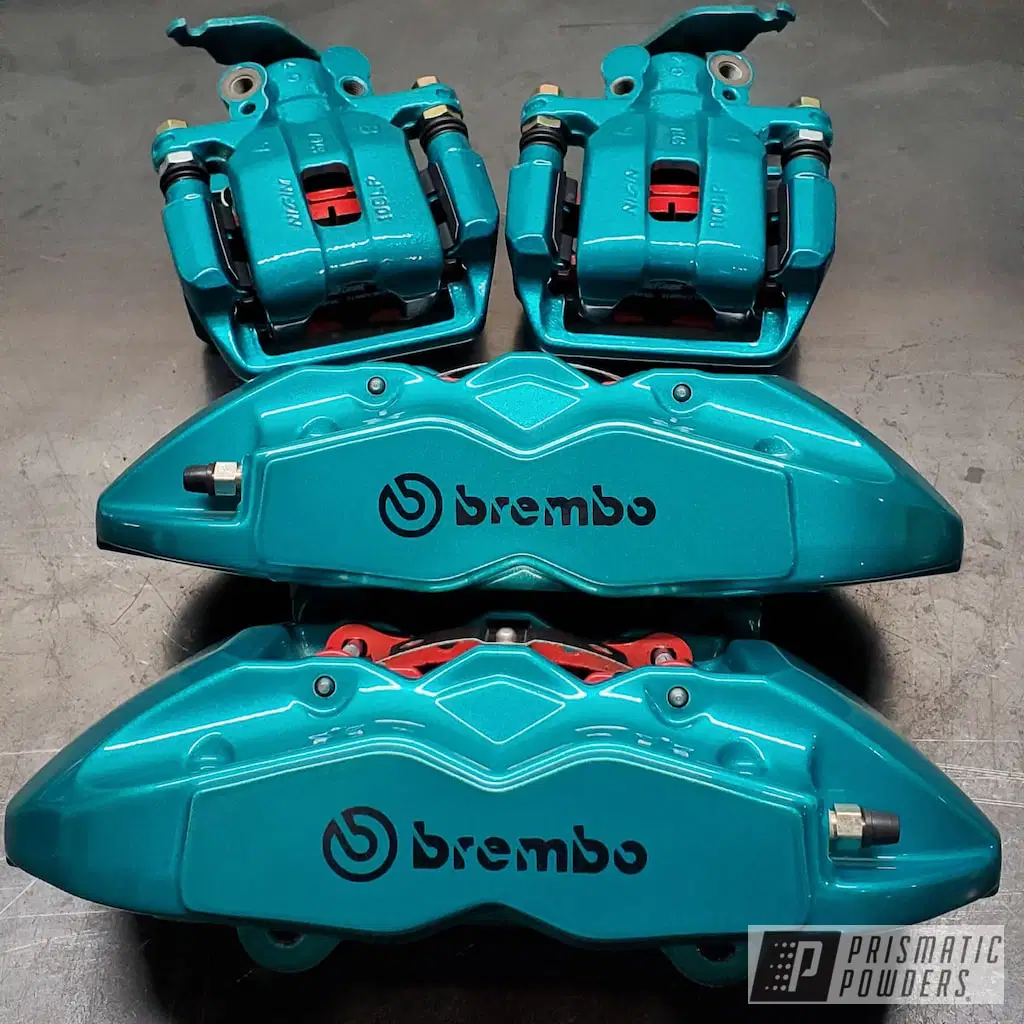


Drum Brakes are often used on the front axle of modern cars.
True
False
Both disc and drum brakes require adjustment at installation, and throughout the life of the brakes.
True
False
Off-car brake lathe—Used to machine drums and rotors that are off the vehicle


On-car brake lathe—Used to machine rotors that are on the vehicle


The hydraulic system on a vehicle with ABS is to be bled. Technician A says that the brakes can be bled in a conventional manner. Technician B says that to properly bleed the ABS system, it may require a scan tool. Who is right?
Technician A only
Technician B only
Both A and B
Neither A nor B


Is this a drum brake part or a disc braking part?

Is this a drum brake part or a disc braking part?

Is this a drum brake part or a disc braking part?

Is this a drum brake part or a disc braking part?
What has been added to all vehicles starting in 2012 to help drivers maintain control during unstable situations such as attempting to avoid a crash or during unfavorable weather conditions?
parking brake
electronic stability control
disc brakes
drum brakes
Technician A says that most new vehicles have ABS. Technician B says that ABS minimizes wheel lockup (skidding) by using sensors at each wheel (or in the differential) to monitor wheel speed. Who is correct?
Technician A
Technician B
Both A & B
Neither A or B
Technician A says on vehicles that have disc and drum brakes, the drum brakes are always on the front of the vehicle. Technician B says that it is common to have drum brakes on all four wheels on new vehicles. Who is correct?
Technician A
Technician B
Both A & B
Neither A or B
Technician A says that the master fluid reservoir is where the brake fluid is stored and checked. Technician B says that if you don’t have brake fluid, windshield washer fluid can be used as a substitute. Who is correct?
Technician A
Technician B
Both A & B
Neither A or B

What Safety feature has become a legal requirement since 2010
Traction Control
Stability Control
ABS
Electronic Handbrakes

Vehicle brakes usually do more work at the front than the rear the average split for braking effort is
90/10 Front/Rear
80/20 Front/Rear
60/40 Front/Rear
50/50 Front/Rear

The brake system is usually fitted with flexible brake lines this allows for
Easy component removal and refitting
Allows for steering movement
Allows for suspension movement
Allows for steering and suspension movement

A sign that the servo has failed is that
The brake pedal becomes soft
The brakes do not work
The pedal remains hard but the brakes still work
Only the front brakes work

The brake servo is fitted on vehicles with disc brake systems its job is to
Increase the efficiency of the braking system
Increase hydraulic pressure
Reduce the hydraulic pressure
Decrease the effort required by the driver

What is the usual minimum thickness we change brake pads at
0.5-1 mm
1-1.5 mm
8-9 mm
2-3 mm

There are two main types of disc in use
Solid and Vented
So Solid Crew
Drilled and Slotted
Disc and Drum
How often should brake fluid be replaced?
(a)

Brake fluid can absorb moisture from the air. What is the term we use for this reaction?
Hydrotopic
Hydroscopic
Hygroscopic
Hygrotopic
Which option below is not a brake disc?


The component that applies pressure within the braking system is the (a) cylinder.
At how many MM should we be recommending that brake pads are changed?
(a)

