wayground logo

Free Printable Worksheets

NEW

Font size

S
M
L
XL
Worksheets

Full Evolution Unit Review

Total questions: 50

Worksheet time: 37mins
Name
Class
Date
1.
Where the better adapted organisms survive to pass traits along to offspring.
a)
Evolution
b)
Natural Selection
c)
Extinction
d)
Artifical Selection
2.
Why are advantageous traits more likely to be passed onto offspring?
a)
Because they are more likely to survive and reproduce.
b)
Because they come from dominant alleles.
c)
Because they come from recessive alleles.
d)
Because the trait is an acquired phenotype.
3.
Natural selection is when ____________ decides who survives and who doesn't
a)
nature
b)
humans
c)
animals
d)
years
4.
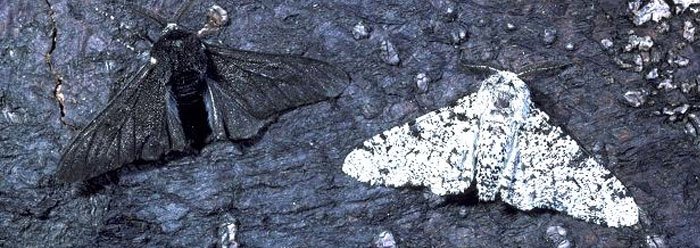
The trees these moths used to live on were white, but have been covered in soot from coal factories. Which moth will be more successful in this environment?
a)
Dark moth
b)
Light moth
c)
Both will be equally successful
d)
Neither will be successful
5.
Which best describes mutations?
a)
Always helpful
b)
Always harmful
c)
Can be helpful or harmful
d)
Always neutral
6.
Structures with the same parts have different functions; suggests that organisms share a common ancestry
a)
vestigial structures
b)
homologous structures
c)
adaptive radiation
d)
fossil
7.
Study of embryos of various organisms to show a common ancestor because of similarities in development
a)
natural selection
b)
embryology
c)
speciation
d)
evolution
8.
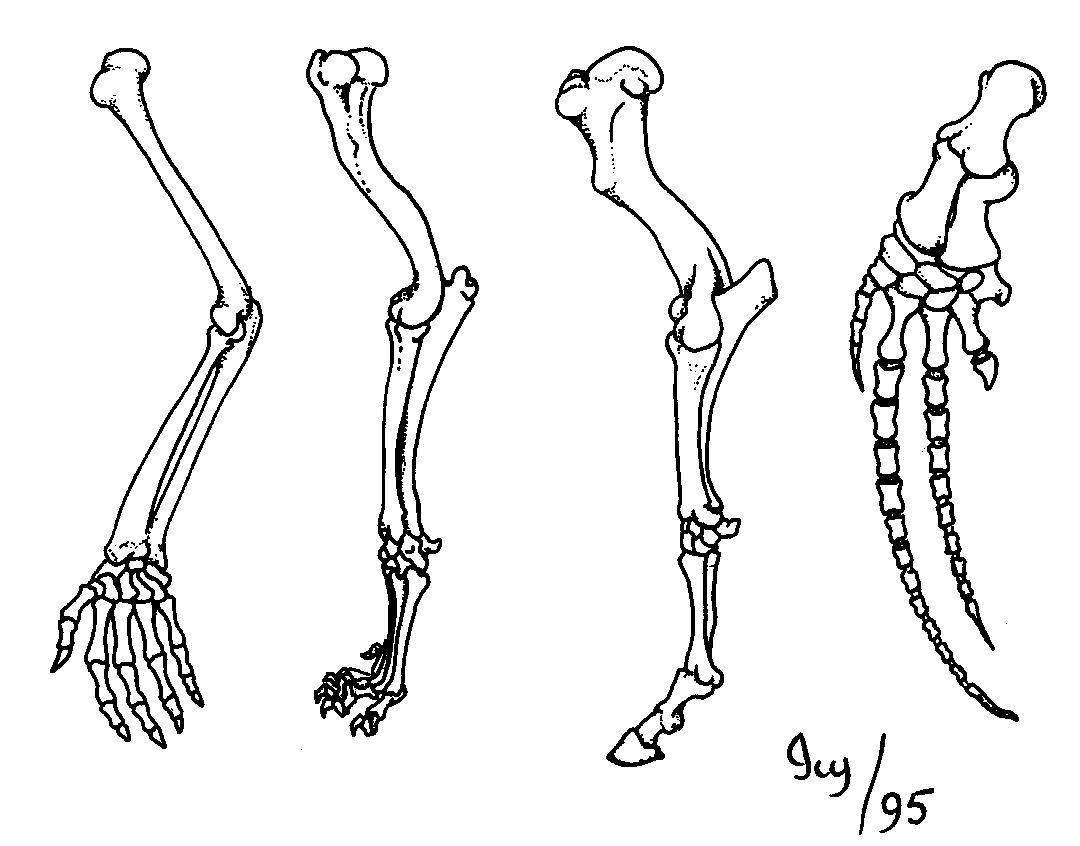
What type of structures are these?
a)
homologous
b)
vestigial 
c)
analogous
d)
fossil
9.
Which of these best represents a time period in which an organism could evolve?
a)
5 days
b)
100 years
c)
10,000 years
d)
2 decades
10.

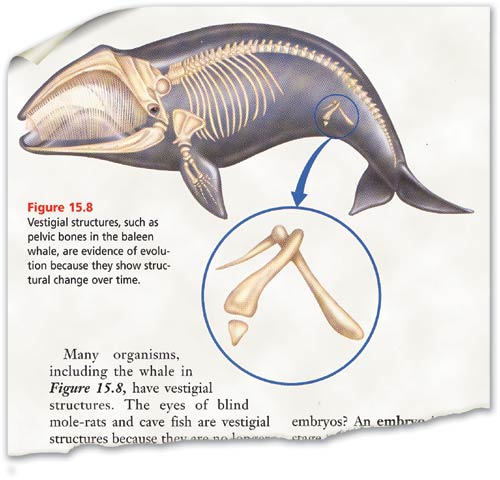
Whales are aquatic mammals that contain a pelvis (hip) bone. Even though it does not aid in its movement, the function must have been used by a common ancestor of the whale. Thus, the pelvis is referred to as a(n)

a)

vestigial structure

b)

analogous structure

c)

homologous structure

11.
The ability of an organism to survive and reproduce in its specific environment 
a)
diversity.
b)
evolution
c)
adaptation
d)
 fitness
12.
Where humans have bred organisms together based on traits we like.
a)
Evolution
b)
Natural Selection
c)
Extinction 
d)
Artificial Selection
13.
Genetic differences between organisms of the same species
a)
Variation
b)
Adaptation
c)
Behavior
d)
Environment
14.
An error in DNA copying that results in a new trait
a)
Homeostasis
b)
Mutation
c)
Natural Selection
d)
Selective Breeding
15.

Hummingbirds have a beak just the right length to reach the nectar in a cardinal flower and as they feed their foreheads bump into the pollen structure. Cardinal flowers are red which hummingbirds can see but bees can’t. Cardinal flower’s pollen structure is just the right length for the hummingbird to pick up pollen as it feeds

a)

Convergent

b)

Divergent

c)

Coevolution

16.

Bees don’t see red, but do see yellow, blue, and ultra-violet light. Thus, bee-pollinated flowers are mostly yellow or blue with UV nectar guides (landing patterns) to guide the bee. They usually have a small, narrow floral tube to fit the tongue-length of that species of bee.

a)

Convergent Evolution

b)

Divergent Evolution

c)

Coevolution

17.

The beaver in North America and the capybara in South America share a common ancestor, but have evolved over time to look different

a)

Convergent Evolution

b)

Divergent

c)

Coevolution

18.

The Galápagos tortoises share a common ancestor, but have necks of different lengths to best reach the food they need in their environment.

a)

Convergent

b)

Divergent

c)

Coevolution

19.

Whales, sharks, and penguins all have streamlined bodies and fins/flippers for moving in water even though they belong in different classes of animals (mammals, fish, and birds)

a)

Convergent

b)

Divergent

c)

Coevolution

20.

The Galápagos finches evolved through natural selection from a common ancestor into a wide variety of different looking species.

a)

Convergent Evolution

b)

Divergent Evolution

c)

Coevolution

21.

What is the study of prehistoric life through the fossil record?

a)

Embryology

b)

Paleontology

c)

Morphology

d)

Biogeography

22.

What is the study of chemical processes in living things?

a)

Biochemistry

b)

Paleontology

c)

Morphology

d)

Biogeography

23.

A trait or change in lifestyle that helps a plant or animal survive in its environment

a)

adaptation

b)

evolution

c)

homologous

d)

vestigial

24.

Body part you have that use to have a purpose but now has little or no function

a)

vestigial organ

b)

embryology

c)

homologous structures

25.

Organisms with the best suited adaptations for their environment are more likely to survive and reproduce than organisms that are not very well adapted

a)

natural selection

b)

artificial selection

c)

creationism

26.

The more offspring an organism has the greater the odds that a few of them will survive, reproduce and pass on those traits

a)

overproduction

b)

variation

c)

selection

d)

adaptation

27.

Species not closely related evolve similar traits due to their similar environment

a)

Convergent evolution

b)

divergent evolution

c)

parallel evolution

28.
Humans, birds, whales, and lizards all have similar arm bones. What is the reason for this?
a)
The function of these bones is the same in all animals
b)
They live in similar environments
c)
They have a common ancestor
d)
All organisms resemble humans
29.
Bird wings and butterfly wings are an example of
a)
Homologous structure
b)
Analogous structure
c)
Mimicry
d)
Camoflague
30.
Evolution occurs quickly (over short periods of time).
a)
True
b)
False
31.
  Notice the similarities of a shark and dolphin.  If these similarities developed by  common life experiences and not by common ancestry, which of the following vocabulary words would best describe them?
a)
a.  Vestigial Organ
b)
  b.  Embryological Similarities
c)
c.  Homologous Structures
d)
d.  Analogous Structures
32.
The hind leg bones in a whale are examples of
a)
homologous structures
b)
analogous structures
c)
fossils
d)
vestigal structures
33.
The changes of species over time
a)
Embryonic 
b)
Natural selection 
c)
Mimicry 
d)
Evolution 
34.
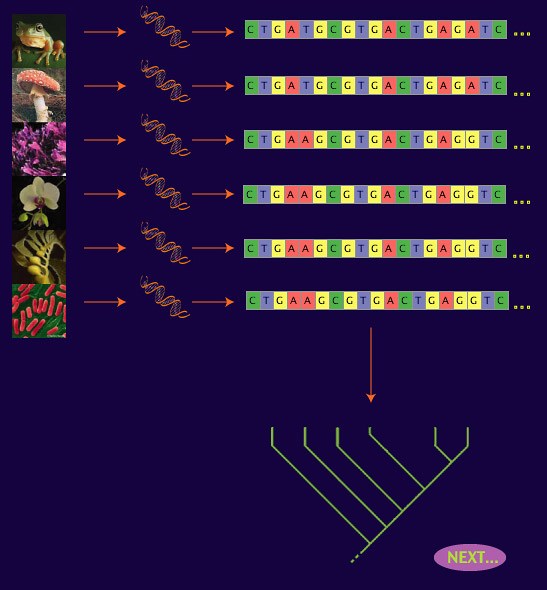
Two organisms that are closely related would have
a)
very similar DNA sequence
b)
exactly the same DNA sequences
c)
no proteins in common
d)
completely different DNA sequence
35.

Mutations are a change in what?

a)

DNA

b)

tRNA

c)

protein

d)

rRNA

36.
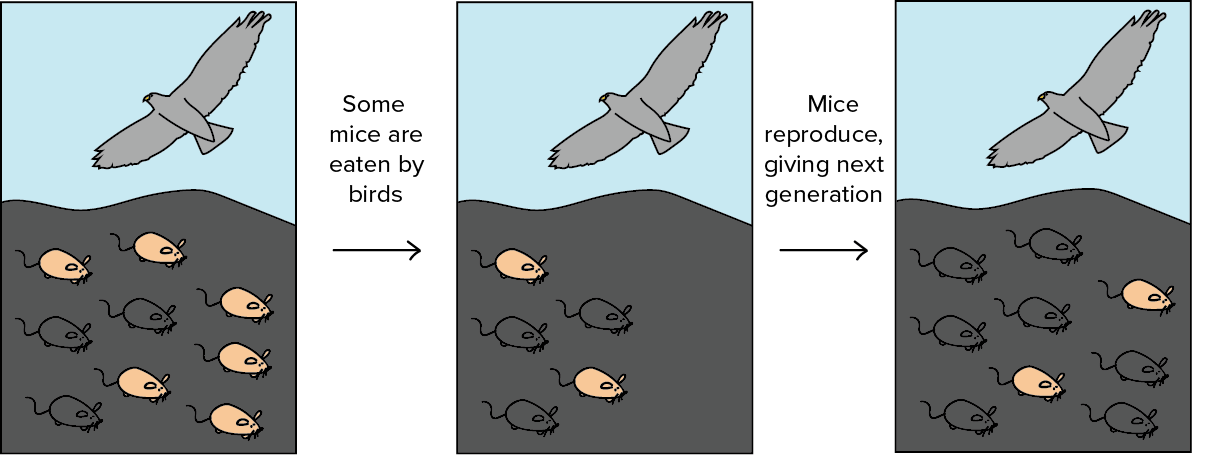
Why is the mouse population changing over time?
a)
The light mice can reproduce more successfully than the dark mice
b)
The hawks eat more dark mice than light mice because the dark mice taste better
c)
The hawks eat more light mice than dark mice because they can see the light mice more easily
d)
The hawks eat more dark mice than light mice because they can see the dark mice more easily
37.

Where do adaptations come from?

a)

The individual organism decides to adapt

b)

Mutations that give an organism an advantage in its environment

c)

Genetic recombination during meiosis

d)

Both mutations and genetic recombination are sources of adaptation

38.

All rabbits of the same species living in a particular area would be an example of a(n)

a)

population

b)

species

c)

community

d)

ecosystem

39.

The more genetic variation a population has,

the more likely it is for some individuals to

a)

evolve

b)

migrate

c)

survive

d)

mutate

40.

Mutations are important because they bring about

a)

death of the organism in which they develop

b)

genetic variation needed for a population to evolve

c)

benefits for the individual, not for the population

d)

changes in genotype, but not phenotype

41.
Why do frogs and other organism reproduce so many eggs or offspring?
a)
so that their babies can have friends to play with
b)
the more offspring the more likely the offspring will survive
c)
the more offspring the less likely offspring will survive 
d)
the more offspring the less competition
42.
Domesticated dogs are an example of:
a)
Natural Selection
b)
Selective Breeding
43.
Definition: fitness
a)
ability to survive and reproduce in a specific environment
b)
organisms with traits well suited to their environment survive and reproduce at a greater rate
c)
a growing population causes a scarcity of resources
d)
differences in the DNA sequence
44.

Evolution occurring gradually and slowly over long periods of time

a)

Homeostasis

b)

Stasis

c)

Punctuated Equilibrium

d)

Gradualism

45.

A group of organisms that can successfully interbreed & produce fertile offspring are a...

a)

Species

b)

Population

c)

Domain

d)

Genus

46.

Punctuated equilibrium...

a)

Involves bursts of change & periods of stability

b)

Takes place slowly over long periods of time

c)

Involves organisms evolving together

d)

Involves organisms splitting from a common ancestor

47.

Elimination of a species from Earth

a)

evolution

b)

darwin

c)

extinction

48.

Diversification of one ancestral species into many descendent species, usually adapted to a wide range of environments

a)

gradualism

b)

punctuated equilibrium

c)

adaptive radiation

49.

All genes available in a population is called

a)

Gene pool

b)

Genetic Variation

c)

Gene Flow

d)

Genetic Equilibrium

50.

A change in gene frequency over time so more beneficial traits become more common in a population is called

a)

Adaptation

b)

Variation

c)

Overproduction of Offspring

d)

Descent with Modification