
 Worksheets
Unit 6 - Senses & Survival
Total questions: 111
Worksheet time: 2hrs 16mins
Amanda suddenly woke up and smelled something burning. She crept down the stairs to see what was happening. She found her parents reading and sitting by the fireplace, which was burning wood. Why did Amanda wake up?
The smell of the fire sent a signal through her blood cells to her brain and she woke up.
The smell of the fire sent a signal through her nerves to her brain and she woke up
Amanda's nose was stuffy from a cold and she could not sleep.
Amanda was too cold upstairs to sleep.
On a hot summer day, Jack left the pool and began to climb a ladder to his tree house. He hurt his toe by bumping it on the ladder as he climbed into the tree house. How did Jack know that he had hurt his toe?
The nerves in his hurt toe sent a signal through his body to his brain.
The blood cells in his toe sent a signal through his body to his brain.
Jack's toes became very cold and numb.
D.
Jack's toe became smaller than before he had bumped it on the ladder.
Sarah is creating a model to show the path that information travels in the nervous system. She has drawn sensory receptors. What should she draw next?
She should draw a nerve cell in the brain.
She should draw nerves extending from the sensory receptors to the spinal cord.
She should connect the sensory receptors to the muscles.
She should label the drawing with the words "output."
Four students write what they know about sense receptors. Evaluate each student's response. Who is not correct?
Julia says sense organs like the ear, mouth, and skin all have sense receptors.
Sam says sense receptors collect information from our environments.
Miriam says all sense organs are the same.
Juan says sense organs are connected to nerves.
A (a) is something that an animal can sense that can cause a response.

Many animals do not have eyes, including the blind millipede, the Kentucky cave shrimp, and the darkling beetle. These animals are MISSING which sense?
Sight
Hearing
Smell
Touch
Taste

Bats and dolphins use echolocation. They send out a high-pitched soundwave that bounces off prey which they sense. This is an example of . . .
Sight
Hearing
Smell
Touch
Taste

Cats, dogs, rats, and mice have whiskers. Stiff, specialized hairs that allow them to feel how narrow openings are that they might enter. This is an example of . . .
Sight
Hearing
Smell
Touch
Taste

Toads gather light at night slowly and get a complete image around them every four seconds. This is an example of . . .
Sight
Hearing
Smell
Touch
Taste

Cats do not have any taste buds for sweet. This is an example of . . .
Sight
Hearing
Smell
Touch
Taste

Bees can see ultraviolet light, invisible to humans, which allows them to see flowers better. This is an example of. . .
Sight
Hearing
Smell
Touch
Taste

Dogs have 300 million scent sensors an noses that inhale from one direction and exhale another. This is an example of. . .
Sight
Hearing
Smell
Touch
Taste

The mantis shrimp has 12 color receptors in it's eyes. Humans only have 3. This is an example of. . .
Sight
Hearing
Smell
Touch
Taste

What is the jumping spider's strongest sense?
Sight
Smell
Taste
Touch

What is a grizzly bear's strongest sense?
Taste
Hearing
Sight
Smell

What is the hammerhead shark's strongest sense?
Sight
Smell
Taste
Hearing

What is a Butterfly's strongest sense?
touch
sight
taste
smell
Bats are _____________________, meaning they sleep during the day and are awake at night.
nocturnal
lazy
hibernating
sensitive
What is it called when animals sleep for long periods of time during the winter?
Winter Solstice
Hibernation
Quiet Snow
Mammal Rest
What do the close-up pictures of the rabbit, the reindeer, and the horse tell viewers about these animal's eyes?
Their homes are in warm climates.
They travel far to find food and water.
They need to be able to see 360 degrees.
Their sense of smell is much better than their hearing.
Which is an example of sensory input?
A lion making a sound as it approaches a heard of impalas.
A dog listening.
A spider spinning a web.
A bear eating red berries and not green.
What are sensory receptors?
The information that the senses gather from the outside world
The parts of an animal's body that enable them to receive sensory input
The special parts of sense organs that detect signals
The body system that allows us to move, feel, and think
Which of the following is a sense organ?
The brain
The spinal cord
The ear
The taste buds on the tongue
What is sensory input?
The information that the senses gather from the outside world
The parts of an animal's body that enable them to receive sensory input
The special parts of sense organs that detect signals
The body system that allows us to move, feel, and think
What does it mean when a plant adapts?
It grows on the rainforest floor or under water.
It changes itself to fit in better with its environment.
It grows giant leaves and has very bright flowers.
It converts its surroundings into a kinder climate.
How long does adaptation usually take?
a decade
an hour
a few days
centuries
Why do some plants in the rainforest have bright flowers and grow close to the ground?
to repel any extra rainfall
to get as much sunlight on their leaves as possible
to keep animals and people away from them
to attract birds and insects for pollination
How have some rainforest plants adapted to receive enough sunlight?
by growing poisonous flowers
by growing giant, slippery leaves
by growing giant, bright flowers
by growing long, deep roots

In a rainforest, the large canopy can block sunlight. Plants living under the canopy must be able to tolerate shade or adapt in order to get light. What adaptation could help plants get more sun?
strong roots
climbing vines
needles
spores

Plants can respond to all of these stimuli except
sight of a predator
presence of light
force of gravity
presence of water

Which of the following is an example of a plant responding to the stimulus of touch?
trees grow flowers in the spring
vines coil around trees
roots grow down into the soil
stems and leaves grow upward

A venus fly trap responds to
sight
touch
gravity
light

Some water plants, such as the cattail, have tall, strong stems so
they can move with the water
they can bend in the water
they can grow above the water
they can grow below the water

Water plants have ___________ stems that allow them to bend with the flow.
strong
flexible
unbendable
long

Why might some plants that grow on the shady rain forest floor have large leaves?
to stay safe from predators
to attract different animals
to survive harsh winters with heavy snowfall
to take in as much sunlight as possible

Water lilies live in lakes and ponds. The lilies have very long stems. The picture above shows a water lily in a pond. How do long stems help water lilies live in ponds?
They absorb food for the plant.
They absorb water from the pond.
They enable the pads and flower to reach sunlight.
They help the plants float away.
A plant is adapted to a forest with little sunlight. Identify the BEST adaptation this plant might have to ensure its survival.
extremely long root system
thick, waxy, spike covered leaves
ability to attach to and grow upwards on taller trees
shallow root system near the surface

What is one possible reason for seeds to have hooks or barbs?
to stay warm during the winter
to protect themselves from sunlight
to get attached to passing animals and get carried away
to stick to animals and steal nutrients from them
What is one reason that some plants have a strong scent?
to shed extra water off the plant
to take in nutrients from the soil
to attract animals to spread its pollen
to conserve water during dry periods
Some grasses grow in hot dry areas. Why might they grow very deep roots?
to protect the plant from sun damage
to take in as much light as possible
to spread seeds to new places
to reach water that is underground

Which feature of a rose helps it grow without being eaten by animals?
flowers with bright colors
sharp thorns
small seeds
deep roots
What is it called when a plant or animal has a trait that helps it survive in a specific environment?
instinct
mimicry
camouflage
adaptation

Desert plants have a coat of wax on their leaves to
keep water from escaping
protect them from animals eating them
absorb water from the air
release scent to attract animals

An adaptation that helps a cactus live in the desert is its
wide, flat leaves to catch water
bright green color
thin, spiny needles
tall stems


If plants didn't adapt as their environments changed, they would
save a lot of time.
not survive.
get taller every year.
be safe forever because they were already fine.
How long does it take plants to adapt?
less than a minute
a very long time
3 hours
5 days
Which part of a plant changes sunlight into energy?
Stem
Flower
Roots
Leaves
Where does a plant absorb nutrients from the soil?
In the flowers
In the stem
In the leaves
In the roots
How do flowers help a plant?
They attract insects to pollinate the plant.
They absorb sunlight to make food.
They are eaten by birds and other animals.
They bring nutrients in from the soil.
In what part of the plant is food made?
The flowers
The leaves
The roots
The stem
The process where plants make their own food (sugar) is
germinate
photosynthesis
function
structure
Flowers' stems give them structure to stand upright and trees have trunks. Which human system is similar, in that it gives us support to stand upright?
muscular system
skeletal system
integumentary system
nervous system

What is the function of the skeleton?
to digest food
to provide support and give the body its shape
to circulate blood
to provide nutrients for the body
What is the job of the seeds?
to make seeds for the plant
to make food for the plant and take in air
to help the flower reproduce
to support the plant and help deliver food, minerals, and water to other parts of the plant
to anchor the plant in place, soak in water, and store food for the plant
What is the job of the stem?
to make seeds for the plant
to make food for the plant and take in air
to help the flower reproduce
to support the plant and help deliver food, minerals, and water to other parts of the plant
to anchor the plant in place, soak in water, and store food for the plant
What is the job of the leaves?
to make seeds for the plant
to make food for the plant using the sun's light, and to take in air
to help the flower reproduce
to support the plant and help deliver food, minerals, and water to other parts of the plant
to anchor the plant in place, soak in water, and store food for the plant
What is the job of the flower?
to make seeds for the plant
to make food for the plant and take in air
to help the flower reproduce
to support the plant and help deliver food, minerals, and water to other parts of the plant
to anchor the plant in place, soak in water, and store food for the plant
What is the job of the roots?
to make seeds for the plant
to make food for the plant and take in air
to help the flower reproduce
to support the plant and help deliver food, minerals, and water to other parts of the plant
to anchor the plant in place, soak in water, and store food for the plant

What stage of the plant life cycle is shown?
Full grown, mature plant
a bud
a seed
a sprout
A seedling is . . .
the outer protective layer of a seed
to begin to grow or sprout
a seed whose shoot has reached about the ground
none of these
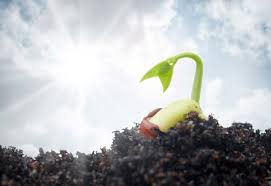

The arctic fox and snowshoe hare develop a white coat of fur during the winter months. What statement best describes this behavioral response?
The color of the fur will attract a mate
White fur allows the animals to reflect light and stay warm
Snow falls during the winter and the white fur will camouflage the animals
It becomes colder during the winter, so these animals need more fur to stay warm

Which adaptation is this organism using?
camouflage
feet
mimicry
adaptations to hunt
How do zebra stripes protect the zebra?
When zebras run as a herd,stripes help the predators pick out one zebra.
When zebras run as a herd,stripes help the zebras by not letting the predator pick out one zebra because they blend together and look like a blur of stripes.
The zebra stripes don't have a purpose.

An animal is using the adaptation __________________, when it is disguising itself using either colors and patterns, mimesis (imitation of objects), or mimicry (imitation of other animals).
walking
camouflaging
running
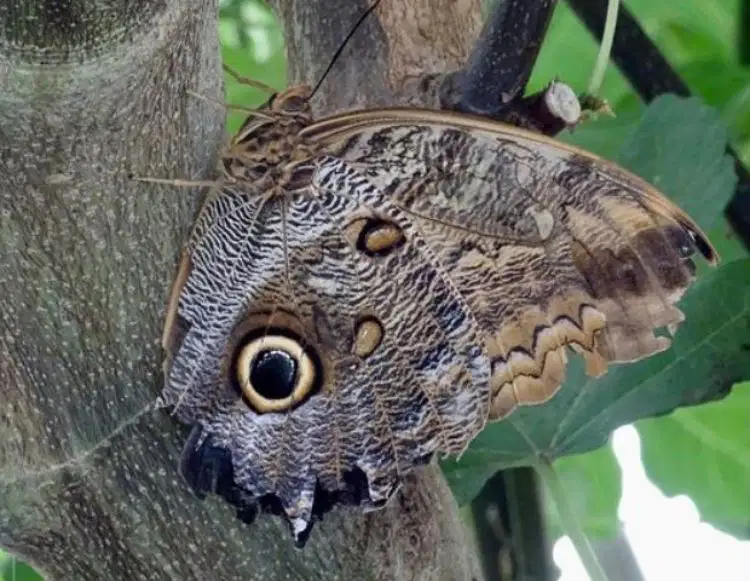
What is this an example of?
Camouflage
Mimicry
Which is NOT an example of mimicry:
The fur of an arctic fox turns white in winter to match the snow
An alligator snapping turtle's tonge looks like a worm, so he lures fish to his mouth
A bad tasting butterfly & a good tasting butterfly look similar, so birds don't eat either kind
Mimicry means:
A tree that has pink flowers in the spring
When one living thing looks like a different kind of living thing
A way an animal blends in with its environment
Camouflage means:
When an animal looks like another animal
A special dessert
A way an animal can look like its surroundings

The teeth in this picture are from an animal that would most likely eat
grass
insects
fruit
fish
If an animal can blend in to its environment, which adaptation does it have?
sharp eyesight
mimicry
camouflage
feathers
If an animal hides by looking like another living thing, which adaptation does it have?
feathers
mimicry
camouflage
blubber

What is one adaptation this animal might have?
It has blubber to keep it warm.
It raises its belly off the sand to keep cool.
It is an herbivore.
It has feathers.
an organ that receives information from sense organs about the environment and then tells the body how to react
heart
brain
lungs
skeleton
an action that causes a certain reaction in an animal
extinct
gills
classify
stimulus
the organ in fish and young amphibians that takes in oxygen and water
lungs
gills
heart
brain
an organ that pumps blood
lungs
brain
heart
skeleton
the main respiratory organ that takes in and releases air
lungs
gills
heart
brain
What does internal mean?
Outside something
Veins and Arteries
Inside something
Lasts forever
What does external mean?
Inside something
Mutant Superheroes
Outside something
Aliens
What does function mean?
Something's job
A type of cheese
A new social media app
The organised parts of something
What is an external structure?
Outer parts of a plant/animal
Inner parts of a plant/animal
What is an internal structure?
Outer parts of a plant/animal
Inner parts of a plant/animal
Check ALL that are external structures of an elephant
Ears
Liver
Feet
Skin
Intestines
Check all that are internal structures of an elephant
Stomach
Skin
Teeth
Liver
Esophagus
This wide structure supports great weight allowing elephants to walk quietly. This part of the body also allows the elephant to feel vibrations in the ground.
Legs
Shoes
Feet
Toes
This external structures keeps the internal organs in and helps keep the animal cool.
Ears
Lungs
Skin
This external structure is both the nose and upper lip of an elephant.
Mouth
Teeth
Trunk
This structure supports the leaves and flowers and bends towards the light, allowing the leaves to get sunlight.
Root
Stem
Leaf
Flower
Inside this structure, there are 4 layers that use water from the soil, carbon dioxide from the air, and energy from the sun to make food.
Root
Stem
Leaf
Flower
Some plants have this structure to protect it from hungry animals.
Leaves
Thorns
Stem
All of the above.

What is the function (purpose) of a long think beak? Hint: Their beaks are very thin and long, so it is able to get into small places.
To open nuts and seeds
To eat nectar from flowers
To help grab large prey
To help it tear apart its prey

What is the function (purpose) of a short beak? Hint: Their beaks are small and strong. So they need to eat something small.
To open nuts and seeds
To tear apart meat
To help it fly
To eat nectar from flowers

What is the function (purpose) of a pelican's beak ?
To eat flowers
To eat seeds and nuts
To catch and eat fish
To tear apart its prey
Birds have different kinds of beaks depending on _____________
Where it lives
How big it is
How it drinks
The kind of food it eats

This type of feet is used to _____________
Climb up the tree
swim forward by pushing the water
to pick up small worms
to perch on thin branches

This bird has _____________
strong, short and hard beak
strong, sharp and hooked beak
Broad and flat beak
Long and pointed beak

