
 Worksheets
Maths_FPS_SECOND TERM 1
Total questions: 18
Worksheet time: 35mins
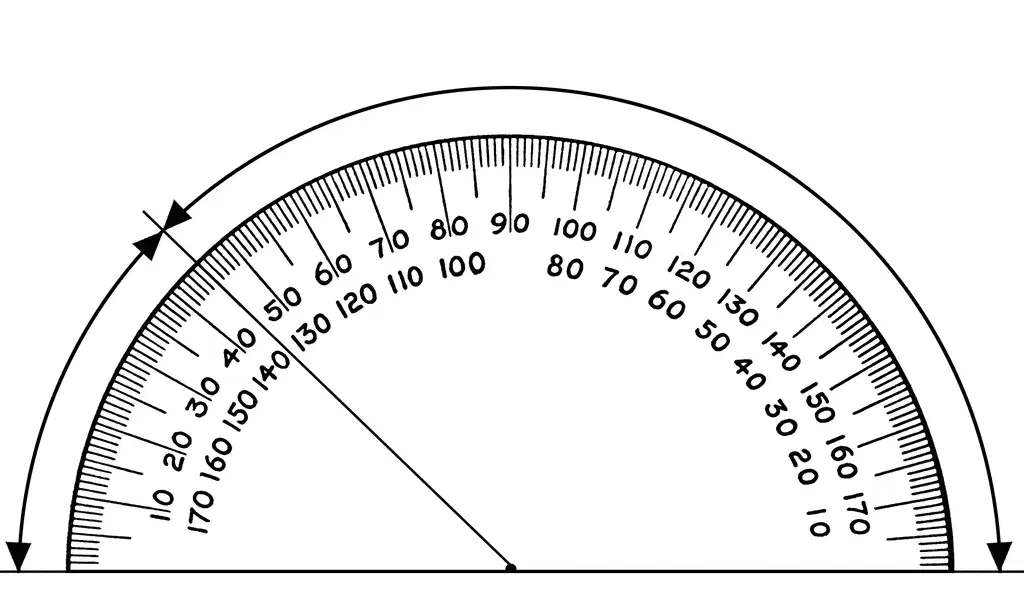
What is the measure of the angle from left to right
135 degrees

What is the measure of this angle
55 degrees
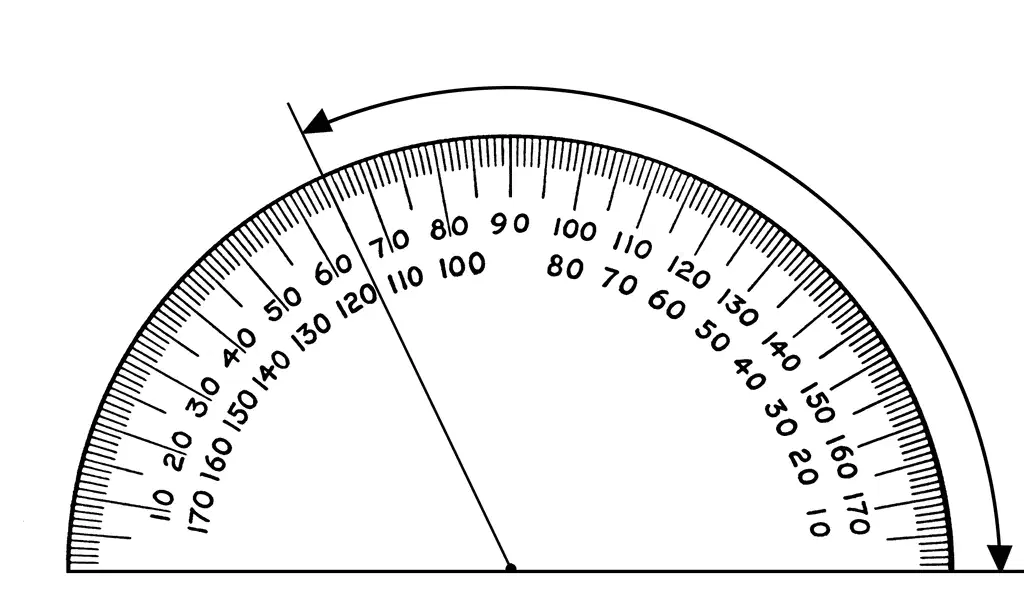
What is the measure of this angle
120
115
110
75

Name the diagonals of the pentagon ABCDE

How many sides does the octagon have?
What shape is formed by connecting the vertices of the octagon shown above?
Rectangle
How many sides does a rectangle have?
How many vertices does the octagon have?
What type of angle is formed by the intersection of two sides in a rectangle?
Draw rectangle connecting the vertices of an octagon:


What type of Angle is this....
Right
Straight
Obtuse
Acute
Define an obtuse angle
A triangle ABC ,AB = 7.8 cm ,AC= 7 cm and BC = 6 cm is....
Isosceles Triangle
Scalene triangle
Equilateral triangle
Right angled Triangle
Define a scalene triangle
The Concept of Degrees on a Clock
As there are 360 degrees in a circle and a right angle is 90 degrees, three right angles would be 3 * 90 = 270 degrees.
On a standard clock, each hour marking represents 30 degrees (360 degrees / 12 hours). Therefore, moving the hour hand 270 degrees would be equivalent to moving it 9 hour positions (270 degrees / 30 degrees/hour).
Since there are only 12 hours on a clock face, moving the hand 9 positions would take it past the 12 and all the way around to point to the 4:00 position.
This understanding of degrees and angles on a clock can help us visualize and calculate the movement of the clock hands accurately, providing a practical application of geometry in everyday life.
Given:
Total degrees in a circle: 360°
Degrees per right angle: 90°
Number of right angles rotated: 3
Degrees per hour marking on a clock: 360° / 12 hours = 30°
Step 1: Calculate total degrees rotated
Degrees rotated = Number of right angles rotated * Degrees per right angle
Degrees rotated = 3 right angles * 90° per right angle = 270°
Step 2: Calculate equivalent hour positions rotated
Hour positions rotated = Degrees rotated / Degrees per hour marking
Hour positions rotated = 270° / 30° per hour = 9 hour positions
Step 3: Consider wrapping around the clock face
A clock face only has 12 hour positions.
Step 4: Final hour position Since rotating 9 hour positions would take the hand past the 12, we need to find the remainder after dividing by 12 (number of hours on the clock face).
Final hour position = (Initial hour position + Hour positions rotated) % 12
Example (assuming initial position is 7:00 which corresponds to 7 hour position):
Final hour position = (7 + 9) % 12
Final hour position = 16 % 12
Final hour position = 4 (remainder after division by 12)
Therefore, rotating the hour hand by 270 degrees (3 right angles) from the 7:00 position is equivalent to moving it 9 hour positions, which brings it back around to the 4:00 position on the clock face.
How does understanding degrees and angles on a clock help visualize and calculate hand movement accurately?
By providing a reference point for measuring time
By allowing for precise measurement of rotational movement
By determining the size of the clock hands
By indicating the temperature at different times of the day
Moving the hour hand 270 degrees is equivalent to how many hour positions?
6
9
12
15
How many degrees would three right angles on a clock be equivalent to?
180 degrees
270 degrees
360 degrees
90 degrees
How many positions would the hand move on a clock to point to the 6:00 position?
6
3
9
12
How many degrees are in a right angle?
180 degrees
90 degrees
45 degrees
360 degrees
How many degrees does each hour marking on a clock represent?
15 degrees
30 degrees
45 degrees
60 degrees
What are the total degrees in a circle?
How many degrees are there per right angle?
If you rotate 3 right angles, how many degrees have you rotated?
How many degrees are there per hour marking on a clock?
If the initial hour position is 7:00 and you rotate the hour hand by 270°, what is the final hour position?
If you rotate the hour hand by 270°, how many hour positions have you moved on the clock face?
The hour hand starts at 12 and takes 1/2 a revolution where will it stop.
The hour hand will stop at 6 after completing half a revolution.
Here's the breakdown:
A complete revolution on a clock face is 360 degrees because a circle has 360 degrees.
Half a revolution is half of 360 degrees, which is 360 degrees / 2 = 180 degrees.
On a standard clock, each hour marking represents 30 degrees (since 360 degrees are divided by 12 hours).
Therefore, moving the hour hand by 180 degrees (half a revolution) is the same as moving it 6 hour positions (180 degrees / 30 degrees/hour = 6 hours).
Since the hour hand starts at 12, moving it 6 positions clockwise will bring it to the 6 o'clock position.
How many degrees does each hour marking on a clock represent?
15 degrees
30 degrees
45 degrees
60 degrees
What time does the hour hand stop at after completing half a revolution?
3
6
9
12
Moving the hour hand by 180 degrees is the same as moving it how many hour positions?
3
4
6
8
How many degrees is half a revolution?
90 degrees
180 degrees
270 degrees
360 degrees
If the hour hand starts at 12 and moves 6 positions clockwise, where does it end up?
3 o'clock
6 o'clock
9 o'clock
12 o'clock
How many degrees is a complete revolution on a clock face?
180 degrees
270 degrees
360 degrees
450 degrees
When it is 3 o’ clock, the minute hand is at 12, and hour hand is at 3 as shown in the figure, clearly, the angle between the two hands 90°.
When it is 6 o’ clock, the minute hand is at 12 and the hour hand is at 6 as shown in the figure. Clearly, the angle between the two hands of the clock is a straight angle is ______.
When it is 12 o’ clock, both the hands of the clock lie at 12 as shown in the figure. Clearly, the angle between the two hands
When it is 9 o’ clock, the minute hand is at 12 and the hour hand is at 9 as shown in the figure. Clearly, the angle between the two hands = ____
What is a polygon?
Give examples of a polygon.
Give 5 example of acute angle
Give 5 examples of obtuse angles
Where will the hour hand of a clock stop if it starts
(a) from 6 and turns through 1 right angle?
Where will the hour hand of a clock stop if it starts
(b) from 8 and turns through 2 right angles?
Where will the hour hand of a clock stop if it starts
(c) from 10 and turns through 3 right angles?
Where will the hour hand of a clock stop if it starts
(d) from 7 and turns through 2 straight angles?
7

