
Font size
 Worksheets
MUSIC THEORY REVIEW UNITS 1-5
Total questions: 69
Worksheet time: 35mins
An EXACT phrase in a different voice is known as...
Sequencing
Repetition
Imitation
Alberti bass
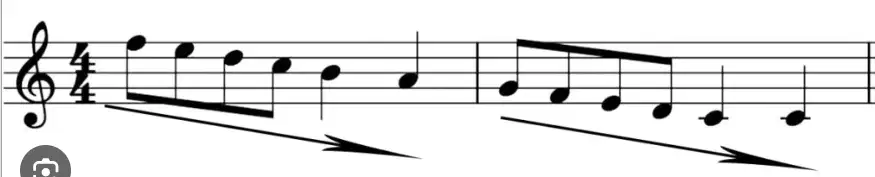
The following motion and contour can be described as...
Descending and conjunct
Descending and disjunct
Ascending and conjunct
Ascending and disjunct

The following is a representation of...
Fragmentation
Augmentation
Diminution
Segmentation
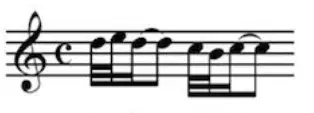
Which ornament is used here?
An acciaccatura
An appoggiatura
A mordent
A tremelo

Which texture is described here?
Polyphonic
Homophonic
Monophonic
Heterophonic
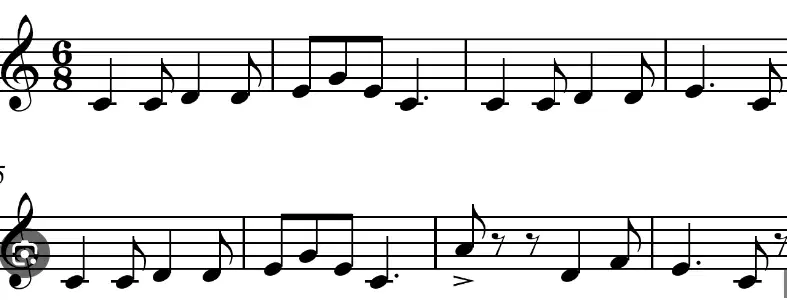
The texture...
Homophony
Heterophony
Polyphony
Monophony
THE BEST example of counterpoint would be...
A fugue
A sonata
A choral suite
A theme and variations
What is a similarity between an answer and an episode in a fugue compared to the main subject?
Both use fragmentation
Both use sequencing of changed intervals
Both use intervallic change
Both use inversion
A ______ _______ is a sequenced restatement of the subject in another voice with MODIFIED intervals
A real anwer
A tonal answer
A sequenced exposition
A counter subject

The meter can be identified as...
Simple
Changed
Compound
Asymmetric
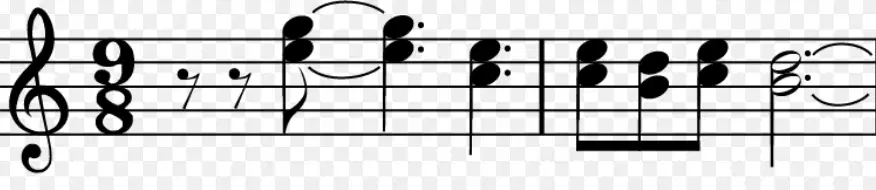
Which TYPE of meter is the following example?
Compound triple
Compound duple
Simple triple
Simple duple
Which note quality and quantity represents one measure in 12/8 meter?
4 dotted eighth notes
4 dotted quarter notes
3 dotted eighth notes
3 dotted quarter notes
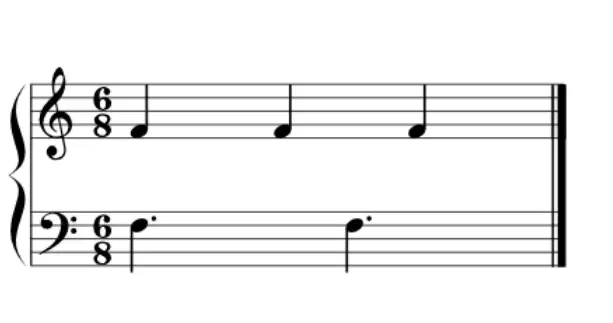
The following is an example of...
Syncopation
Hemiola
Tuplets
Anacrusis
In 6/8 meter, one dotted quarter note is interchangeable with...
1 eighth duplet
1 eighth triplet
1 quarter quadruplet
1 quarter triplet

The beaming example is WRONG in which measure(s)?
Just 2
1 and 3
Just 3
1, 2, and 3
The subtonic is a chromatic scale degree.
True
False
Which modal scale is built on C in the key of E minor?
Aeolian
Lydian
Phrygian
Dorian

The following scale is identified as...
B-flat major scale
G melodic minor scale
A locrian scale
C harmonic minor scale
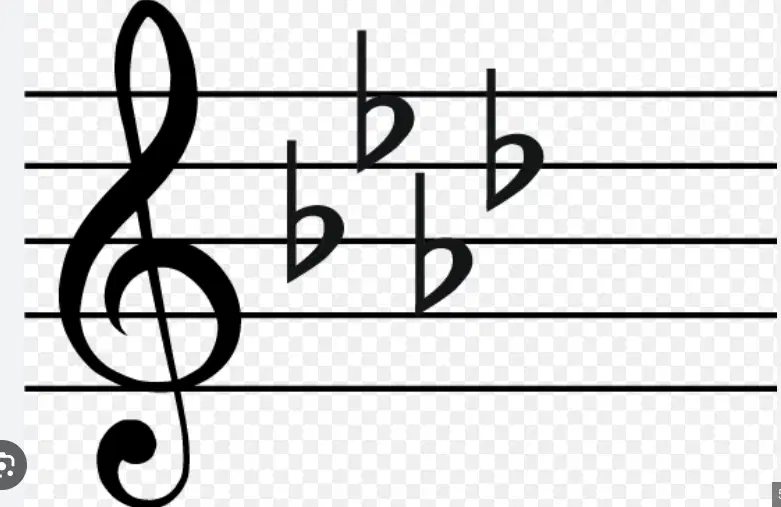
Which two possible parallel keys could be shown?
F and Abm
Fm and Ab
Cm and Bb
C and Bbm
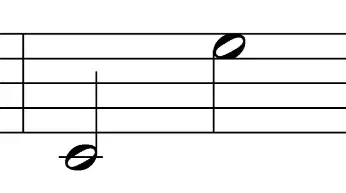
1) Identify as harmonic or melodic. 2) Identify based on octave displacement.
Harmonic and simple
Melodic and compound
Harmonic and compound
Melodic and simple
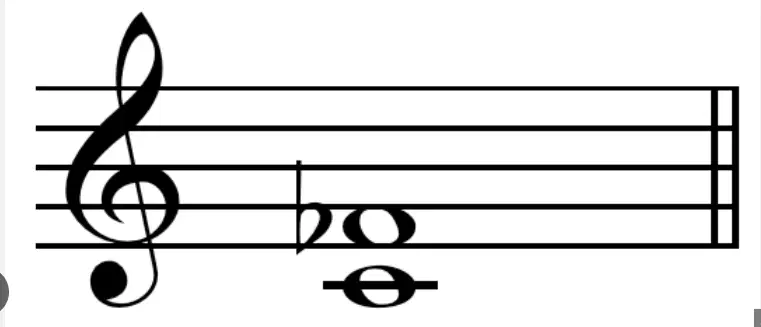
1) Name the inversion of the interval. 2) Name the stability.
A4
Dissonant
A5
Dissonant
D4
Consonant
D3
Dissonant
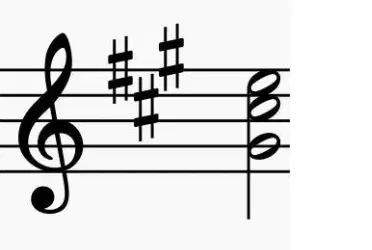
Name the roman numeral and figured bass of the major key.
iii6
vii
V6
ii6/4
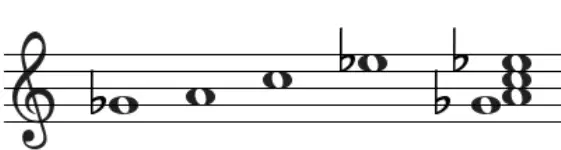
Name the roman numeral, lead sheet, and figured bass, AS IF in the key of B-flat minor.
viio4/2
A/Gb
VIIo4/3
Ab/Gb
III+6/5
Bb/A
VI4/2
Eb/Gb

With the addition of this symbol, what should be done?
flat the third above the bass
flat the following bass note
flat the root note
flat the fifth above the bass
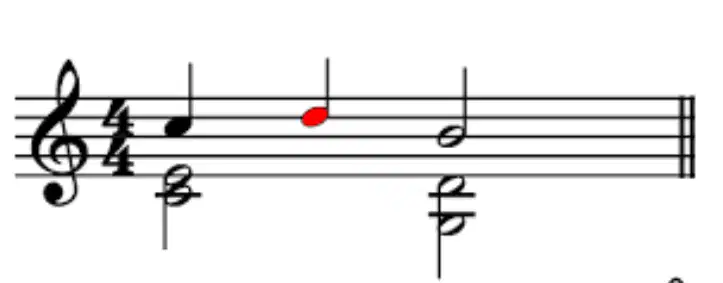
Which NCT is used here?
Escape tone
Appoggiatura
Neighbor tone
Cambiata
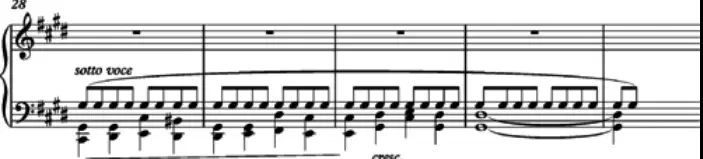
Which embellishment is used in this example?
Anticipation
Appoggiatura
Neighbor
Pedal Point
Anticipations are usually...
Accented
Unaccented
Cadential
Dissonant
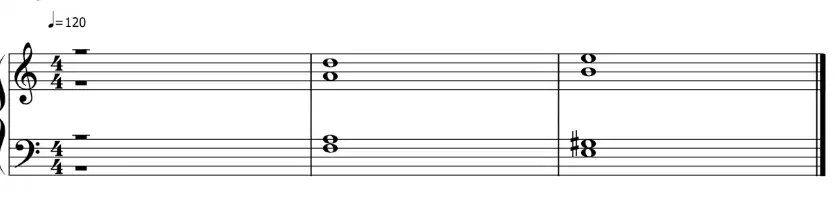
Which cadence is shown here?
Half cadence
Phrygian Half cadence
Picardy third cadence
flattened deceptive cadence
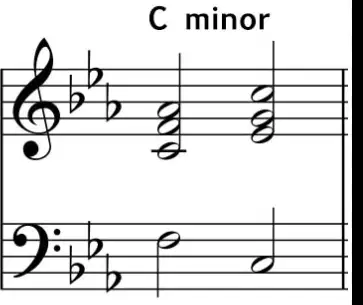
The following cadence can be described as...
Plagal
Deceptive
Imperfect
Perfect
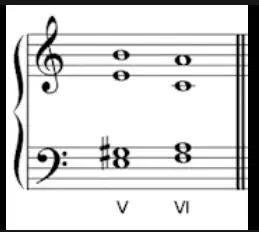
The following cadence can be described as...
Plagal
Imperfect Authentic
Perfect Authentic
Interrupted
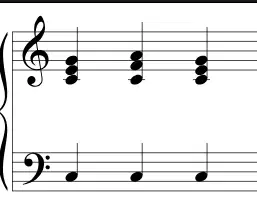
The following 6/4 can be identified as...
Passing
Arpeggiated
Cadential
Pedal
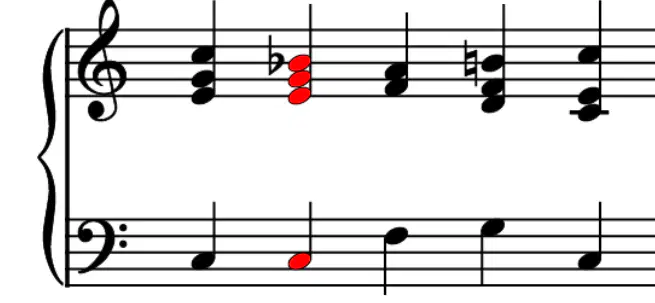
The following chord can be identified as...
Secondary
Predominant
Borrowed
Applied
Which progression represents an arpeggiated six-four?
I6/4 - V - I
I - I6 - I6/4
I - IV6/4 - I
V - I6/4 - V
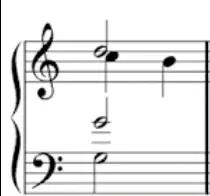
The suspension can be labeled as...
4 - 3
7 - 6
6 - 5
2 - 1
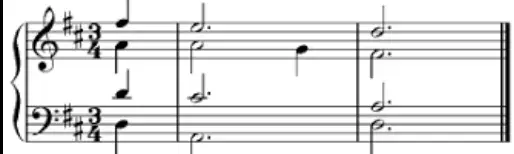
The second measure can be labeled as...
V7 omit the 5th
Sus. 7 - 6
V8 - 7
V with a PT
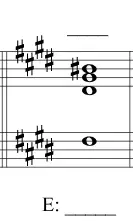
Name the following chord with figured bass and lead sheet.
G#7/F#
V4/2/vi
G#7/D#
V6/5/ii
F#4/3/D#
V4/3/vi
C#7/F#
V4/2/vi

The following secondary dominant should be notated as... (in bass clef)


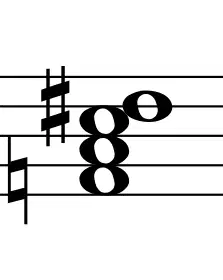
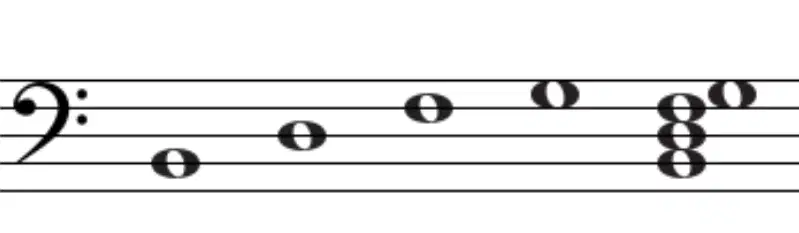
Name the following chord in the key of A Major. Give the scale degree of which the chord is TONICIZING.
V6/5/iii
Tonicizing the mediant
V4/3/vi
Tonicizing the submediant
viio4/2/ii
Tonicizing the supertonic
viio6/5/VII
Tonicizing the Subtonic
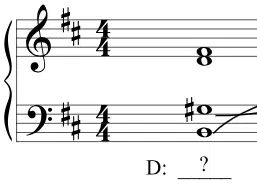
Which Secondary diminished chord is shown?
viio6/5/V
viio6/5/vi
viio4/3/V
viio4/3/vi
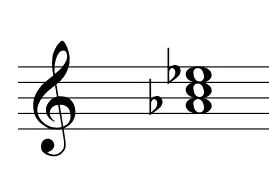
In the key of C Major, the following chord is an example of a(n)...
A-tonal chord
Augmented sixth chord
Borrowed chord
Applied chord
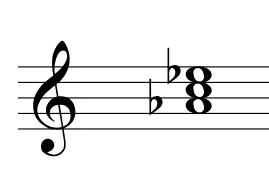
How should the following chord be labeled?
bVI
bvi
bVII
VII/viio
Using the technique of modal interchange, what degree should NOT be lowered?
Mediant
Subdominant
Submediant
Leading Tone
What progression ties into Modal Mixture using the "flat" deceptive cadence?
V7 - bvi - i
V7 - bVI - bVII - I
V7 - bvi - VII - I
V7 - vi - bVII - i
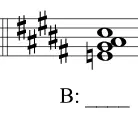
Label the following chord with figured bass and lead sheet. (bass clef)
C#o7/G
iio4/3
A#o7/G
viio4/2/iii
D/F#
V6/V
C#o7/Bb
viio4/2
A picardy third represents...
Major key ----->
Parallel minor
Minor key ------>
Parallel major
Major key ------>
Mixolydian mode
Minor key ------->
Relative major
The F Dorian scale differs from the F Natural Minor Scale because...
6 is raised
5 is lowered
7 is raised
3 is lowered
Which triad can be built on the 4TH DEGREE of C Mixolydian?
F#m
F
F#o
Fo
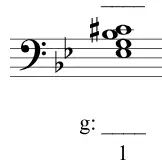
Label the Augmented-sixth chord.
Eb7
Ger+6
F7
It+6
Gb7
Fr+6
Abm7
Ger+6
The Ger+6 chord must progress to _______ before the ______ chord.
I6/4 - V
V - I
IV - V7
V7 - vi
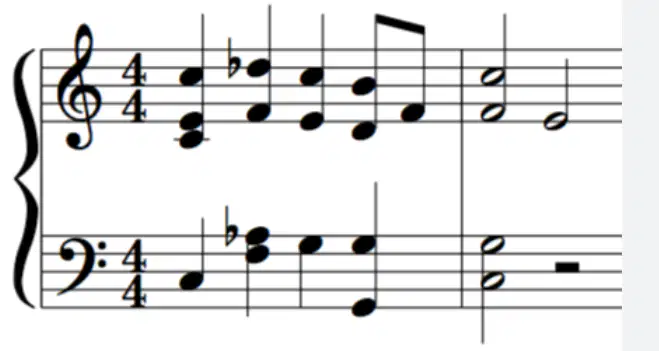
The second chord is what type of chord?
Italian-sixth chord
Neapolitan-sixth chord
German-Augmented sixth chord
French-Augmented sixth chord
Which of the following can be a NON-example of Chromaticism?
Modal Interchange
Tonicization
Modulation
Embellishments

What is the chord and what is its function? (Cm)
It+6
Predominant
Fr+6
Tonic Prolongation
Ger+6
Dominant
N6
Predominant

What key is modulated to according to the chord analysis?
C Major
C Minor
Bb Major
Bb Minor

Which statement(s) is/are correct?
Since the Eb is cancelled with the natural sign, this confirms there is no modulation.
The use of the flattened "E" must represent a tonicization
The E natural represents a raised Leading-Tone from the Subtonic
There is a Common-Chord Modulation taking place on the third measure when there is an E natural.
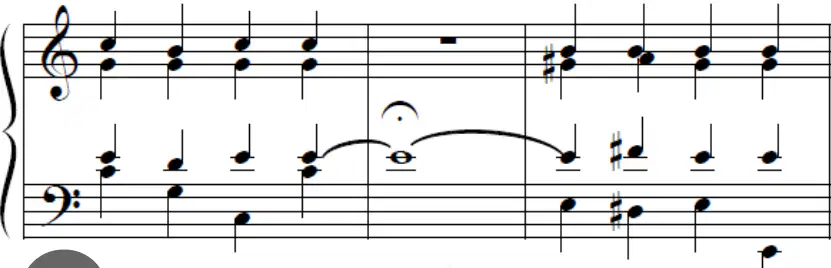
Which type of modulation is used here?
Common-tone modulation
Chromatic modulation
Direct Modulation
Common Chord Modulation
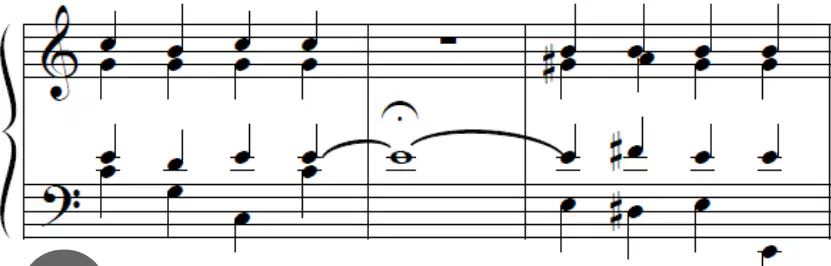
Name the two central tonalities.
C Major and A-flat major
C Major and E Major
A Minor and E Major
A Minor and B Major
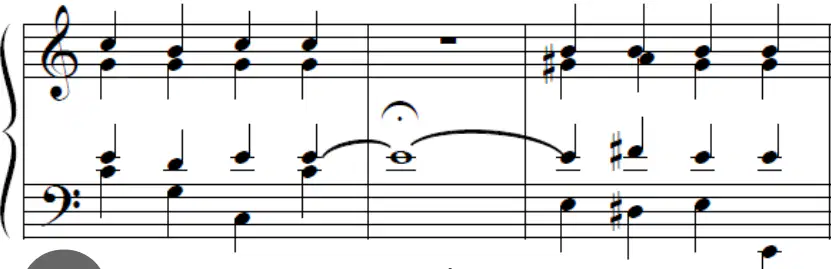
Which of the following statements is true?
This progression shows modulation through the usage of chromatic mediants
This modulation occurs through sequences of a Major 3rd
This modulation takes place through closely-related keys from a major mode to a minor mode
The modulation of this progression is completely direct due to the fermata on the E
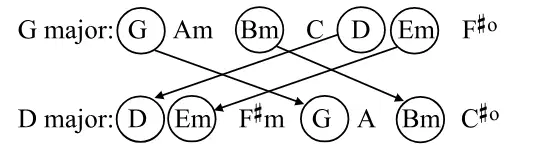
The following info is most useful for:
All Pivot chord modulation
Only pivot chords expressing common-chord modulation
Only pivot chords expressing chromatic modulation
Finding closely-related keys of G Major
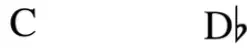
The key relationship shown would be described as...
closely-related keys
foreign/distant keys
Parallel keys
Equivalent keys
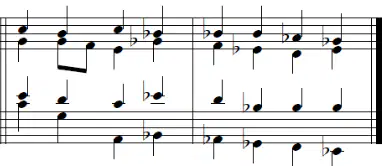
The following progression fits which type of modulation?
Direct modulation
Monophonic modulation
Common-chord modulation
Enharmonic modulation
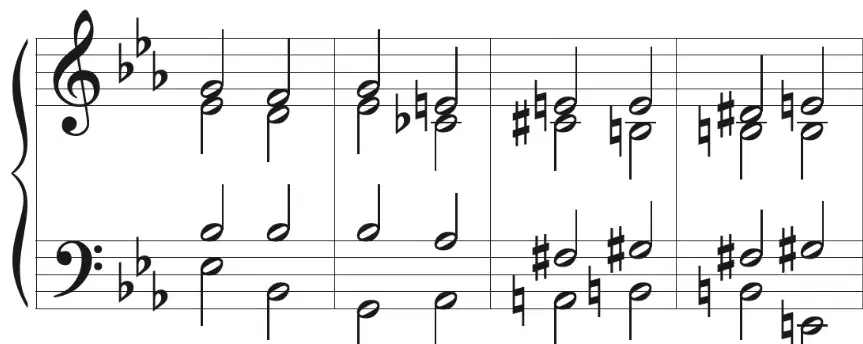
The following type of modulation is described as..
Direct modulation
Sequential modulation
Chromatic modulation
Enharmonic Modulation
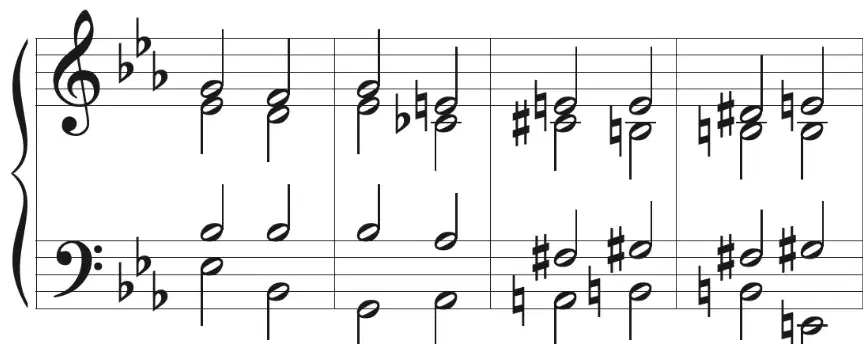
The pivot chord used is enharmonically expressing...
A Neapolitan sixth chord of the key of Eb Major
A Ger+6 chord in the key of E Major
A secondary dominant chord in the key of Eb Major
A dominant seventh chord in the key of E Major
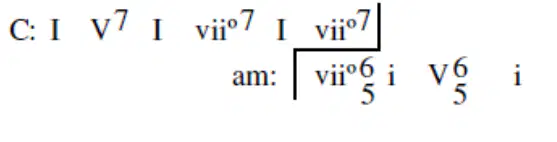
The following represents...
Enharmonic modulation
Chromatic mediant modulation
Phrase modulation
Common chord modulation
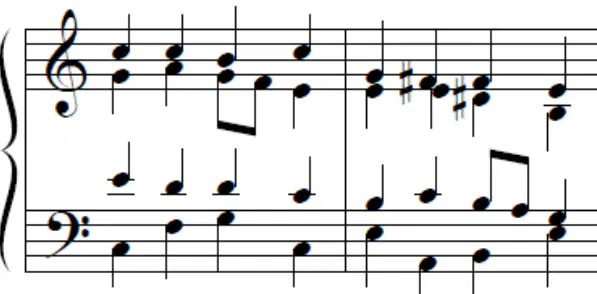
Which two central tonalities are shown and what TYPE of modulation?
Chromatic - CM to EM
Diatonic Common-chord - CM to Em
Sequential - CM to Em
Enharmonic - Ab+6 to B7
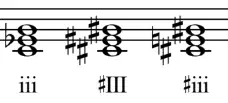
Which type of relationship is shown?
Chromatic mediants
Modal interchange
Altered chromatic degrees
Secondary supertonic chord
In the key of F Major, which chord could be used during Chromatic Mediant modulation AND Modal interchange?
Db minor
D Major
Ab Major
A Major
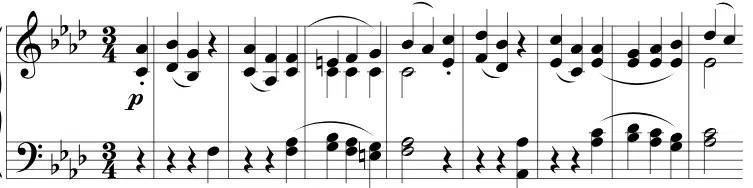
Which type of modulation is used here?
Sequential modulation
Direct modulation
Phrase modulation
Common-tone modulation
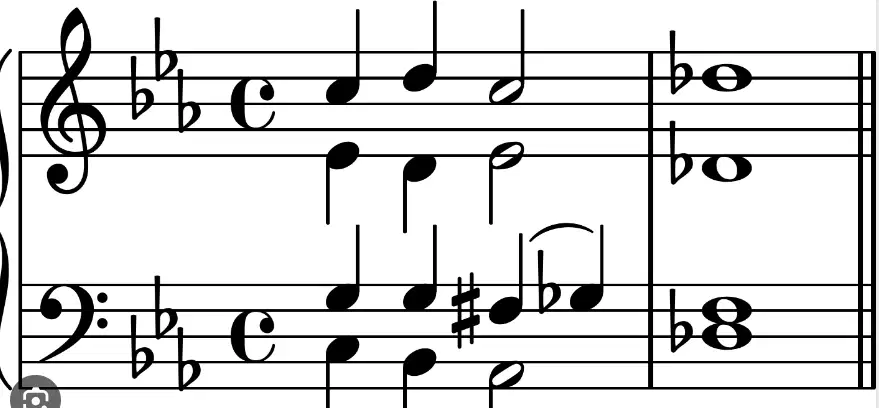
The following example is...
Enharmonic modulation through a German Augmented chord
Enharmonic modulation using a tonicization
Chromatic modulation using a diminished-seventh chord
Chromatic moduation using a chromatic mediant relationship
A specific flute is considered a B-flat instrument. Which of the notes are sounded when the flautist plays a D-sharp?
C-sharp
E-sharp
D natural
A-sharp

