
 Worksheets
E. Colonization- Early Republic 2
Total questions: 126
Worksheet time: 1hrs 5mins
Ban on all trade
embargo
free enterprise
impressment
isolationism
forcing American men to serve in the British navy
embargo
impressment
intervention
protective tariff
American ships were banned from trading with all European countries
No foreign ships could enter U.S ports, and no American ships could leave, except to trade at other U.S ports
impressment
Embargo Act
Louisiana Purchase
Monroe Doctrine
Established the principle of judicial review
Gibbons v. Ogden
McCulloch v Maryland.
Marbury v. Madison
Worchester v. Georgia
Strengthened the federal government and the longest-running Chief Justice of the U.S Supreme Court
John Marshall
Andrew Jackson
Thomas Jefferson
James Monroe
Doubled the size of the United States
Encouraged citizens to move west
Gave permanent access to the Mississippi River
War of 1812
Missouri Compromise
Louisiana Purchase
Marbury v. Madison
Causes of the War of 1812 - Choose 3
Impressment
Native American attacks in the NW Territory
"War Hawks"
Burning down the White House
What year did we purchase Louisiana?
(a)
Effects of the War of 1812 - Choose 3
Federalist Party died
Americans began to increase their manufacturing
Increase land for America
No actual winner
Missouri Compromise - Choose 3
Congress admitted Missouri to the Union as a state that allowed slavery, and Maine as a free state
Banned slavery from the Louisiana Purchase territory north of the 36º 30’ parallel
Congress admitted Maine to the Union as a state that allowed slavery, and Missouri as a free state
Kept the balance of free/slave states in Congress
When the Supreme court Determines whether or not a law is constitutional
patriotism
nationalism
judicial review
unconstitutional
Claimed the Western Hemisphere was no longer open to European colonization
Missouri Compromise
Monroe Doctrine
Adams-Onis Treaty
Embargo Act
U.S. acquired Florida from Spain
Missouri Compromise
Monroe Doctrine
Adams-Onis Treaty
Embargo Act
The court decided that the federal government had the power to set up a federal bank
states did not have the power to tax the federal government.
Addressed the issue of state versus federal power
McCulloch v. Maryland
Gibbons v. Ogden
Marbury v. Madison
Worchester v. Georgia
The Supreme Court ruled that federal law overrules state law in conflicts involving more than one state.
This case strengthened the power of the federal government in issues dealing with interstate commerce
McCulloch v. Maryland
Gibbons v. Ogden
Marbury v. Madison
Worchester v. Georgia
What job did Hamilton have while Washington was president?
Secretary of State
Secretary of Treasury
Secretary of War
Attorney General
What job did Jefferson have while Washington was president?
Secretary of State
Secretary of Treasury
Secretary of War
Attorney General
What did the Judiciary Act of 1789 establish?
A federal court system
Judicial Review
A neutral relationship with France and Britain
A national bank
How did Hamilton's financial plan get passed?
rock, paper, scissors
move the capital north to New York
move the capital south
It didn't get passed
Which describes Washington's beliefs about foreign policy?
Befriend France
Befriend Britain
Stay Neutral
Help both in the war
What was the effect of the Whiskey Rebellion?
Showed how weak the national government was
Showed the need for a national bank
Showed the power of the state government
Proved the strength of the national government
Which of the following did Washington advise in his Farewell Address?
Keep out of debt
Avoid permanent alliances
Encourage the growth of country to be coast to coast
Warned against political parties
Does the following represent the Federalist Party or the Democratic-Republican Party:
Led by Hamilton
Federalist Party
Democratic-Republican Party
Does the following represent the Federalist Party or the Democratic-Republican Party:
Favored Manufacturing
Federalist Party
Democratic-Republican Party
Does the following represent the Federalist Party or the Democratic-Republican Party:
Favored state government over the national government
Federalist Party
Democratic-Republican Party
Does the following represent the Federalist Party or the Democratic-Republican Party:
Thought the bank was unconstitutional
Federalist Party
Democratic-Republican Party
Does the following represent the Federalist Party or the Democratic-Republican Party:
Believed in a strict interpretation of the Constitution
Federalist Party
Democratic-Republican Party
What laws infringed on the 1st amendment by making it harder for immigrants to become citizens and people could be arrested for making negative statements about the government
Alien and Sedition Acts
XYZ Affairs
Virginia and Kentucky Resolutions
Judiciary Act of 1789
What did the Fugitive Slave Act of 1793 do? Choose 2.
Allowed slaves to escape
Allowed people to hunt down escaped slaves
Fine people for helping escaped slaves
Made slavery illegal
What was an effect of the Alien and Sedition Acts?
XYZ Affair
Increase in immigration
Washington was elected
Virginia and Kentucky Resolutions
What concept did Virginia and Kentucky use to disagree with the Alien and Sedition Acts?
states' rights
sedition
impressment
manifest destiny
What is the definition of civic virtue?
a responsibility that a citizen of a country has because they live and benefit from its services
describes the character of a good participant in a system of government
Being good
forcing American men to serve in the British navy
embargo
impressemtn
nationalism
free enterprise
A nation's strategy for dealing with other nations
Foreign policy
Domestic policy
Isolationism
Neutrality
Tax on imported goods with the aim to make imported goods cost more than domestic goods
tariff
protective tariff
free enterprise
Assumption
The first constitution/government for the United States
Articles of Confederation
Fundamental Orders of Connecticut
Treaty of Paris
First Continental Congress
Under the Articles of Confederation, who had more power - the states or the national government
States
National government
What was the effect of Shays' Rebellion?
Farmers were upset and marched on the arsenal
Massachusetts ordered the farmers to sell land to pay of debts
There was a money shortage in the United States after the war
It showed how weak the national government was.
Representation in Congress would be based on population.
Wanted 3 branches with two houses in Congress.
Liked by highly-populated states such as Virginia and Pennsylvania.
New Jersey Plan
Virginia Plan
Great Compromise
3/5th Compromise
Representation in Congress would be equal.
Wanted 3 branches with only one house in Congress.
Liked by small, less populated states.
New Jersey Plan
Virginia Plan
Great Compromise
3/5th Compromise
Created a two-house Congress: House of Representatives based on population and Senate one equal representation (two per state).
New Jersey Plan
Virginia Plan
Great Compromise
3/5ths Compromise
Essays written to influence the ratification of the Constitution
Federalist Papers
Common Sense
The Crisis
Declaration of Independence
President of the Constitutional Convention
George Washington
James Madison
Ben Franklin
Alexander Hamilton
Oldest delegate at the Convention
George Washington
James Madison
Ben Franklin
Alexander Hamilton
Father of the Constitution
George Washington
James Madison
Ben Franklin
Alexander Hamilton
Original purpose of the Constitutional Convention
To make peace with Britian
To create the Constitution
To revise the Articles of Confederation
To come up with an idea of how to admit new states
Under the Northwest Ordinance, which three of the following did a territory have to meet in order to become a state?
60,000 free settlers
Have a constitution
Slavery would be permitted
Maintain trial by jury and freedom of religion
A crop that is raised in large quantities and sold
for profit
Commercial
Raw material
Cash Crop
Plantation
What is the climate of the New England colonies?
Hot and humid summers and long growing season
Mild climate
Short mild summers & long winters
What is the climate of the Southern Colonies?
Hot and humid summers and long growing season
Mild climate
Short mild summers & long winters
Reasons for Spanish Exploration
Gold
Fur Trade
Glory
Religious Freedom
Spread Catholicism
The first permanent English settlement in the “New World” was ________________________..
Boston
New Orleans
Colonization
Jamestown
What year was Jamestown founded
1607
1619
1620
1776
What year was the Mayflower Compact written?
1607
1619
1620
1776
Reasons for French Exploration
Fur Trade
Religious Freedom
Find Gold
House of Burgesses
First self-government of the English colonies
First representative government in the English colonies.
First constitution in the English colonies
Mayflower Compact
First self-government of the English colonies
First representative government in the English colonies.
First constitution in the English colonies
Fundamental Orders of Connecticut
First self-government of the English colonies
First representative government in the English colonies.
First constitution in the English colonies
What was a natural barrier that kept colonists from moving west?
Appalachian Mountains
Mississippi River
Proclamation Line of 163
Ohio River
An unofficial policy where the British did
not enforce its laws on the colonies
Salutary Neglect
Mercantilism
Transatlantic
Triangular Trade
Why did the colonies develop self-government?
The distance between the colonies and England was too great
England did not want to rule the colonies
The French allowed it
Too many languages were spoke in the colonies
An economy based on farming cash crops and plantations.
New England
Middle Colonies
Southern Colonies
An economy based on shipping and trading lumber, ship building, whaling and fishing
New England
Middle Colonies
Southern Colonies
An economy based on farming grains
New England
Middle Colonies
Southern Colonies
Colony set up for Catholics and had freedom of religion.
Rhode Island
Connecticut
Pennsylvania
Maryland
Colony set up for Quakers
Rhode Island
Connecticut
Pennsylvania
Maryland
Colony set up for a refuge for Puritans
Rhode Island
Connecticut
Massachusetts
Maryland
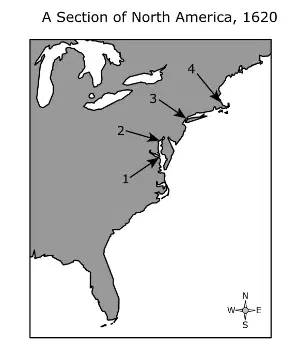
Which number represents the location of Plymouth?
1
2
3
4
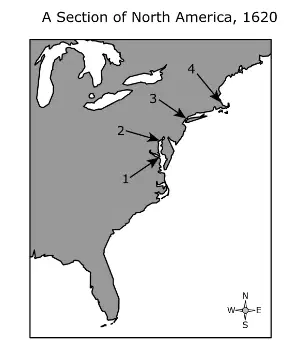
Which number represents the location of Jamestown?
1
2
3
4
Trading that benefits the mother country
Triangular trade
Plantation
Mercantilism
Shipping
To refuse to buy items to show disapproval
Impose
Boycott
Mercantilism
Propaganda
An intellectual movement that focused on the search for practical knowledge and inventions and stressed the power of reason.
Enlightenment
First Great Awakening
Second Great Awakening
Revolution
Religious movement that spread throughout the colonies
Enlightenment
First Great Awakening
Second Great Awakening
Revolution
Guaranteed that Englishmen had certain rights, right to a fair trial, and no cruel and unusual punishment, and supported free speech.
Magna Carta
English Bill of Rights
Fundamental Orders of Connecticut
Mayflower Compact
Unalienable rights are life, liberty, pursuit of happiness (property).
He believed that if a government starts to take away its citizens’ rights, they should alter or abolish and institute a new government
Montesquie
Hooker
Jefferson
Locke
a self-governing state
Sovereignty
Colony
Mother Country
Militia
He believed in separation of powers among three branches of government
He believed civic virtue was the love of one’s country and its laws, and the willingness of the individual to work for the
Montesquieu
Jefferson
Locke
Hooker
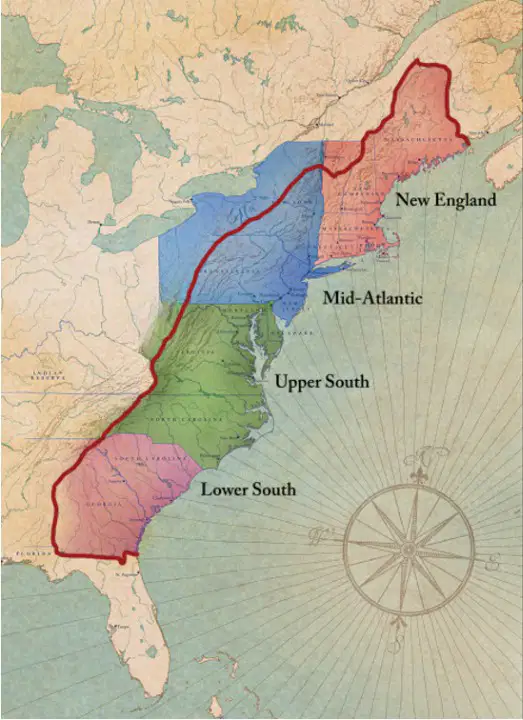
What does the red line represent?
The 13 Colonies
French Occupation Line
Proclamation Line of 1763
Intolerable Line
Caused the British to go in debt
Stamp Act
Mercantilism
French and Indian War
Proclamation Line of 1763
Required the colonists to pay a tax on most printed materials, such as newspapers, pamphlets, marriage licenses, and playing cards.
Townshend Acts
Intolerable Act
Quartering Act
Stamp Act
Slogan of the Sons of Liberty
No taxation without representation
No taxation without consent
Representation is everything
Remember the Ladies
Required colonists to find lodging for British soldiers in addition to providing food, drink and other costs.
Stamp Act
Intolerable Acts
Quartering Act
Tea Act
This was used as propaganda for the colonists after 5 men were killed in Boston
Boston Tea Party
Coercive Act
Boston Massacre
Sons of Liberty
This made King George III and British Parliament angry which led to the Intolerable Acts, also known as the Coercive Acts.
Writing the Declaration of Independence
Boston Tea Party
Tea Act
Boycotting the Stamp Act
Effects of this Act: Colonists formed the First Continental Congress.
Stamp Act
Quartering Act
Tea Act
Intolerable Acts
Was the Tea Act a tax on tea?
Yes; it raised the prices
Yes; the colonists were so mad they threw tea into the harbor
No; it gave the British East Indies company a complete monopoly on the tea trade
No; It made drinking tea illegal
Defended the British soldiers after the Boston Massacre
John Adams
Sam Adams
Ben Franklin
Thomas Paine
Mercy Otis Warren is famous for
Wrote Common Sense
She was a spy for the Patriots in Boston
Wrote plays against the British government
Created "The Bloody Massacre" engraving
Founded the Sons of Liberty. Led the Boston Tea Party
John Adams
Sam Adams
Crispus Attucks
Thomas Paine
What was Common Sense about?
Why the Patriots should make peace with Britian
That the colonists should pay for the French and Indian War
The reasons why the colonists should seek independence from Great Britain
How to beat the British in war
An American who favored American Independence
Loyalist
Vigilante
Patriot
Monarch
Influential woman who wrote letters to her husband encouraging him to "Remember the ladies."
Abigail Adams
Mercy Otis Warren
Martha Washington
Betsy Ross
Reigned over England during the American Revolution
George Washington
Benjamin Franklin
King George III
Thomas Jefferson
Commander of the Continental Army
Thomas Jefferson
Ben Franklin
Marquis de Lafayette
George Washington
First African American to serve in a public office. Was a messenger. African American
James Armisted
Wentworth Cheswell
Patrick Henry
Paul Revere
Father of the Navy. "I have not yet begun to fight."
Thomas Paine
Patrick Henry
John Paul Jones
Marquis de Lafayette
Enslaved person who was a spy prior to the Battle of Yorktown
Wentworth Cheswell
Marquis de Lafeyette
John Paul Jones
James Armistead
A skilled orator and patriot and made the famous speech “Give me liberty, or give me death!”
George Washington
Thomas Jefferson
Thomas Paine
Patrick Henry
Main author of the Declaration of Independence
George Washington
Thomas Jefferson
Thomas Paine
Patrick Henry
French governor and volunteer who became one of Washington’s most valued advisors
Patrick Henry
Thomas Paine
Marquis de Lafayette
Wentworth Cheswell
Patriot writer who wrote “Common Sense” and the “American Crisis”
Thomas Paine
Mercy Otis Warren
John Paul Jones
Thomas Jefferson
This was the first battle of the American Revolution.
Lexington and Concord
Saratoga
Valley Forge
Yorktown
This was the last battle of the American Revolution.
Lexington and Concord
Saratoga
Valley Forge
Yorktown
Rights that cannot be taken away
Unalienable
Tangible
Constitutional
Limited
This was the turning point of the American Revolution.
Lexington and Concord
Saratoga
Valley Forge
Yorktown
This victory got the French to join the American side.
Lexington and Concord
Saratoga
Valley Forge
Yorktown
Officially ended the American Revolution
Declaration of Independece
Treaty of Paris 1783
Proclamation of 1763
First Continental Congress
Washington trained the troops here and read The Crisis during a cold winter.
Lexington and Concord
Saratoga
Valley Forge
Yorktown
Helped convince France to send military aid to colonies to fight the British. During the French and Indian War, he wrote the Albany Plan of Union.
Thomas Jefferson
Ben Franklin
Patrick Henry
George Washington
Tax on imported goods (also known as a tariff)
Repeal
Bill
Compensate
Duty
To cancel or reverse a law
Duty
Repeal
Enact
Act
The principle that requires all U.S. citizens, including government leaders, to obey the law.
Limited Government
Republicanism
Federalism
Separation of Powers
Government powers are divided among the legislative, executive and judicial branches.
Limited Government
Checks and Balances
Federalism
Separation of Powers
Citizens elect representatives
Limited Government
Republicanism
Federalism
Separation of Powers
Each branch of government has some influence over the other branches
Checks and Balances
Republicanism
Federalism
Separation of Powers
The people rule
Checks and Balances
Republicanism
Popular Sovereignty
Individual Rights
Rights guaranteed to all United States citizens under the Bill of Rights
Checks and Balances
Republicanism
Popular Sovereignty
Individual Rights
Which Enlightenment thinker helped develop the idea of separation of powers and checks and balances?
Jefferson
Montesquieu
Locke
Franklin
Which Enlightenment thinker helped develop the principle of individual rights ?
Jefferson
Montesquieu
Locke
Franklin
Which are freedoms guaranteed in the 1st amendment?
Speech
Religion
Press
Petition
Assembly
Which amendment guarantees no unreasonable search and seizure?
1st
4th
5th
7th
What is due process, which is protected under the 5th Amendment?
Freedom of religion
Ability to choose your own lawyer.
Fair treatment of citizens through the judicial system
No unreasonable search and seizure of your belongings
Which amendment is most related to federalism?
7th
8th
9th
10th
Which branch of government makes laws?
Executive
Judicial
Legislative
Which branch of government enforces laws?
Executive
Judicial
Legislative
Which branch of government interprets laws?
Executive
Judicial
Legislative

