
Font size
 Worksheets
S-Cubed Lesson 8 Test
Total questions: 13
Worksheet time: 10mins

What is the name of this symbol above the note?
Stress mark
Accent
Staccato
Fermata

What does this symbol tell us to do?
Hold the note longer
Sing/play the note shorter than notated
Sing/play the note louder than normal
Sing/play the note quieter than normal
How does accenting help us in sight-singing?
Accenting makes the music taste better.
Accenting helps us name the solfege.
Accenting makes us sing in other languages.
Accenting helps us stay together on the same beat.
4. Which rule for accenting will help you sight-sing more successfully?
Gently accent every time you sing beat 1.
Never show the accent in your hand when you use HAND SIGNS!
Always eat a Dum-Dum when singing accents.
Barlines organize beats into measures.
True
False
8. Accents always occur on the last beat.
True
False
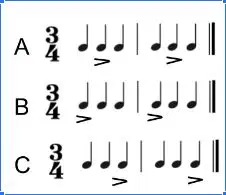
Which example shows the correct use of NATURALLY occurring accents?
A
B
C
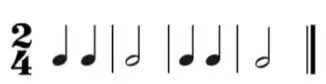
How many MEASURES are in this rhythm?
2
3
4
6
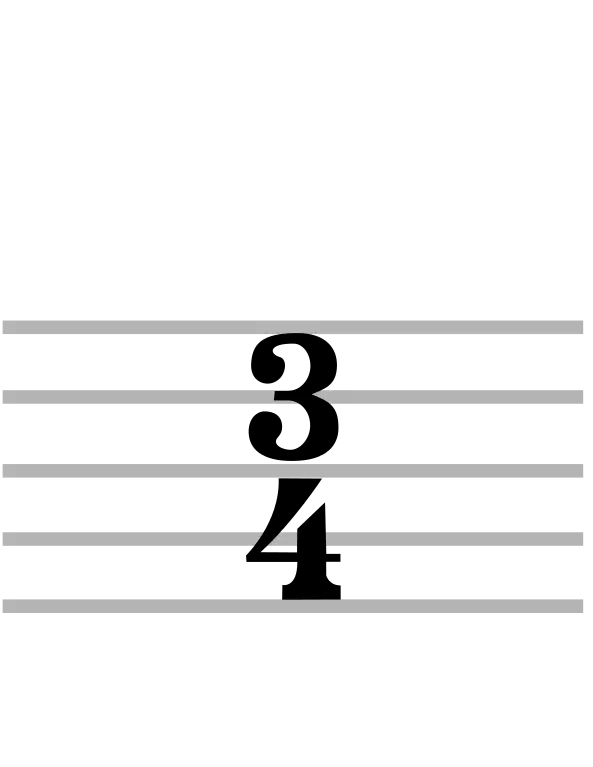
How should we count ourselves in when we see this time signature?



How should we count ourselves in when we see this time signature?


How many beats are in each measure

