
 Worksheets
Unit I: Matter
Total questions: 25
Worksheet time: 18mins
What are chemical properties of matter?
Chemical properties of matter only involve the color of a substance
Chemical properties of matter refer to the physical appearance of a substance
Chemical properties of matter describe how a substance interacts with other substances to form new substances.
Chemical properties of matter are not related to how substances interact with each other
Give an example of a compound.
Oxygen
Carbon
Nitrogen
Water
How are pure substances classified?
Based on size and weight
Based on chemical composition as elements or compounds, and based on physical properties as elements, compounds, or alloys.
Based on taste and smell
Based on color and texture
What is the difference between a homogeneous and heterogeneous mixture?
Homogeneous mixtures are always solid, while heterogeneous mixtures are always liquid.
Homogeneous mixtures are always transparent, while heterogeneous mixtures are always opaque.
Homogeneous mixtures have non-uniform composition, while heterogeneous mixtures have uniform composition.
Homogeneous mixtures have uniform composition, while heterogeneous mixtures have non-uniform composition.
Define chemical properties of matter.
Chemical properties of matter refer to the temperature at which a substance boils.
Chemical properties of matter are related to the weight of a substance.
Chemical properties of matter describe the physical appearance of a substance.
Chemical properties of matter describe how a substance interacts with other substances to form new substances.
Name two types of compounds.
Ionic compounds, Covalent compounds
Molecular compounds
Organic compounds
Metallic compounds
Explain the classification of pure substances.
Pure substances are classified into solids and liquids.
Pure substances are classified into metals and non-metals.
Pure substances are classified into elements and compounds.
Pure substances are classified into organic and inorganic.
Provide an example of a homogeneous mixture.
Sand and water mixture
Sugar water solution
Oil and water mixture
Salt water solution
What are the characteristics of chemical properties of matter?
Chemical properties of matter describe how substances interact with other substances to form new substances.
Chemical properties of matter are constant and do not change.
Chemical properties of matter are related to physical properties only.
Chemical properties of matter do not involve interactions with other substances.
List the properties of an ionic compound.
High melting and boiling points, conduct electricity when molten or in solution, crystalline solid at room temperature
Low melting and boiling points, insulator in all states, liquid at room temperature
Low melting and boiling points, conduct electricity in solid state, amorphous structure
High melting and boiling points, non-crystalline structure, gas at room temperature
How do we differentiate between a pure substance and a mixture?
By listening to the material
By tasting the material
By analyzing the physical properties and composition of the material.
By smelling the material
Describe the particle nature of matter.
Matter is composed of molecules, which are made up of subatomic particles like protons, neutrons, and electrons.
Matter is composed of dark matter particles that are not detectable.
Matter is composed of energy waves that interact with each other.
Matter is composed of atoms, which are made up of subatomic particles like protons, neutrons, and electrons.
What are the properties of a covalent compound?
Good electrical conductivity in pure form
Always solid at room temperature
High melting and boiling points
Properties of a covalent compound include low melting and boiling points, typically gases or liquids at room temperature, and lack of electrical conductivity in pure form.
Differentiate between a compound and a mixture.
A compound is a homogeneous mixture, while a mixture is a heterogeneous mixture.
A compound is a substance with fixed composition, while a mixture is a combination of substances with variable composition.
A compound is a mixture of substances, while a mixture is a single substance.
A compound is always a liquid, while a mixture can be in any state of matter.
Explain the concept of homogeneous and heterogeneous mixtures.
Homogeneous mixtures have non-uniform composition, while heterogeneous mixtures have uniform composition.
Homogeneous mixtures have visible boundaries, while heterogeneous mixtures do not.
Homogeneous mixtures have uniform composition, while heterogeneous mixtures have non-uniform composition.
Homogeneous mixtures are always solid, while heterogeneous mixtures are always liquid.

This diagram represents...
An element
A molecule
A compound
A mixture of elements and compounds


Ionic Bonds
metal with nonmetal
nonmetal with nonmetal
Covalent Bonds
metal with nonmetal
nonmetal with nonmetal
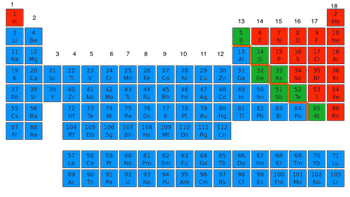
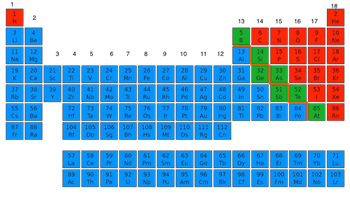

Click the letter of the correct answer.
3. Particles with more energy move ________ than particles with less energy.
a. Slower and closer together
b. Slower and farther apart
c. Faster and farther apart
d. Faster and closer together
Which is TRUE about Mass and Weight?
Mass is constant, weight varies
Mass varies, weight is constant
Mass and weight are both constant
Mass and weight varies.

