
Font size
 Worksheets
Cell Vocabulary Review
Total questions: 15
Worksheet time: 8mins
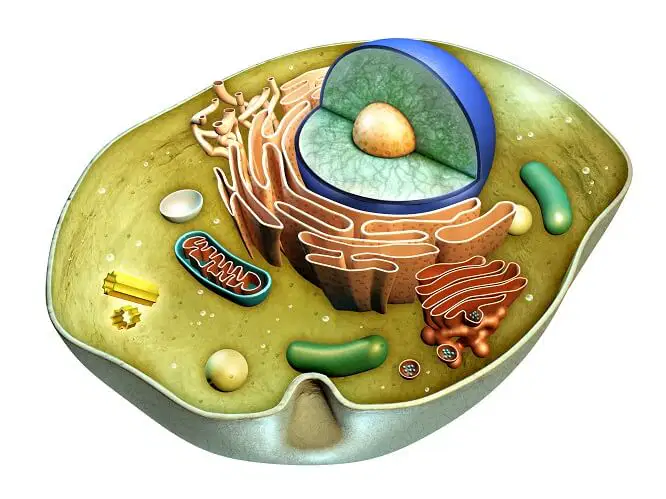
The image below shows a typical animal cell that can be found in multi-cellular organisms. What type of cell must it be?
Prokaryotic cell
Eukaryotic cell
Which level of scientific knowledge uses mathematical formulas to show relationships and make predictions about the world around us?
Hypothesis
Theory
Scientific law

Which organelle in the cell specifically controls what comes in and goes out?
Cell membrane
Cell wall
Chloroplast
Nucleus
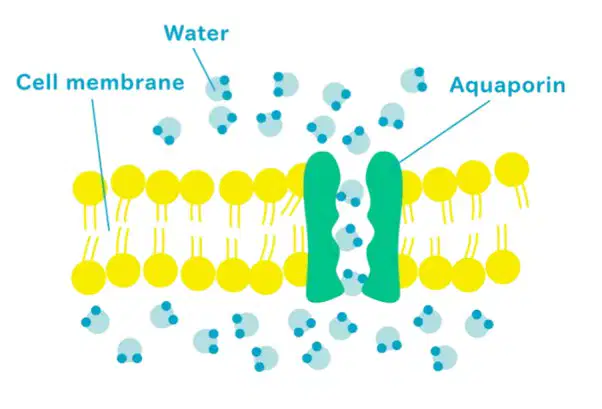
When water naturally moves through the cell membrane, what is that called?
Osmosis
Diffusion
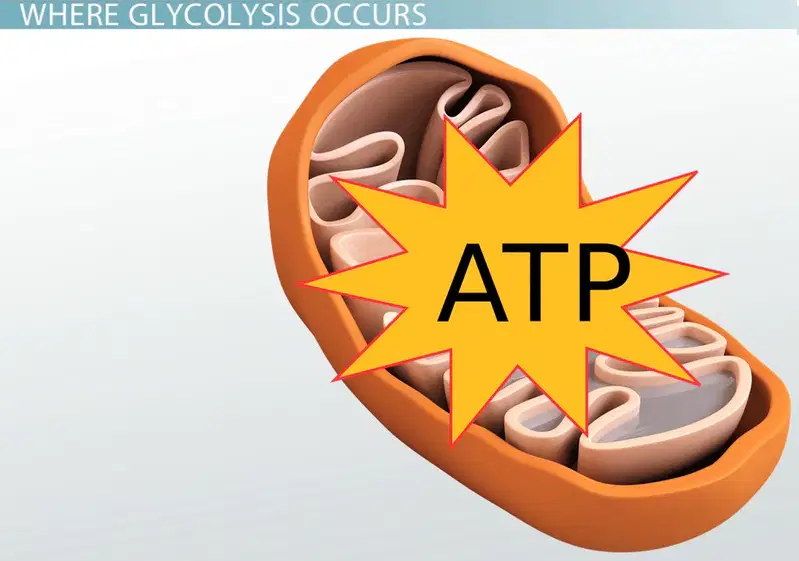
Which organelle is responsible for converting the food we eat into energy usable by the cell?
Cell membrane
Chloroplast
Mitochondria
Nucleus
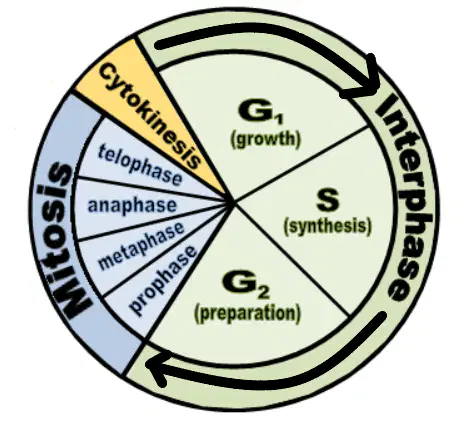
The cell cycle is a constantly repeating pattern that the vast majority of cells in your body are constantly experiencing. Which below is NOT a part of the cell cycle?
Mitosis
Meiosis
Interphase
Cytokinesis
A possible explanation to a scientific question or problem is known as what?
A hypothesis!
A theory!
A scientific law!

DNA is typically packed into a chromosome, and a human cell has 23 pairs of chromosomes within it. Where are chromosomes found in the cell?
Cytoplasm
Nucleus
Endoplasmic reticulum
Mitochondria

This is a picture of a bacteria, which is a single-celled organism. What type of cell is this?
Prokaryotic cell
Eukaryotic cell
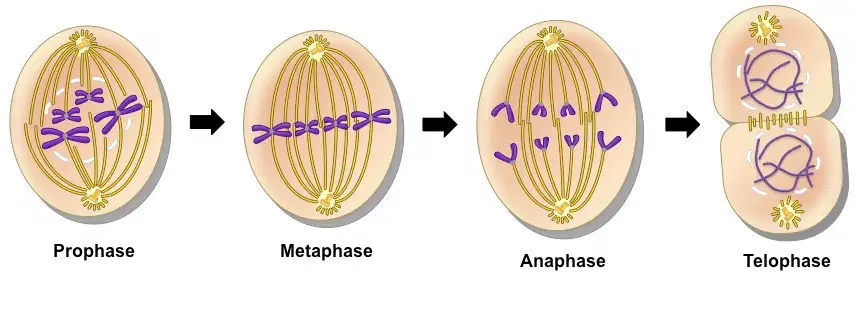
This image breaks down, step by step, the process of a cell making a copy of itself. What is this called?
Mitosis
Meiosis

Gases such as Oxygen and Carbon Dioxide are able to passively move through the cell membrane. What is this passive movement called?
Osmosis
Diffusion

What are the TWO organelles below that are found in plant cells, but NOT animal cells?
Chloroplast
Cell membrane
Endoplasmic reticulum
Mitochondria
Cell wall

The cell theory describes the relationship between cells and living organisms, and consists of three core tenets. Which below is NOT one of those core tenets?
All living things are made up of cells.
All cells come from pre-existing cells.
All organisms are made up of more then one cell.
The cell is the basic unit of live.
When a new organism is formed by combining half the DNA of the father with half of the DNA of the mother, what form of cell division has occurred?
Mitosis
Meiosis
Which level of scientific knowledge is supported by a tremendous amount of evidence, and is trying to describe complex natural processes that can't simply be explained using mathematical means?
A hypothesis!
A theory!
A scientific law!

