
Font size
 Worksheets
Demand Notes Quiz
Total questions: 1
Worksheet time: 14mins
Which of the following is NOT a characteristic of the Market System?
Private property
Limited government
Central planning
Freedom of choice
What does "Competition" in the Market System refer to?
The struggle among producers for consumer money
The cooperation between different market sectors
The regulation of markets by the government
The distribution of wealth among citizens
Which of the following is NOT a characteristic of the market system?
Private property
Limited government
System of markets and prices
Centralized economic planning
What is meant by "freedom of choice" in a market system?
Consumers have no choice but to buy what is available.
Producers can only sell what the government allows.
Consumers and producers have the liberty to make economic decisions.
Choices are made by the government for the benefit of the economy.
How is "competition" an essential part of the market system?
It eliminates the need for government regulation.
It ensures that only one producer can dominate the market.
It encourages producers to improve their products and services.
It guarantees equal profits for all market participants.
What does demand represent in the market?
The supplier (sellers) side of the market.
The consumer (buyers) side of the market.
The regulatory bodies controlling the market.
The external factors influencing the market.
What is the definition of Demand according to the learning material?
The amount of a good or service people are willing and able to buy at a certain price at a certain time.
The amount of a good or service people are willing and able to sell at a certain price over a period of time.
The amount of a good or service people are willing and able to buy at a certain price over a period of time.
The amount of a good or service available at a certain price over a period of time.
What does a demand curve represent?
The relationship between the price of pizza slices and the quantity demanded
The cost of production for pizza slices
The profit made from selling pizza slices
The number of pizza slices available in the market
As the price of pizza slices increases from $0.50 to $2.50, what happens to the quantity demanded?
It increases
It remains constant
It decreases
It is not related to the price
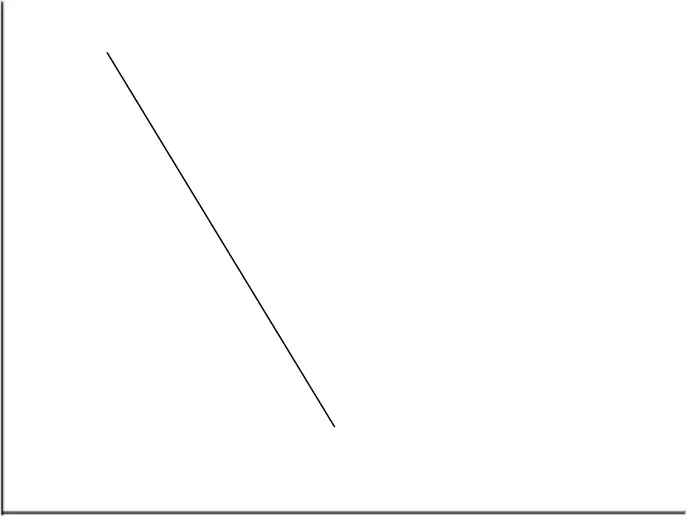
Based on the demand curve graph, which of the following statements is true?
The quantity demanded increases as the price increases
The quantity demanded decreases as the price increases
The price remains constant regardless of the quantity demanded
The quantity demanded remains constant regardless of the price
What does the Law of Demand state about the relationship between price and quantity demanded?
The relationship between price and quantity demanded is direct.
The relationship between price and quantity demanded is inverse.
The relationship between price and quantity demanded is unrelated.
The relationship between price and quantity demanded is constant.
According to the Law of Demand, what happens to the quantity demanded when the price goes up?
The quantity demanded goes up.
The quantity demanded stays the same.
The quantity demanded goes down.
The quantity demanded doubles.
What happens to the quantity demanded when the price goes down, as per the Law of Demand?
The quantity demanded goes down.
The quantity demanded goes up.
The quantity demanded stays the same.
The quantity demanded is halved.
What happens to the demand curve when demand decreases?
A) The curve shifts right.
B) The curve shifts left.
C) The curve becomes steeper.
D) The curve becomes flatter.
What happens to the demand curve when demand increases?
The curve shifts left.
The curve shifts right.
The curve shifts downward.
The curve remains unchanged.
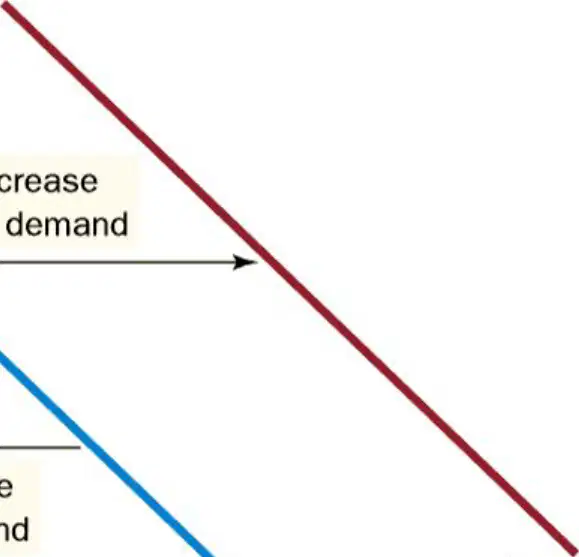
What does a shift to the right of the demand curve indicate?
Decrease in demand
Increase in price
Increase in demand
Decrease in price

In which direction do demand curves typically shift to show a change in demand?
Up and down
Left and right
Diagonally
In a circular motion
What does the acronym BRIDE stand for in economics?
Buyers, Related products, Income of buyers, Desires of consumers, Expectations of price
Business, Resources, Investments, Demand, Economics
Buyers, Resources, Income, Demand, Elasticity
Balance, Revenue, Interest, Debt, Employment
Which factor is not included in the acronym BRIDE for shifting a demand curve?
Government policies
Buyers (number of)
Related products
Income of buyers
What happens to the demand for complementary products when the demand for one increases?
The demand for the complementary product decreases.
The demand for the complementary product increases.
The demand for the complementary product remains unchanged.
The demand for the complementary product is not related.
What is the relationship between substitute products in terms of demand?
If the demand for one product goes up, the demand for the substitute also goes up.
If the demand for one product goes up, the demand for the substitute goes down.
The demand for substitute products is not related.
If the demand for one product goes down, the demand for the substitute also goes down.
What usually happens to demand when incomes rise in a market?
Demand decreases because people can buy less.
Demand stays the same regardless of income changes.
Demand usually rises since people can buy more.
Demand fluctuates unpredictably.
What happens to the demand for normal goods when income increases?
Demand remains the same
Demand goes down
Demand goes up
Demand fluctuates unpredictably
What happens to the demand for inferior goods when income increases?
Demand goes up
Demand remains the same
Demand goes down
Demand fluctuates unpredictably

