
 Worksheets
Persepolis Ch. 1-10 questions
Total questions: 14
Worksheet time: 7mins
How does Marjane Satrapi primarily create meaning in her graphic novel?
Through extensive dialogue and monologues
Through the use of both text and image
Through the use of extended metaphors
Through the use of stanzas and refrains
What type of text is Persepolis?
autobiographical poem
autobiographical play
autobiographical novel
autobiographical graphic novel
Which of the following is the best description of a graphic novel?
multimodal text that combines texts and visual
a text that combines stage directions with dialogue and monologues
A purely visual form of storytelling
An poem that details the tails of an epic hero
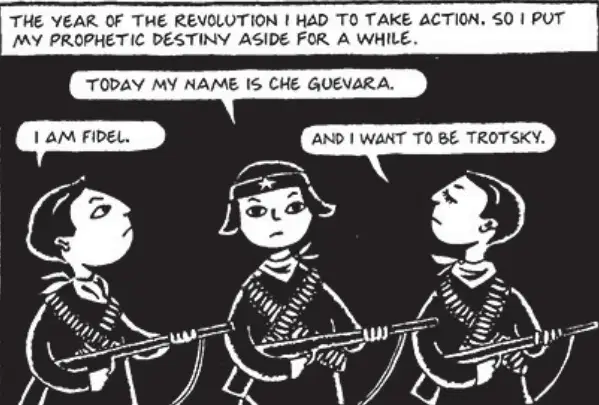
What authorial choice does Marjane Satrapi make by referring to the 3 historical figures in this panel from "The Bicycle"?
Juxtaposition - contrast between who Marji and her friends are on the inside vs the historical figure they are portraying
allusion - referring to revolutionaries from Russia and Cuba to emphasize Marji's desire to play a role in her country's revolution
Hyperbole - exaggerating Marji and her friend's roles as revolutionaries

What is the primary purpose of this panel?
To depict a chronological timeline of significant historical events in Iran.
To contrast the past with the present-day struggles of Iranian society.
To underscore the importance and benefits of tyranical rule throughout Iranian history.
To illustrate Iran's history of oppression from both inside and outside forces
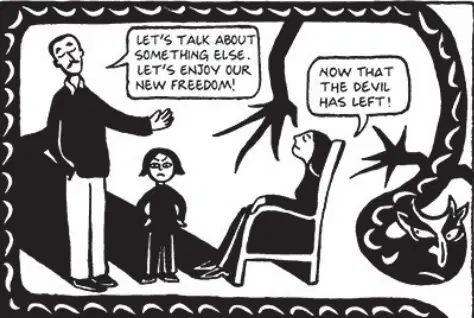
Choose the answer that best explains the significance of this panel
The Shah continues to haunt Iran even after he is overthrown
While the people believe that the Shah is gone, he has not actually been overthrown
With the shah gone, most Iranians think they are free, but evil still surrounds them. This panel foreshadows the evil of the new regime that takes over
The snake actually represents freedom in Iranian culture, and is therefore a symbol of the current freedom Iranians have

Which of the following authorial choices best represents the snake-like creature in the panel?
visual irony
hyperbole
emanata
non-linear storytelling
As a child, how are Marji's views on heroism skewed?
She values the heroes in her family
She romanticizes and glamorizes heroism
She understands the true costs of heroism
She understands that heroism comes with loss and trauma
In "The Letter" we are introduced to Mehri, Marji's maid, who falls in love with Marji's neighbor. What is the chapter's primary purpose?
To highlight the importance of friendship and loyalty during difficult times.
To depict the complexities of romantic relationships in times of political turmoil.
To highlight the limitations imposed on people of lower classes, due to Iran's rigid class structure
To highlight the possibility of inter-class relationships under Iran's class structure
In "The Letter" we are introduced to Mehri, Marji's maid, who falls in love with Marji's neighbor. Marji's parents tell her that the relationship between Merhi and their neighbor can never happen because they come from different classes.
What do we learn about Marji's parents in this chapter
Their actions reflect their beliefs and their desire for systemic change under the Shah's regime
They are slightly hypocritical because they advocate for change under the Shah's regime, yet are complacent with the current class system that benefits them
They encourage Mehri to pursue her feelings despite societal barriers
They view class differences as inconsequential in matters of love.
What happens to Marji's relationship with God after her beloved Uncle Anoosh dies?
Her relationship with God strengthens
Her relationship with God doesn't change
She banishes God from her life
Marji never believed in God to begin with
Marjane Satrapi goes back in forth in time to tell her story. What is the name of this authorial choice?
linear storytelling
non-linear story telling
visual ambiguity
irony
What is the term for the short, interesting stories about real incidents or people, often used by Marji and other characters in the story, to provide insight into the character, theme, situation, etc.?
non-linear storytelling
visual irony
anecdote
allusion
What alarming news do the Satrapis find out when they return from their trip to Europe?
Marji's grandma had died
Iran was now at war with Iraq
Their home had been robbed
They were unable to get back into the country

