
Font size
 Worksheets
I CIA-HistoryofAncientandEarly MedievalIndia-Prehistoryto 1206 C
Total questions: 20
Worksheet time: 11mins
Which of the following is considered an archaeological source?
a) Ancient Manuscripts
b) Literary Works
c) Coins
d) Oral Traditions
Fill in the blanks
Urbanization is a global trend, with more people moving to cities than ever before. Cities offer opportunities for economic advancement, cultural experiences, and a diverse range of services and amenities. The concentration of people in urban areas brings both …………………. and ………………………...
Choose the correct option:
a) Benefits, challenges
b) Services, challenges
c) Opportunities, services
d) None of these
The Indus Valley Civilization is known for which type of urban planning?
a) Radial City Layout
b) Grid Layout
c) Circular Layout
d) Random Layout
Assertion(A): The Vedic Period is considered the earliest
civilization in Indian history of which we have
written records.
Reason(R): The history of the Vedic period is based mainly on the
Vedic texts such as the Vedas, Upanishads, and Epics.
a) Both A and R are true, and R is the correct explanation of A.
b) Both A and R are true, but R is not the correct explanation of A.
c) A is true, but R is false.
d) A is false, but R is true.
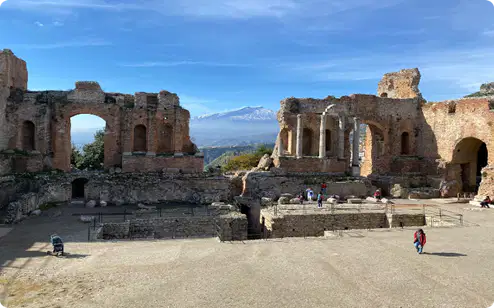
Identify the picture. Select the appropriate response from the following list:
a) Archaeological Site
b) Holy Place
c) Memorial Mahal
d) None of these
Choose the correct answer from the following:
The Harappan civilization was one of the earliest examples of ......................... in the world,
with well-planned cities and advanced infrastructure.
a) Ruralism
b) Urbanism
c) Centralism
d) None of these
Match the following;
(i) Adichanallur - Madurai
(ii) Keeladi - Tirunelveli district
(iii) Kondagai - Thanjavur district
(iv) Sivagalai - Salem districtstrict
a) ii, i, iv, iii
b) ii, i, iii, iv
c) iii, i, iv, ii
d) ii,iii, iv, i
Fill in the blanks
.................................. were made of various materials, including steatite, terracotta,
and copper, and often featured intricate designs.
a) Seals
b) Script
c) Cions
d) None of these
Which of the following statements best describes a republic?
(i) Supreme power is held by a monarch and inherited by lineage.
(ii) Supreme power is held by the people and their elected representatives, with an elected head of state.
a) Only i
b) Only ii
c) Both i and ii
d) None of these
True or False ;
As agricultural productivity increased, populations grew, leading to the emergence of larger
urban centers and powerful kingdoms.
(a)
The term "Mahajanapada" refers to:
a) Small villages
b) Large urban settlements
c) Large kingdoms
d) A type of monarchy
Which of the following Aryan texts is considered the oldest and forms the foundation of Vedic knowledge?
a) Rig Veda
b) Sama Veda
c) Yajur Veda
d) Atharva Veda
Match the following
1. Palaeolithic - New stone
2.Mesolithic - Middle stone
3.Neolithi - Old stone
a) ii,i,iii
b) i,ii,iii
c) iii,ii,i
d) iii,i,ii
True or False
The Harappan civilization, also known as the Indus Valley Civilization, was a Bronze Age civilization that flourished in the Indus River Valley from the 3300 BCE to 1300 BCE.
(a)
Choose the correct answer
Adichanallur is an important archaeological site located in which Indian state?
a) Kerala
b) Tamil Nadu
c) Karnataka
d) Andhra Pradesh
Which type of ancient objects have NOT been found at Adichanallur?
a) Burial urns
b) Pottery
c) Bronze implements
d) Stone sculptures
Who meditated under the Bodhi Tree and attained enlightenment?
a) Mahavira
b) Ashoka
c) Siddhartha Gautama
d) Adi Shankara
Bodh Gaya is located in which present-day Indian state?
a) Uttar Pradesh
b) Bihar
c) Madhya Pradesh
d) West Bengal
Who was the founder of the Mauryan Empire?
a) Ashoka
b) Bindusara
c) Chandragupta Maurya
d) Kanishka
What was the key objective of Ashoka's policy of Dhamma?
a) Expansion of territory
b) Promotion of social welfare and harmony
c)Militarization
d) Trade enhancement

