
Font size
 Worksheets
3rd Quarter Revew Exams SY 2023-2024
Total questions: 50
Worksheet time: 29mins

He is also known as the Great or the Sun King of France from 1643 until his death in 1715. His verified reign of 72 years and 110 days is the longest of any sovereign.

He later became Lord Protector of the Commonwealth, effectively ruling as a dictator until his death in 1658.

It is a grand royal residence located in Versailles, a suburb of Paris, France. It was originally a hunting lodge built by Louis XIII in the early 17th century,

A system of government in which a ruler holds absolute power and authority, typically without any checks or balances from other governmental institutions..
Absolutism

It enacted by Parliament following the Glorious Revolution. It affirmed certain rights of English citizens and limited the powers of the monarchy, establishing the principle of parliamentary supremacy.

It is a system of government where rules are set by a constitution to organize how power is divided, ensuring rights and freedoms are protected.
Constitutionalism
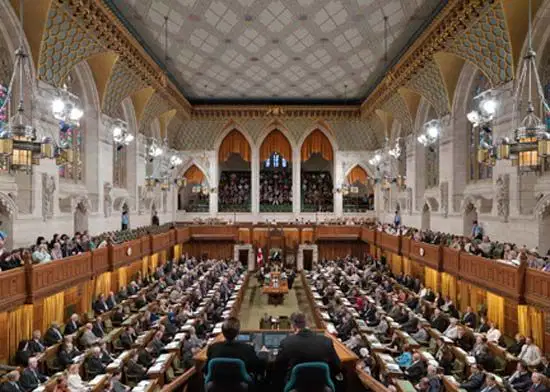
A legislative body in England responsible for making laws, representing citizens, and overseeing the government in constitutional monarchies.
He argued that individuals possess certain natural rights, including the rights to life, liberty, and property. He believed that these rights were inherent to human beings and could not be justly taken away by any government.
He proposed that proposed the concept of the "tabula rasa," or blank slate, suggesting that individuals are born without innate ideas or knowledge and that their understanding of the world is shaped by their experiences and interactions.
Jean Jacques Rousseau
Votaire
Thomas Hobbes
He was a staunch defender of freedom of thought, speech, and religion. He famously wrote, "I disapprove of what you say, but I will defend to the death your right to say it,"
Jean Jacques Rousseau
Votaire
Thomas Hobbes
He was critical of religious intolerance and the abuses of power by organized religion.
Jean Jacques Rousseau
Votaire
Thomas Hobbes
He introduced the concept of the general will, which represents the collective desires and interests of the members of a society.
He emphasized the importance of education in shaping individuals and society. He advocated for a naturalistic approach to education that focused on nurturing children's innate abilities and fostering their moral and intellectual development.
Jean Jacques Rousseau
John Locke
He famously described the state of nature as a "war of all against all," where life is solitary, poor, nasty, brutish, and short. In this state, individuals are in constant conflict and competition for resources, leading to a state of perpetual insecurity and fear.
He believed the primary role of government is to ensure the security and safety of its citizens by maintaining order and protecting them from external threats and internal conflicts. He believed that individuals should surrender their freedoms and rights to the sovereign authority in exchange for the benefits of social stability and security.
Thomas Hobbe
s
Jean Jacques Rousseau
John Locke
Adam Smith
He advocated for a laissez-faire approach to economic policy, arguing that governments should intervene minimally in the economy and allow markets to operate freely without excessive regulation or interference.
Joseph Smith
Sam Smith
Adam Smith
Baron De Montesqieu
He advocated for a laissez-faire approach to economic policy, arguing that governments should intervene minimally in the economy and allow markets to operate freely without excessive regulation or interference.
Adam Smith
Baron de La Brède et de Montesquieu
Thomas Hobbes
John Locke
It was an intellectual and philosophical movement that occurred in Europe, especially Western Europe, in the 17th and 18th centuries, with global influences and effect
(a)
A period of drastic change in scientific thought that took place during the 16th and 17th centuries. It replaced the Greek view of nature that had dominated science for almost 2,000 years.
(a)
Who is credited with formulating the heliocentric model of the solar system during the Scientific Revolution?
Isaac Newton
Galileo Galilei
Johannes Kepler
Nicolaus Copernicus
Which invention played a crucial role in the dissemination of scientific knowledge during the Scientific Revolution?
Which scientist is known for his laws of motion and universal gravitation?
The Scientific Revolution is often associated with the challenging of the prevailing __________ model of the universe.
A systematic approach to inquiry that involves observation, hypothesis formation, experimentation, and analysis.
(a)
Which scientist is credited with the discovery of the laws of planetary motion?
Galileo Galilei
Johannes Kepler
Nicolaus Copernicus
Isaac Newton
It is a concept that refers to the idea that the universe operates according to predictable laws and principles, much like a well-oiled machine.
(a)
He edited and contributed to the Encyclopédie
He is known for formulating the theory of communism and critiquing capitalism.
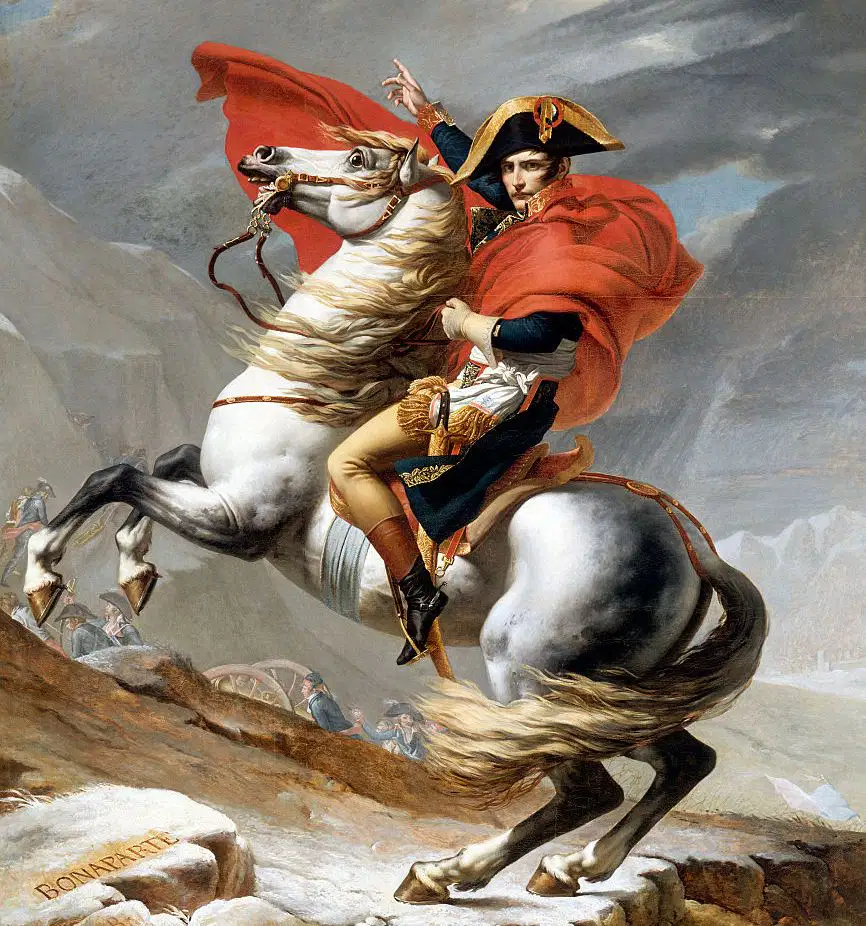
He was the first Emperor of France, reigning from 1804 to 1814.
Napoleon Bonaparte
Louis XVI
Louis XV
Louis XIV

He was the first President of the United States, serving from 1789 to 1797.
Thomas Jefferson
George Washington
Abraham Lincoln
John Adams
A system of government where power is in the hands of a single ruler who claims divine right.
Absolutism
It is the revolution that played a significant role in the development of
constitutionalism and end of Absolutism in England.
People who promoted reason, liberty, and social and political reforms.
Philosophes
A tool used by Enlightenment thinkers to refine and improve existing traditions.
A period that marked new scientific discoveries that sparked debates and conflicts with established religious doctrines, challenging long-held beliefs.
Enlightenment ideas of (a) and social contract theory inspired American colonists to challenge the British.
The ___________ __________ happened because of factors, including economic grievances, constitutional disputes and growing sense of American identity.
(a)
The American Revolution emerged from a combination of factors, including economic grievances, constitutional disputes and growing sense of American identity.
TRUE
FALSE
Economic concerns, such as high taxation and trade restrictions, fueled resentment and motivated colonists to seek independence.
TRUE
FALSE
Colonial leaders provided military leadership and political guidance for the cause of American independence.
TRUE
FALSE
France did provided crucial military and financial support to the American colonies helping them in their fight for independence.
TRUE
FALSE
Napoleon helped spread the ideas of the revolution through military conquest and occupation of other countries.
TRUE
FALSE
It introduced a standardized legal code that influenced many European
countries.
(a)
It was the maxim of the French revolution, that was represented in the tri-color flag (choose 3) sparked revolutions in other countries to overthrow monarchies.
Life
Liberty
Equality
Fraternity
Which event helped propel Napoleon to prominence?
Battle of Leipzig
Battle of Waterloo
French Revolution
American Revolution
The Battle that ended the Napoleonic Wars and Napoleon's rule.
Battle of Trafalgar
Battle of the Pyramids
Battle of Waterloo
Battle of Leipzig
It provided a reliable energy source for powering machinery and
steam engines in factories and transportation systems.
Water
Coal
Wind
Solar
Which of the following are reasons why Great Britain became an industrial superpower? (Choose 2)
Harnessed Technological Power
Industrialization
Agricultural Revolution
Increase in trade restrictions
Diderot agrees with Locke that the government’s primary goal should be to protect the rights and property of the people.
True
False
Which Enlightenment ideas inspired the American Declaration of Independence? Choose 3
Pursuit of Liberty
Purpose of Government
Protection of Natural Rights
Creation of a limited monarchy

