
 Worksheets
Chapter 10 A&P
Total questions: 37
Worksheet time: 19mins
muscle terminology is based on
location of muscle
amount of fibers on the muscle
shape of the muscle
direction of muscle
Flexor, extensor, adductor are all based on the muscle's
direction of muscle fibers
number of origins
location of attachments
action
Deltoid and trapezius are examples of
relative size of the muscle
number of origins
location of the muscle
shape of the muscle
Long axis of fascicles run parallel to long axis of the muscle.
Fusiform
Parallel
Convergent
Circular
fascicles arranged in concentric rings
parallel
bipennate
circular
multipennate
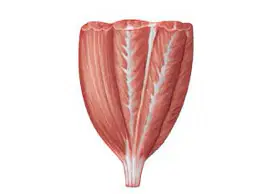
what type of muscle is this?
circular
multipennate
bipennate
parallel
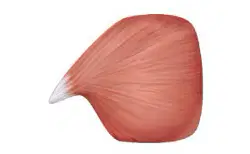
what type of muscle is this?
convergent
unipennate
fusiform
bipennate
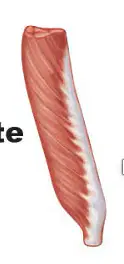
What type of muscle is this?
parallel
circular
convergent
unipennate
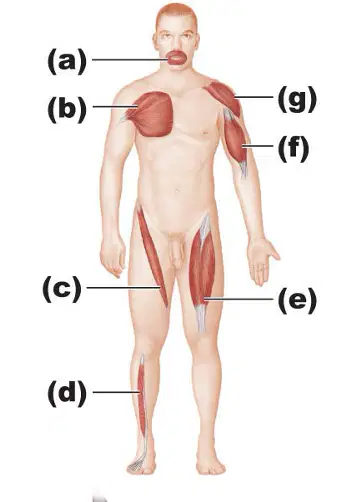
What muscle is C?
sartorius
rectus femoris
orbicularis oris
biceps brachii
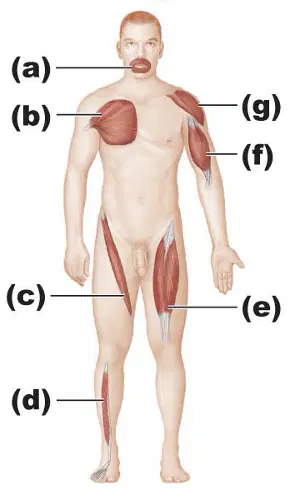
What muscle is F?
biceps brachii
rectus femoris
deltoid
pectoralis major
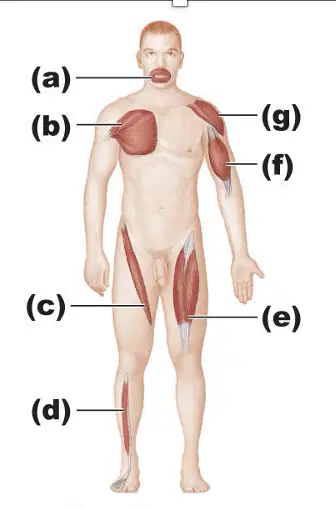
What muscle is E?
fusiform
multipennate
bipennate
convergent
A lever or _______ is a rigid bar on a fixed point.
effort
fulcrum
load
Mechanical advantage is caused by a _______ lever
power
speed
Mechanical disadvantage is caused by a _______ lever
power
speed
A ______ lever moves small distances with long stroke and produces a large force
power
speed
Fuclrum close to effort causes a mechanical __________
advantage
disadvantage
Fuclrum away from effort causes a mechanical __________
disadvantage
advantage
How many types of levers?
2
3
4
5
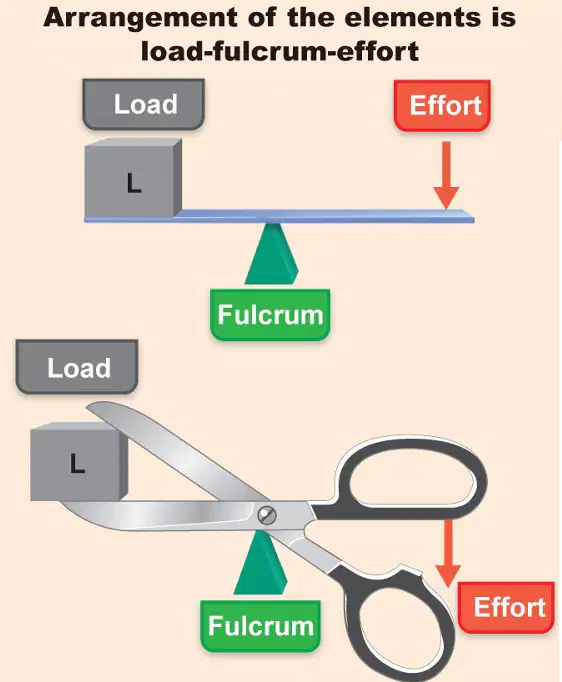
What type of lever is this?
third class lever
second class lever
first class lever
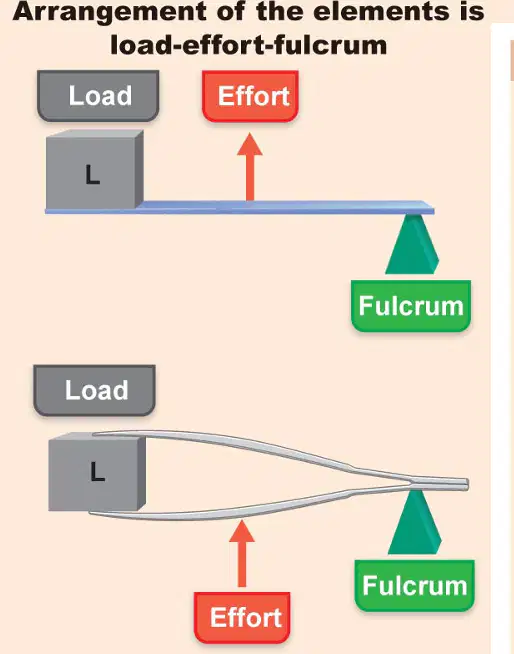
What type of lever is this?
third class lever
second class lever
first class lever?
What type of lever is this?
third class lever
second class lever
first class lever
first class lever
load-fulcrum-effort
effort-load-fulcrum
load-effort-fulcrum
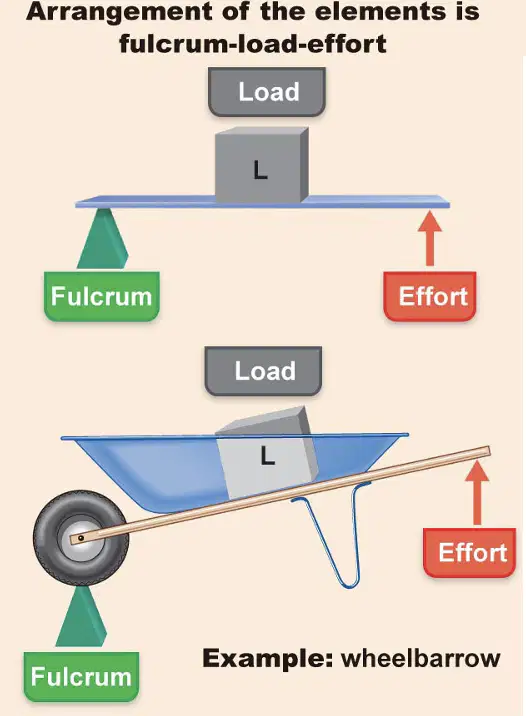
fulcrum-load-effort
third class lever
load-fulcrum-effort
effort-load-fulcrum
load-effort-fulcrum
fulcrum-load-effort
second class lever
load-fulcrum-effort
effort-load-fulcrum
load-effort-fulcrum
fulcrum-load-effort
Flexing the forearm by the biceps brachii muscle exemplifies...
first class lever
second class lever
third class lever
fourth class lever
The ________ system raises your head off your chest.
third class lever
second class lever
first class lever
This lever is found when you stand on tip-toe.
third class lever
second class lever
first class lever
The atlanto-occipital joint in a first class lever serves as the...
effort
fulcrum
load
provides force for movement
synergists
antagonists
prime movers
agonists
oppose agonists and reverse movement
prime movers
fixators
synergists
antagonists
assist agonists by recruitment or by decreasing undesirable movement
synergists
antagonists
prime movers
fixators
immobilize a bone, creating a fulcrum
antagonists
fixators
prime movers
agonists
Muscles only contract and never push
True
False
Three types of muscle are
smooth
nervous
cardiac
skeletal
Origin
immobile portion of muscle
moveable portion of muscle
the belly of the muscle
body
immobile portion of muscle
moveable portion of muscle
the belly of the muscle
insertion
immobile portion of muscle
moveable portion of muscle
the belly of the muscle

