
NEW
Font size
 Worksheets
Animal Adaptations and Habitat Changes
Total questions: 27
Worksheet time: 32mins
How do the webbed feet of the alligator help it survive in its habitat?
They help the alligator cool off in hot weather.
They allow the alligator to grab food quickly.
They help the alligator swim fast to catch its food.
They make it easier for the alligator to climb trees.
The water moccasin is a venomous snake found in the southern part of Georgia. Several other
nonvenomous water snakes are often mistaken for being a water moccasin. What benefit would
a nonvenomous snake have by looking like a venomous snake?
Other animals will leave them alone.
It helps them blend in better.
They can get food easier.
They can move faster.
An adaptation helps an animal survive in its habitat. Which adaptation best allows an alligator to catch small mammals?
Its long teeth catch the animals quicker and easier.
Its color blends in with the murky water so small mammals will not see it coming.
Its tail because it is strong and powerful.
Its long snout because it can reach them easier.
Many animals have adaptations that help them survive the colder winter temperatures in Georgia. Would it be better if turtles migrate or hibernate? Explain your thinking.
It would be easier for turtles to hibernate so they do not have to travel very far.
It would be easier for turtles to hibernate so they can still eat and survive outside.
It would be easier for turtles to migrate so they can still eat and survive outside.
It would be easier for turtles to migrate so they do not have to travel very far.
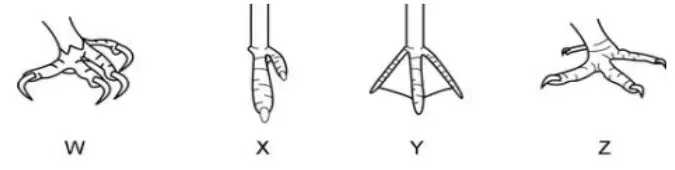
Which of the following feet most likely belonged to an animal that lived on land and in water?
W
X
Y
Z
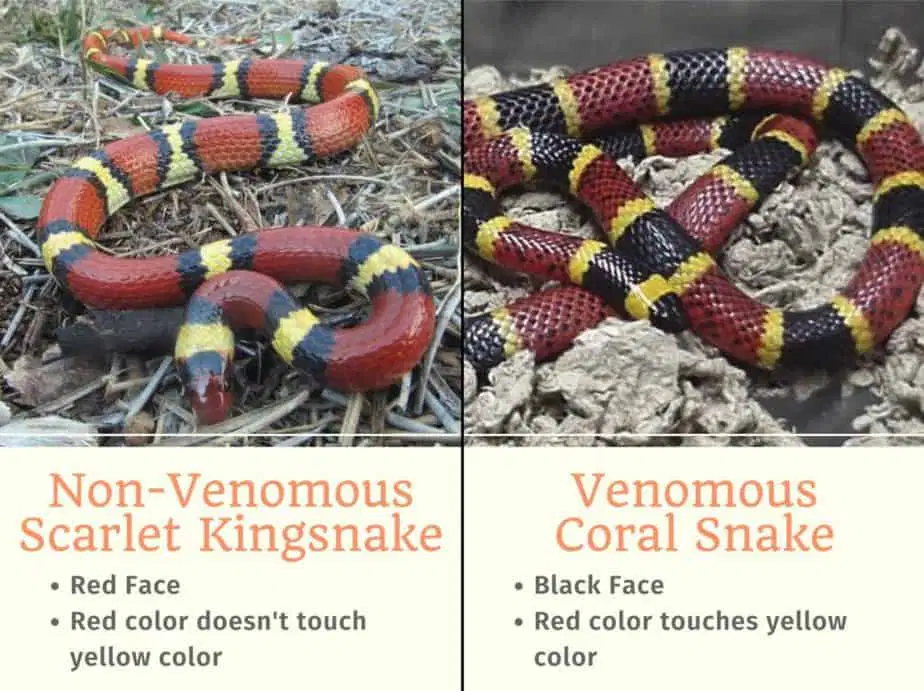
The King Snake looks like the venomous Coral Snake so that other animals will leave it alone. Which animal adaptation is this?
mimicry
hibernation
migration
camouflage
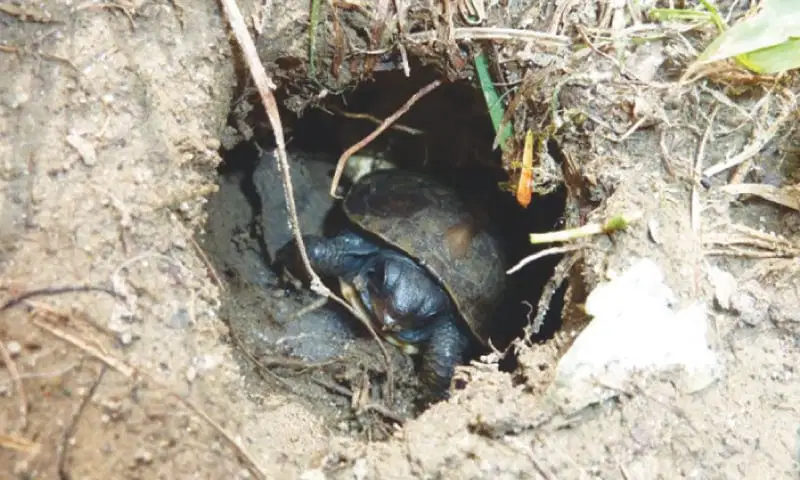
Third grade students have been studying animals in Georgia. Each student has to choose an animal and create a presentation on that animal. One student chose the gopher tortoise, a reptile that requires a lot of sunlight and eats plants to survive.
Which of the following explanations BEST describes how the tortoise has adapted to living in the Coastal Plains of Georgia?
The animal adapted to the local predators by staying safe by digging burrows in sand that are pitch black so predators cannot see them.
The animal adapted to the environment by moving to an area that is covered with
grasslands.
The animal has adapted to the local predators by using its strong legs to burrow holes in sand to stay safe while still receiving a lot of sunlight.
The animal adapted to the environment by living in an area that is always sunny.
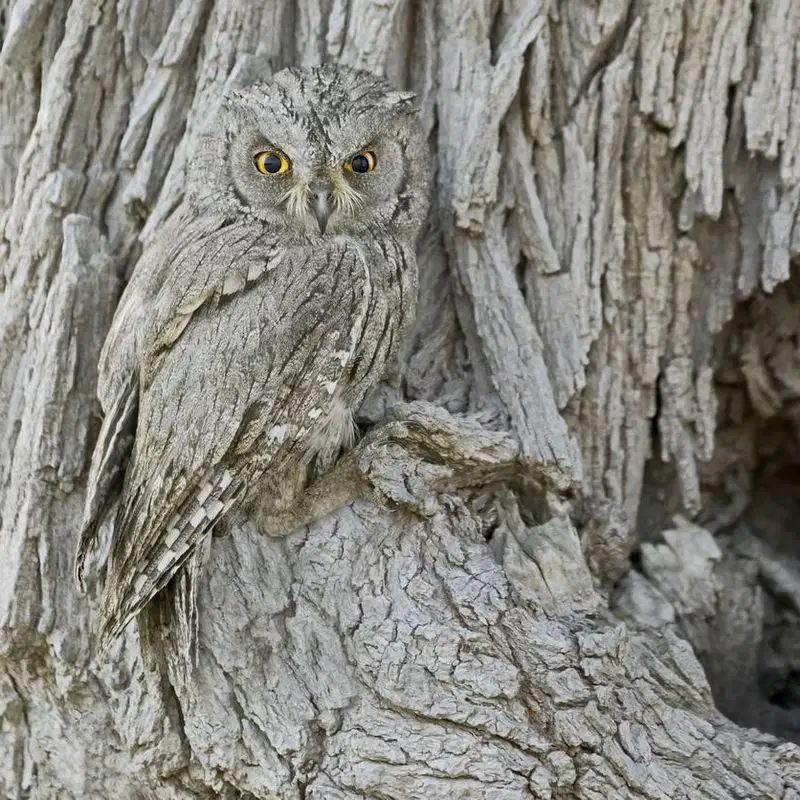
This owl blends in with the tree trunk so it can sneak up on its prey. Which animal adaptation is this?
mimicry
hibernation
migration
camouflage
A teacher ordered some pitcher plants for the school garden that was located in the Piedmont area of the state of Georgia. The class planted them in August but in October the pitcher plants began to die. What is the best explanation for this?
The pitcher plants were too hot in the Piedmont.
The climate in the Piedmont was not wet and warm enough.
The climate in the Piedmont was not dry and cold enough.
The pitcher plants did not get enough sunlight in the Piedmont.
A student went up to the Coastal Plains and collected seaweed from the ocean waters to put in her pond at home in the Piedmont region. The seaweed did not survive in the new pond. What is the best explanation for this?
The seaweed needs sandy soil at the bottom of the pond.
The seaweed can only survive in saltwater.
The seaweed did not get enough sun.
The seaweed needs a hot climate.
A student caught a small alligator while on vacation in South Georgia. They would like to take it home to release in Lake Lanier near the Georgia Mountains. Would this be helpful or harmful for the alligator and why?
Harmful because the alligator could not survive during the cold winters in North Georgia.
Helpful because the alligator can use the muddy area in the mountains for nests.
Harmful because the alligator would eat everything and put animals in danger.
Helpful because the alligator could survive anywhere and eat some of the problem pests like rats.
Maple and pine trees grow very well in the North Georgia Mountains due to all of the rain the mountains receive. If you planted a palm tree in the mountains, would the tree survive?
Yes, because it will receive a lot of sunlight.
Yes, because it will receive a lot of rain.
No, because it needs a warmer climate.
No, because there is too much rain.
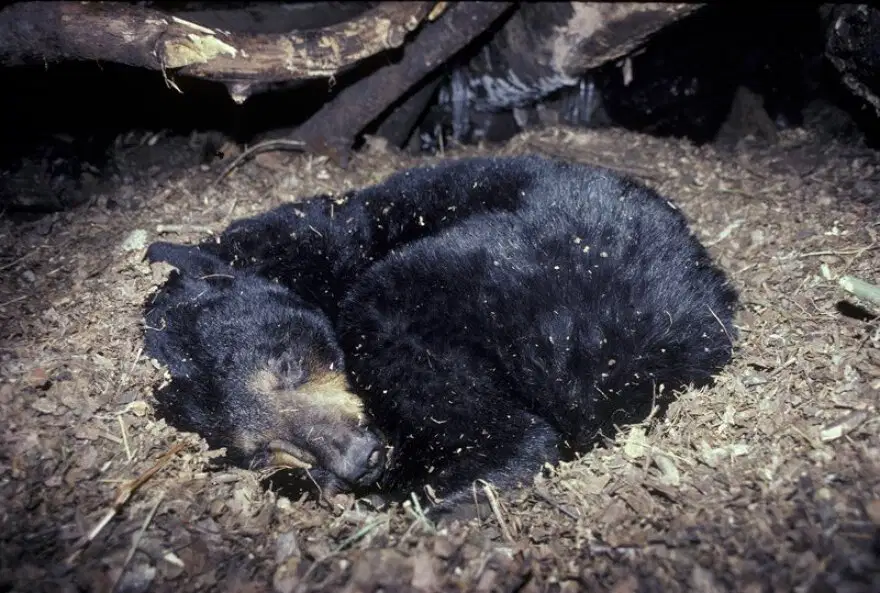
The black bear sleeps through the winter when food is scarce. Which animal adaptation is this?
mimicry
hibernation
migration
camouflage
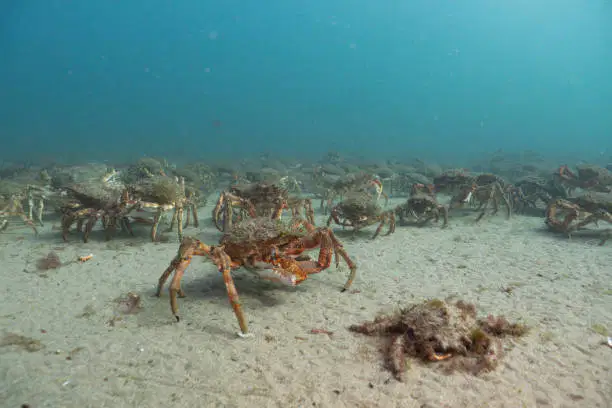
Crabs have external features and adaptations that help them survive best in an ocean habitat. What would happen to the crab in this picture if it were placed in a mountain habitat?
The crab would not likely survive because crabs live in the water and cannot live without water.
The crab would survive because crabs do not have specific needs in order to survive.
The crab would survive because there is water near mountain ranges.
The crab would not likely survive because crabs need humidity and warm temperatures to survive.
Which group of living things would be negatively impacted by flooding?
Fish that live in freshwater.
Flying insects that eat leaves.
Birds that nest on the ground.
Plants that float on top of the lakes.
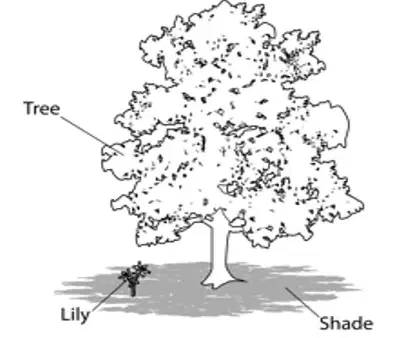
Lily plants grow best in the shade of large trees. What change would have a harmful effect on the lily plant?
The clouds blocked the Sun for a few days.
The trees were all cut down.
The trees grew more leaves.
There was more rainfall.
A farmer bought some land that was full of deer. He fenced the land and brought in some cattle. What might happen to the deer in the habitat?
Nothing. They will share the grass with the cattle and live in the fenced area.
The deer will starve or move because there is not enough grass for both the cattle and deer.
The deer will migrate to another place because they don’t like cattle.
The number of deer will grow because the food is plentiful.

Monarch Butterflies migrate from Mexico to the United States every spring. When the weather gets colder they move back to Mexico to hibernate in the trees. The butterflies need milkweed plants for their food and shelter. If an area of milkweed was removed to make room for a new neighborhood what might happen to the butterflies?
The butterflies will stop and not migrate north or south.
The butterflies will have to adjust their migration path to survive.
The butterflies must find another food source.
The butterflies will stay in Mexico all year.
In the Coastal region of Georgia, there has been an increase in the number of new technology on boats to find fish. Which of the following would BEST describe an outcome of the new technologies?
Nothing. There will be just as many fish.
The population of fish will decrease.
The fish will move to another area of the ocean.
There will be an increase in the number of fish.

A student found a brown thrasher and relocated it to the North Georgia Mountains. Would this help the organism to survive?
Yes; there are lots of areas with low growth in a mountainous area.
Yes; these birds live in thick wooded areas such as mountains.
No; the thrasher would thrive best near the Coast Plains.
No; the thrasher would thrive best in the Piedmont region.
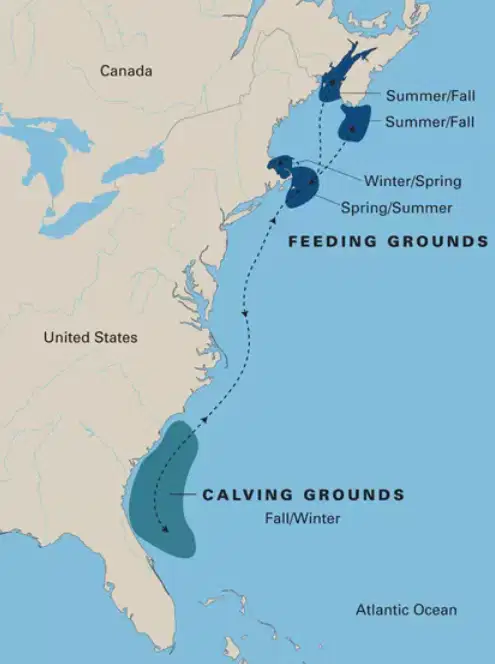
The Right Whale swims south every year to have babies. Then they swim back up north in the spring. Which animal adaptation is this?
mimicry
hibernation
migration
camouflage
White-tailed deer in Georgia are hunted by bobcats, bears, coyotes, and humans. What feature do the deer have that best keep them hidden from predators?
large ears
split hooves
brown fur
white tail
Winter weather causes a significant decrease in the food supply of most animals. Some mammals are able to survive on considerably less food during the winter. What adaptation have these animals developed?
the ability to grow a thick coat
an increased body temperature during the winter
the ability to hibernate
teeth that fall out during the winter
Birds like hawks and eagles have sharp, curved talons. What does this characteristic most likely show about these birds?
They use their talons to help them swim.
They use their talons to catch their prey.
They use their talons to gather seeds.
They use their talons to transport their nests.
Plants compete for many different resources, including sunlight and water. Which of the following adaptations of a plant is most likely to help the plant successfully compete for water?
a tall stem or trunk
colorful flowers
a broad and deep root system
the ability to produce fruit with seeds
Why is it important to protect habitats from being manipulated or changed?
To increase the number of predators.
To ensure a balanced ecosystem.
To make the habitat look prettier.
So organisms can have fun.
What could be a consequence of habitat destruction on a species?
Decreased competition for resources.
Improved body features of the species.
Increased population of the species.
Endangerment or extinction of the species.

