
Font size
 Worksheets
CCU7 post leChat. Team Review
Total questions: 38
Worksheet time: 2hrs 55mins
2SO2(g)+O2(g) ⇌ 2SO3(g) + Heat
Increasing the temperature will...
shift equilibrium right
shift equilibrium left
increase pressure
have no change
Which of the following is NOT true at equilibrium?
The concentrations of reactants and products do not change.
The forward and reverse reactions proceed at the same rate.
The concentration of the reactants is equal to the concentration of the products.
The forward and reverse reactions continue to occur.
ΔHrxn= -453 kJ/mol
If the [B] is decreased then the reaction is will shift to the _______.
2SO3(g) ⇋ 2SO2(g) + O2(g)

N2 (g) + 3 H2 (g) <−> 2 NH3 (g)
If the pressure in the system is decreased, which substance will increase in concentration?
CO(g) + H2O(g) ⇌ CO2(g) + H2(g)
This is the expression for the equilibrium constant for the reaction shown above.


Equilibrium reaction in which the reactants and products are present in more than one physical state is called what?
common ion
homogeneous equilibrium
heterogeneous equilibrium)
Le Châtelier’s principle
chemical equilibrium
Which Lewis Dot Model drawing correctly shows an O2 molecule?


How many TOTAL VALENCE ELECTRONS are in the diagram for this molecule?
(a)
What will the central atom be in a nitrate (NO3-1)
Nitrogen
Oxygen
What will the central atom be for the molecule CH2O?
Carbon
Oxygen
Hydrogen


tin (II) fluoride
SnF2
Sn2F
FeF2
Fe2F
What is the formula for calcium carbonate?
CaCO
CaCO2
CaCO3
Ca3CO3
dichloride pentoxide
Cl2O5
ClO5
Cl5O2
Cl2O6

Use the following reaction to answer the following questions.
Reaction: N2(g) + 3H2(g) ⇌ 2NH3(g)
Which way will the equilibrium shift when the concentration of NH3 is increased?
The equilibrium shifts to the left.
The equilibrium shifts to the right.
The equilibrium does not change.
The equilibrium constant changes.
Decreasing volume of container will
In this equation,
CuCl2+ NaOH → Cu(OH)2 + NaCl
Identify the insoluble product?
copper(II) hydroxide
sodium chloride
sodium hydroxide
copper(II) chloride
Aluminum Phosphate
soluble
insoluble
Silver Nitrate
soluble
insoluble
1s2 2s2 2p6 3s2
18 electrons
What happens to the rate of diffusion if the temperature of a gas increases?
The rate of diffusion decreases.
The rate of diffusion remains the same.
The rate of diffusion increases.
The rate of diffusion becomes zero.
According to Graham's Law, if Gas A has a molar mass of 4 g/mol and Gas B has a molar mass of 16 g/mol, which gas will effuse/diffuse faster?
Gas A
Gas B
Both gases will effuse at the same rate.
It depends on the temperature.
Which of the following salts is the most soluble?
AgCl, Ksp = 1.8x10⁻¹⁰
AgBr, Ksp = 5.3x10⁻¹³
AgI, Ksp = 8.3x10⁻¹⁷
CuBr, Ksp = 5.3x10⁻⁹
Sort the compounds
Sodium Chloride
Sugar
Magnesium Nitrate
Methane
Hydrochloric acid
Reorder the following
Smallest mass to largest mass
1 atom of chlorine
1 molecule of chlorine
1 gram of chlorine
1 mole of chlorine
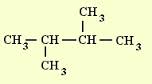

Name the following alkane?
3-ethyl octane
2-ethyl hexane
3-ethyl heptane
5-ethyl heptane
The magnitude of Kw indicates that ______________.
water autoionizes very slowly
water autoionizes very quickly
water autoionizes only to a very small extent
the autoionization of water is exothermic

The major theory of reaction rate is called
Collision theory
Crash theory
Newton's laws
Thermodynamics

