
 Worksheets
Ancient Greece
Total questions: 22
Worksheet time: 25mins
What does it mean if a religion is polytheistic?
It means they believe in one god.
It means they believe in multiple gods.
It means they believe in no gods.
Athens was ruled by a form of democracy where all citizens could vote on items related to the city-state. This was called a (a) democracy.
What is the name of the sea that connected the Greek Islands with mainland Greece?
Adriatic Sea
Aegean Sea
Atlantic Ocean
Ionian Sea
Which of the following best describe a peninsula.
Land surrounded by water on two sides.
Land surrounded by water on all sides.
Land with an elevation of 3,000 feet above sea level.
Land surrounded by water on 3 sides.
Which of the following best defines the term mythology?
The study of ancient civilizations
A collection of fictional stories explaining natural phenomena
The science of legends and folklore
The analysis of religious rituals and practices
A (a) god or goddess was believed to have protected and overseen a specific city-state in Ancient Greek times.
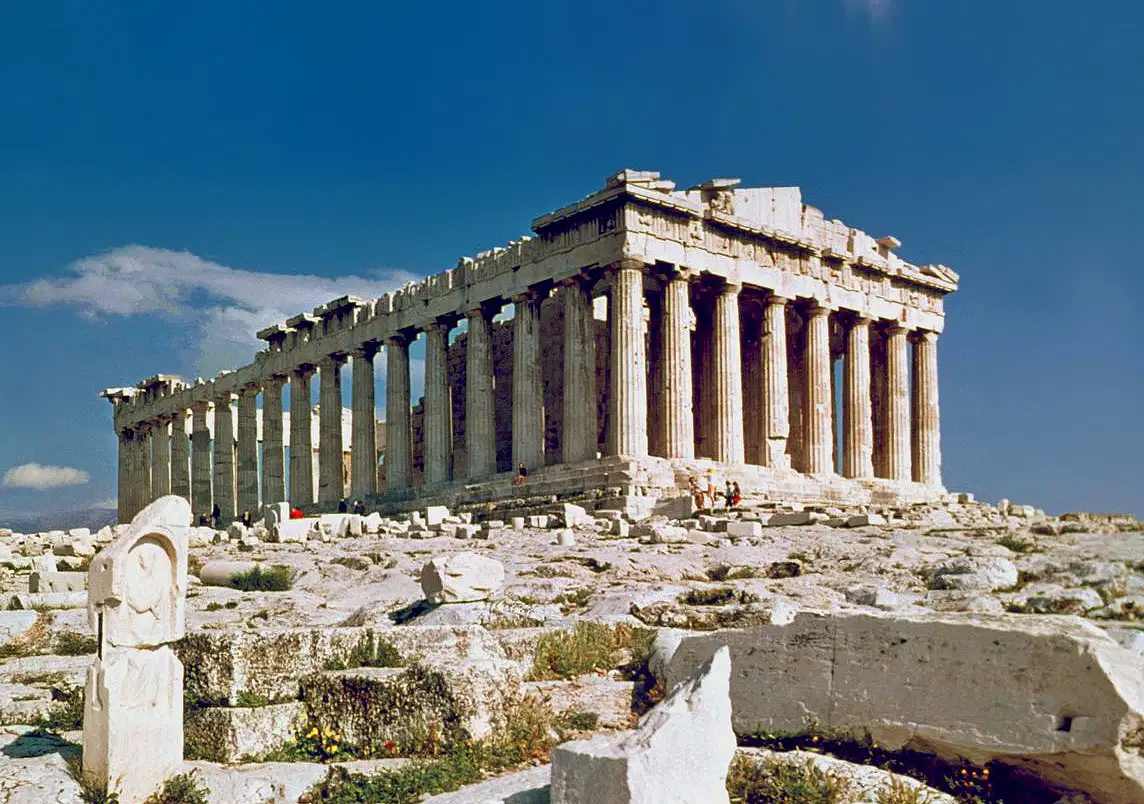
The building in this image was used as a temple to worship Athena. It is called the Parthenon. It is still standing and is located on the ______ of Athens.
council
assembly
polis
acropolis
In Greek mythology, what does the word pantheon mean?
A sacred temple dedicated to a single god.
A gathering place for philosophers and scholars to discuss the gods.
A collection of major gods/goddesses in a particular religion or mythology.
A type of Greek musical instrument that was used to worship the gods.
What are two reasons why we should consider the Pythagorean Theorem an achievement of Ancient Greece?
Spartan society revolved around training for war because
warfare was their favorite activity.
Spartans believed they could not achieve immortality without proving their bravery in battle.
Spartans wanted to dominate the entire Mediterranean world.
Spartans feared slave rebellions, and knew military strength would help them succeed.
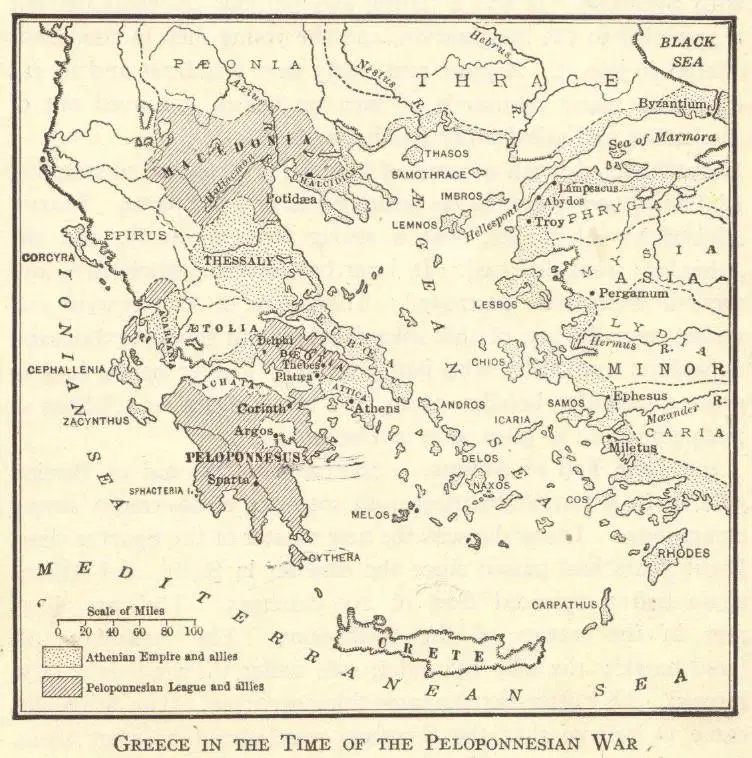
Study the map. According to the map, which area(s) below was an ally of Sparta.
Corinth
Delphi
Athens
Rhodes
This is the type of government that was favored in Athens.
direct democracy
representative democracy
oligarchy
monarchy
Which of the following statements about the geography of Greece and its effect on the people is true?
The mountains caused the Greeks to be somewhat isolated from each other.
The isolated location of Greece from the ancient world meant that they did not trade with other civilizations.
The vast expanses of land was good for farming.
all of the above are true.
Greek drama had its roots in Athens and was created as part of religious festivals honoring Dionysus, the god of wine and celebration.
False
True
Which two groups of people are considered the first Greeks?
Myceneans
Corinthians
Ionia
Minoans
Spartan education was geared toward military fighting. Athens education was more focused on art, _________, and literature.
physical education
philosophy
polis
assembly
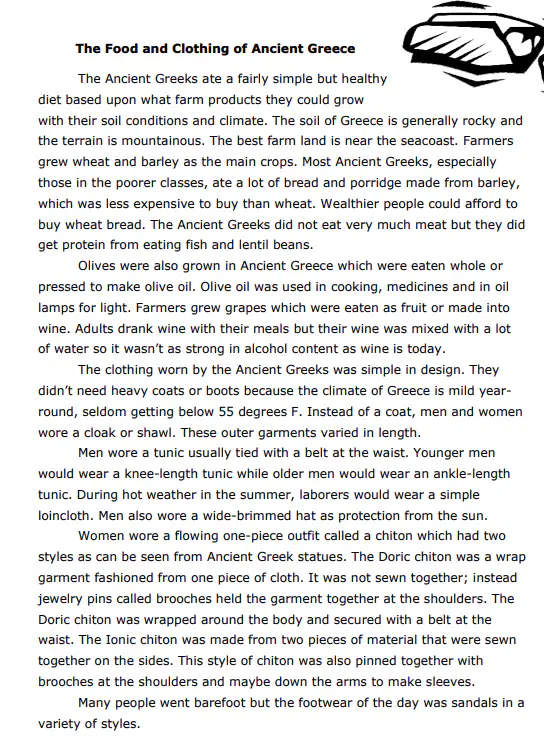
Select all of the following that were consumed by the ancient Greeks.
wheat and barley
fish
grapes
tunics
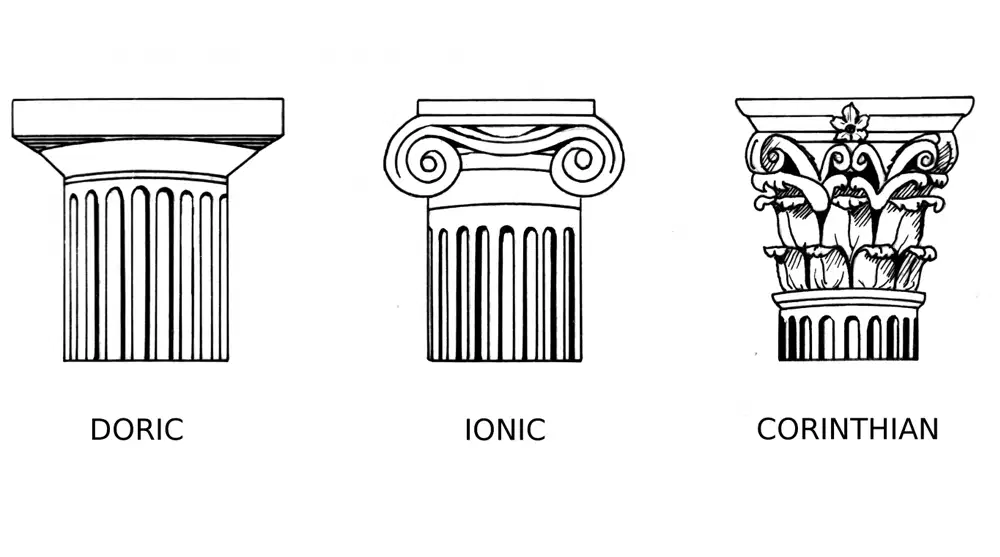
The three columns seen in the image are a part of which age of ancient Greece?
Hellenistic
Classical
Archaic
Dark
In which city-state did women have more rights?
Athens
Sparta
Spartan government was a mix of which two forms of government?
oligarchy
democracy
tyranny
monarchy
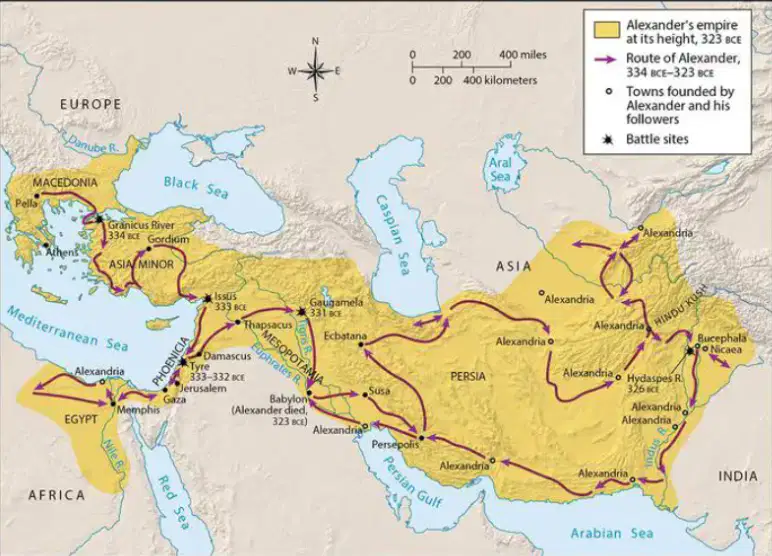
How far did Alexander the Great's conquests go?
Egypt
India
China
Italy
Which Greek philosopher taught Alexander the Great?
Pericles
Socrates
Aristotle
Plato

