
Font size
 Worksheets
Grade 7 Integrated Science
Total questions: 50
Worksheet time: 45mins
Write short notes on the following.
1. Silt
2. Gravel
3. Clay
The composition of the soil consists of various materials that comes together to create a complex mixture capable of supporting plant life, list and explain the components.
list the functions of the below components.
1. vacoule
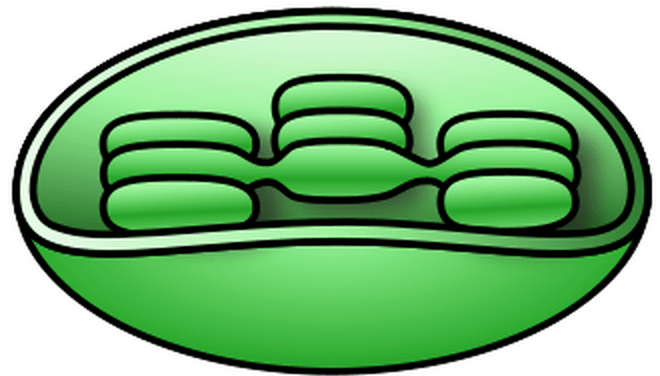
2. chloroplast
3. cell membrane
Which type of soil has the lowest rate of permeability?
sand
silt
clay
loam

Soil is made of ---
weathered rocks and minerals.
dead plants and animals.
air and water.
all of the above

Which layer of soil is on the bottom of a soil profile?
topsoil
subsoil
bedrock
humus

Which of the following is NOT one of the three layers of soil?
topsoil
undersoil
subsoil
bedrock

Humus is ---
the dead parts of plants and animals in soil.
A food we eat with pretzels.
The tiny particles inside of soil.
The roots that come off of a plant and live in soil.
When plants, animals, and other organisms die, they break down and become part of the soil. What is this part of the soil called?
sand
silt
clay
humus

What is the layer of soil just below the topsoil?
bedrock
subsoil
topsoil
humus


Horizontal layers of soil are called ---
Soil profiles
Soil horizons
The texture of soil depends mainly on ---
the types of plants that grow in the soil.
the size of the particles in the soil.
the color of the soil.
the number of worms in the soil.
Matter is anything that has ________________and _____________.
mass and density
mass and takes up space
volume and density
density and energy
The amount of matter in an object is called ___________.
Volume
Density
Mass
Energy
What is the smallest piece of matter?
Atom
Molecule
Compound
Density
What is a substance that cannot be broken down into another substance?
molecule
compound
mixture
element
What is a group of two or more atoms held together by a chemical bond?
molecule
mixture
compound
element
What is a group of two or more different elements held together with a chemical bond?
mixture
atoms
molecule
compound
Which of the following do atoms not contain?
protons
neutrons
positrons
electrons
What is the amount of space an object takes up called?
mass
volume
density
temperature
Pick all examples of a living thing
A human
A rock
A dog
Sand


Our bodies use this Bio-molecule as it's building material. Often found in meats, eggs, and dairy products.
Carbohydrates
Proteins
Lipids
Baconidis

I am the Bio-molecule responsible for mapping out everything. I am like a blue print to a living organism.
Nucleic Acids
Lipids
Proteins
Carbohydrates

A flexible covering that protects the inside of a cell from the environment outside a cell.
cell wall
cell membrane
cytoplasm
cytoskeleton
nucleus
Stiff structure outside the cell membrane
Cell wall
cell membrane
cytoplasm
cytoskeleton
nucleus
Fluid inside of a cell that contains salts and other molecules
Cell wall
cell membrane
cytoskeleton
cytoplasm
mitochondria
Organelle used for energy production in the cell
ATP
nucleus
ribosomes
mitochondria
golgi bodies
Organelle found in plant cells used to convert sunlight into energy
mitochondria
nucleus
ribosomes
golgi bodies
chloroplasts
The following are some safety rules in a laboratory. Which one is not correct?
Do not eat or drink in the laboratory
Do not report any injury, however small, to the teacher
Do not taste chemicals in the laboratory
Do not run in the laboratory
Which of the following is the correct laboratory rule?
Eating in the laboratory while doing practical during lunch time
Running in the laboratory when he is in a hurry
Poking the electrical power points with sharp objects
Using the apparatus in the laboratory only when told to do the science teacher
Which of the following is Vernier Calliper?


Identify this laboratory apparatus that measures mass
Spring balance
Iron stand
Funnel
Electronic balance

This measure the amount of liquid.
Erlenmeyer Flask
Graduated Cylinder
Beaker
Test tube
This holds test tubes when heating
Wire gauze
Dropper
Test tube holder
Syringe

Name the use of the give picture.
used for the measurement of an amount of a liquid
mainly used to store and mix solutions
used for transferring liquids from one container to another


The outside of an animal cell is called…
Plasma membrane
Cell Wall
Cytoplasm
Mitochondria
The mitochondria…
Creates energy for the cell
builds DNA for the cell
Makes cytoplasm
Digests cell waste

Which part on the diagram decides what goes in and out of the cell?
1
4
2
3
The _____________ is a gel-like fluid that fills plant and animal cells. It holds the organelles in place and gives each cell its shape.
Cytoplasm
Cell Membrane
Cell Wall
Chloroplast
Which organelle is the command center for eukaryotic (plant and animal) cells and is referred to as the "brain"?
Cell wall
Nucleus
Mitochondria
Lysosome

