
Font size
 Worksheets
Chemical Reactions
Total questions: 27
Worksheet time: 14mins

Which subatomic particle has a POSITIVE charge? (+)
proton
neutron
electron
Which subatomic particle has a negative charge? (-)
proton
neutron
electron
Which subatomic particle has a neutral charge? (0)
proton
neutron
electron
Metals like potassium (K) and Lead (Pb) become a _____________ ion.
positive
negative
neutral
Non-metals like oxygen (O) and chlorine (Cl) become a _____________ ion.
positive
negative
neutral
A negatively charged iodine (I) ion would most likely be attracted to which of the following?
A neutral helium (He) atom
A positively charged lithium (Li) atom
A negatively charged oxygen (O) atom
Another negatively charged iodine (I) atom
Ionic bonds occur between a metal and a ____________
metal
non-metal
Metallic bonds occur between a metal and a ____________
metal
non-metal
Covalent bonds occur between a non-metal and a ____________
metal
non-metal
Which of the following explains the role of valence electrons?
They give their ion a positive charge
They are free electrons and not part of the atom
They are electrons that have escaped the atom's nucleus
They are the electrons in the outer shell of the atom that can be used to form bonds
Methane has the formula CH4.
In this molecule, hydrogen (H) has an oxidation number of +1.
Methane is overall neutral, so what is the oxidation number of carbon (C) in the molecule?
+4
-4
0
-1
Which of the following is true about the noble gases?
They are non-reactive
They have a full outer shell with 8 valence electrons
They are in Group VIII on the periodic table of the elements
All of these are true
H2S is a ____________ compound.
polyatomic ion
binary
ionic
The name of H2S is _____________.
hydrogen sulfur
hydrogen sulfate
hydrogen sulfide
hydrogen silicate
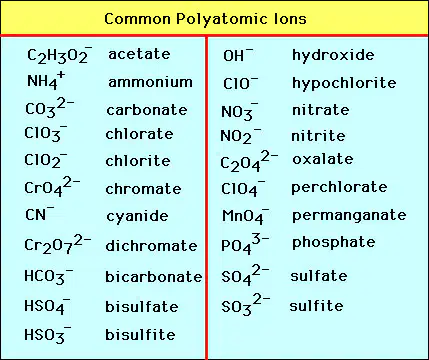
The names of polyatomic ions are shown here. Click on the image to see it larger. Conside this compound: Mg(ClO3).
The first part of this compound's name is magnesium. The second part is ___________.
chlorate
chlorite
hypochlorite
chlorox
Dinitrogen trichloride contains two nitrogen atoms and ____ chlorine atoms.
1
2
4
3
Which of these groups has the elements with the highest number of valence electrons?
H, Li, Na, K
Be, Mg, Ca, Sr
O, S, Se, Te
F, Cl, Br, I
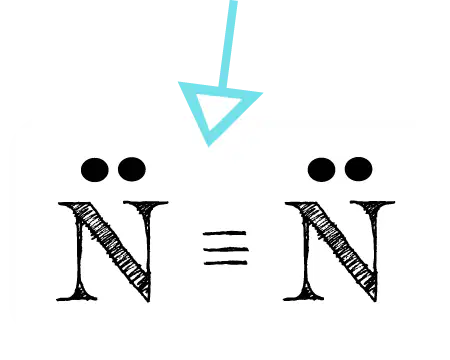
The molecule shown is nitrogen gas.
Which of the following best describes how many electrons the two nitrogen atoms are sharing?
3 electrons
3 pairs of electrons
2 electrons
4 pairs of electrons
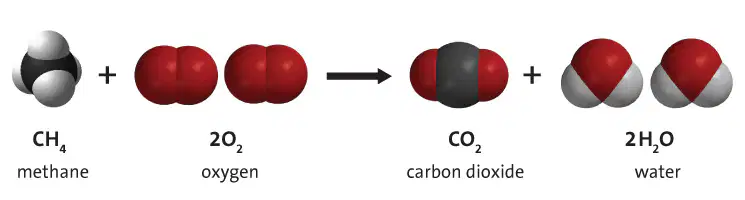
Which of the following identifies the products in the reaction shown?
CH4 and O2 only
CO2 and H2O only
O2 and H2O only
They're all products
All of the molecules in this reaction contain non-metals. These molecules can best be described as ________.
ionic
covalent
metallic
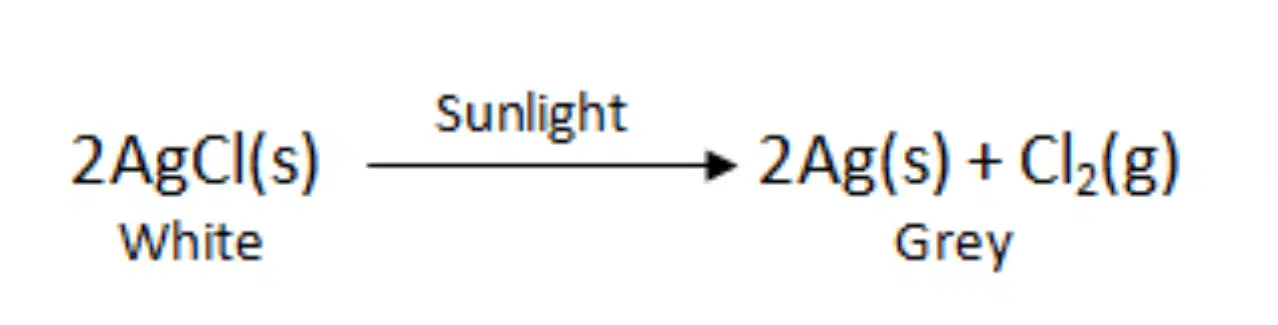
Take a look at the reaction shown.
This is the breakdown of silver chloride. As the reaction occurs, it it absorbs a great deal of energy from the sun.
This reaction can be described as an __________ reaction.
exothermic
endothermic
hypothermic
hyperthermic
Take a look at the reaction shown.
This is the breakdown of silver chloride. As the reaction occurs, it it absorbs a great deal of energy from the sun.
This reaction can be described as a__________ reaction.
synthesis
double replacement
decomposition
single replacement
If two barium sulfate molecules (2BaSO4) were used as a reactant in a reaction, how many oxygen atoms would they contribute?
1
2
4
8
Natural resources can be used to produce ____________
only more complex natural substances
only synthetic substances
both natural and synthetic substances
Which of the following is an impact of synthetic materials on society?
They can cause an increase in pollution
They mimic natural materials
They work differently than natural materials
A reaction that forms bonds AND releases energy can be called what? CHOOSE ALL THAT APPLY.
exothermic
endothermic
decomposition
synthesis
True or false: chemical reactions that are NOT balanced cannot occur because they______________.
don't follow the Law of Conservation of Mass
have elements that are highly reactive
use less energy than balanced reactions
always have oxygen in them

