
Font size
 Worksheets
Driver Education: Chapter 9 Symbols and Devices
Total questions: 25
Worksheet time: 15mins
What does the alternator warning light indicate?
The vehicle is visible at night.
The battery is discharging.
The engine power is being transferred to the wheels.
The vehicle should stop as it is showing overheating.
Which lights illuminate the area in front of the vehicle and make it more visible to other road users?
Brake lights
Headlights
Tail lights
Hazard lights
What is the purpose of the brake lights?
To indicate the speed of the vehicle
To make the parked vehicle visible at night
To warn road users behind the vehicle that the vehicle is slowing or stopping
To indicate the number of miles the vehicle has been driven since it was manufactured
What does the odometer measure?
The speed of the vehicle
The number of miles the vehicle has been driven since it was manufactured
The revolutions per minute of the engine
The amount of fuel remaining in the tank
What is the function of the defroster in a vehicle?
To clear condensation from the inside of the windows
To illuminate the area in front of the vehicle
To indicate emergency or dangerous situations to other road users
To keep a stopped vehicle from rolling and may be used to stop in the event of service brake system failure
What is the function of the parking brake?
To make the vehicle visible from the rear
To indicate the battery is discharging
To keep a stopped vehicle from rolling and may be used to stop in the event of service brake system failure
To warn road users behind the vehicle that the vehicle is slowing or stopping
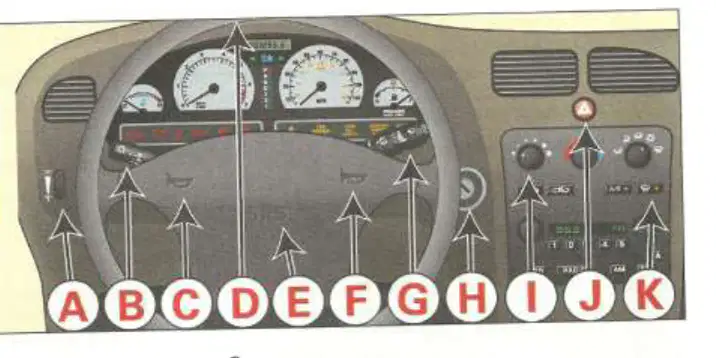
What does the letter 'A' on the dashboard represent?
Fuel gauge
Rheostat
Tachometer
Engine temperature gauge
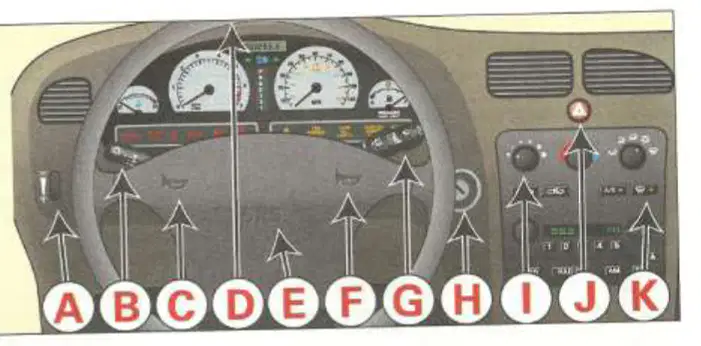
What is the purpose of the device indicated by the letter 'E' on the dashboard?
To indicate the engine temperature
To show the battery charge level
Air Bag
To warn about low oil pressure
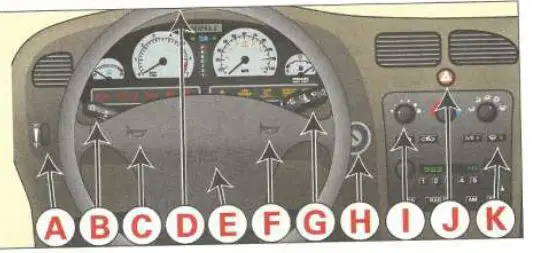
What does the letter 'J' on the dashboard signify?
Hazard warning lights
High beam indicator
Seat belt reminder
Airbag warning light

What should you do if the indicator light shown?
Check the engine oil level and pressure
Refill the windshield washer fluid
Replace the vehicle's battery
Adjust the rearview mirror
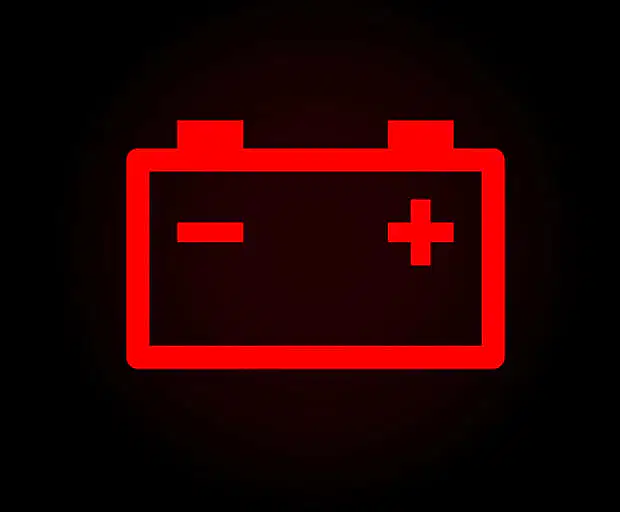
If the light flashes momentarily, what does it indicate?
The battery is being charged
There is a malfunction in the battery or alternator
The headlights are turned on
The doors are not properly closed
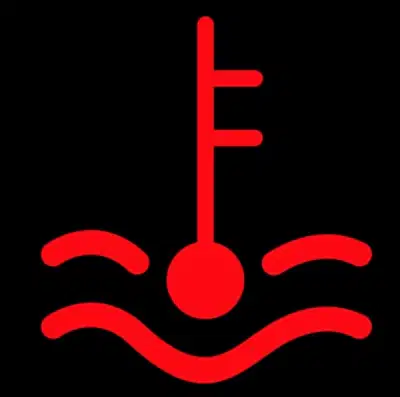
What problem might the gauge indicate?
The windshield may not get cleaned properly
The engine is overheating
The engine oil pressure might be too low
The battery might not charge correctly
To crank the engine on a vehicle equipped with an automatic transmission, the selector lever must be:
be in "P" - Park only.
be shifted to "R" - Reverse only.
be in "P" - Park or in "N" - Neutral.
be shifted to "P" - Park or to "D" - Drive.
To move the selector lever out of the "P" - Park position, you must:
depress the brake pedal, then the lock button.
depress the lock button.
apply the parking brake, then depress the lock button.
apply the parking brake, then depress the brake pedal.
On most vehicles, the parking brake applies the brakes:
in the front only.
in the rear only.
on the right side only.
on all four wheels.
When the service brakes fail, you should:
select neutral and turn "off" the ignition.
select park and turn "off" the ignition.
select neutral and lock the parking brake.
downshift and pump the parking brake.
To perform an emergency stop using this type of parking brake (diagram right), you should:
pull the release lever and pump the pedal.
apply the pedal gradually.
apply the pedal firmly and quickly.
pull the release lever and apply the pedal fully.
You should depress the clutch pedal completely to disengage the motor from the transmission before:
shifting gears.
stopping completely.
cranking the engine.
all of the above.
In a Manual Transmission, when you intend to crank the engine, the shifter lever should be in:
1st gear.
2nd gear.
reverse gear.
neutral.
In a Manual Transmission, to crank the engine, the driver should:
depress the clutch pedal fully.
depress the brake pedal.
press and release the accelerator.
release the parking brake.
What should you never do while refueling at the service station to prevent a possible explosion?
Turn off the engine
Smoke or light a match
Open the fuel filler door
Squeeze the lever to pump gas
Match the following:
These lights make the parked vehicle visible at night.
Parking lights
This component permits the driver to crank and start the engine.
Ignition switch
This indicator registers the speed of the vehicle.
Speedometer
This device helps you see behind your vehicle while reversing.
Backup camera
This component disconnects the engine from the transmission.
Clutch pedal
Match the following:

High Beam

Fuel Gauge

Brake Light

Low Washer Fluid

Tachometer
What does the ABS warning light indicate when it stays on while driving?
The airbags are fully operational
The Anti-lock Braking System is malfunctioning
The vehicle's battery is low
The headlights are not functioning properly
Before starting a journey, it is important to check the tire pressure because:
It can affect the vehicle's fuel efficiency
It changes the color of the tires
It increases the speed of the vehicle
It turns off the ABS warning light

