Worksheets
Review III
Total questions: 15
Worksheet time: 15mins
Select all four nitrogenous bases found in DNA
Adenine
Thymine
Glucose
Guanine
Cytosine
Which of the following will pair with Adenine?
Guanine
Thymine
Cytosine
Thylakoid
DNA makes a copy of itself in a process called ________________________________?
translation
replication
transcription
division
Organisms with the best suited adaptations for their environment are more likely to survive and reproduce than organisms that are not very well adapted
natural selection
artificial selection
creationism
Select the right word for this definition:
"in biology, changes that happen over time in the gene pool of a population."
evolution
extinction
mutation
Which binomial nomenclature is written correctly?
Marmota Monax
Marmota monax
marmota monax
marmota Monax
none of the answers are correct
What are the 8 levels of classification of living organisms from inclusive to exclusive?
What are the three domains from oldest to youngest?
Plant, Animal, Fungi
Eukarya, Archaea, Animal
Eukarya, Archea, Protista
Bacteria, Archaea, Eukarya

Vestigial structures
structures that perform a similar function but are not similar in origin
remnants of once-important structures that have slowly lost all or most of their function
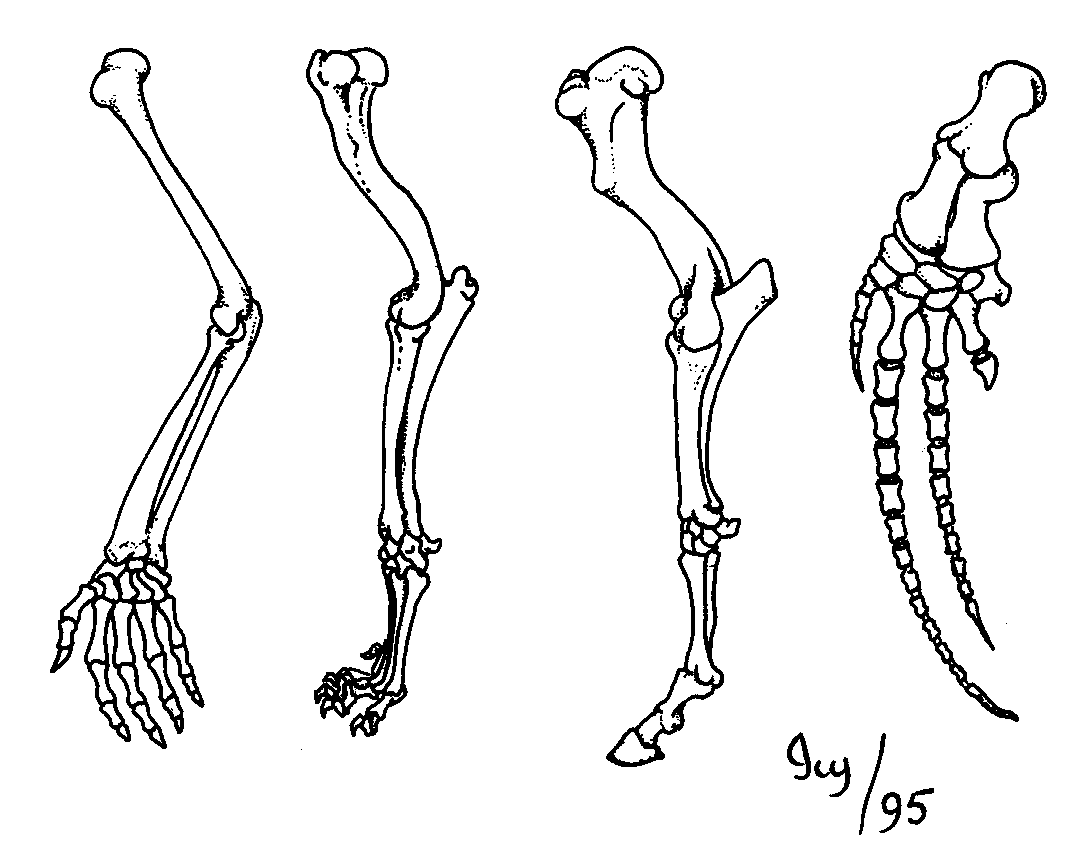
features found in different organisms that share structural similarities but may have very different functions
preserved remains of an organism
Which scientist visited the Galapagos Islands and came up with the theory of natural selection?
Theodor Schwann
Gregor Mendel
Charles Darwin
Rudolf Virchow