wayground logo

Free Printable Worksheets

Font size

S
M
L
XL
Worksheets

IT Festival _Quiz

Total questions: 143

Worksheet time: 2hrs 22mins

Name
Class
Date
1.
The ______________ was developed in 3000 BC, and was basically beads on rods to count and was used to calculate, has upper and lower deck.
a)
UNIVAC
b)
Abacus
c)
Vacuum Tubes
d)
Slide Rule
2.
One of the earliest calculating devices was invented in 1642 and could only perform addition
a)
Stepped Reckoner
b)
Pascaline
c)
Difference Engine
d)
Analytical Engine
3.
Recipient of Computer Science’s first “Man of the Year Award
a)
Jacquard Moore
b)
John Napier
c)
Charles Babbage
d)
Grace Hopper
4.
What does the 'PC' stand for?
a)
Personal Computer
b)
Private Computer
c)
Posh Computer
d)
Petite Computer
5.
What company did Paul Allen and Bill Gates start
a)
Microsoft
b)
Windows
c)
Apple
d)
Minecraft
6.
What company did Steve Jobs & Steve Wozniack start?
a)
Apple
b)
Orange
c)
Microsoft
d)
Dell
7.
Which type of computer is designed for one person to use at a time?
a)
personal computer
b)
server
8.
Who is considered the "Father of the Computer" for inventing a calculating machine called the Difference Engine?
a)
Tim Berners-Lee
b)
Barles Cabbage
c)
Bill Gates
d)
Charles Babbage
9.
One of the first computers was an abacus. Invented in Babylon in 500 B.C., the abacus was made of string and beads.
a)
True
b)
False
10.

The abacus was created by ______________________________

a)

Blaise Pascal

b)

The Babylonians

c)

Gottfried Wilhelm Leibniz

d)

Jospeh Marie Jaquard

11.

Blaise Pascal invented the _____________________________.

a)

Pascaline

b)

Abacus

c)

Stepped Reckoner

d)

Difference Engine

12.

I was known as the father of computing. I am ___________________.

a)

Blaise Pascal

b)

Herman Hollerith

c)

Marie Jaquard

d)

Charles Babbage.

13.

Charles Babbage designed the Tabulating Machine.

a)

True 

b)

False

14.

The word "Computer" was first assigned to...

a)

A person who conducts calculations

b)

A person who is very loud

c)

A person who doesn't sleep

d)

A person who lies

15.

The ______________ was developed in 3000 BC, and was basically beads on rods to count and was used to calculate, has upper and lower deck.

a)

UNIVAC

b)

Abacus

c)

Vacuum Tubes

d)

Slide Rule

16.

What are the 4 stages of computing in order?

a)

input, output, storage, processing

b)

input, processing, output, storage

c)

output, input, storage, processing

d)

output, storage, input, storage

17.

Who started the company Google?

a)

Steve Jobs and Steve Wozniak

b)

Larry Page and Sergey Brin

c)

Bill Gates

d)

Donald Trump

18.

This guy made the operating system for IBM and started a company called Microsoft.

a)

Steve Jobs

b)

Howard Aiken

c)

Bill Gates

d)

Alan Turing

19.

Why did Pascal invent the first calculator?

a)

To help determine the current French population.

b)

To help with collecting taxes.

c)

To teach his children how to add and subtract.

20.

Which came into existence first: Wikipedia or YouTube?

a)

Wikipedia

b)

YouTube

21.

Who is recognized as the first computer programmer?

a)

Charles Babbage

b)

Howard Aiken

c)

Blaise Pascal

d)

Ada Lovelace

22.

How do we call this?

a)

memory stick

b)

folder

c)

mouse

d)

router

23.

How do we call this?

a)

webcam

b)

screen

c)

 a link

d)

keyboard

24.

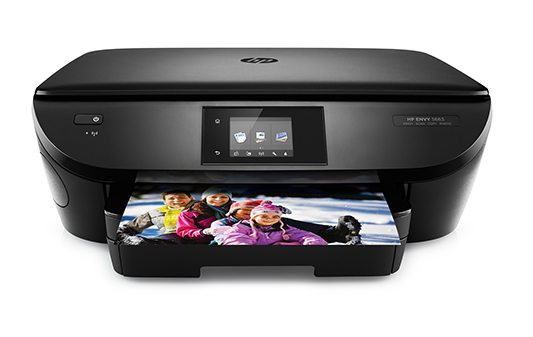
How do we call this?

a)

scanner

b)

smartphone

c)

games console

d)

printer

25.

How do we call this?

a)

router

b)

mouse mat

c)

memory stick

d)

printer

26.

How do we call this?

a)

mouse

b)

speakers

c)

mouse mat

d)

webcam

27.

How do we call this?

a)

smartphone

b)

speakers

c)

mouse mat

d)

folder

28.

How do we call this?

a)

tablet

b)

router

c)

monitor

d)

screen

29.

How do we call this?

a)

folder

b)

memory stick

c)

tablet

d)

mouse mat

30.

_________________  are  sets of instructions loaded each time a computer is started

a)

Algorythms

b)

Operating Systems

c)

Vacuum Tubes

d)

Origination Systems

31.

21st Century Computing has brought users which of the following: 

a)

Great increases in speed, storage, and memory

b)

Increased networking, speed in Internet

c)

Wirelesss technology

d)

All of the above

32.

The first wireless LAN was created in Hawaii

a)

True

b)

False

33.

The ______________ was developed in 3000 BC, and was basically beads on rods to count and was used to calculate, has upper and lower deck.

a)

UNIVAC

b)

Abacus

c)

Vacuum Tubes

d)

Slide Rule

34.

One of the earliest calculating devices was invented in 1642 and could only perform addition

a)

Stepped Reckoner

b)

Pascaline

c)

Difference Engine

d)

Analytical Engine

35.

Recipient of Computer Science’s first “Man of the Year Award

a)

Jacquard Moore

b)

John Napier

c)

Charles Babbage

d)

Grace Hopper

36.

What does the 'PC' stand for?

a)

Personal Computer

b)

Private Computer

c)

Posh Computer

d)

Petite Computer

37.

What company did Paul Allen and Bill Gates start

a)

Microsoft

b)

Windows

c)

Apple

d)

Minecraft

38.

What company did Steve Jobs & Steve Wozniack start?

a)

Apple

b)

Orange

c)

Microsoft

d)

Dell

39.

Which type of computer is designed for one person to use at a time?

a)

personal computer

b)

server

40.

Who is considered the "Father of the Computer" for inventing a calculating machine called the Difference Engine?

a)

Tim Berners-Lee

b)

Barles Cabbage

c)

Bill Gates

d)

Charles Babbage

41.

One of the first computers was an abacus. Invented in Babylon in 500 B.C., the abacus was made of string and beads.

a)

True

b)

False

42.

The abacus was created by ______________________________

a)

Blaise Pascal

b)

The Babylonians

c)

Gottfried Wilhelm Leibniz

d)

Jospeh Marie Jaquard

43.

Blaise Pascal invented the _____________________________.

a)

Pascaline

b)

Abacus

c)

Stepped Reckoner

d)

Difference Engine

44.

I was known as the father of computing. I am ___________________.

a)

Blaise Pascal

b)

Herman Hollerith

c)

Marie Jaquard

d)

Charles Babbage.

45.

Charles Babbage designed the Tabulating Machine.

a)

True 

b)

False

46.

The word "Computer" was first assigned to...

a)

A person who conducts calculations

b)

A person who is very loud

c)

A person who doesn't sleep

d)

A person who lies

47.

The ______________ was developed in 3000 BC, and was basically beads on rods to count and was used to calculate, has upper and lower deck.

a)

UNIVAC

b)

Abacus

c)

Vacuum Tubes

d)

Slide Rule

48.

What are the 4 stages of computing in order?

a)

input, output, storage, processing

b)

input, processing, output, storage

c)

output, input, storage, processing

d)

output, storage, input, storage

49.

Who started the company Google?

a)

Steve Jobs and Steve Wozniak

b)

Larry Page and Sergey Brin

c)

Bill Gates

d)

Donald Trump

50.

This guy made the operating system for IBM and started a company called Microsoft.

a)

Steve Jobs

b)

Howard Aiken

c)

Bill Gates

d)

Alan Turing

51.

Why did Pascal invent the first calculator?

a)

To help determine the current French population.

b)

To help with collecting taxes.

c)

To teach his children how to add and subtract.

52.

Which came into existence first: Wikipedia or YouTube?

a)

Wikipedia

b)

YouTube

53.

Who is recognized as the first computer programmer?

a)

Charles Babbage

b)

Howard Aiken

c)

Blaise Pascal

d)

Ada Lovelace

54.
How do we call this?
a)
memory stick
b)
folder
c)
mouse
d)
router
55.
How do we call this?
a)
webcam
b)
screen
c)
 a link
d)
keyboard
56.
How do we call this?
a)
scanner
b)
smartphone
c)
games console
d)
printer
57.
How do we call this?
a)
router
b)
mouse mat
c)
memory stick
d)
printer
58.
How do we call this?
a)
mouse
b)
speakers
c)
mouse mat
d)
webcam
59.
How do we call this?
a)
smartphone
b)
speakers
c)
mouse mat
d)
folder
60.
How do we call this?
a)
tablet
b)
router
c)
monitor
d)
screen
61.
How do we call this?
a)
folder
b)
memory stick
c)
tablet
d)
mouse mat
62.
_________________  are  sets of instructions loaded each time a computer is started
a)
Algorythms
b)
Operating Systems
c)
Vacuum Tubes
d)
Origination Systems
63.
21st Century Computing has brought users which of the following: 
a)
Great increases in speed, storage, and memory
b)
Increased networking, speed in Internet
c)
Wirelesss technology
d)
All of the above
64.
The first wireless LAN was created in Hawaii
a)
True
b)
False
65.
Computers in this network are connected in a line.
a)
Bus Network
b)
Simple Network
c)
Train Network
d)
Straight Network
66.
A technique where each letter in a string is shifted along the alphabet, to hide the meaning of the text.
a)
Julius Cipher
b)
Caesar Cipher
c)
Nero Cipher
d)
Claudius Cipher
67.
Sending data between one or more computers
a)
Transmitting
b)
Communication
c)
Receiving
d)
Duplex Transmission
68.
Scrambling data to prevent it being understood by unauthorised users.
a)
Decryption
b)
Encryption
c)
Compressing
d)
Modifying
69.
Standard protocol set for network cabling.
a)
Ethernet
b)
RJ45
c)
ADSL
d)
Cat5
70.
Software to control data going in and out of a network.
a)
Anti Virus
b)
Hub
c)
Switch
d)
Firewall
71.
The protocol used to transfer files between computers.
a)
IMAP
b)
HTTP
c)
FTP
d)
SMTP
72.
The language in which web pages are created.
a)
Unicode
b)
HTTP
c)
HTML
d)
TCP/IP
73.
The general protocol used on the World Wide Web.
a)
POP3
b)
FTP
c)
HTTP
d)
ASCII
74.
A protocol for secure web pages.
a)
SMTP
b)
FTP
c)
HTTP
d)
HTTPS
75.
A protocol for receiving email which leaves messages on the server.
a)
SMTP
b)
POP3
c)
FTP
d)
IMAP
76.
Every computer on the network has a unique one of these.
a)
Password
b)
Device Name
c)
IP Address
d)
User Id
77.
An organisation that provides Internet access to people and companies.
a)
ISP
b)
ASP
c)
IAP
d)
PSI
78.
Abstract representation of a network's function.
a)
Stack Model
b)
Layer Model
c)
Layer Thing
d)
Network layer
79.
A network set up in a small geographical area, such as an office.
a)
Metropolitan Area network (MAN)
b)
Local Area Network (LAN)
c)
Wide Area Network (WAN)
d)
Personal Area Network (PAN)
80.
A network where every computer is connected to every other computer.
a)
Bus
b)
Mesh
c)
Star
d)
Ring
81.
A collection of computers connected together to exchange data & share resources.
a)
System
b)
Group
c)
Network
d)
Arrangement
82.
Data on the Internet is divided up into these for transmission.
a)
Pieces
b)
Packets
c)
Bits
d)
Envelopes
83.

A network where there is no server - all clients are equal.

a)

Bus

b)

Peer To Peer

c)

Client/Server

d)

Mesh

84.
Connecting your phone to your laptop would create this type of network.
a)
Local Area Network (LAN)
b)
Metropolitan Area network (MAN)
c)
Wide Area Network (WAN)
d)
Personal Area Network (PAN)
85.
The protocol used to receive email by downloading it from the server.
a)
SMTP
b)
POP3
c)
IMAP
d)
FTP
86.
A set of rules for how computers should communicate.
a)
Instructions
b)
Protocol
c)
Convention
d)
Procedure
87.
A device used to connect two networks together.
a)
Switch
b)
Router
c)
Hub
d)
Firewall
88.
The protocol used to send email.
a)
POP3
b)
IMAP
c)
FTP
d)
SMTP
89.
A network with a central hub to which all computers are connected.
a)
Mesh Topology
b)
Ring Topology
c)
Star Topology
d)
Bus Topology
90.
The standard protocol of the Internet.
a)
FTP
b)
TCP/IP
c)
UDP
d)
ICMP
91.
This word means 'the way we lay out our network'.
a)
Structure
b)
Format
c)
Mapping
d)
Topology
92.
A way of specifying the location of a website or a resource online.
a)
URL
b)
Browsing
c)
Searching
d)
DNS
93.
Software used to view pages on the World Wide Web.
a)
Word Processor
b)
Web Browser
c)
Keylogger
d)
Spreadsheet
94.
The Internet is the most famous example of this type of network.
a)
Personal Area Network (PAN)
b)
Metropolitan Area network (MAN)
c)
Wide Area Network (WAN)
d)
Local Area Network (LAN)
95.
A way of communicating without cables.
a)
Wireless
b)
Token Ring
c)
Ethernet
d)
Broadband
96.
A network where all connections are made via bluetooth is a…
a)
Personal Area Network (PAN)
b)
Wide Area Network (WAN)
c)
Local Area Network (LAN)
d)
Metropolitan Area network (MAN)
97.
What allows devices to access, or be blocked from accessing a network based on their physical address embedded within the device’s network adapter
a)
MAC address filtering
b)
Firewall
c)
TCP/IP
d)
Anti Virus Software
98.
The layer where the network applications, such as web browsers or email programs, operate.
a)
Application layer
b)
Transport layer
c)
Data link layer
d)
Network layer
99.
This layer sets up the communication between the two hosts and they agree settings such as ‘language’ and size of packets.
a)
Application layer
b)
Transport layer
c)
Network layer
d)
Data link layer
100.
This layer addresses and packages data for transmission then routes the packets across the network.
a)
Data link layer
b)
Network layer
c)
Application layer
d)
Transport layer
101.
This is where the network hardware such as the NIC (network interface card) is located. OS device drivers also sit here.
a)
Data link layer
b)
Transport layer
c)
Application layer
d)
Network layer
102.
The unit used to measure network speed.
a)
Bytes per Second (Bps)
b)
MHz
c)
GHz
d)
Bits per Second (bps)
103.
A computer on a network that provides facilities to others, such as storage or printing.
a)
Router
b)
Mainframe
c)
Client
d)
Server
104.
The physical parts of the computer
a)
Hardware
b)
Software
c)
Operating System
d)
Serial Bus Port
105.

Non-physical components of the computer

a)

Hardware

b)

Software

c)

Operating System

d)

Serial Bus Port

106.
The software that communicates with computer hardware on the most basic level.
a)
Hardware
b)
Software
c)
Operating System
d)
Serial Bus Port
107.
The main circuit board of a microcomputer.
a)
CPU
b)
Motherboard
c)
ROM
d)
RAM
108.
The brain of the computer.
a)
CPU
b)
USB
c)
ROM
d)
RAM
109.
The heart of the computer.
a)
CPU
b)
Motherboard
c)
ROM
d)
RAM
110.
Temporary memory.
a)
CPU
b)
Motherboard
c)
ROM
d)
RAM
111.
Memory that handles the automatic functions of a computer and cannot be changed.
a)
CPU
b)
Motherboard
c)
ROM
d)
RAM
112.
Creates the images that appear on the monitor
a)
Video Card
b)
Sound Card
c)
Power Supply
d)
Optical Drive
113.
Creates sound from speakers, and microphone
a)
Video Card
b)
Sound Card
c)
Power Supply
d)
Optical Drive
114.
Supplies the power that the computer needs
a)
Video Card
b)
Sound Card
c)
Power Supply
d)
Optical Drive
115.
The main disk inside a computer used for storing programs and information
a)
Video Card
b)
Hard Disk
c)
Power Supply
d)
Optical Drive
116.
A hardware device that uses lasers or light to read from, and maybe even write to, CDs, DVDs, or Blu-ray discs.
a)
Video Card
b)
Hard Disk
c)
Power Supply
d)
Optical Drive
117.
Allows you to connect different pieces of equipment to the computer
a)
CPU
b)
USB
c)
ROM
d)
RAM
118.
Groupings of 1's and 0's that makes information that a computer can understand.
a)
Binary Code
b)
Bit
c)
Byte
d)
Kilobyte
119.

One on/off signal or measurement of information from Binary Code

a)

Binary Code

b)

Bit

c)

Byte

d)

Kilobyte

120.
Another word for character; generally represented by 8 bits.
a)
Kilobit
b)
Bit
c)
Byte
d)
Kilobyte
121.
A unit of information equal to one million (1,048,576) bytes
a)
Megabit
b)
Kilobyte
c)
Megabyte
d)
Gigabyte
122.
A unit of information equal to one billion (1,073,741,824) bytes
a)
Gigabit
b)
Kilobyte
c)
Megabyte
d)
Gigabyte
123.
CPU is an abbreviation for:
a)
Central Processing Unit
b)
Central Brain Unit
c)
Computer Processing Unit
d)
Computer Brain Universal
124.
RAM is an abbreviation for:
a)
Random Access Memory
b)
Reliable Action Memory
c)
Read Access Memory
d)
Read Always Memory
125.
ROM is an abbreviation for:
a)
Random Once Memory
b)
Read Only Memory
c)
Reliable Once Memory
d)
Read Once Memory
126.
USB is an abbreviation for:
a)
Universal Serial Bus Port
b)
Univerasl Cereal Bus Port
c)
Universal Serial Bus
d)
Univerasl Cereal Bus
127.
A device that sends information out of the computer
a)
Input Device
b)
Output Device
c)
Operating System
128.
A device that sends information into the computer
a)
Input Device
b)
Output Device
c)
Operating System
129.
Monitor
a)
Input Device
b)
Output Device
c)
Operating System
d)
Software
130.
Mouse
a)
Input Device
b)
Output Device
c)
Operating System
d)
Software
131.
Keyboard
a)
Input Device
b)
Output Device
c)
Operating System
d)
Software
132.
Printer
a)
Input Device
b)
Output Device
c)
Operating System
d)
Software
133.

Identify this computer part:

a)

Motherboard

b)

Hard Disk

c)

Optical Drive

d)

Central Processing Unit

134.

Identify this computer part:

a)

Motherboard

b)

Hard Disk

c)

Optical Drive

d)

Central Processing Unit

135.

Identify this computer part:

a)

Motherboard

b)

Hard Disk

c)

Optical Drive

d)

Central Processing Unit

136.

Identify this computer part:

a)

Motherboard

b)

Hard Disk

c)

Optical Drive

d)

Central Processing Unit

137.

Identify this computer part:

a)

RAM

b)

ROM

c)

CPU

d)

USB

138.

Identify this computer part:

a)

RAM

b)

ROM

c)

CPU

d)

USB

139.

Identify this computer part:

a)

RAM

b)

ROM

c)

CPU

d)

USB

140.

Identify this computer part:

a)

Motherboard

b)

Hard Disk

c)

Optical Drive

d)

Power Supply

141.

Who is known as the 'Father of Computer Science'?

a)

Alan Turing

b)

Steve Jobs

c)

Bill Gates

d)

Mark Zuckerberg

142.

What was the first high-level programming language created?

a)

Fortran

b)

COBOL

c)

Python

d)

C++

143.

Which company developed the first commercially successful computer?

a)

IBM

b)

Apple

c)

Microsoft

d)

Google