
Font size
 Worksheets
Gen. Bio 1 and 2 V.3
Total questions: 111
Worksheet time: 10hrs 48mins
Which definition of the magnification of a drawing of a leaf is correct?
the actual size of the leaf multiplied by the magnification of the microscope
the measured difference in size between the leaf and a drawing of the leaf
the increase in size of the leaf when observed using a microscope
the size of the drawing of the leaf divided by the actual size of the leaf

The electron micrograph shows parts of two cells.
Which labelled features identify these cells as eukaryotic?
W, X and Y
W and X only
W only
X only
Plant cells are stained and viewed using a microscope. The light source is natural light.
What could be clearly visible at x400 magnification?
cristae of mitochondria
grana of chloroplasts
nucleoli
ribosomes
Which lengths are equivalent to 1 μ m?
1- 1000 mm
2- 0.001 nm
3- 0.001 mm
4- 1 000 000 nm
5- 0.01 mm
6- 1000 nm
1 and 4
2 and 5
3 and 4
3 and 6
Some secretory cells synthesize and release glycoproteins. What is the correct sequence of some of the events that occur in a secretory cell?
1 exocytosis
2 products accumulate in secretory vesicles
3 mRNA binds to ribosomes
4 synthesis of glycoproteins
3, 4, 1, 2
3, 4, 2, 1
4, 3, 1, 2
4, 3, 2, 1

What is the function of the type of organelle extracted in pellet 3?
digestion of old cell organelles
production of ATP by respiration
synthesis of mRNA
synthesis of protein
What is the general formula for amylose?
(C5H10O5)n
(C5H10O6)n
(C6H12O6)n
(C6H10O5)n
Which statement describes how the molecular structure of starch is suited to its function?
Amylose has a branched structure and amylopectin is coiled to give a compact molecule for transport
In the breakdown of amylose and amylopectin, many condensation reactions release stored energy
In the formation of amylose and amylopectin, many hydrolysis reactions allow the release of stored energy
Amylose and amylopectin form a complex that is insoluble and so does not affect the water potential of the cell

Which statement about the ratio of short fatty acids (4-16 carbon atoms) to long fatty acids (18 or more carbon atoms) in the milk of cows and whales is correct?
The ratio in cow milk is higher because newborn cows need more energy than newborn whales
The ratio in cow milk is lower because newborn cows need less energy than newborn whales
The ratio in whale milk is higher because newborn whales need less energy than newborn cows
The ratio in whale milk is lower because newborn whales need more energy than newborn cows
The structure of phospholipids includes:
1 polar phosphate heads
2 hydrophobic fatty and chains
3 saturated fatty acid chains
1 and 2
1 and 3
2 and 3
3 only

Which molecules would result from the complete hydrolysis of the peptide?


Which row identifies the different parts of the molecule?
1- ∝ -helix
2- β -pleated sheet
3- oxygen binding site
4- hydrophobic amino acids
1- oxygen binding site
2- hydrophilic amino acids
3- ∝ -helix
4- hydrophobic amino acids
1- haem group
2- hydrophobic amino acids
3- ∝ -helix
4- hydrophilic amino acids
1- hydrophobic amino acids
2- β -pleated sheet
3- haem atom
4- oxygen binding site
A student investigated the effect of enzyme concentration on the rate of hydrolysis of protein in milk.
When the enzyme and milk were mixed, the protein was hydrolysed and the mixture changed from cloudy to clear.
The student investigated five different enzyme concentrations and recorded the time taken for the mixture to become clear.
What is an appropriate control for this investigation?
Carrying out an experiment where the enzyme solution is replaced with water
Carrying out each experiment in a thermostatically controlled water-bath at 35C
Repeating each experiment three times for each of the five enzyme concentrations
Using the same volume of enzyme solution for each of the five experiments
What determines the specificity of an enzyme?
1 the covalent and other bonding between R groups of the polypeptide
2 the optimum pH of enzyme
3 the covalent peptide bonds between amino acids of the polypeptide
4 the shape of the substrate molecule
1, 2, 3 and 4
1 and 3 only
1 only
2, 3 and 4 only

Which statements explain the shape of the graph at temperatures higher than T?
1 Bonds are broken between the R groups of the amino acids in the polypeptide chains of the enzyme
2 There are more collisions between the enzyme and its substrate
3 The tertiary structure of the enzyme is altered
4 The shapes of the active site and the substrate are no longer complementary
1, 2 and 3
1, 2 and 4
1, 3 and 4
2, 3 and 4
Which statement describes carrier proteins in cell surface membranes?
Carrier proteins are found on the outer surface of the membranes allowing cell recognition.
Carrier proteins are involved in moving substances through the membranes by either active transport or passive transport.
Carrier proteins allow the binding of ligand molecules, which causes changes within cells
Carrier proteins are involved in moving substances through membranes by passive transport through water-filled pores
What happens to a typical bacterium when it is placed in surroundings that have a higher water potential than the water potential inside the cell?
The bacterium bursts because the cell wall has no structural function
The bacterium dies because water leaves the cell by osmosis
There is no change because the cell wall is impermeable to water
There is a net movement of water into the bacterium
By which process do hydrogencarbonate ions leave red blood cells?
active transport
endocytosis
facilitated diffusion
phagocytosis
In an experiment, fluorescent dyes were attached to proteins on the outer surface of cell surface membranes. Fluorescent dyes of one colour were attached to proteins of a living human cell and fluorescent dyes of a different colour were attached to proteins of a living mouse cell.
The human and the mouse cell were fused to form a hybrid cell.
At first, the proteins attached to different fluorescent dyes remained separate, but after 40 minutes the proteins were distributed randomly across the hybrid cell surface membrane.
What does this experiment show?
Proteins are found only the outer surface of cell surface membranes
Proteins in the outer layer of a bilayer do not penetrate into the inner layer
Proteins move freely in the phospholipids of a bilayer
The cell surface membranes of the two cells are bilayers

The diagram shows the mitotic cell cycle.
During which phase is DNA replicate?
A
B
C
D
Bacterial cells divide by a process called binary fission.
Which macromolecules must be synthesized for binary fission?
1 cell membrane proteins and RNA
2 DNA and peptidoglycan
3 enzymes and cellulose
1, 2 and 3
1 and 2 only
2 and 3 only
3 only

Which label is correct for each of the structures labelled W, X and Y?
W- centriole
X- centromere
Y- chromatid
W- centriole
X- centromere
Y- microtubule
W- centromere
X- telomere
Y- chromatid
W- centromere
X- telomere
Y- microtubule
Which statement about the behaviour of chromosomes during mitosis is correct?
The attach to spindle fibers to contain them within the nucleus
They condense to prevent further translation of genes
They reach the poles of the cell and begin to uncoil
They replicate to produce sufficient DNA to form two new nuclei
Gene mutations can occur by substitution, deletion or insertion.
What is the smallest part of a DNA molecule that can be changed by a gene mutation?
base
codon
gene
nucleotide
Which statements about mRNA are correct?
1 mRNA can form base pairs
2 mRNA can form hydrogen bonds
3 mRNA is single stranded
1, 2 and 3
1 and 2 only
1 and 3 only
2 and 3 only

A
B
C
D

Which type of sugar and which type of bond are found in a DNA molecule?
A
B
C
D

Which row is correct for phloem?
root- 1
stem- 3
leaf- 5
root- 1
stem- 4
leaf- 6
root- 2
stem- 3
leaf- 6
root- 2
stem- 4
leaf- 5

Sucrose moves from a phloem sieve tube element into a root cell.
Which changes to the water potential and the volume of liquid in the phloem sieve tube element are correct?
A
B
C
D
Which statements about water movement in plants are correct?
1 Water can pass through cell walls containing layers of cellulose fibres
2 Water can pass through cell walls containing rings or spiral of lignin
3 Water cannot pass through a band of suberin in cell walls
1, 2 and 3
1 and 2 only
1 and 3 only
2 and 3 only

Which labelled features are characteristic adaptations of many xerophytes?
1, 3, 4 and 5
1, 2 and 3
1, 2 and 5
2, 3, 4 and 5
A maize crop is growing successfully in a field in which the water potential of the soil is -40kPa.
What is the most likely water potential of the cell sap in the root hair cell?
-60kPa
-40kPa
-20kPa
0kPa
The contraction of the heart is coordinated through electrical impulses passing through the cardiac muscle.
What is the correct order of part of the sequence of these impulses?
right and left atria -> sinoatrial node -> atrioventricular node -> ventricular walls
sinoatrial node -> right and left atria -> atrioventricular node -> Purkyne tissue
sinoatrial node -> right and left atria -> Purkyne tissue -> atrioventricular node
right and left atria -> sinoatrial node -> Purkyne tissue -> ventricular walls
Which features allow the aorta to withstand high blood pressures?
collagen fibres and elastin fibres
collagen fibres and smooth muscle
elastin fibres and endothelium
endothelium and smooth muscle

Which row is correct for the pulmonary artery?
A
B
C
D

Which conditions could change the shape of curve 1 to the shape of curve 2?
increased carbon dioxide concentration causing a decrease in pH
increased carbon dioxide concentration causing an increase in pH
decreased carbon dioxide concentration causing a decrease in pH
decreased carbon dioxide concentration causing an increase in pH
What maintains the necessary concentration gradients for carbon dioxide and oxygen in the lungs?
good ventilation of the lungs
large surface area of the alveoli
the capillaries are close to the walls of the alveoli
the walls of the alveoli are thin

Which cells and tissues are present in the trachea?
A
B
C
D

How many millions of people died in 2013 from the bacterial diseases listed in the table?
0.02
1.42
2.45
2.90
Why is it difficult for B-lymphocytes and T-lymphocytes to respond to antigens on pathogens that are intracellular parasites?
The antigens are constantly mutating
The antigens can destroy the lymphocytes
The lymphocytes do not encounter the antigens
The lymphocytes do not recognise the antigens
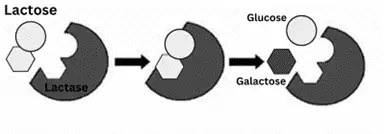
What type of reaction is shown in the diagram?
Anabolic Reaction
Combination Reaction
Catabolic Reaction
All of the above
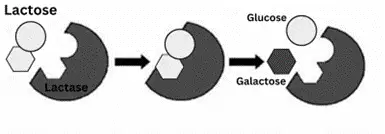
Which illustrates the substrate?
Galactose
Lactose
Glucose
Lactase
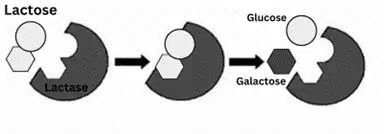
Which is NOT a product of the catalyzed reaction shown in the diagram?
Galactose
Lactase
Glucose
None of the above
Digestion starts in the mouth, where amylase and lingual lipase in the saliva break down fats and starch in the food. Which enzyme-substrate pairing is correct?
amylase :: fats
lingual lipase :: fats
amylase :: lingual lipase
lingual lipase :: starch
In which way/s are carbohydrates and lipids similar?
They are both exclusively made out of C, H, O, and N.
They both provide energy.
Both are made out of C, H, and O.
Both can be made into simpler molecules.
What is the simplest unit of a nucleic acid?
amino acid
monosaccharide
glycerol
nucleotide

Based on the picture above, what are the structural components of lipids?
1 glycerol and 3 molecules of water
1 glycerol and 3 molecules of fatty acid chains
3 molecules of fatty acids
3 molecules of water and 3 fatty acid chains

The graph shows changing energy levels during a reaction, with and without an enzyme specific to this reaction. Which shows the activation energy WITHOUT an enzyme?
A
B
C
D
Dino mixed a certain amount of chicken liver with hydrogen peroxide in a water bath. His first water bath was with icy water; the second was with boiling water; and the last was with lukewarm water. Among all of the reactions, the one with the lukewarm water released more bubbles compared to the other two. Dino made his conclusions based on his results. Which material contains the enzyme? Which material is the substrate?
chicken liver :: water
hydrogen peroxide :: chicken liver
water :: chicken liver
water :: hydrogen peroxide
Why did the lukewarm water setup present the most reaction?
The lukewarm water setup has the most chicken liver.
The lukewarm water setup has the most hydrogen peroxide concentration.
The lukewarm water setup has the most ideal temperature for enzymes to react.
The chicken liver in the lukewarm water was already denatured which resulted in a very reactive effect.
Why did the boiling water setup display less reaction compared to the icy water setup and the lukewarm water setup?
The chicken liver, not the boiling water, is the cause of non-reaction.
The boiling water evaporated the hydrogen peroxide which hampered the reaction.
The boiling water caused the enzymes to be deactivated in a process called denaturation.
The amount of hydrogen peroxide in the boiling water setup is not enough to show an acceptable rate of reaction.
Most enzymes are _________.
lipids
nucleotides
carbohydrates
nucleic acids
protein
Proteins are composed of __________.
amino acids linked together by peptide bonds
monosaccharides linked together by glycosidic bonds
nucleotides linked together by hydrogen bonds
fatty acids linked to a glycerol molecule via ester bonds
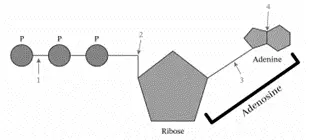
The main function of ATP is to act as a source of energy for cellular processes. The diagram shows a simple outline of the structure of an ATP molecule. Which bond breaks to release the energy stored in it?
1
2
3
4
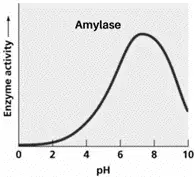
Based on the graph, what is the optimum pH of amylase?
2
4
7
9
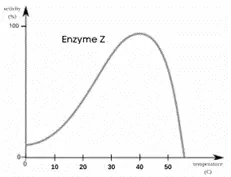
Based on the graph, what is the optimum temperature of enzyme Z?
35oC
36oC
37oC
38oC
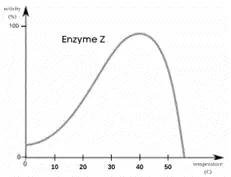
What do you think will happen to enzyme Z at high temperatures?
The enzyme will produce more substance to speed up the reaction.
The enzyme will double.
The enzyme will swell up.
The enzyme will be denatured.
Which illustration shows a competitive inhibition of enzyme activity?
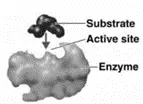
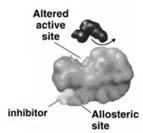
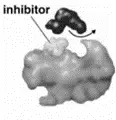
Which diagram shows a non-competitive inhibition of enzyme activity?
Which illustration will show an enzyme-substrate complex?
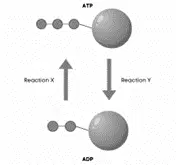
The diagram provided gives a basic outline of the relationship between ATP and ADP. What types of reactions are reactions X and Y?
Reaction X - Anabolism; Reaction Y - Catabolism
Reaction X - Catabolism; Reaction Y - Anabolism
Reaction X - Anabolism; Reaction Y - Anabolism
Reaction X - Catabolism; Reaction X - Catabolism
What does ADP stand for?
adenosine dihydrophosphate
adenosine diphosphatase
adenosine diphosphate
adenosine di-phosphorylase

Why is it advised to get the right amount of cholesterol from the food we eat and not in excess?
i only
i and iii
ii and iii
i, ii, iii, and iv
plants : cellulose :: bacteria : __________
chitin
peptidoglycan
glycogen
starch
glucose : monosaccharide :: guanine : __________
amino acid
nucleotide
fatty acid
triglyceride
glucose : hexose :: ribose : __________
hexose
pentose
monomer
triose
lactase : lactose :: trypsin : _________
DNA
proteins
lipids
sugars
maltase : maltose :: acetylcholinesterase : __________
DNA
proteins
lipids
sugars
All of the following are the results of inhibitors binding to enzymes, EXCEPT:
Activate chemical reactions in our cells
Decrease enzyme activity
Increase activation energy of a chemical reaction
Slow down metabolism
Which is FALSE about non-competitive inhibition?
Non-competitive inhibitors bind a site other than the active site
Non-competitive inhibitors can be overcome by increasing substrate concentration
Non-competitive inhibitors change the conformation of the active site
Non-competitive inhibitors actively block the enzyme from attaching to the substrate.
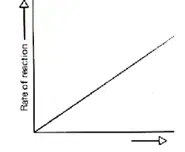
Enzyme Concentration
Temperature
Substrate Concentration
pH
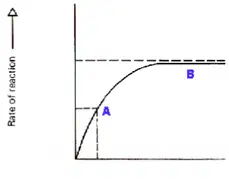
Enzyme Concentration
Temperature
Substrate Concentration
pH
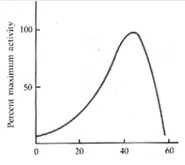
Enzyme Concentration
Temperature
Substrate Concentration
pH
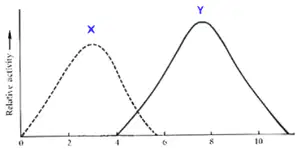
Enzyme Concentration
Temperature
Substrate Concentration
pH
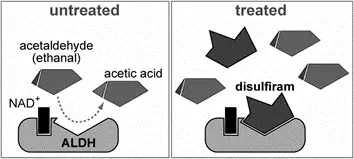
Disulfiram is an example of an enzyme inhibitor that inhibits aldehyde dehydrogenase (ALDH). It prevents acetaldehyde from attaching to ALDH to produce acetic acid. Which inhibitor is Disulfiram?
Competitive Inhibitor
Non- Competitive Inhibitor
Both A and B
Disulfiram Inhibitor
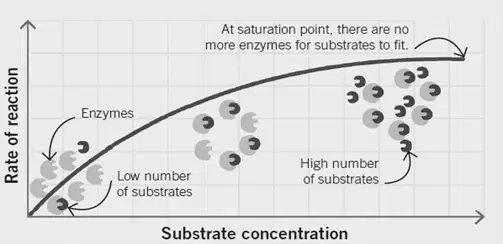
Enzyme activity is affected by the amount/concentration of enzymes and substrates. At a saturation point, excess substrates cannot bind to available enzymes anymore. How can you overcome the saturation point and increase the rate of reaction?
ATG TGA CAG
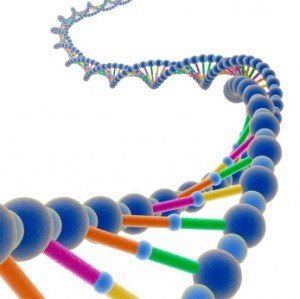

STRUCTURE: One difference between RNA and DNA is -
RNA has thymine where DNA has ademine
DNA is single stranded where RNA is double stranded
DNA is made in the nucleus where RNA is made in the ribosomes
RNA is single stranded where DNA is double stranded
STRUCTURE: What Nitrogenous Base does RNA contain that DNA does not?
Thymine
Uracil
Adenine
Love
STRUCTURE: Which 2 molecules form the sides of the DNA ladder?
deoxyribose and adenine
deoxyribose and a hydrogen bond
sugar and the nucleus
deoxyribose (sugar) and phosphate
GENERAL: DNA is found in the:
cell membrane
vacuole
chloroplast
nucleus

STRUCTURE: Nucleotides monomers are made up of a sugar, a phosphate, and a:
nitrogenous base
nucleic acid
cholesterol
fatty acid
STRUCTURE: The five-carbon sugar found in DNA.
ribose
guanine
deoxyribose
helicase

TRANSLATION:
This is
tRNA
mRNA
DNA
a ribosome
TRANSCRIPTION: What is the mRNA complementary mRNA base sequence for: CAGTTCCAG
GUCAAGGUC
GTGAAGGTC
HISTORY: Built the first correct model of DNA
Watson and Crick
Linnus Pauling
Rosalind Franklin
Hershey and Chase
REPLICATION:
DNA replication is when:
DNA makes DNA
DNA makes RNA
RNA makes Protein
DNA makes Protein
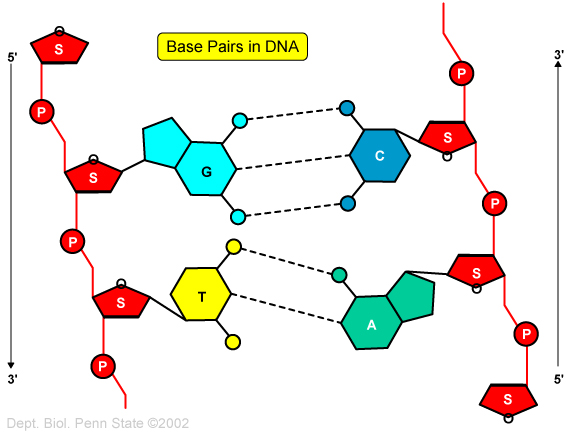


There are 3 types of RNA. What are they? (Select all that apply)
tRNA
rRNA
mRNA
xRNA
What combines together to make a protein?
Amino Acid
RNA
Ribosome
DNA
What is the order for Protein Synthesis?
Transcription -> Translation -> Protein
Translation - > Transcription -> Protein
Protein -> Transcription -> Translation
Translation -> Protein -> Transcription

What type of RNA is shown in this image?
rRNA
mRNA
tRNA

