
 Worksheets
Biology STAAR Review
Total questions: 90
Worksheet time: 3hrs 7mins
NUCLEOTIDES ARE THE BUILDING BLOCKS OF...
CARBOHYDRATES
LIPIDS
NUCLEIC ACIDS
PROTEINS
AMINO ACIDS ARE THE BUILDING BLOCKS OF...
CARBHYDRATES
LIPIDS
NUCLEIC ACIDS
PROTEINS
FATTY ACIDS AND GLYCEROL ARE THE BUILDING BLOCKS OF..
CARBOHYDRATES
LIPIDS
NUCLEIC ACIDS
PROTEINS
WHAT ELEMENTS DO ALL BIOMOLECULES (LIPIDS, PROTEINS, NUCLEIC ACIDS, CARBS) HAVE IN COMMON?
CARBON, HYDROGEN, FLOURINE
CARBON, HYDROGEN, CHLORINE
CARBON, HYDROGEN, IODINE
CARBON, HYDROGEN, OXYGEN

This cell is a -
PROKARYOTIC
PLANT
ANIMAL
PROTIST


What do viruses have in common with living cells? They both...
store genetic information
have chloroplasts
use glucose for cellular respiration
have endoplasmic reticulum

Which viral life cycle kills its host cell by lysing (exploding)?
lytic
mitosis
lysogenic
S phase


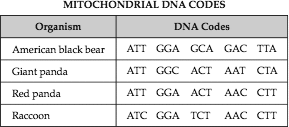
Scientists can determine relatedness among organisms by comparing partial amino acid sequences. The table shows four partial amino acid sequences from four organisms.
Which organism is the LEAST related to the other three organisms?
Organism 1
Organism 2
Organism 3
Organism 4
Adaptations that result from natural selection are expected to increase the fitness of an organism. In terms of natural selection, which of the following best describes fitness?
Being able to escape from predators
Being among the strongest organisms in a population
Being able to survive, find a mate, and produce offspring
Being able to survive long enough to reach the adult stage
Which of these is a function of the cell membrane in all cells?
Producing cellular nutrients
Maintaining homeostasis
Neutralizing chemicals
Preserving cellular wastes
Which of the following is correct about the events of the cell cycle?
Little happens during the G1 and G2 phases of the cell cycle.
DNA replicates during the S phase of interphase.
Mitosis is usually the longest phase of the cell cycle when the cell is growing.
Interphase consists of G1, S, G2 phase and mitosis

A segment of DNA is shown in the diagram. Which of these identifies the part of the DNA segment labeled X?
Nucleotide
Phosphate group
Hydrogen bond
Deoxyribose
A segment of a DNA strand is shown.
3' AGGTCAGGT 5'
Which of these is the correct complementary DNA strand for the segment shown?
5' AGGTCAGGT 3'
5' ACCUGAGGU 3'
5' TGGACTGGA 3'
5' TCCAGTCCA 3'
When crossed with the genotype AaBb, which genotype would result in a 50% chance of producing offspring with the alleles AA?
AaBb
AABb
Aabb
aaBB
Delray has dimples and his wife does not. Delray has a homozygous dominant genotype for dimples, and his wife has a homozygous recessive genotype for no dimples.
If Delray and his wife decide to have children, then which Punnett square correctly shows the probability of them having a child with dimples?


What allele combination should go in the missing box of the Punnett square?
AA
Aa
aa
none of these
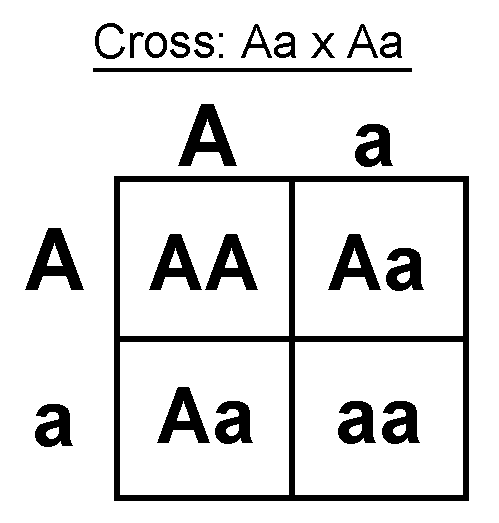
A = Brown hair and a = blond hair
What are the phenotype percentages of the offspring?
50% Brown hair and 50% Blond hair
25% Brown hair and 75% Blond hair
75% Brown hair and 25% Blond hair
0% Brown hair and 100% Blond hair
Scientists can determine relatedness among organisms by comparing partial amino acid sequences. The table shows four partial amino acid sequences from four organisms.
Which organism is the LEAST related to the other three organisms?
Organism 1
Organism 2
Organism 3
Organism 4

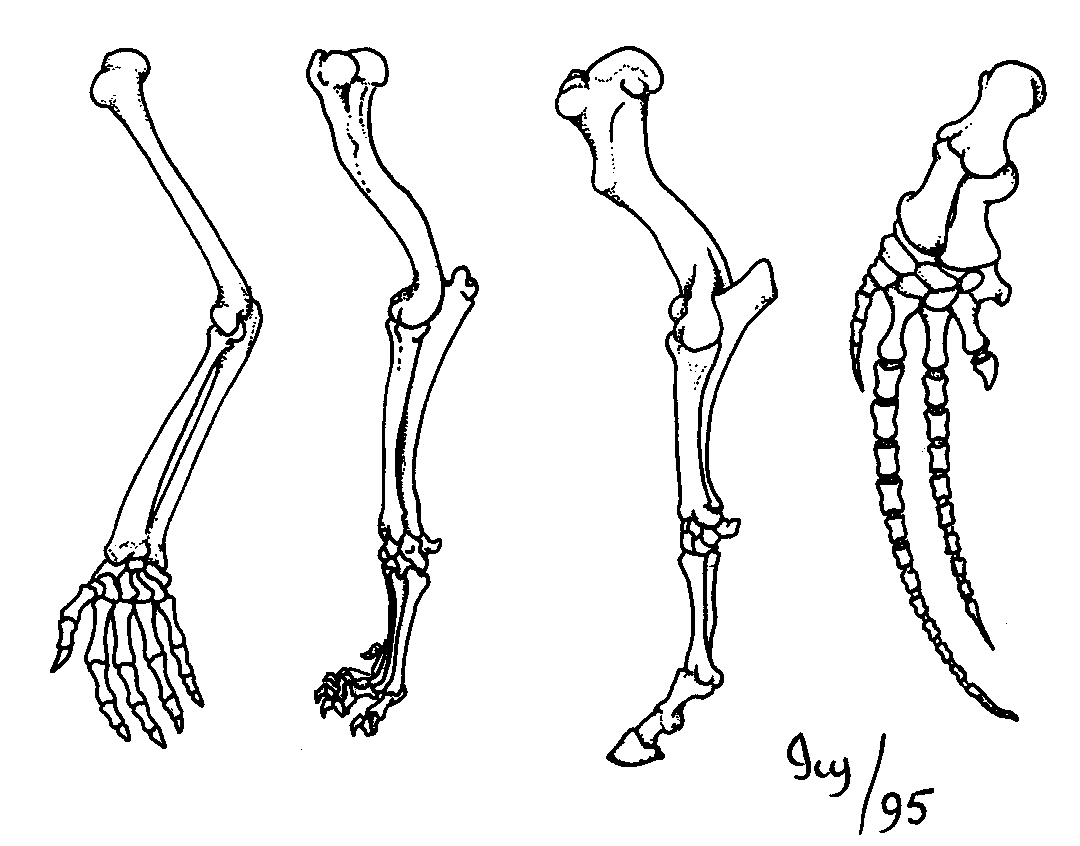
The image shows part of the humerus bone in different genera of primates.
Which statement is best supported by the observable structures of the different humerus bones?
The primates lived in similar environments.
The primates shared a common ancestor.
The primates interbreed with similar organisms in a population.
The primates had diets that consisted of similar types of foods.

Researchers studying populations of lizards from the genus Gallotia on the Canary Islands compared the protein cytochrome b in different populations. The table shows the number of differences in the cytochrome b protein between different populations.
Which conclusion about the relatedness of the lizards do these data support?
G. atlantica and G. stehlini are the least closely related. .
G. simonyi and G. bravoana are the most closely related.
G. galloti eisentrauti and G. galloti palmae are the most closely related.
G. galloti eisentrauti and G. galloti galloti are the least closely related

The graph shows the number of taxa of reptiles whose fossilized tracks have been found.
Which statement is best supported by these data?
Competition for food and shelter among reptile species was very low during the Triassic period.
A great extinction occurred during the Jurassic period.
Environmental conditions for speciation were most favorable for reptiles during the Permian period.
Reptiles adapted to a terrestrial environment during the Cretaceous period.

The diagram shows light- and dark-colored beetles that live on a tree.
Which result is most likely to occur to the beetle population due to predation over time?
The number of light-colored beetles in the population will increase.
There will be more dark-colored beetles than light-colored beetles.
The number of light-colored beetles will decrease.
The dark-colored beetles will move to a different type of tree.
The white cattail is a hybrid species of plant that is a result of the cross between the broad-leaved cattail and the narrow-leaved cattail. Over time, the white cattail has established itself in the wetlands of Midwestern states. Which of these explains the success of the white cattail?
Favorable genes from parental generations provide advantageous characteristics to the hybrid species.
Hybridization produces offspring traits that allow different species to survive in extreme environments.
Inherited traits passed on from parental generations make hybrid species more susceptible to disease.
Hybrid species display more adaptations due to their reduced genetic diversity.
Adaptations that result from natural selection are expected to increase the fitness of an organism. In terms of natural selection, which of the following best describes fitness?
Being able to escape from predators
Being among the strongest organisms in a population
Being able to survive, find a mate, and produce offspring
Being able to survive long enough to reach the adult stage
Common baboons live on the savanna in breeding groups called troops. While females tend to stay with the troop, younger or less dominant males may leave to join a neighboring troop. Which of these is a likely outcome of movement by young males?
Gene flow occurs between populations.
Allele frequencies suddenly change.
Relative genotypic frequencies reach a constant state.
Intermediate phenotypes increase in the species.

F
G
H
I
Which is true of prokaryotic and eukaryotic cells?
Prokaryotic cells are larger than eukaryotic cells.
Eukaryotic cells do not have nuclei, and prokaryotic cells do have nuclei.
Prokaryotic cells lack membrane-bound organelles, and eukaryotic cells contain membrane-bound organelles.
Eukaryotic cells are simpler than prokaryotic cells.

The mutated DNA segment is TTCGCAAG. This is an example of ___ mutation.



What are the offspring's possible phenotypes?
Brown fur is dominant. White fur is recessive.
One parent is homozygous for brown fur as the other is heterozygous.
100% White fur
50% Brown fur 50% White fur
100% Brown fur
75% Brow fur 25% White fur
(RRYY x rryy)
R = round seeds, r = wrinkled seeds Y = yellow seeds, y = green seeds
What percent will have Round and Yellow seeds?
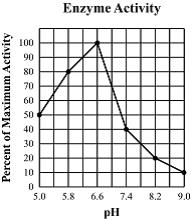
How do enzymes speed up chemical reaction?
Increasing activation energy
Decreasing activation energy
Increasing deactivation energy
Decreasing deactivation energy

Influenza infects a cell and causes it to lyse immediately. What do they use the appendages on the outside of this picture for?
Attachment
Poison host
Replicate dna
Create a nucleus

This diagram is demonstrating
Mutation
Non-random mating
Gene Flow
Genetic Drift
Natural Selection
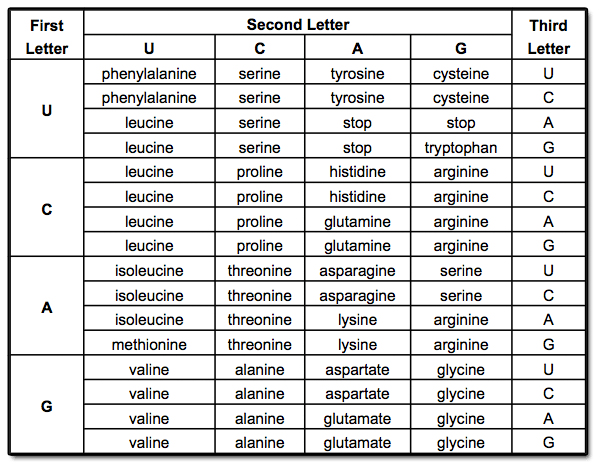
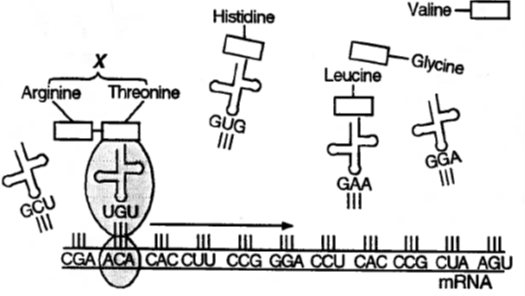
What amino acid is represented by the codon UAA?
Phenylalanine
Tyrosine
Isoleucine
Stop codon
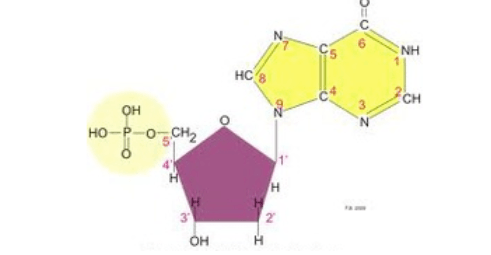
Which component of DNA determines the traits of an organism?
Nitrogen Bases
Phosphate
Hydrogen bonds
Deoxyribose Sugar

What amino acid is represented by the codon TAC?
Phenylalanine
Tyrosine
Methionine
Isoleucine
ATG TGA CAG
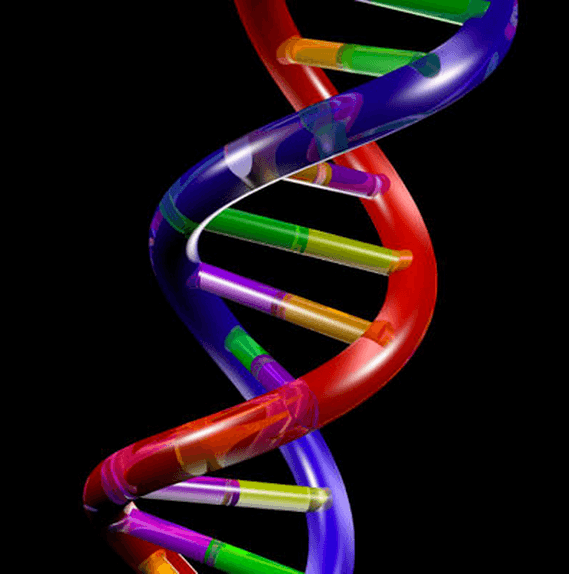
What determines the code, or information, of a DNA molecule?
the shape (structure) of the nitrogen bases
the order of the nitrogen bases
the color of the nitrogen bases
the frequency (number) of nitrogen bases
When levels go above or below a set point a hormone is released to return the body to set point. When the body is restored to set point no more hormone is released. This is an example of...
a positive feedback loop
a negative feedback loop
a neutral feedback loop
not maintaining homeostasis
The major organ of the integumentary system is
Skin
Heart
Hormones
Lungs



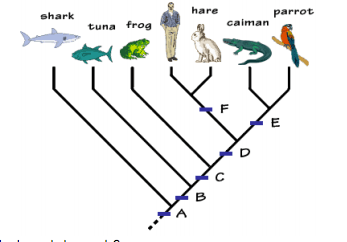
A gene from organism A can be put into organism B and work because
all organisms share the genetic code
they have the exact same genome
they lack a nucleus
the eyes of texas are upon us


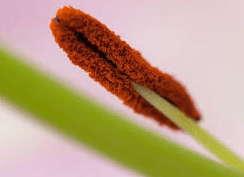
What condition absolutely must be present in a population before evolution can act upon it?
more females than males
a source of new alleles
genetic variation
a harsh environment
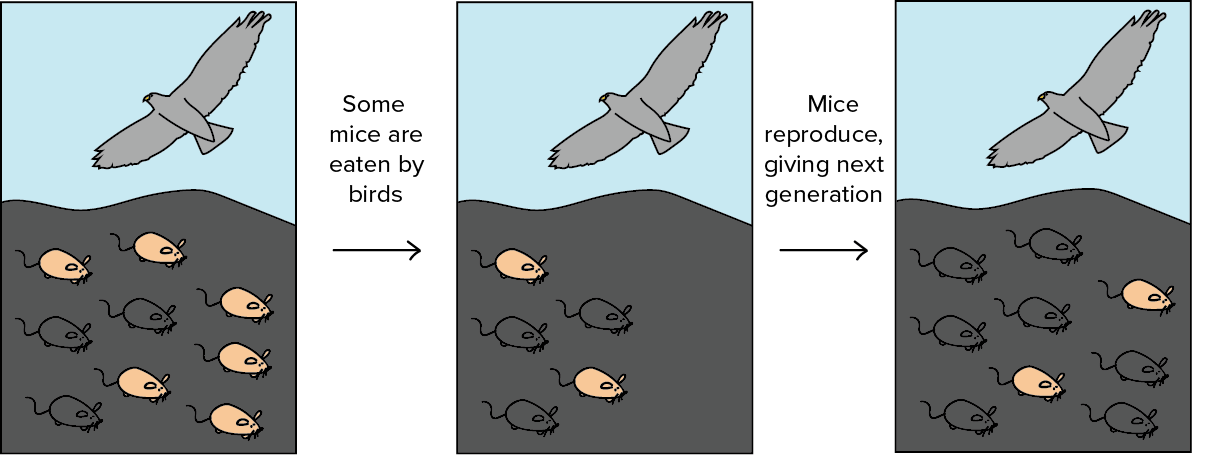
Why is the mouse population changing over time?
The light fur mice can reproduce more successfully than the dark fur mice
The hawks eat more dark fur mice than light mice because they hunt by smell
The hawks eat more light fur mice than dark fur mice because they can see the light fur mice more easily
The hawks eat more dark fur mice than light mice because they can see the dark fur mice more easily
The differences between two molecules include the type of sugar that forms a section of the molecules and the identify of one of the four nitrogenous bases that make up another section of the molecules. These two molecules are -
proteins
lipids
nucleic acids
complex carbohydrates
(a) has one cell and (b) has many cells

In which part of the plant cell does photosynthesis take place?
Nucleus
Mitochondria
Chloroplast
Ribosome

A. (a)
B. (b)
C. (c)
D. (d)
Label the Following Illustration of the Cell Cycle.
G1-phase
S-phase
G2-phase
M-phase
5.A
This model of the cell cycle includes two arrows that each represent a process in the cycle. What stages of the cell cycle are represented by each arrow?

