
 Worksheets
Geology Quiz #2
Total questions: 30
Worksheet time: 15mins
Name
Class
Date
1.

1. What is the rock cycle?
a)
A path traveled by a rock in space
b)
The process that changes one type of rock into another
c)
The study of rocks and minerals
2.
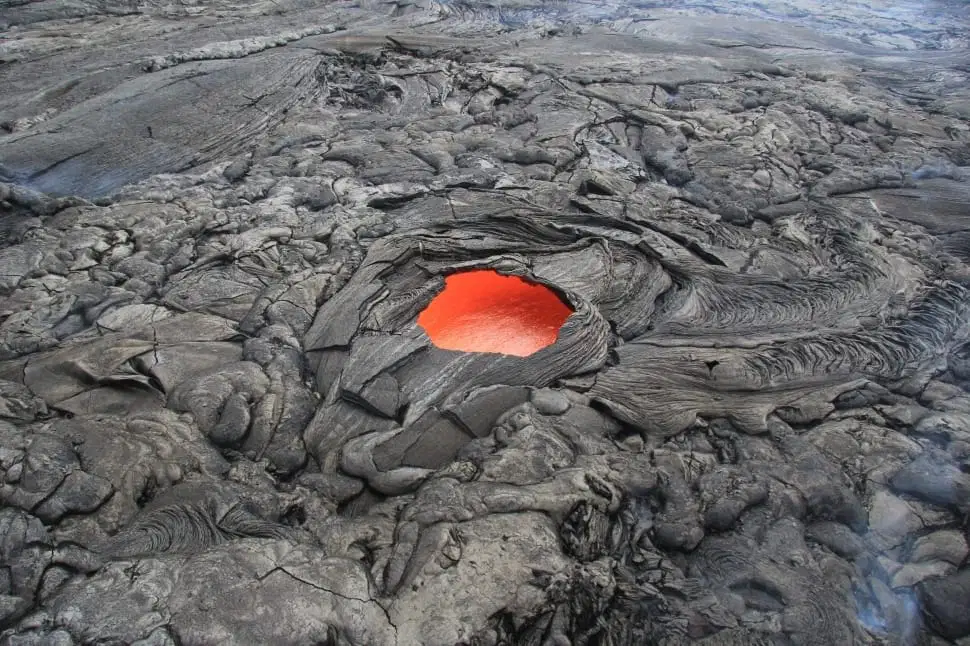
2. Which type of rock is formed by the cooling and hardening of magma or lava?
a)
Sedimentary Rock
b)
Igneous Rock
c)
Metamorphic Rock
3.
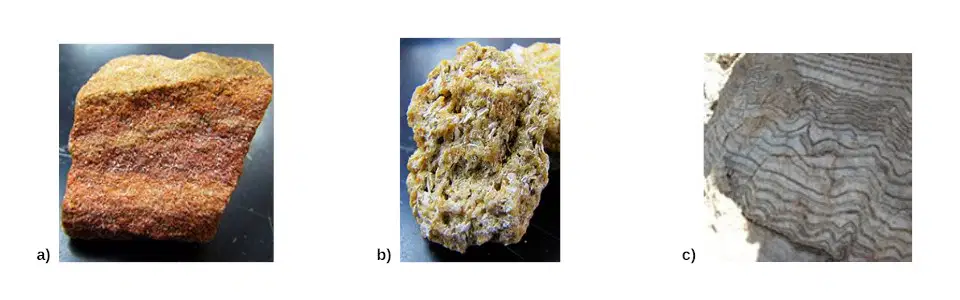
3. What are the three main types of rocks in the rock cycle?
a)
Magma, lava, and sediment
b)
Metamorphic, volcanic, and sedimentary
c)
Igneous, sedimentary, and metamorphic
4.

4. How does a sedimentary rock form?
a)
By cooling and hardening of magma
b)
From layers of sediment being pressed together
c)
Through heat and pressure deep underground
5.
5. True or False: Rocks go through a set path in the rock cycle and always follow the same sequence.
a)
True
b)
False
6.
6. What kind of rock is formed when existing rocks are changed by heat and pressure deep within the Earth?
a)
Igneous Rock
b)
Sedimentary Rock
c)
Metamorphic Rock
7.

7. Which process breaks down rocks into smaller pieces?
a)
Melting
b)
Weathering
c)
Compaction
d)
Deformation
8.
8. Heat and ____________ can change sedimentary rock into metamorphic rock.
a)
Cooling
b)
Melting
c)
Pressure
9.
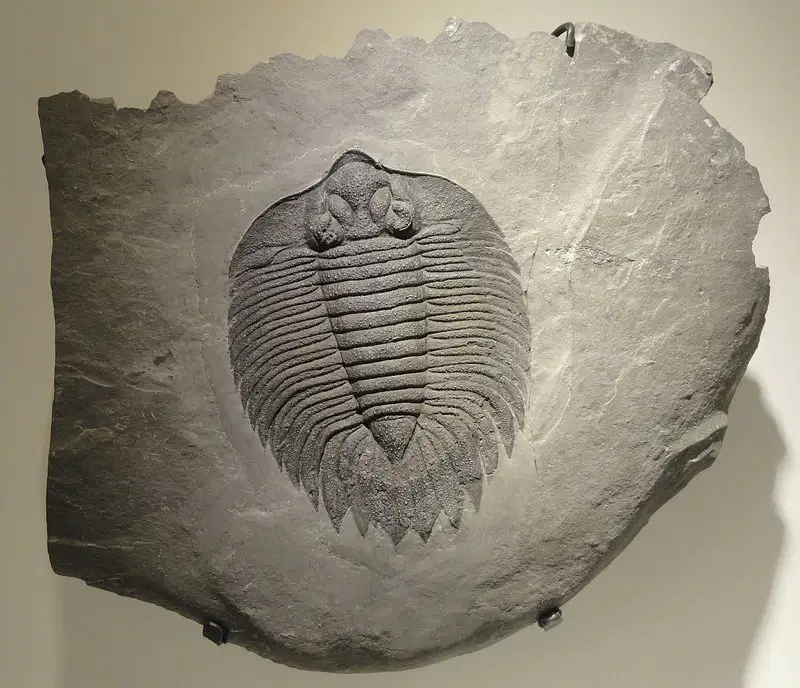
9. Which type of rock often contains fossils?
a)
Igneous Rock
b)
Sedimentary Rock
c)
Metamorphic Rock
10.
10. What geologic process changes pieces of rocks, minerals and other materials into sedimentary rocks?
a)
Compacting and Cementing
b)
Heat and Pressure
c)
Cooling
d)
Melting
11.
11. What characteristic can be present in metamorphic rocks?
a)
Fossils
b)
Air pockets
c)
Foliation
d)
Glassy surface
12.
12. What type of rock is formed from slow cooling magma UNDER the earth's surface?
a)
Intrsuive Ignenous
b)
Extrusive Igneous
13.

13. President Lincoln inside the Lincoln Memorial was carved out of white Georgia marble (formed from Earth's pressure and heat). What type of rock is marble?
a)
Igneous
b)
Metamorphic
c)
Sedimentary
d)
None of the above
14.
14. What process forms Igneous rock?
a)
heat and pressure
b)
melting and cooling
c)
compaction and cementation
d)
weathering and erosion
15.
15. What geological process involves the transformation of solid rock into molten rock or magma?
a)
Weathering
b)
Crystallization
c)
Melting
d)
Erosion
16.
16. Complete the equation:
Compaction + ________ = Sedimentary Rocks
a)
Melting
b)
Cooling
c)
Crystallization
d)
Cementation
17.

17. Which geological process involves the removal of weathered rock particles?
a)
Weathering
b)
Erosion
c)
Deposition
d)
Compaction and Cementation
18.
18. What is an example of mechanical weathering?
a)
Breaking down of limestone by acid rain
b)
Freezing and thawing of water in rock cracks
c)
Chemical breakdown of minerals by water
19.
19. Which of the following is an example of chemical weathering?
a)
Formation of sand dunes in a desert
b)
Freezing and thawing of water in rock cracks
c)
Rusting of iron due to air and moisture
20.
20. What occurs in a structured pattern?
a)
Magma
b)
Melting
c)
Crystallization
d)
Weathering
21.
21. How do geologists differentiate between different types of rocks?
a)
Weight and size
b)
Based on smell and taste
c)
Using color, texture and crystal formations
d)
By figuring out the age
22.
22. What is the meaning of the term metamorphic?
a)
Fire
b)
Melting
c)
Cooling
d)
Change form
23.
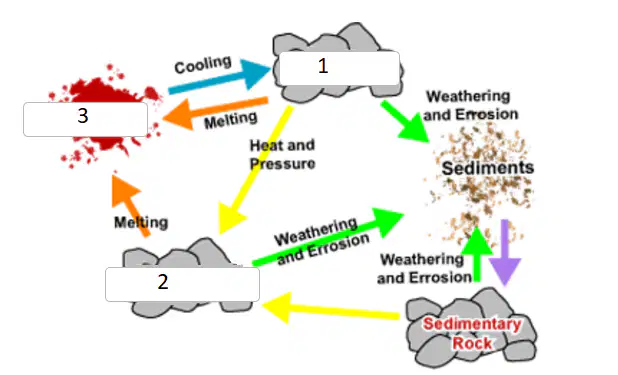
23. What type of rock is #1 on the diagram:
a)
Igneous Rock
b)
Sedimentary Rock
c)
Metamorphic Rock
24.
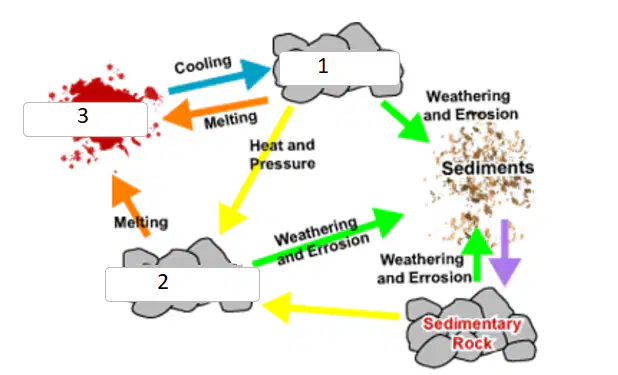
24. What type of rock is #2 on the diagram:
a)
Igneous Rock
b)
Sedimentary Rock
c)
Metamorphic Rock
25.
25. The rate of erosion would increase if the...
a)
Average Rainfall increased
b)
Wind speed decreased
c)
Slope of the land decrease
d)
Vegetation cover increased
26.
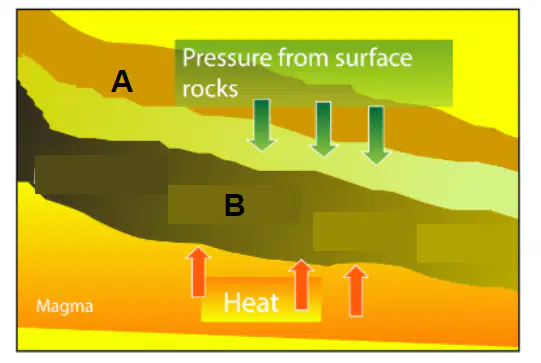
26. A miner is mining for granite, slate and marble. Use the image to determine if they would find what they are looking for in Layer B.
a)
This would be the best place for the miner to mine these rocks.
b)
This would not be a good place for the miner to mine these rocks.
27.
27. Which of the following changes to Earth's surface is most likely to represent the smallest scale of space and time?
a)
Formation of a canyon
b)
Uplift of mountain ranges
c)
Breakdown of rock into sediments
d)
A landslide on a mountain
28.
28. Which of the following land features would take the longest amount of time to change?
a)
Shape of a volcano
b)
Positions of sand dunes
c)
Locations of continents
d)
Fractures in rock formations
29.
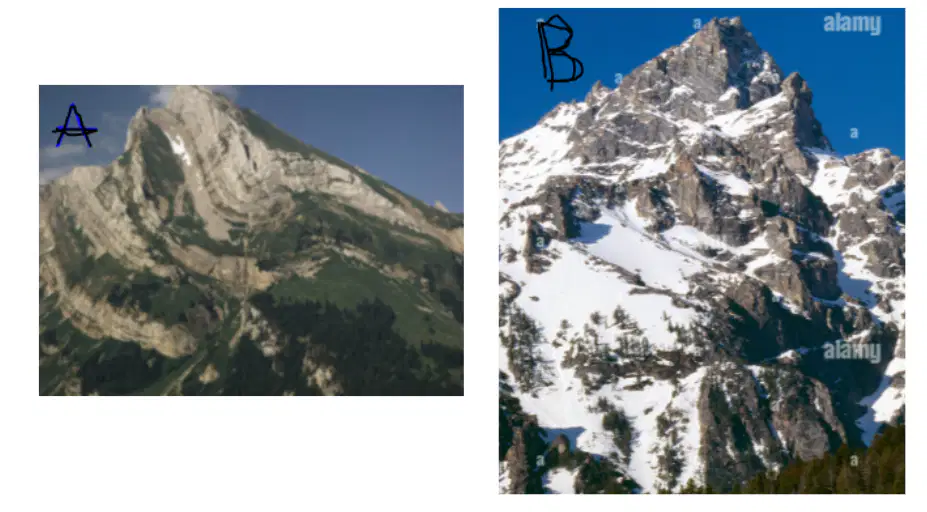
29. What type of deformation caused each mountain range to form.
a)
A. Foliation, B. Tension
b)
A. Folding, B. Fracturing
c)
A. Folding, B. Faulting
d)
A. Tension, B. Faulting
30.
30. What's the difference between erosion and deposition?
a)
Erosion happens because of water and deposition happens because of wind.
b)
Erosion is worse than depostion.
c)
Erosion removes sediment from a land form while deposition adds sediment to a land form
d)
Erosion happens because of wind and deposition happens because of water.
100 %

