
 Worksheets
Biochemistry
Total questions: 10
Worksheet time: 5mins
Which statement BEST describes how enzymes affect the speed of a metabolic reaction?
Enzymes decrease the energy needed to start a reaction, which increases the speed of the reaction.
Enzymes increase the concentration of reactants, which increases the speed of the reaction.
Enzymes replace the reactants in a chemical reaction, which decreases the speed of the reaction
Enzymes prevent products from being converted back into reactants, which decreases the speed of the reaction.
In living cells, enzymes act as catalysts, which may reduce the amount of activation energy required for a chemical reaction to occur. In the graphs below, pathway x is a solid line representing the uncatalyzed reaction. The dotted line shows the catalyzed reaction. Which graph best illustrates the changes in a reaction when the catalyst reduces the amount of energy required?


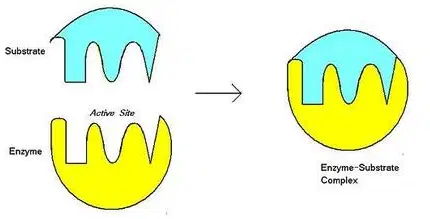
Identify the image and explain its function.
This is called the Lock and Key Model and it is when the active site of an enzyme is structured to fit a specifically shaped substrate.
This is called the Fischer Model and it is an example to show how every bone fits perfectly together in the body.
This is called the Active Site Model and its shows how shapes fit together.
This is called the Emil Enzyme Model and it shows how enzymes link up together.
What is a phospholipid bilayer?
a thin polar membrane made of two layers of lipid molecules. These membranes are flat sheets that form a continuous barrier around all cells.
a double layer of closely packed atoms or molecules.
a molecule produced by a living organism and essential to one or more typically biological processes.
a compound consisting of a nucleoside linked to a phosphate group.
Lipids are made up of ___ and ___.
monomers and peptide bonds
proteins and carbs
fatty acids and glycerol
insulin and cholesterol
What do carbs do for organisms?
Quick Energy, Acts as an energy source, helps control blood glucose
Moving and storing energy, absorbs vitamins and makes hormones
Serves as structural support for the body, they build and repair our muscles
Carries genetic information to make RNA/DNA
What do Proteins do for organisms?
Quick Energy, Acts as an energy source, helps control blood glucose
Moving and storing energy, absorbs vitamins and makes hormones
Serves as structural support for the body, they build and repair our muscles
Carries genetic information to make RNA/DNA
What do lipids do for organisms?
Quick Energy, Acts as an energy source, helps control blood glucose
Moving and storing energy, absorbs vitamins and makes hormones
Serves as structural support for the body, they build and repair our muscles
Carries genetic information to make RNA/DNA
What do nucleic acids do for organisms?
Quick Energy, Acts as an energy source, helps control blood glucose
Moving and storing energy, absorbs vitamins and makes hormones
Serves as structural support for the body, they build and repair our muscles
Carries genetic information to make RNA/DNA
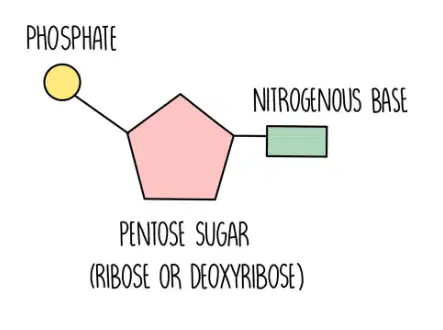
What molecule is this?
Nucleic Acid
Protein
Carb
Lipid

