
NEW
Font size
 Worksheets
Electromagnetism & Circuits
Total questions: 40
Worksheet time: 20mins
What is the term used to describe the flow of charged particles from one region to another?
Static electricity
Electric shock
Electric discharge
Electric current
What is a magnet or magnetized material?
An object that can conduct electricity.
An object with a north and south pole that produce a magnetic field.
A material that repels all other materials.
A substance that only attracts metals.
What causes magnetism in materials?
The alignment of protons in a material.
The spinning of electrons in a material.
The movement of neutrons within an atom.
The electrical current flowing through the material.
Magnetic fields flow out of the ______ and into the ______.
east; west
north; south
south; north
up; down
What do magnetic fields exert forces on?
Stationary charges
Moving charges
Magnetic poles
Insulators
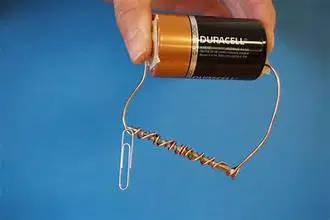
What is this image showing?
Electrical energy turning into mechanical
Mechanical energy turning into electrical
The principle of moving electric charges creating a magnetic field
Spinning of a turbine to create power
Which device below turns electrical energy into mechanical?
Motor
Generator
Turbine
Transformer
What do generators transform mechanical energy into?
Heat energy
Chemical energy
Electrical energy
Nuclear energy
What are turbines used for?
To produce intermittent power
To produce continuous power
To reduce the flow of fluids
To store energy
What causes the rotor in a turbine to revolve?
A slow-moving flow of water
Electrical energy
A fast-moving flow of water, steam, gas, air, or other fluid
Electric motors
Transformers are used to change the amount of _______ or current in a circuit.
resistance
voltage
power
energy
What is the name of the transformer that increases the voltage in a circuit?
Step-down transformer
Step-up transformer
Voltage-up transformer
Current-up transformer
What do you call a transformer that decreases the voltage in a circuit?
Voltage-down transformer
Current-down transformer
Step-up transformer
Step-down transformer
What is the purpose of a resistor in an electrical circuit?
To increase the voltage
To control the flow of current
To measure the current
To provide power to the circuit
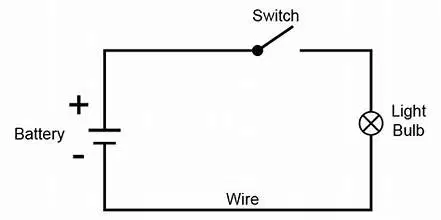
What does the schematic diagram of a circuit typically show?
The physical layout of the components
The actual size of the components
The symbolic representation of the components and their connections
The brand names of the components
What is the unit of measurement for resistance in a circuit?
Volts
Amps
Ohms
Watts
What best describes the current moving through a circuit?
A type of energy
A flow of protons
A flow of electrons
A magnetic field
What analogy can be used to describe a circuit in relation to current?
A closed box
A closed track
An open road
A flowing river
What do materials called conductors do?
Prevent current from flowing
Allow current to flow easily
Convert current into energy
Store electric current
What do materials called insulators do?
Allow current to flow easily
Store electric current
Do not allow easy current flow
Convert current into other forms of energy
How is the flow of electric current measured?
Volts
Watts
Ohms
Amperes
What is a key property of a circuit?
It must be a single line
It must be a closed loop
It must be an open system
It must be a parallel connection
What happens when there is a break in the circuit?
The current will flow more quickly.
The current will change direction.
The current will not flow.
The current will flow intermittently.
What causes current to flow in a circuit?
Resistance
Potential difference
Capacitance
Inductance
What is another term for potential difference in a circuit?
Current
Resistance
Voltage
Power
According to Ohm's Law, voltage is equal to current multiplied by what?
Power
Resistance
Capacitance
Inductance
What does the 'I' in the Ohm's Law equation V = I x R represent?
Impedance
Intensity
Current
Insulation
What symbol is used to represent resistance?
α (alpha)
β (beta)
Ω (omega)
δ (delta)
What happens to the current if the resistance in a circuit decreases?
The current decreases
The current remains the same
The current increases
The current alternates
What is the current flowing through a 12 V battery connected to a circuit with a resistance of 4 Ω?
2.0 amps
3.0 amps
4.0 amps
6.0 amps
What is the resistance in a circuit with a current of 5 amps and a potential difference of 20 volts?
4 Ω
5 Ω
25 Ω
100 Ω
What is electric power?
The resistance offered by a circuit
The potential energy in a circuit
The rate at which energy moves through a circuit
The amount of charge in a circuit
What can electric power appear as?
Only as light
Only as heat
Only as mechanical power
Light, heat, or mechanical power
How is power measured in an electric circuit?
Amps (A)
Volts (V)
Ohms (Ω)
Watts (W)
What is the formula for power in an electric circuit?
P = I + V
P = I / V
P = I * V
P = I - V
What is the power output of a circuit with 10 volts and 5 amps of current flow?
15 watts
50 watts
55 watts
100 watts
How much power does a circuit have with 10 ohms of resistance and 10 current amps?
1 watt
100 watts
1000 watts
1500 watts
In a series circuit, how does current flow?
Along multiple paths
Along a single path
In a parallel manner
It does not flow
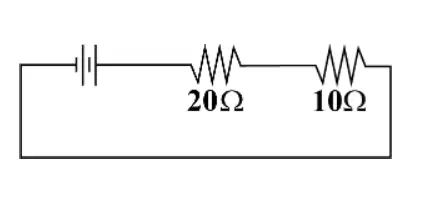
What is the total resistance of the series circuit shown in the diagram?
5 ohms
15 ohms
10 ohms
30 ohms
In a parallel circuit, how does current flow between two points?
Along a single path
Along multiple paths
In a closed loop without branching
It does not flow

