
 Worksheets
AP World National Exam Review
Total questions: 50
Worksheet time: 45mins
The Increased food production accompanying the introduction of Champa rice into China from Vietnam during the 11th century best illustrates which of the following?
The stimulation of agriculture by technological innovation
The reliance of China on food imports
The importance of Vietnam to the world economy
The influence of China on neighboring societies
Which of the following was a common feature of most Asian and European philosophies between 1000 to 1450?
Emphasis on experimental science
Reliance on ideas of individual freedom
A close association with religion
wide availability through printed books
Which of the following was the most important factor in enabling the Spanish to defeat the Aztec Empire?
The Spanish were able to use their understanding of Aztec culture to create effective propaganda that weakened Aztec resistance.
The Spanish were able to devise effective countermeasures to the horse cavalry that formed the bulk of the Aztec army.
The Spanish were able to form military alliances with other indigenous peoples who were enemies of the Aztecs.
The Spanish were able to exploit discontent within the Aztec state to trigger revolt of the lower classes against the Aztec ruling class.
Which of the following is true of commerce in the Indian Ocean during the time period 1000-1450?
Chinese merchants dominated the trade routes of the Indian Ocean.
Following the rise of the Mongols during the thirteenth century, the volume of Indian Ocean commerce fell sharply.
, Not Selected
There was very little commercial activity in the Indian Ocean.
Indian Ocean commerce flourished and was conducted by a mixture of Asian, Middle Eastern, and East African merchants.
From 1400 to 1750, Eurasian rulers sponsored the arts primarily for which of the following reasons?
To encourage tourism and pilgrimages
To display power and legitimize their rule
To increase employment opportunities for struggling artists
To spend excess money collected in taxes
Spain and Portugal signed the Treaty of Tordesillas (1494) primarily because they
needed to agree on the official languages for Central and South America in order to keep out English and French
wanted to protect the existing religions in South Asia and the Western Hemisphere
needed to resolve their territorial disputes after the discovery of ocean routes to the Americas and the Indian Ocean
did not wish to disrupt the plant and animal life of the Western Hemisphere with the introduction of foreign species
were concerned that the Western Hemisphere’s native peoples be treated humanely by the European conquerors
Inca and Aztec societies were similar in that both
developed from Mayan civilization
independently developed iron technology
depended entirely on oral record keeping
acquired empires by means of military conquest
Which of the following describes an accurate similarity between the Qing and Russian empires in the eighteenth and nineteenth centuries?
Both relied heavily on maritime trade as a source of material goods.
Both had vast territories with peoples of various ethnicity and languages.
Both successfully resisted pressure from industrialized powers.
Both were heavily influenced by the intellectual work of Jesuit missionaries.
Before 1700, Spain governed its American colonies through a system of
elected presidents
written constitutions
chartered companies
appointed administrators
independent merchants

Of the following, what reflects the role Islam played in intellectual exchange and innovation?
The Ka'aba
The Taj Mahal
Borobrodur
The House of Wisdom
How did the Inca expand and control of their empire?
The cut off trade with other places.
They killed everyone.
They built roads.
They made their own currency system.

What political system form due to the collapse of the Roman empire in Europe?
Feudalism
Communism
Republic
Confucianism
Which of the following is an indicator of increasing patriarchy in China?
Civil Service Exam
Veiling of Women
Footbinding
Issuing of Dowry's
What would be most responsible for the spike in population in China in the postclassical era?
the perfecting the manufacturing of Porcelain
the prolific trade on the Silk Road
the introduction of Champa rice to the Chinese diet
the high demand for Chinese silk
A major difference between the Inca and the Aztecs in their treatment of conquered people is-
Required labor rather than payment of tribute
Treated conquered people more harshly
Refrained from enslaving their captives
Allowed conquered people to retain their culture

What was Japan's response to foreign interference in the nineteenth century?
Adapt to Western politics and culture (Meiji Restoration)
Isolate themselves further by resisting and fighting
Became allies with the Chinese to become the dominant power in the region
Adapt to the ideas of the islanders and tribal people to resist

Why, in the time period c. 1750-1900, did European states fight to acquire overseas colonies?
To acquire raw materials to fuel their industrialization
To spread Enlightenment ideas
To abolish slavery worldwide
To stop the spread of Islam throughout the world

Why did European powers divide Africa by diplomatic agreements between each other?
Fear of going to war because of fierce competition
Rapid population increase in European colonies in Asia
Atlantic revolutions lead Europeans states to seek new troops
Creation of transnational business fostered exchange of raw materials
At what conference did the Europeans divide up Africa for their colonization?
Egypt Conference
London Conference
Belgium Conference
Berlin Conference
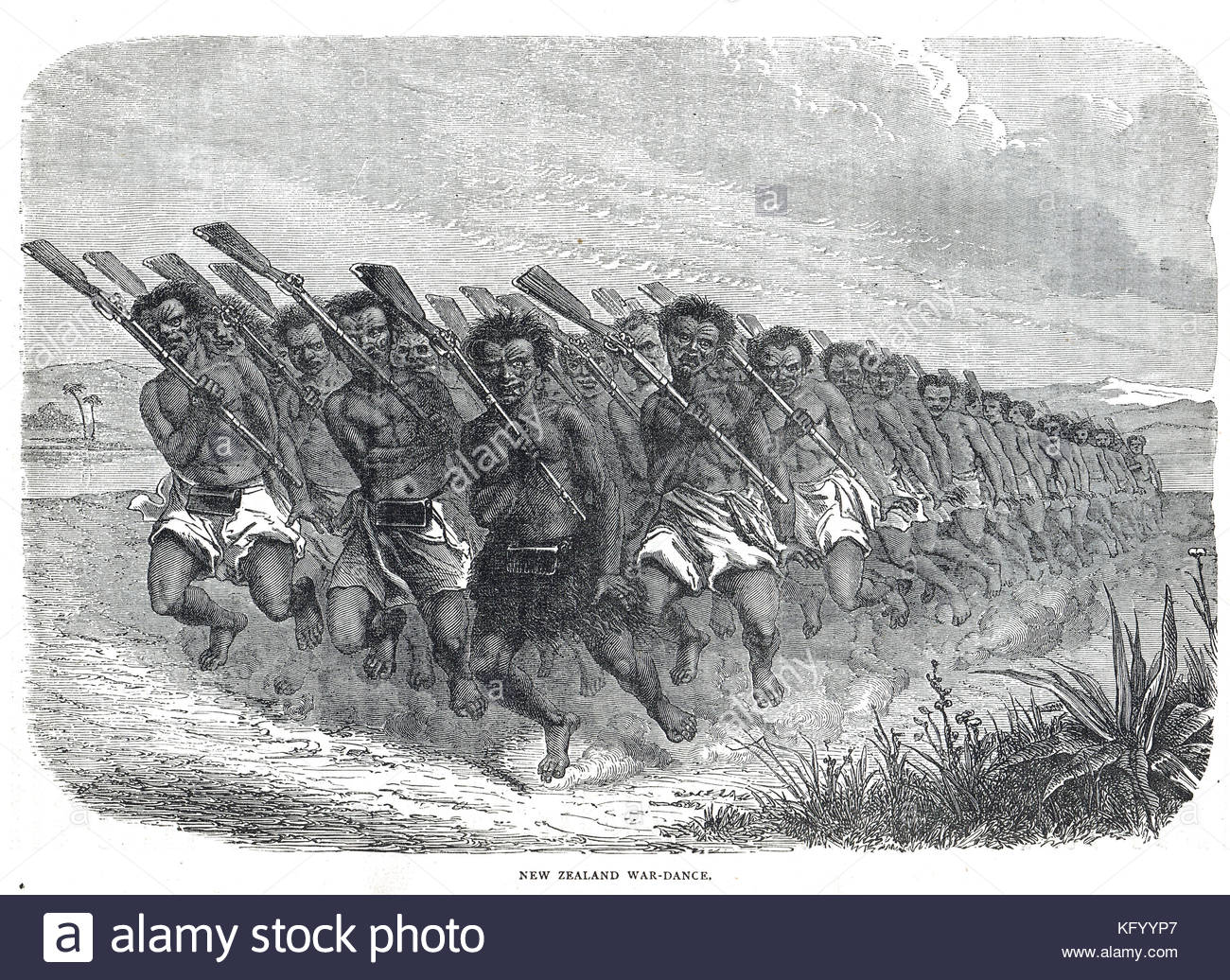
These Maori are going to war in
Australia
Indonesia
Kenya
New Zealand
The Monroe Doctrine
supported US Imperial ambitions
supported the British control of India
solved the "Scramble for Africa" issue
made the Opium Wars worse
How long is the multiple choice question section?
55 Minutes
60 minutes
3 hours 15 minutes
1 hour
Mansa Musa was:
an Islamic conqueror
an Islamic prophet
a wealthy king from West Africa
a travelling merchant
Why was it beneficial for Africans to convert to Islam?
business and trade benefits
no taxation
life or death
mandate of heaven
Dar-al-Islam refers to what?
original Arabian states
conquered territory in Anatolia
spread of Islam to Africa
all Muslim controlled territory
What was 'A'ishah al-Ba'uniyyah best known for?
creation of Triginometry
advancements in Algebra
large collection of Arabic poems
advancements in medicine
What invading group captured and conquered Anatolia?
Mongols
Mughols
Abbasids
Seljuk Turks
Nasir al-Din al-Tusi was know for
medical advances
writing poetry
leading the Abbasaid Dynasty
inventing Trigonometry
What is the total duration of the AP World History Modern Exam?
2 hours and 30 minutes
3 hours and 15 minutes
4 hours
5 hours
What is the exam weighting for the multiple-choice questions in Section 1?
10%
20%
30%
40%

Which of the following best explains the process illustrated in the image?
A. States increasingly relied on slave soldiers to establish large empires.
B. The invention of the stirrup allowed expanding states to use cavalry more effectively.
C. The development of new types of armor reduced casualties and allowed states to expand faster than before.
D. States used gunpowder weapons to establish large empires.

A historian interpreting the passage would most likely explain that the audience of the sermon is an illustration of the fact that
A. papal alliances with the Holy Roman emperors led to widespread religious persecutions in Germany
B. the Protestant German nobility was wary of confronting the Ottomans without Catholic support
C. political support from the German nobility aided in the development of the early Protestant community
D. the Protestant German nobility adopted pacifist attitudes during religious disputes with their Catholic and Muslim opponents
Why were joint-stock companies such as the East India Company or the Dutch East Indian Company the driving force behind the development of maritime empires?
they allowed continued exploration/ventures to colonize with limited risk to investors
they helped governments fund public journeys
they gave explorers the navigational tools they needed to succeed on their journeys
all of the above
What was the name of the communities created by runaway slaves during this time period?
Maroon societies
Secret societies
Underground Railroad
Haiti
Which of the following best describes the maroon wars in the Americas?
Slaves fought for their independence by escaping slaveholders & establishing independent settlements
British and Spanish colonists fought for territory in the Americas
Slave rebellions primarily along the east coast of North America
The Pueblo Revolt (1680) could be considered successful because...
the Pueblo and Apache fought off Spanish colonizers trying to force religious conversions, and kept their influence away until 1692.
the Spanish and Pueblo worked together to kick the French out of their native lands
the Pueblo and Apache fought off the British forever and established a maroon society
the revolt was the biggest native American-colonizer conflict of the 17th century
When is the AP World History Exam scheduled for the academic year 2023-2024?
May 1, 2024
May 15, 2024
June 1, 2024
June 15, 2024
Nuclear accident at Chernobyl in the former Soviet Union Dumping of toxic waste in the ocean Cutting down the rain forest in Africa and South America
Which conclusion can be drawn from these situations?
Environmental problems need global solutions.
The fall of the Soviet Union has caused severe environmental hazards.
Technology has helped the world stop polluting the environment
Only nations that create environmental problems will suffer from them.

What is one explanation for the great change in the world population between 1950 and 2000?
Family planning was successful.
There was an absence of war and conflict.
New medicines and technology were discovered and applied.
Famine and other natural disasters increased.

Based on this late 20th-century map, which conclusion is accurate?
The worldwide distribution of wealth is unequal.
Social mobility between social classes is increasing.
The communist movement is growing.
Economic self-sufficiency in less developed countries is increasing.
Which of the following is NOT a good example of the Americanization of global culture?
Subway
Coca-Cola
McDonald's
Rolex watches

