
 Worksheets
Energy Consetvation; 2nd partial quiz
Total questions: 11
Worksheet time: 36mins
Name
Class
Date
1.
What is a chemical reaction?
a)
A chemical reaction is a physical change in matter.
b)
A chemical reaction is a process that leads to the transformation of one set of chemical substances to another.
c)
A chemical reaction is a change in temperature.
d)
A chemical reaction is a biological process.
2.
What's energy?
a)
Energy is a type of food.
b)
Energy is a color.
c)
Energy is a type of animal.
d)
Energy is the ability to do work or cause change.
3.
What is light?
a)
Light is electromagnetic radiation that is visible to the human eye.
b)
Light is a type of liquid substance.
c)
Light is a type of solid material.
d)
Light is a form of sound waves.
4.
What is thermodynamics?
a)
Thermodynamics is a form of ancient philosophy
b)
Thermodynamics is a type of cooking technique
c)
Thermodynamics is the branch of physical science that deals with the relations between heat and other forms of energy.
d)
Thermodynamics is the study of weather patterns
5.
What does thermodynamics 0th law stand for?
a)
Systems in thermal equilibrium with a third system are not in thermal equilibrium with each other.
b)
The 0th law of thermodynamics states that energy cannot be created or destroyed.
c)
The 0th law of thermodynamics deals with the conservation of mass.
d)
Systems in thermal equilibrium with a third system are in thermal equilibrium with each other.
6.
What does mechanical equivalent of heat stand for?
a)
Interchangeability of mechanical work and heat
b)
Conversion of light into heat energy
c)
Transformation of sound waves into mechanical energy
d)
Transfer of electrical energy into chemical energy
7.

How much heat is released when 30 g of water at 96°C cools to 25°C? The specific heat of water is 1 cal/g°C.
8.
What's thermal radiation?
a)
Thermal radiation is the absorption of heat by an object due to its color.
b)
Thermal radiation is the emission of electromagnetic waves from the surface of an object due to its temperature.
c)
Thermal radiation is the process of converting heat into mechanical energy.
d)
Thermal radiation is the transfer of heat through direct contact between objects.
9.
What is chemical energy?
a)
Chemical energy is a form of potential energy stored in the bonds of chemical compounds.
b)
Chemical energy is a form of thermal energy
c)
Chemical energy is a form of mechanical energy
d)
Chemical energy is a form of kinetic energy
10.
Place the parts of the carbon cycle where they must be
a)
Organic Carbon
b)
Factory emissions
c)
Sunlight
d)
Fossils
e)
photosynthesis
f)
Animal respiration
1
2
3
4
5
6
1)
2)
3)
4)
5)
6)
11.
Match the pictures with the kind of electricity generation that they represent
a)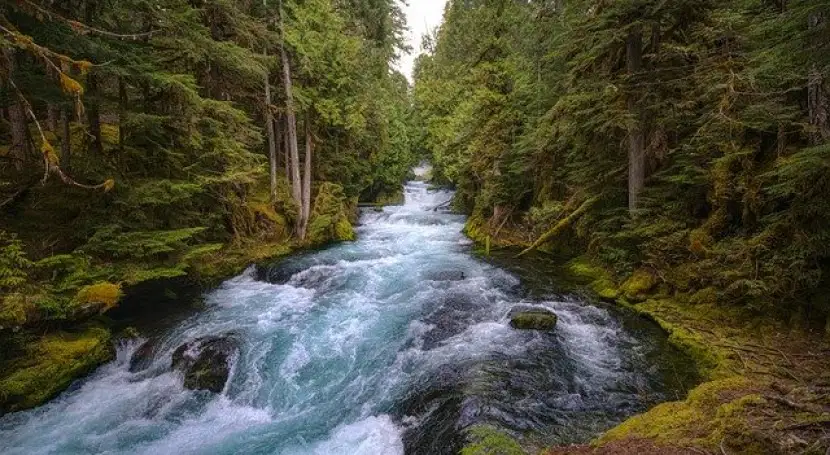
1.
Hydroelectric
b)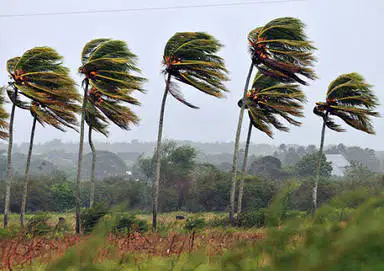
2.
Wind
c)
3.
Nuclear
d)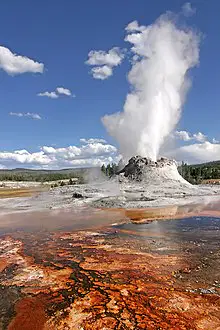
4.
Geothermal
e)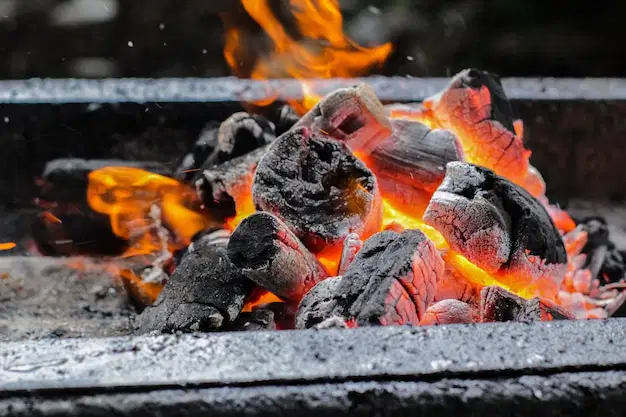
5.
Thermoelectric
100 %

