
 Worksheets
Rubric Quiz
Total questions: 227
Worksheet time: 7hrs 43mins
What is required for a score of 3 in Organization and Development of Ideas?
The controlling idea/thesis is evident but not fully developed, and the organization is minimal.
The controlling idea/thesis is clear and fully developed, and the response includes effective introduction and conclusion.
The controlling idea/thesis is present but not developed appropriately, and logical development is not always evident.
The response lacks an introduction and conclusion, and the expression of ideas is unclear.
What does a score of 2 in the Conventions category indicate about a student's writing?
The writing demonstrates consistent command of grade-level appropriate conventions.
The writing demonstrates inconsistent command of grade-level appropriate conventions.
The writing demonstrates little to no command of grade-level appropriate conventions.
The writing has several errors, but these errors impact the clarity of the writing.
What is a characteristic of a response that scores a 1 in the Organization and Development of Ideas category?
The response includes specific, well-chosen, and relevant text-based evidence.
The expression of ideas is clear and effective, enhancing the overall quality of the response.
The expression of ideas is ineffective, and sentences and phrases are often imprecise and interfere with the essay's meaning.
The response is well-organized with a clear introduction and conclusion.
If a student receives a score of 0 in the Organization of Ideas trait, what score will they automatically receive in the Conventions trait?
0
1
2
3
What does a score of 1 in the Conventions category suggest about a student's writing?
The writing demonstrates a strong command of grade-level appropriate conventions with minimal errors.
The writing demonstrates an inconsistent command of grade-level appropriate conventions with frequent errors.
The writing demonstrates little command of grade-level appropriate conventions with errors that significantly impact readability.
The writing demonstrates a moderate command of grade-level appropriate conventions with some errors.
For a student to achieve a score of 4 in the Organization and Development of Ideas category, which of the following must be true?
The controlling idea/thesis is somewhat developed, and the organization shows an attempt at coherence.
The controlling idea/thesis is clear, fully developed, and the response includes a logical progression of ideas with effective introduction and conclusion.
The controlling idea/thesis is vague, and the response lacks a logical progression of ideas.
The response lacks both an introduction and a conclusion, making the organization of ideas difficult to follow.
What does a score of 3 in Conventions imply for a student's writing?
The writing has no errors in conventions, showing perfect command.
The writing has minimal errors, showing strong command of conventions.
The writing has numerous errors, indicating a lack of command.
The writing shows inconsistent command of conventions with some errors.
What does a score of 0 in the Conventions category indicate about a student's writing?
The writing demonstrates a strong command of grade-level appropriate conventions with minimal errors.
The writing demonstrates an inconsistent command of grade-level appropriate conventions with frequent errors.
The writing demonstrates little to no command of grade-level appropriate conventions, with errors that significantly impact readability.
The writing demonstrates a moderate command of grade-level appropriate conventions with some errors.
For a student to achieve a score of 3 in the Conventions category, which must be true?
The writing has no errors in conventions, demonstrating perfect command of grade-level conventions.
The writing has minimal errors that do not impede readability, showing a strong command of grade-level conventions.
The writing has numerous errors that make understanding difficult, indicating a lack of command of grade-level conventions.
The writing demonstrates an inconsistent command of conventions with errors that occasionally impede readability.
What is the first paragrph of your extended constructed response?
(a)
What goes into the Background (ATMS)? (a) (b) (c) (d)
What is the first sentence of your introduction?
Hook
Background
Quote
Thesis
We use the (a) to create the thesis statement.
What is the first sentence of your body paragraphs?
(a)
Where does the topic sentence come from?
Background
Thesis
I have no idea
What follows the topic sentence in your body paragraphs?
Cite Evidence
Restate Thesis
Conclusion
Explain
You should (a) after you cite evidence.
Topic Sentence
Cite Evidence
Restate Thesis
What is the last paragraph of your ECR?
(a)
What is the first sentence of your conclusion?
To create an Extended Constructed Response what must be included?
Evidence that connects with your claim
Evidence that is completely off topic, but hey have evidence!
Answer to the question.
It is ok to just not do them!
What is the correct way to write an ECR?
Introduction
SCR
SCR
Conclusion
Introduction
SCR
SCR
SCR
Intro
Conclusion
Which part of ECR is the most important?
Introduction
2 SCR paragraphs
Conclusion
All answers are equally
How does adding punctuation help in ECR's?
(a)
While reading the article, what should you be doing?
I should be annotating the article and paying attention to the important details that will answer the prompt while reading the article.
I should be sleeping while reading the article.
I should be writing the essay while reading the article.
I should be creating the graphic organizer while reading the article.
What do you do after your read the article?
After I read the article, I should end the test.
After I read the article, I should annotate the article.
After I read the article, I should read and analyze (break apart) the prompt.
After I read the article, I should write the essay.
What should you do with your piece of paper to create your 4 Box Graphic Organizer?
I should not create a graphic organizer.
I should fold the paper into fourths.
I should fold the paper into eighths.
I should not fold it.
What do you do after your read the article?
After I read the article, I should end the test.
After I read the article, I should annotate the article.
After I read the article, I should read and analyze (break apart) the prompt.
After I read the article, I should write the essay.
While reading the article, what should you be doing?
I should be annotating the article and paying attention to the important details that will answer the prompt while reading the article.
I should be sleeping while reading the article.
I should be writing the essay while reading the article.
I should be creating the graphic organizer while reading the article.
How many sentences are in an ECR?
There should be at least 4 sentences in an ECR.
There should be at least 10 sentences in an ECR.
There should be at least 6 sentences in an ECR.
There should be at least 3 sentences in an ECR.
While reading the article, what should you be doing?
I should be annotating the article and paying attention to the important details that will answer the prompt while reading the article.
I should be sleeping while reading the article.
I should be writing the essay while reading the article.
I should be creating the graphic organizer while reading the article.
What do you do after your read the article?
After I read the article, I should end the test.
After I read the article, I should annotate the article.
After I read the article, I should read and analyze (break apart) the prompt.
After I read the article, I should write the essay.
What should you do with your piece of paper to create your 4 Box Graphic Organizer?
I should not create a graphic organizer.
I should fold the paper into fourths.
I should fold the paper into eighths.
I should not fold it.
What is Box 1 of the graphic Organizer referred to as in your Extended Constructed Response Essay (ECR)?
Box 1 is P4 (paragraph 4).
Box 1 is P3 (paragraph 3).
Box 1 is P2 (paragraph 2).
Box 1 is P1 (paragraph 1).
What is Box 2 of the graphic Organizer referred to as in your Extended Constructed Response Essay (ECR)?
Box 2 is P4 (paragraph 4)
Box 2 is P3 (paragraph 3).
Box 2 is P2 (paragraph 2).
Box 2 is P1 (paragraph 1).
What is Box 3 of the graphic Organizer referred to as in your Extended Constructed Response Essay (ECR)?
Box 3 is P4 (paragraph 4)
Box 3 is P3 (paragraph 3).
Box 3 is P2 (paragraph 2).
Box 3 is P1 (paragraph 1).
What is Box 4 of the graphic Organizer referred to as in your Extended Constructed Response Essay (ECR)?
Box 4 is P4 (paragraph 4)
Box 4 is P3 (paragraph 3).
Box 4 is P2 (paragraph 2).
Box 4 is P1 (paragraph 1).
After folding the graphic organizer into fourths and labeling the boxes as paragraphs, what should you do?
After folding the graphic organizer into fourths and labeling the boxes as paragraphs, I should write the claim in P2.
After folding the graphic organizer into fourths and labeling the boxes as paragraphs, I should type the essay.
After folding the graphic organizer into fourths and labeling the boxes as paragraphs, I should write the conclusion in P4.
After folding the graphic organizer into fourths and labeling the boxes as paragraphs, I should develop the claim/thesis statement by answering the question or statement in the prompt and write it in P1.
What information is required for P1 of the graphic organizer?
In P1 of the graphic organizer, I need to restate the prompt and write my claim/thesis statement with 2 reasons that support my answer.
In P1 of the graphic organizer, I need to add a transition word and write my claim/thesis statement.
In P1 of the graphic organizer, I need to write the conclusion to my essay.
In P1 of the graphic organizer, I need to write my claim/thesis statement with reason #1 and text evidence.
What information do I need to include in P2 of the graphic organizer?
In P2 of the graphic organizer, I need to include the claim/thesis statement with 2 reasons that support my answer to the prompt.
In P2 of the graphic organizer, I need to include a transition word or phrase, the claim/thesis statement with Reason #1, quote the author phrase, and text evidence.
In P2 of the graphic organizer, I need to include only my text evidence to support the claim/thesis statement.
In P2 of the graphic organizer, I need to include, the claim/thesis statement with 2 reasons and text evidence.
What should I include in P3 of the graphic organizer?
In P3 of the graphic organizer, I should include a closing transition phrase and the claim/thesis statement with 2 reasons.
In P3 of the graphic organizer, I should include a quote the author phrase and text evidence.
In P3 of the graphic organizer, I should include a transition word with the claim/thesis statement and text evidence.
In P3 of the graphic organizer, I should include a transition word or phrase, claim/thesis statement with reason #2, quote the author phrase, and text evidence.
What information belongs in P4 of the graphic organizer?
In P4 of the graphic organizer, I need to add a closing transition word or phrase and restate the claim/thesis statement with 2 reason. I should also add a connection or thought that can support my answer to the prompt.
In P4 of the graphic organizer, I need to restate the claim/thesis statement with 2 reasons that answer the question or statement in the prompt.
In P4 of the graphic organizer, I need to add my text evidence that supports my answer to the prompt.
In P4 of the graphic organizer, I do not need to write anything,
Which group of transition words and phrases belong in P2?
P2 Transition Words and Phrases:
To continue,
Furthermore,
Another key point,
To add on,
To build on my last reason,
At the same time,
Additionally,
P2 Transition Words and Phrases:
To begin with,
First and foremost,
First of all,
To mention first,
An important thing to begin with is,
P2 Transition Words and Phrases:
All in all,
As you can see,
It’s easy to see,
In conclusion,
As I’ve explained,
To conclude,
As shown above,
Obviously,
P2 Transition Words and Phrases:
As told in the article,
The article clearly states,
According to the article,
The author states,
According to the author,
The article continues to state,
The author mentions,
In the article,
The author clearly states,
Which group of transition words and phrases belong in P3?
P3 Transition Words and Phrases:
As told in the article,
The article clearly states,
According to the article,
The author states,
According to the author,
The article continues to state,
The author mentions,
In the article,
The author clearly states,
P3 Transition Words and Phrases:
To begin with,
First and foremost,
First of all,
To be clear,
To mention first,
An important thing to begin with is,
P3 Transition Words and Phrases:
To continue,
Furthermore,
Another key point,
To add on,
To build on my last reason,
At the same time,
Additionally,
P3 Transition Words and Phrases:
All in all,
As you can see,
It’s easy to see,
In conclusion,
As I’ve explained,
To conclude,
As shown above,
Obviously,
Which group of transition words and phrases belong in P4?
P4 Transition Words and Phrases:
All in all,
As you can see,
It’s easy to see,
In conclusion,
As I’ve explained,
To conclude,
As shown above,
Obviously,
P4 Transition Words and Phrases:
To begin with,
First and foremost,
First of all,
To be clear,
To mention first,
An important thing to begin with is,
P4 Transition Words and Phrases:
To continue,
Furthermore,
Another key point,
To add on,
To build on my last reason,
At the same time,
Additionally,
P4 Transition Words and Phrases:
As told in the article,
The article clearly states,
According to the article,
The author states,
According to the author,
The article continues to state,
The author mentions,
In the article,
The author clearly states,
Which transition words and phrases should you use to quote the author for your text evidence?
All in all,
As you can see,
It’s easy to see,
In conclusion,
As I’ve explained,
To conclude,
As shown above,
Obviously,
To begin with,
First and foremost,
First of all,
To be clear,
To mention first,
An important thing to begin with is,
To continue,
Furthermore,
Another key point,
To add on,
To build on my last reason,
At the same time,
Additionally,
As told in the article,
The article clearly states,
According to the article,
The author states,
According to the author,
The article continues to state,
The author mentions,
In the article,
The author clearly states,
In paragraph ____ of the article,
In the article ______, it explains,
How many paragraphs are in an ECR?
There are 2 paragraphs in an ECR.
There are 4 paragraphs in an ECR.
There are 3 paragraphs in an ECR.
There is 1 paragraphs in an ECR.
How many sentences are in an ECR?
There should be at least 4 sentences in an ECR.
There should be at least 10 sentences in an ECR.
There should be at least 6 sentences in an ECR.
There should be at least 3 sentences in an ECR.
What are the key elements for scoring five points in extended constructed responses?
Clear thesis statements, supporting evidence, and logical organization
Grammar and punctuation, vocabulary and word choice, and sentence structure
Introduction, body paragraphs, and conclusion
Spelling, capitalization, and paragraph indentation
What is the purpose of starting an essay with a hook?
To provide context for the topic
To introduce the main argument
To grab the reader's attention
To outline the main points
What skills are developed in mastering the art of extended constructed response?
Skills in organization, clarity, and coherence
Skills in evidence, reasoning, and precise language
Skills in editing for grammar, punctuation, and spelling
Skills in utilizing evidence and reasoning

There will be one 0, one 1, one 2, one 3, one 4, and one 5. What would you score this essay?
2
3
4
5

There will be one 0, one 1, one 2, one 3, one 4, and one 5. What would you score this essay?
2
3
4
5

There will be one 0, one 1, one 2, one 3, one 4, and one 5. What would you score this essay?
1
2
3
4

There will be one 0, one 1, one 2, one 3, one 4, and one 5. What would you score this essay?
0
1
2
3
Highlight in green what you are supposed to write about. (The prompt) Highlight in blue what you have to include in your essay. Highlight in yellow how you know whether it is an SCR (short constructed response) or ECR (Extended Constructed Response).

COMPARE/CONTRAST
Highlight the main points (bolded) in blue that are the same/repeated. Highlight what is different between 3 pts. and 2 pts. in yellow.

Which group of words signal a conclusion?
In the end
In conclusion
Finally
In the beginning
First
To start
Secondly,
Then,
Next
Although
However
Even though
Fill in the blanks:
Use ______ and/or _______ from the passage(s).
ideas
details
details
details
only your ideas
creativity
grammar
spelling
True/False
Your writing should be based on ideas from the passage.
True
False
What is the function/purpose of the restate sentence?
To remind the reader and reinforce your main point
To insult the reader’s intelligence
Restate and answer the following question using a complete sentence. What is the capital of Louisiana?
It is Baton Rouge.
The capital of Louisiana is Baton Rouge.
Baton Rouge is the answer.
Baton Rouge is in Louisiana.
Restate and answer the following question. How did Columbus’ arrival in the New World come to signal the end for native cultures worldwide?
Columbus' arrival in the New World came to signal the end for native cultures worldwide.
Columbus' arrival in the New World came to signal the end for native cultures worldwide and for that I am glad.
Columbus' arrival in the New World came to signal the end for native cultures worldwide by spreading diseases and creating conflicts in the New World.
I don't think that Columbus' arrival in the New World came to signal the end for native cultures worldwide.
Restate and answer the following question. What is the name of the river that was used by the Poverty Point Indians for trade?
The Poverty Point Indians and the Mississippi River are important to the culture of Louisiana.
It is the Mississippi River.
The Mississippi River is located between Louisiana and Mississippi.
The Poverty Point Indians used the Mississippi River for trade.
When copying a piece of evidence from a text, there should be what around the evidence?
Colons
Parenthesis
Quotation Marks
Commas
Students must show CONSISTENT command of grade-level appropriate conventions including ... (check all that apply)
sentence construction (i.e., sentence formulas)
punctuation
capitalization
grammar
spelling
What does "ECR" stand for?
Extra Constructed Response
Extended Created Response
Extra Creative Response
Extended Constructed Response
Which "question type" requires that you use textual evidence to support your response.
Extended Constructed Response
Short Constructed Response
Both
Extended Constructed Response and Short Constructed Response
Which "question type" requires you to read a passage and write your response based on that passage.
Extended Constructed Response
Short Constructed Response
Both
Extended Constructed Response and Short Constructed Response
Using examples to support your points can make your writing more convincing.
True
False
Including irrelevant information in your writing is acceptable as long as it sounds impressive.
True
False
What are some factors that the extended writing section of the STAAR Test scores based on?
Grammar, punctuation, and spelling
Organization and development of ideas
Use of language
All of the above
What is an important skill to demonstrate when developing your ideas in the extended writing section of the STAAR Test?
Providing evidence to support your ideas
Making up facts and statistics
Including opinions without evidence
All of the above
Explain why the author chose to bold some words in the passage.
The significance of the title of the play is...
The text states that the old grasshopper ran home.
This is a good introduction to the question above.
Is the prompt asking your opinion or to give information?
Which 2 things should be included in a BODY PARAGRAPH?
Evidence
Hook
Thesis Statement
Explanation of Evidence
Select 2 similarities between:
- Short Constructed Response
and
- Extended Constructed Response
Response must be written in 1 paragraph.
Response must be based on a passage.
Response include evidence to support their response or idea.
Instructions include "steps" to follow.
Response must include your opinion.

The question displayed is an example of which "question type"?
Text Entry
Extended Constructed Response
Short Constructed Response
Multiselect

The question displayed is an example of which "question type"?
Short Constructed Response
Extended Constructed Response
Match Table Grid
Text Entry
Read the question carefully. Then record your answer in the box provided.
What is one similarity between the boy in “Jim at Bat” and Billy Crystal in “A Crystal-Clear Love Affair”? Support your answer with evidence from the article.
Extended Constructed Response (ECR)
Short Constructed Response (SCR)
Sentence 11 needs to be revised. In the box provided, rewrite sentence 11 in a clear and effective way.
Extended Constructed Response (ECR)
Short Constructed Response (SCR)
Read the question carefully. Then record your answer in the box provided.
After reading “Hearing the Sweetest Songs,” do you think the author considers herself disabled? Support your answer with evidence from the article.
Extended Constructed Response (ECR)
Short Constructed Response (SCR)

ECR or SCR?
Extended Constructed Response (ECR)
Short Constructed Response (SCR)
What are some quick ways to tell the difference between an SCR prompt and an ECR prompt? (Choose TWO)
SCR prompts are shorter.
ECR prompts are shorter.
ECR prompts say "in a well-written essay."
SCR prompts tell you to use evidence.
Sentence 8 repeats information. In the box provided, rewrite sentence 8 in a clear and effective way.
Extended Constructed Response (ECR)
Short Constructed Response (SCR)
Read the statement carefully. Then record your answer in the box provided.
Explain how Anthony’s behavior in paragraphs 12 through 14 affects the resolution of the plot. Support your answer with evidence from the story.
Extended Constructed Response (ECR)
Short Constructed Response (SCR)

ECR or SCR?
Extended Constructed Response (ECR)
Short Constructed Response (SCR)

ECR or SCR?
Extended Constructed Response (ECR)
Short Constructed Response (SCR)
How many sentences should your answer to a short constructed response (SCR) have?
What does ACE stand for? Do you use ACE for short constructed responses (SCRs) or extended constructed responses (ECRs)?
Choose the items that you should always include in an extended constructed response (ECR).
Thesis statement
Evidence from the text
A story from your life
An introduction
A conclusion
When answering the prompt, you have to make sure you...
write your name
restate and answer the prompt
write 1 word as your answer
nothing
How many paragraphs must a extended constructed response have?
1 word
your name
1 paragraph
4 paragraphs
What does extended constructed response mean?
It is a writing question that has a prompt and I have to answer by writing 4 paragraphs.
It is a writing question, that I can answer with 1 sentence.
It is a writing question, that I can answer with 1 word.
It is a multiple choice question, where I can choose an answer.
What is the first sentence of your ECR called?
Controlling sentence
Main Idea
Thesis
Summary sentence
In the ECR, after providing evidence you must _______
Repeat what the evidence says
Give another piece of evidence to support the evidence
Provide reasoning for why the evidence is important
Explain the connection between the evidence & the prompt
STEP 1: Read the prompt
STEP 2: _____________
Annotate the text
Find the Key Words
Write the thesis/Answer
Reread the prompt
The conclusion must include...
how the writer feels about the topic
why the evidence is important
text evidence
a restated central idea
How can you explain the text evidence in your essay?
make it matter
tell why
state your opinion
share a short story that connect to the evidence
ECR is short for...
Extra Constructed Response
Extended Complicated Response
Extended Constructed Response
Extended Critical Response
Sketch out what your ECR planning chart should look like:

Compare and contrast an extended constructed response (ECR) to a short constructed response (SCR).
SCRs are longer than ECR needing 2,300 characters.
ECRs are longer and more developed than SCRs.
SCRs grade grammar.
ECRs do not grade grammar.
What is the highest number of points you can earn when constructing an Extended Constructed Response?
2 points
3 points
4 points
5 points
In an ECR, what is the highest number of points you can earn when there is no thesis, even if spelling, punctuation, and grammar are perfect?
zero
one
four
five
In an ECR, what is the highest number of points you can earn when there is no thesis, even if spelling, punctuation, and grammar are perfect?
zero
one
four
five
In an ECR, what is the highest number of points you can earn when there is no thesis, even if spelling, punctuation, and grammar are perfect?
zero
one
four
five
When you construct a writing response on STAAR, who is your audience?
you
The rater who doesn't know you.
your teacher
Mrs. Lanham
Why are the prompts important?
Prompts give you an idea of what to write.
All of the above
Prompts are needed to create your thesis.
Prompts include the topic of your response.
Where in your essay, should your thesis go?
The first paragraph only.
Only in the title.
The first and last paragraph.
The body paragraph.
As a reader, where can you find the author's controlling idea or thesis (non-fiction)?
In the body paragaphs.
Towards the end.
Towards the beginning.
Only in the title.
How will the test raters grade your written responses?
However they want.
Using the TEA rubrics.
With a checklist.
With their eyes closed.
How will the test raters grade your written responses?
However they want.
Using the TEA rubrics.
With a checklist.
With their eyes closed.
How will the test raters grade your written responses?
However they want.
Using the TEA rubrics.
With a checklist.
With their eyes closed.
How will the test raters grade your written responses?
However they want.
Using the TEA rubrics.
With a checklist.
With their eyes closed.
True or False: You should always include text evidence on your written responses.
TRUE
FALSE
True or False: You should always include text evidence on your written responses.
TRUE
FALSE
True or False: You should always include text evidence on your written responses.
TRUE
FALSE
True or False: You should always include text evidence on your written responses.
TRUE
FALSE
True or False: You should always include text evidence on your written responses.
TRUE
FALSE
What is the first step in the writing process?
Typing your final copy.
Pre-writing or brainstorming.
Revise and edit your draft.
Write your draft.
You MUST write a draft ON PAPER before typing your answer.
All of the Above!
Of course!
Absolutely!
Yes!
You MUST write a draft ON PAPER before typing your answer.
All of the Above!
Of course!
Absolutely!
Yes!
You MUST write a draft ON PAPER before typing your answer.
All of the Above!
Of course!
Absolutely!
Yes!
You MUST write a draft ON PAPER before typing your answer.
All of the Above!
Of course!
Absolutely!
Yes!
You MUST write a draft ON PAPER before typing your answer.
All of the Above!
Of course!
Absolutely!
Yes!
You MUST write a draft ON PAPER before typing your answer.
All of the Above!
Of course!
Absolutely!
Yes!
You MUST write a draft ON PAPER before typing your answer.
All of the Above!
Of course!
Absolutely!
Yes!
You MUST write a draft ON PAPER before typing your answer.
All of the Above!
Of course!
Absolutely!
Yes!
What should you do if there is an unfamiliar word in the prompt?
Skip over it.
Look it up.
Replace it with another word.
Guess what it is.
What should you do if there is an unfamiliar word in the prompt?
Skip over it.
Look it up.
Replace it with another word.
Guess what it is.
What should you do if there is an unfamiliar word in the prompt?
Skip over it.
Look it up.
Replace it with another word.
Guess what it is.
What should you do if there is an unfamiliar word in the prompt?
Skip over it.
Look it up.
Replace it with another word.
Guess what it is.
A person, or sometimes an animal, who takes part in the action of a story.
setting
theme
character
plot
A time and place in which the story happens
theme
setting
plot
point of view
The events that happen in the story from the beginning to the end.
Plot
Point of view
Theme
Setting
A struggle between two people or things in a story.
plot
conflict
theme
point of view
Who is telling the story
point of view
character
plot
theme
The narrator tells the story from the “I” perspective.
1st person point of view
3rd person omniscient point of view
3rd person limited point of view
2nd person point of view
The narrator tells the story of another person or group of people. The narrator may be far removed from or not involved in the story, or he or she may be a supporting character supplying narration for a hero.
1st person point of view
2nd person point of view
3rd person point of view
4th person point of view
What is the function/purpose of the restate sentence?
To remind the reader and reinforce your main point
To insult the reader’s intelligence
Reread the prompt for a short constructed response to make sure you haven't missed anything in the question
False
True
Restate and answer the following question. How did Columbus’ arrival in the New World come to signal the end for native cultures worldwide?
Columbus' arrival in the New World came to signal the end for native cultures worldwide.
Columbus' arrival in the New World came to signal the end for native cultures worldwide and for that I am glad.
Columbus' arrival in the New World came to signal the end for native cultures worldwide by spreading diseases and creating conflicts in the New World.
I don't think that Columbus' arrival in the New World came to signal the end for native cultures worldwide.
How many total points can a student earn on an Extended Constructive response
2
5
10
3
There are (a) scorers for the ECR
What are the two components are the ECR graded on?
organization and development of ideas
language conventions.
Organization and information
Language conventions and Development
There are two modes for both short and Extended responses, Check all that apply
Informational
Argumentative
Fiction
Persuasive
What are the 3 types of Writing you will see on the STAAR Test -
Short Constructed Response - Reading, Short Constructed Response- Writing, and Extended Constructed Response - Essay
Short Constructed Response, Medium Constructed Response, and Extended Constructed Response
Only SCR (Short Constructed Responses)
Only ECR (Extended Constructed Responses)
What method should you use on the Short Constructed Response - Writing question?
Type the sentence using correct grammar.
RACE
RACECES
Nothing
What is the 1st Step of the Writing Process?
Pre-Writing
Drafting
Revising
Editing
What is the 2nd step of the Writing Process?
Pre-Writing
Drafting
Revising/ Editing
Publishing
What is the 3rd step of the Writing Process?
Pre-Writing
Drafting
Revising
Publishing
What is the 4th step of the Writing Process?
Pre-Writing
Revising
Editing
Publishing
What is the 5th Step of the Writing Process?
Pre-Writing
Revising
Editing
Publishing
Which of the following is not something you do in the Revising portion?
Make sure you have 3 paragraphs
Turn the prompt into a question
Make sure your writing is grade appropriate
Make sure you have 2 forms of Text Evidence
What are the two steps in the Pre-Writing section?
Read the Prompt/ Turn the Prompt into a question
Read the Passage/ Write your Essay
Read the prompt/ Write your essay
Turn the Prompt into a question/ Revise your essay
All of the following steps should be done on the lined paper EXCEPT -
Publishing
Pre-Writing
Revising/Editing
Drafting
The museum is home to Houston's
first 4-D theater. While the McGovern 4D Theater shows 3-D movies, it adds other kinds of special effects that allow moviegoers to experience what is happening on screen. For example, different scents are released in the theater so that viewers can smell what is happening. Water, wind, or vibrations are also included to enhance the movie experience.
In this paragraph, what does the word enhance mean?
increase the quality
reduce the volume
enlarge the images
imitate the sounds

What type of writing prompt is this?
Reading Short Answer Response
Extended Constructed Response
Writing Short Answer Response

What type of writing prompt is this?
Reading Short Answer Response
Extended Constructed Response
Writing Short Answer Response

What type of writing prompt is this?
Reading Short Answer Response
Extended Constructed Response
Writing Short Answer Response

What type of writing prompt is this?
Reading Short Answer Response
Extended Constructed Response
Writing Short Answer Response

What type of writing prompt is this?
Reading Short Answer Response
Extended Constructed Response
Writing Short Answer Response

What type of writing prompt is this?
Reading Short Answer Response
Extended Constructed Response
Writing Short Answer Response

What type of writing prompt is this?
Reading Short Answer Response
Extended Constructed Response
Writing Short Answer Response
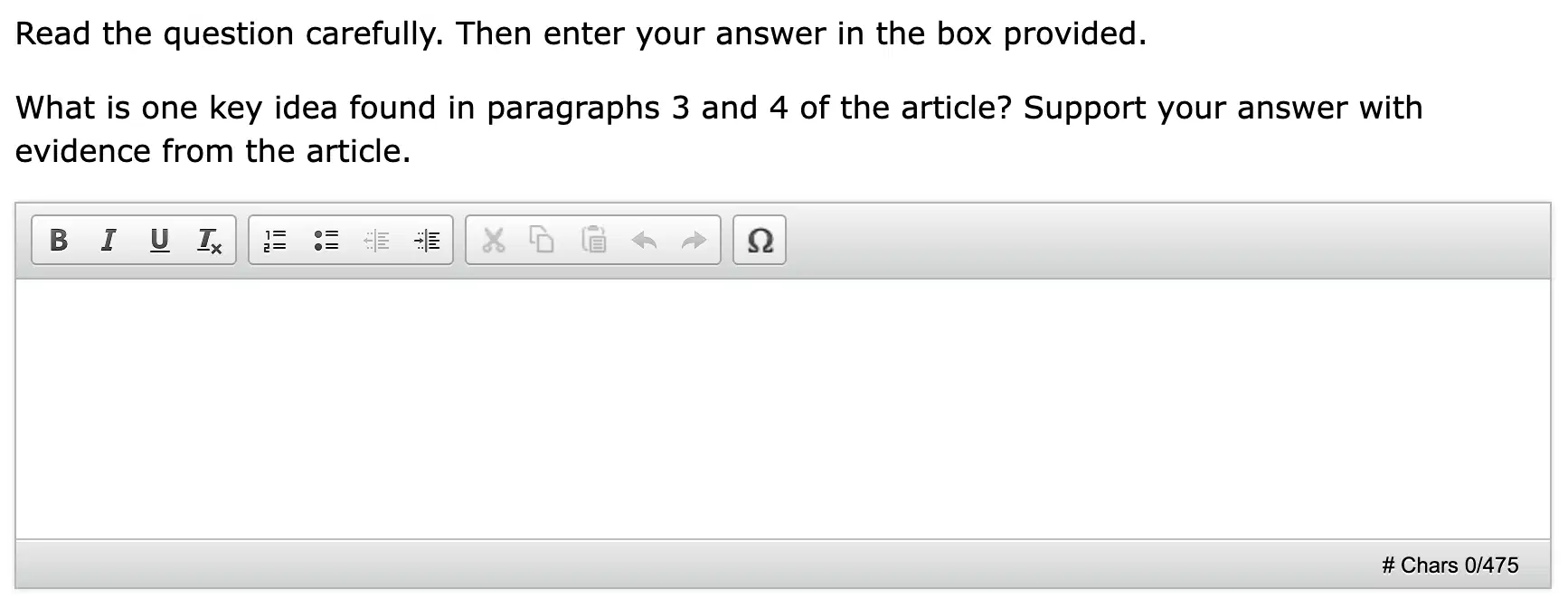
What type of writing prompt is this?
Reading Short Answer Response
Extended Constructed Response
Writing Short Answer Response

What type of writing prompt is this?
Reading Short Answer Response
Extended Constructed Response
Writing Short Answer Response
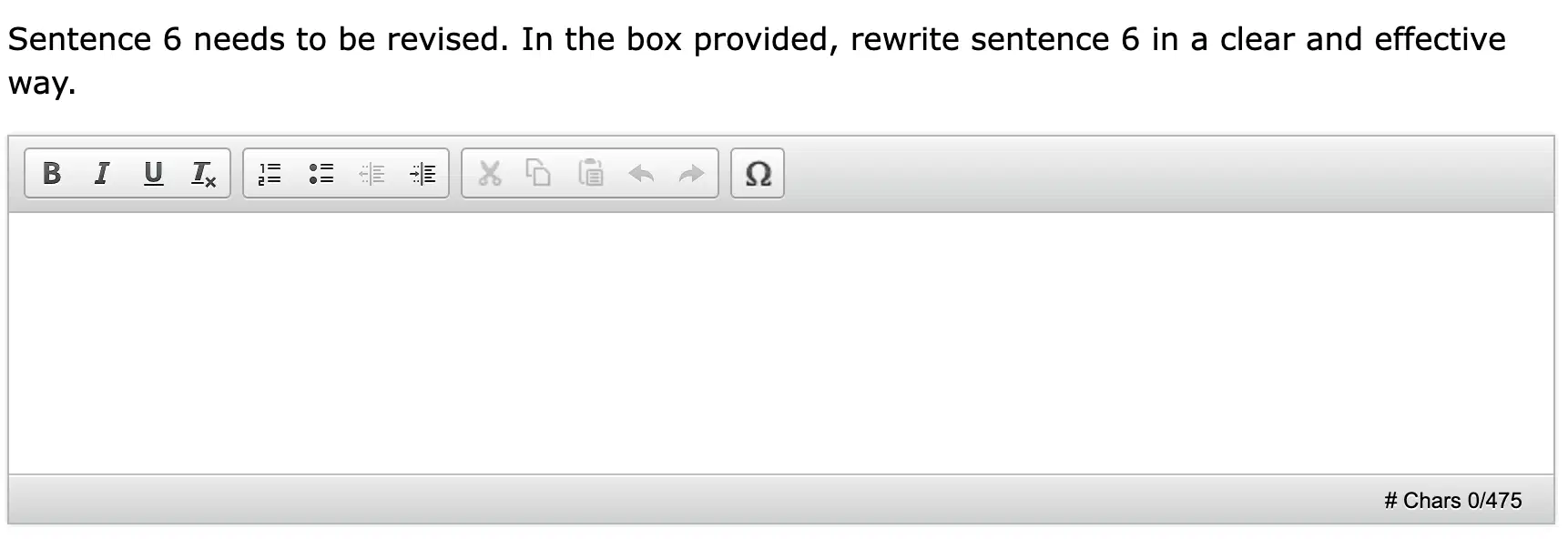
What type of writing prompt is this?
Reading Short Answer Response
Extended Constructed Response
Writing Short Answer Response

What type of writing prompt is this?
Reading Short Answer Response
Extended Constructed Response
Writing Short Answer Response

What type of writing prompt is this?
Reading Short Answer Response
Extended Constructed Response
Writing Short Answer Response

What type of writing prompt is this?
Reading Short Answer Response
Extended Constructed Response
Writing Short Answer Response

What type of writing prompt is this?
Reading Short Answer Response
Extended Constructed Response
Writing Short Answer Response

What type of writing prompt is this?
Reading Short Answer Response
Extended Constructed Response
Writing Short Answer Response
How many points is the SCR (Short Constructed Response) worth on STAAR?
1
2
3
5
How many points is the ECR (Extended Constructed Response) worth?
3
6
10
5
An Extended Constructed Response should have an _________, 2-3 ___________, and a conclusion
(a)
If you score a 1 on the SCR, it is most likely because
You got it completely correct.
You restated and answered correctly, but you did not include correct evidence
If you get a 2 in the SCR, it's most likely because...
You restated and answered, but you forgot to include evidence.
You restated and answered, but your answer was not correct.
You restated and answered correctly, and you provided relevant evidence that supports your answer.
You restated and answered, but your evidence was irrelevant.
To make sure I get a 5 on the ECR, I should
Fully develop my claim, include 2-3 paragraphs with relevant reasons and evidence that support my claim, and include a conclusion.
Vaguely state my claim paraphrase little evidence from the text, and if I have time include my conclusion.
How many boxes do I need to draw to plan my ECR?
None, I don't believe drafts are important.
1
3
5
What should I ask for when I am about to start my drafts for a SCR or ECR question?
tissue
snack
sticker
sheet of paper
What should I ask for when I am about to start my drafts for a SCR or ECR question?
tissue
snack
sticker
sheet of paper
What should I ask for when I am about to start my drafts for a SCR or ECR question?
tissue
snack
sticker
sheet of paper
What should I ask for when I am about to start my drafts for a SCR or ECR question?
tissue
snack
sticker
sheet of paper
What should I ask for when I am about to start my drafts for a SCR or ECR question?
tissue
snack
sticker
sheet of paper
What should I ask for when I am about to start my drafts for a SCR or ECR question?
tissue
snack
sticker
sheet of paper
What should I ask for when I am about to start my drafts for a SCR or ECR question?
tissue
snack
sticker
sheet of paper
What should I ask for when I am about to start my drafts for a SCR or ECR question?
tissue
snack
sticker
sheet of paper
What should I ask for when I am about to start my drafts for a SCR or ECR question?
tissue
snack
sticker
sheet of paper
What should I ask for when I am about to start my drafts for a SCR or ECR question?
tissue
snack
sticker
sheet of paper
How many points is the SCR (Short Constructed Response) worth on STAAR?
1
2
3
5
What strategy should you use to write your short constructed response?
RARA
APE
TEA
RACE
How many points is the ECR (Extended Constructed Response) worth?
3
6
10
5
An Extended Constructed Response should have an _________, 2-3 ___________, and a conclusion
(a)
If you score a 1 on the SCR, it is most likely because
You got it completely correct.
You restated and answered correctly, but you did not include correct evidence
If you get a 2 in the SCR, it's most likely because...
You restated and answered, but you forgot to include evidence.
You restated and answered, but your answer was not correct.
You restated and answered correctly, and you provided relevant evidence that supports your answer.
You restated and answered, but your evidence was irrelevant.
To make sure I get a 5 on the ECR, I should
Fully develop my claim, include 2-3 paragraphs with relevant reasons and evidence that support my claim, and include a conclusion.
Vaguely state my claim paraphrase little evidence from the text, and if I have time include my conclusion.
How many boxes do I need to draw to plan my ECR?
None, I don't believe drafts are important.
1
3
5
What should I ask for when I am about to start my drafts for a SCR or ECR question?
tissue
snack
sticker
sheet of paper
Do you need to explain your quotes on the ECR?
yes
no
The THESIS should be ____ sentence(s).
1
2
3
4
The ____________ is the most important sentence in an ECR and SCR.
intro
conclusion
text evidence
The question displayed is an example of which "question type"?
Short Constructed Response
Extended Constructed Response
Match Table Grid
Text Entry
The question displayed is an example of which "question type"?
Text Entry
Extended Constructed Response
Short Constructed Response
Multiselect
Which question type must be written in 1 paragraph?
Text Entry
Extended Constructed Response
Short Constructed Response
Multiselect
Which "question type" requires that you use textual evidence to support your response.
Extended Constructed Response
Short Constructed Response
Both
Extended Constructed Response and Short Constructed Response
Which "question type" must be written in essay form (3 paragraphs)?
Short Constructed Response
Extended Constructed Response
Multipart
Text Entry
How many points are possible on an ECR?
0-4
1-4
0-5
1-5
How many points can you earn on an SCR?
0-1
0-2
0-3
0-4
There are two types of written compositions on the English I STAAR exam.
True
False
Which of these is a good graphic organizer for an Extended Response in 3rd Grade?


What type of prompt is this?
Constructed-Response
Extended Constructed-Response
Extended Writing-Response

What kind of response should I write?
Paragraph
Essay

What type of prompt is this?
Constructed-Response
Extended Constructed-Response
Extended Writing-Response

What kind of response should I write?
Paragraph
Essay

What kind of essay should I write?
Argument
Explanatory
Narrative

What type of prompt is this?
Constructed-Response
Extended Constructed-Response
Extended Writing-Response

What kind of response should I write?
Paragraph
Essay

What type of prompt is this?
Constructed-Response
Extended Constructed-Response
Extended Writing-Response

What kind of response should I write?
Paragraph
Essay

What kind of essay should I write?
Argument
Explanatory
Narrative

