
Font size
 Worksheets
STAAR Biology Category 1
Total questions: 41
Worksheet time: 42mins
Multicellular, does not have a cell wall
animal cell
Multicellular, has chloroplasts
plant cell
Unicellular, has a flagella to help it move
bacteria cell
The (a) are responsible for converting glucose (food) into (b) for the cell.
Reorder the following from simple to complex
Cell
Tissue
Organs
Organ systems
Organism
Cyclins signal cells to progress through stages of cell replication. Uncontrolled production of cyclins will most likely result in (a)

This diagram shows the cell cycle.Which of the following activities occur in the S phase? (a)

F
G
H
J

F
G
H
J

F
G
H
J

F
G
H
J

F
G
H
J

F
G
H
J

F
G
H
J

A
B
C
D

A
B
C
D

A
B
C
D

F
G
H
J

F
G
H
J


When the concentration of solutes on both sides of a membrane is the SAME, the solution is
Simple Diffusion
When molecules passively cross the plasma membrane through the phospholipid bilayer
Facilitated Diffusion
When molecules passively cross the plasma membrane through a channel protein
Osmosis
The movement of water across the cell membrane
Endocytosis
Bringing in large materials through the cell membrane into a vacuole.
Exocytosis
Moving larger amounts or large quantities of materials through the cell membrane
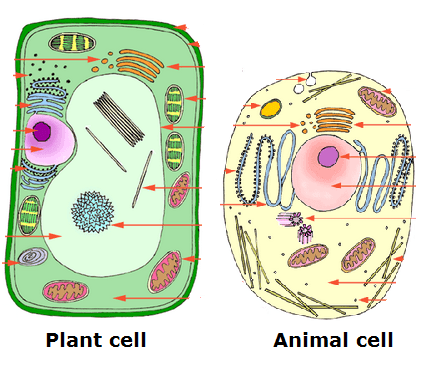
What distinguishes a plant cell from an animal cell? (How do you tell them apart) Hint: There's 3 ways (Check all 3)
Central Vacuole
Mitochondria
Cell Wall
Ribosomes
Chloroplasts
Stem cells are ____________________.
cells that grow uncontrollably
undifferentiated cells that can turn into other types of cells
the first cells of a new living organism (fertilized egg)
specialized cells that do one job

Control center of the cell.

Makes energy for the cell.

Site of photosynthesis.

Site of protein synthesis.

Controls what goes in/out of the cell.
Label the phases of Mitosis on the image shown. They are NOT in order.

Prophase: Chromatin condenses.

Interphase: Resting phase between mitosis cycles.

Metaphase: Chromosomes align in the middle.

Anaphase: Chromosomes are pulled apart.

Telophase: Chromosomes are pulled to opposite end and two nuclei form.


During the cell cycle, proteins called cyclins bind to enzymes that send signals for the cell to progress through stages of cell replication. At the end of this cycle, the cyclins degrade to prevent further signaling for the cell to divide.
Uncontrolled production of cyclins will most likely result in —
the formation of tumors
the immediate death of the cell
the transfer of cyclins to other cells
the formation of haploid cells
Students created note cards comparing characteristics of eukaryotic and prokaryotic cells. Which set of note cards most accurately compares these cells?
Eukaryotic Cells
Membrane-bound nucleus or organelles
DNA chromosomes in the nucleus
Prokaryotic Cells
No nucleus or other membrane-bound organelles
DNA chromosome in the cytoplasm
Eukaryotic Cells
Membrane-bound nucleus or organelles
DNA chromosomes in the cytoplasm
Prokaryotic Cells
No nucleus or other membrane-bound organelles
DNA chromosome in the cytoplasm
Eukaryotic Cells
No membrane-bound nucleus or organelles
DNA chromosomes in the nucleus
Prokaryotic Cells
Membrane-bound nucleus or organelles
DNA chromosome in the nucleus
Eukaryotic Cells
No membrane-bound nucleus or organelles
DNA chromosomes in the cytoplasm
Prokaryotic Cells
Membrane-bound nucleus or organelles
DNA chromosome in the nucleus

The diagram shows the major stages of the cell cycle and the percentage of time spent in each phase. Which statement best describes why a cell spends the majority of its time in interphase?
The cell is growing and carrying out processes such as metabolism and DNA replication.
The cell is aging and processes are stopping as lysosomes clear dead cell matter away.
The cell needs time to synthesize spindle fibers to complete mitosis.
The cell needs time to complete cytokinesis.
F
G
H
J
F
G
H
J

Cell have several mechanisms for regulating their internal environments. Which of these mechanisms involved in maintaining homeostasis requires energy? (a)
Simple Diffusion
When molecules passively cross the plasma membrane through the phospholipid bilayer
Facilitated Diffusion
When molecules passively cross the plasma membrane through a channel protein
Osmosis
The movement of water across the cell membrane
Endocytosis
Bringing in large materials through the cell membrane into a vacuole.
Exocytosis
Moving larger amounts or large quantities of materials through the cell membrane

