
 Worksheets
TNReady Review
Total questions: 145
Worksheet time: 1hrs 13mins

Justinain was known for building the __________.
Ankor Wat
Hagia Sophia
Colosseum
Parthenon
Constantinople is now known as ?
Alexandria
Istanbul
Rome
Venice
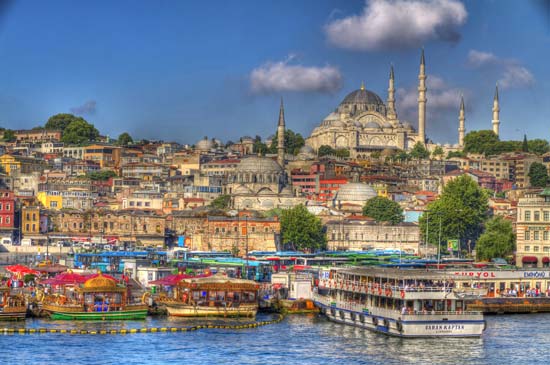
Which group conquered Constantinople?
Persians
Huns
Ottoman Turks
Carthage
Which factors contributed to the decision to establish Constantinople as the new capital of the Roman Empire? (two correct answers)
Access to the Silk Road
Increased military control in the area
Strategic location for trade and communication
Enhanced defense against potential invasions
Richness of natural resources in the region

Which letter on the map shows the location of the Arabian Peninsula?
A
B
C
D
Who founded Islam?
Mohammed
Jesus
Abraham
Moses
The _____________ is the recorded teachings of Mohammed.
Sunnah
Qu'ran
Bible
Torah
Mehmed the Conqueror captured which city?
Constantinople
Mecca
Medina
Rome

What is a Hajj?
Fasting done by Muslims during Ramadan
A Creed said every time Muslims pray
A pilgrimage to Mecca
Praying five times a day
Which of the following is the Holy City of Islam?
Cairo
Makkah(Mecca)
Baghdad
Amritsar
The Islamic place of worship is called a:
Church
Gurdwara
Mosque
Synagogue
Which of the following is one of the 5 Pillars of Islam?
Holy communion
Baptism
Praying five times a day
Practice Yoga daily
The 4th Pillar of Islam invovles the celebration of Ramadan. Ramadan is the:
Holy month of fasting during daylight hours
Holy month of feasting during nightlight hours
Holy day of prayer
Celebration of Muhammad's birth

The fundamental beliefs of Islam are called the:
The Five Pillars
The Ten Commandments
The Four Noble Truths
The Beatitudes

What is the name of this structure?
Kaaba
Colosseum
Pantheon
Great Pyramid of Giza
What is Zakat?
This king of Mali is thought to be the richest person that ever lived
Askia
Mansa Musa
Jeff Bezos
Sundiata

This was the capitol of Mali and an important city of trade. Legends of this city, which some though was built on the edge of the world, persisted for centuries
Cairo
Gao
Timbuktu
Musa
This was the name given to the religions followed by ancient humans. They believed that humans, animals, plants and natural objects had souls
Islam
Hinduism
Animism
Judaism
These are the two valuable trade goods that made West Africa rich
gold and salt
silk and jade
spices and tea
silk and gold
What is an impact of the establishment of Trans-Saharan Trade Routes in West Africa?
Europeans traveled to West Africa to study in Timbuktu
Islam and Arabic spread to West African centers of trade
Horses were transported to West Africa to carry goods.
Barber tribes were conquered and cease to exist.
What was the importance of griots in African society?
They served as central tribal leaders
They served as the main religious leaders of their tribes
They maintained the oral history of their people
They conducted trade agreements for their villages
African storytellers who memorize and recite the names and histories of their people are called
Ghana
Mansa
Griot
King

Which achievements are most closely associated with the Tang and Song dynasties?
spinning wheel and stirrup
domes and arched bridges
gunpowder and magnetic compass
cannon and longbow

Who was the most powerful leader of the Mongols?
Mansa Musa
Genghis Khan
Qin Shi Huang
Kublai Khan

What did Mansa Musa do on his way to Mecca that made him famous?
He gave gold to the poor along his way
He took a large impressive army that made people fear him
He stole gold from everyone along his way
He got lost
What religion began to spread throughout Tang China among the poor and peasant people?
Hinduism
Buddhism
Christianity
Daoism
What invention did the Chinese use to sail long distances without having to see the coastline to know where they were?
Torah
rudder
sphere
compass
Confucianism stressed
pragmatics
state order
morality and ethics
respect for women
One way the Song Dynasty ensured they hired qualified people was making people take what?
Special medicine
College classes
Civil Service Exam
A long break during the year
Fill in the blank: ______________ came from Vietnam and allowed China to grow it more often, which led to an increase in food production and population.
Corn
Cattle
Cotton
Rice
Made the Great Wall stronger and more elaborate, the way we see it today.
Ming
Yuan
Han
Qing
Who was the Mongol emperor of the Yuan dynasty?
Kublai Khan
Genghis Khan
Ogedei Khan
Mr. Givens
What was the purpose of the voyages of Zeng He?
To show off the Chinese prestige, power, and riches
To find more trade routes to Europe
To make money for the Chines
To find a lost treasure


What was the name of the Prince that was created a new constitution based on ideas from China?
Prince Tyoko
Prince Chinalog
Prince Shotoku
Prince Confucian
What is the name of the Samurai honor code?
Bushido
Chivalry
Zen Buddhism
Shinto

Spirits that dwelled in nature in Japan were known as...
Nymphs
Kami
Samurai
Wraiths

What was a shogun in medieval Japan?
a military dictator who ruled in place of the emperor
a general who served as commander of the emperor's army
the high priest and head of the Shinto religion
the name given to the emperor of Japan
Pick the symbol for Shintoism


Many _________ wrote diaries and journals about their lives at court.
women
men
children
nobles
2 Religions that influenced the 17 Articles Constitution written by Prince Shotoku
Confucianism
Buddhism
Shintoism
Daoism
A political and social system in which a vassal receives protection from a lord
parliament
converted
feudalism
chivalry
A person who lived and worked on the private land of a noble or lord
lords
knights
serfs
vassals
a nobleman who received land from a king in medieval feudal society
lords
knights
serfs
vassals
a self-contained world located on land belonging to a lord
chivalry
knights
manor
vassals
king who was forced to place his seal on the Magna Carta
Charlemagne
King John
Joan of Arc
crusades
"Great Charter" between the king and the nobles
Magna Carta
King John
Joan of Arc
crusades
a series of wars to reclaim the Holy Land
Magna Carta
King John
Joan of Arc
crusades
claimed that God chose her to lead the French army agains the British
Magna Carta
King John
Joan of Arc
crusades
weakening of centralized government
decision of nobles to take over local defense
The list above is describing
Which map represents the Silk Road?


What was the main function of the Magna Carta?
free serfs and peasants
limit the king's power
limit the pope's power
provide money to the king

What was the Domesday book?
a book about the end of the world commissioned by William the Conqueror
A record of all the property and holdings in England commissioned by William the Conqueror so he could determine the extent of his lands and wealth
a recipe book with all of the latest French cuisine commissioned by William the Conqueror
a book tracing the family lineage of the English Throne commissioned by William the Conqueror
The ______ used plague infected bodies as a biological weapon by launching them into the city.
Monguls
Chinese
Russians
British
People's faith in the church _______, as they saw the church was powerless against the plague.
weakened
strengthened
stayed the same
was gone

Two important farming inventions of the Middle Ages made turning over soil faster were the horse collar and
the windmill
crop rotation
the heavy plow
the village mill

A group of merchants or craftspeople is called a
vassal
coven
motte
guild

Medieval towns could best be described as?
spotless
hygienic
smelly and unhealthy
state of the art or modern
What role did Constantinople play in Byzantine trade?
It was a minor port rarely used by traders.
It served as the primary gateway between Europe and Asia.
It was mainly a military outpost with little trade.
It was isolated from major trade routes due to its location.


What institution did people lose faith in because of its inability to fight the Black Death?
The Monarchy
The Police
The Church
The Trade Market
What was the first book to be printed on a printing press?
Utopia
Hamlet
The Bible
The Vedas
Who were the main Patron class family in Italy? (First mafia family)
Barrone
Medici
da Vinci
Marietta
What were the two most famous works by Michelangelo?
The Last Supper
David
The Sistine Chapel
The Wedding

Who painted the Mona Lisa?
Michelangelo
Donatello
Jan Van Eyck
Leonardo da Vinci
Which of the following statements describes the type of government which existed in Florence during the Renaissance?
It was a small Italian town ruled by the king of Italy in Rome.
It was completely under the control of the Catholic Church.
It was a city-state ruled by the wealthy Medici family.
It was the capital of Italy and had a large bureaucracy.
Which of these statements reflects an influence of the Renaissance?
dominance of the church
constant feudal warfare
lack of any governance
increased interest in the arts
• Nicolaus Copernicus
• Galileo Galilei
• Tycho Brahe
• Johannes Kepler
All of the above were famous Renaissance
philosophers.
priests.
artists.
scientists.
During the Renaissance, a new intellectual movement known as humanism evolved. What was the significance of the humanist movement?
Humanists felt formal education was impractical and unnecessary; therefore, many schools were closed.
Humanists spread the teachings of Eastern philosophers such as Confucius throughout Europe.
Humanists were very interested in religious studies and sought to increase the influence of the Church.
Humanists were inspired by classical texts and emphasized the dignity and worth of the individual.

• Venetian explorer who visited the court of Kublai Khan
• One of the first Westerners to travel the Silk Road to China
• Travels increased the interest of Europeans in the lands of the East
Who is described above?
Marco Polo
Ferdinand Magellan
Vasco da Gama
Christopher Columbus
What was an explosion of discoveries and ideas that started in Europe during the 1500s?
Enlightenment
Protestant Reformation
Black Death
Scientific Revolution
What was the theory that said that the Earth and all the planets revolve around the sun?
Geocentric
Heliocentric
Geographic
The Earth is flat

Why did people split from the Catholic Church and form Protestant churches?
They believed only Martin Luther could have a church
People were not happy with the Catholic Church's taxes & indulgences.

What is true about Martin Luther?
Belived in predestination
Believed in Salvation by Faith

What desccribes John Calvin?
Believed in using the Bible only
Believed in Predestination
King Henry VIII
Created the Church of England
Martin Luther
German monk who wrote 95 Theses
John Calvin
Believed in Predestination
Ignatius
Started the Jesuits charity
Elizabeth
Protestant Queen who had the Golden Age
How did the invention of the printing press help the Reformation?
Bibles printed allowed more people to read them.
People could read translations of the Bible in their language.
It allowed reformers to spread their ideas.
All of the Above
What was the Spanish Inquistion?
Attempt to spread protestant beliefs
Attempt to rid Spain of non-Catholic people
Attempt to spread Judaism
Attempt to rid Spain of Catholics
What was the list of complaints against the Church called?
95 Theses
Peace of Augsburg
Magna Carta
New Testament
What was the Counter Reformation?
Pope's decision to go to war
Protestants moving to new lands
Printing Bible in other languages
Catholic Church making changes
I am a queen that tried to restore the people of England to the Catholic Church. Who am I?
Elizabeth
Isabella
Mary
None of Above
If a person was accused of heresy, he/she could be kicked out of the church or ______________________.
ordained
crowned
excommunicated
reformed
Spanish Inquisition was to...
reintroduce Moorish culture
prevent the spread of Protestant Beliefs
Encourage industrial revolution
Spread Renaissance ideas
Tudor monarch whose want for a male heir led him to break with the Catholic Church over his need to divorce and marry again. He did so 6 times.
Henry the 7th
Henry the 8th
Louis the 14th
Who was the saint that inspired the French?
St. Michal
St. Jon of Arc
St. John of Burgundy
St. Cicle
In the end, who won the Hundreds year war?
France
England
Flanders
The Holy Roman Empire

Who was the Italian physicist and astronomer who proved that objects of different weights, if dropped from the same height, fell at the same rate of speec. He was also responsible discovering the law of the pendulum.
Galileo
Vesalius
Hooke
Boyle

Who was the English scientist who discovered the laws of gravitation?
Galileo
Newton
Kepler
Copernicus

Who proposed a system of EXPERIMENTATION to find new truths through this type of scientific method.
Newton
Bacon
Descartes
Frisius

Who proposed a mathematical system using REASON and LOGIC to find new truths through this type of scientific method.
Bacon
Newton
Boyle
Descartes
These 3 items helped explorers travel safer and further.
What did Cortes do?
developed a successful fur trade in North America
conquered the Aztec people
controlled spices that other countries wanted for trade
focused on exploring and conquering lands in South America
What is the Columbian Exchange?
The exchange of resources, ideas, and diseases between Europe and the Americas.
The spread of diseases across North and South America.
The creation of Hispaniola by Christopher Columbus.
The exchange of goods between Christopher Columbus and the Spanish King.
Which is a result of Europeans exploring the Americas?
A new and faster water route to Asia for European merchants to buy and sell goods.
An exchange of resources like plants and animals as well as diseases an idea between Europe and the Americas.
All Native Americans died from diseases the Europeans brought to the Americas when they arrived.
50% of the Europeans died from diseases explorers contracted while in the Americas.
Which is NOT a reason for exploration?
Hunting
Gold
God
Glory
Who conquered the Inca Empire?
Pizarro
Cortes
de Soto
Vespucci


Which early American civilization is represented by the white shaded area?
Aztec
Inca
Maya
Spain

Which civilization lived on the Yucatan Peninsula?
Inca
Maya
Aztec


(Click to hide text)

(Click to hide text)

(Click to hide text)
What role did Constantinople play in Byzantine trade?
It was a minor port rarely used by traders.
It served as the primary gateway between Europe and Asia.
It was mainly a military outpost with little trade.
It was isolated from major trade routes due to its location.

