

Wayground logo

Free Printable Worksheets

Font size

S
M
L
XL
Worksheets

KSA Science Review #1

Total questions: 100

Worksheet time: 7hrs 32mins

Name
Class
Date
1.

Three examples of physical change are ___

a)

freezing of water, evaporation of gasoline, and rusting a nail

b)

sawing of wood, crushing a can, and toasting a marshmallow

c)

burning of gasoline, rotting of an egg, and exploding fireworks

d)

boiling of water, bursting of a balloon, and crumpling a piece of paper

2.

Matter that has a definite volume and a definite shape is a ____.

a)

solid

b)

liquid

c)

gas

d)

plasma

3.

Matter that has a definite volume but no definite shape is a ____.

a)

solid

b)

liquid

c)

gas

d)

plasma

4.

When you toss a rock into a pond it will sink. This is because the density of the rock is ___________ the density of the water.

a)

equal to

b)

less than

c)

greater than

5.

When two or more substances are combined so each substance can be separated by physical means, the result is a(n)____.

a)

compound

b)

chemical change

c)

element

d)

mixture

6.

In a solution, the substance that is being dissolved is known as the _________________.

a)

solvent

b)

solution

c)

solute

d)

saturation

7.

In a solution, the substance that is doing the dissolving is known as the ________________.

a)

solute

b)

solvent

c)

solution

d)

saturation

8.

A toy car moving at 10 km/h has less momentum than a real car moving at the same speed because the toy car ____.

a)

has less mass

b)

generates less friction

c)

has greater mass

d)

has greater forward motion

9.

Newton’s 3rd Law states, “to every ________________ there is an equal and opposite _________.”

a)

reaction force ; action force

b)

action force ; reaction force

10.

Which of the following causes some of the energy transferred to an object to be converted into thermal energy?

a)

mechanical advantage

b)

gravity

c)

friction

d)

efficiency

11.

Sound is caused by ____________________.

a)

radio waves

b)

electromagnetic waves

c)

stationary objects

d)

vibrations

12.

As a rock falls from the side of a cliff, its potential energy will _________, its kinetic energy will _____________, and its mechanical energy will ____________.

a)

increase ; decrease ; decrease

b)

increase ; increase ; increase

c)

decrease ; increase ; stay the same

d)

decrease ; decrease ; stay the same

13.

What is a constant in an experiment?

a)

normal conditions

b)

variables that don't change

c)

variables that do change

d)

the same variables

14.
Substances with atoms that are all alike.
a)
element
b)
compound
c)
isotope
d)
ion
15.
Any living factor in an organism"s environment.
a)
biotic
b)
abiotic
c)
cellular substance
d)
nature
16.
A substance in which the atoms of two or more elements are combined in a fixed proportion.
a)
element
b)
isotope
c)
compound
d)
ion
17.
Any nonliving factor in an organism's environment. 
a)
cellular substance
b)
abiotic
c)
biotic
d)
photosynthesis
18.
The measure of the amount of matter in an object 
a)
Mass
b)
Weight
c)
Work
d)
Kinetic 
19.
__________ is stored energy. 
a)
Potential
b)
Kinetic
c)
None of the above 
d)
All of the above 
20.
The heat from a hot burner to a pot is transferred by ______.
a)
convection
b)
insulation
c)
radiation
d)
conduction
21.
The __________ contains the protons and neutrons of an atom, and is most of the mass of an atom
a)
Nucleus
b)
Atomic Number
c)
Atomic Mass
d)
Electrons
22.
An electron has a ____________ charge.
a)
Positive
b)
Negative 
c)
Neutral
d)
Not enough info.
23.
A proton has a ___________ charge
a)
Positive
b)
Negative
c)
Neutral
d)
Not enough info
24.
What does Newton's First law of motion state?
a)
For every action there is an equal and opposite reaction
b)
Force=mass x acceleration
c)
The Law of inertia, an object in motion will remain in motion until acted upon by an outside force.
d)
Energy cannot be created or destroyed, but only transferred. 
25.
What does Newton's second law of motion state?
a)
For every action there is an equal and opposite reaction. 
b)
Force = mass x acceleration
c)
The Law of inertia, an object in motion will remain in motion until acted upon by an outside force.
d)
Energy cannot be created or destroyed, but only transferred. 
26.
What does Newton's third law of motion state?
a)
For every action there is an equal and opposite reaction
b)
Force = mass x acceleration
c)
The law of inertia, an object in motion will remain in motion until acted upon by an outside force
d)
Energy cannot be created or destroyed, but only transferred 
27.
What is the net force?
a)
17 N Right
b)
3 N Right
c)
3 N Left
d)
17 N Left
28.

1.1 An individual living thing is a/an __________.

a)

habitat

b)

ecosystem

c)

organism

d)

population

29.

1.1 In the mountain river ecosystem pictured above, what would be an abiotic factor?

a)

trees

b)

swans

c)

grasses

d)

water

30.

Which of the following metals make up most of the Earth's core?

a)

Steel and Copper

b)

Nickel and Titanium

c)

Aluminum and Iron

d)

Iron and Nickel

31.

The largest layer of the Earth is the.....

a)

Outer Core

b)

Mesosphere

c)

Mantle

d)

Inner Core

32.

The thinnest layer of the Earth is the.....

a)

Crust

b)

Outer Core

c)

Lithosphere

d)

Mantle

33.

What is the most noticeable difference between the outer core and inner core

a)

They are made of different metals

b)

The outer core is melted, and the inner core is solid

c)

P- waves pass through the outer core, but not the inner core

d)

There is no difference

34.

As you get deeper into the Earth...

a)

Temperature and Pressure decrease

b)

Temperature increases, but pressure decreases

c)

Temperature decreases, but pressure increases

d)

Temperature and Pressure increases

35.

Who was the scientist who is famous for proposing the theory of Continental Drift?

a)

Charles Darwin

b)

Johan Kepler

c)

Albert Einstein

d)

Alfred Wegener

36.

What type of boundary is depicted in this image?

a)

Divergent

b)

Convergent

c)

Transform

37.

What plate boundary is depicted in this image?

a)

Divervent

b)

Convergent

c)

Transform

38.

Rocks that form directly from cooled lava/magma are

a)

igneous

b)

sedimentary

c)

metamorphic

39.
What is the ultimate ORIGINAL source of energy for living things
a)
Sugar
b)
Sun
c)
Moon
d)
Carbon Dioxide
40.

In a graph, the variable on the horizontal (x) axis is the____

a)

variable with the largest range

b)

variable with the smallest range

c)

independent variable

d)

dependent variable

41.

A natural resource that is naturally formed much more slowly than we use it is called __________.

a)

Renewable

b)

Non-Renewable

c)

Ecological

d)

Sustainable

42.

Which of the following natural resources is a non-renewable resource?

a)

Fossil Fuels

b)

Sunlight

c)

Wind

d)

Trees

43.

Which biome is known to be the warmest during the day and the coldest during the night?

a)

Savanna

b)

Tundra

c)

Chaparal

d)

Desert

44.

What is an Estuary?

a)

The flow of water at the bottom of rivers and lakes

b)

A biome with a tropical climate

c)

Lake formations

d)

Lakes connections to oceans

45.

What is the definition of "Greenhouse Effect?"

a)

Gases that increase Earth's temperature

b)

the pattern of weather that occurs over time

c)

When our climate changes

d)

when the gases in Earth’s atmosphere trap heat from the Sun and keep the planet warm

46.

What are examples of renewable energy sources?

a)

Solar

b)

Coal

c)

Gas

d)

Wind

47.

What are examples of non-renewable energy sources?

a)

Coal

b)

Oil

c)

Geothermal

d)

Hydro

48.

The diagram below represents an energy pyramid.

Which type of organism could occupy levels B, C,

and D of this energy pyramid?

a)

Producers

b)

Autotroph

c)

Detrivore

d)

Consumer

49.
All of the different populations that live in a specific area.
a)
ecosystem
b)
habitat
c)
ecology
d)
community
50.
An abiotic part of an ecosystem; required by plants to perform photosynthesis.
a)
water
b)
soil
c)
sunlight
d)
oxygen
51.
The place where an organism lives that provides it with shelter, food and water.
a)
ecosystem
b)
population
c)
community
d)
habitat
52.
All the members of one type of species in a specific area.
a)
habitat
b)
community
c)
population
d)
ecosystme
53.

the basic structural unit of matter

a)

atom

b)

matter

c)

element

d)

nucleus

54.

the positively charged subatomic particle contained in the nucleus of an atom

a)

proton

b)

neutron

c)

electron

d)

matter

55.

a subatomic particle, contained in the nucleus of an atom, having the same mass as a proton but no electrical charge

a)

proton

b)

neutron

c)

electron

d)

matter

56.

a negatively charged subatomic particle that orbits the nucleus of an atom

a)

proton

b)

neutron

c)

electron

d)

matter

57.

a row on the Periodic Table of Elements

a)

family

b)

period

c)

row

d)

isotope

58.

a grouping of elements based on similar properties, arranged by columns in the periodic table; also known as a group

a)

family

b)

period

c)

row

d)

isotope

59.

the mass of an atom, calculated by adding the number of protons and neutrons in the nucleus of the atom

a)

element name

b)

element symbol

c)

atomic number

d)

atomic mass

60.

a unique number for each element that equals the number of protons in an atom of that element

a)

element name

b)

element symbol

c)

atomic number

d)

atomic mass

61.

an atom or group of atoms that has gained or lost one or more electrons and is now either positively or negatively charged

a)

isotope

b)

ion

c)

orbital

d)

nucleus

62.

How do you calculate the number of neutrons? *

a)

Mass = Atomic number - Neutrons

b)

Mass - Atomic number = Neutrons

c)

Atomic number = Neutrons

63.
Which group of the periodic table is composed of inert (not reactive)  gases?
a)
alkali metals
b)
alkaline earth metals
c)
halogens
d)
noble gases
64.
The atoms along the staircase are called 
a)
metals
b)
nonmetals
c)
metalloids
d)
noble gases
65.
What is at the center of every atom?
a)
An electron
b)
A compound
c)
A molecule
d)
A nucleus
66.
The positively charged particles of an atom are the ________.
a)
electrons
b)
protons
c)
neutrons
d)
protons & neutrons
67.
What does the nucleus of an atom contain?
a)
Electrons and neutrons
b)
Protons and neutrons
c)
Neutrinos and positrons
d)
DNA and RN
68.

The subatomic particles that make up an atom.

a)

solid, liquid, gas

b)

electrons, protons, nucleus

c)

energy, protons, nucleus

d)

electrons, protons, neutrons

69.

Which TWO of the following subatomic particles are inside the nucleus?

a)

protons

b)

electrons

c)

neutrons

d)

There are no subatomic particles in the nucleus of an atom.
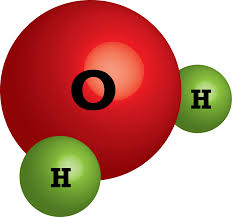
70.

How many atoms of Hydrogen are in this compound?

a)

1

b)

2

c)

3

d)

4

71.
Living things are organized from the smallest to the largest unit in the following ecological levels:
a)
Community, ecosystem, organism, biosphere, population
b)
Biosphere, ecosystem, community, population, organism
c)
Organism, population, community, ecosystem, biosphere
d)
None of the options
72.
A is an organism’s way of life.
a)
Species
b)
Habitat
c)
Environment
d)
Niche
73.
A ______ is the actual place an organism lives.
a)
Niche
b)
Habitat
c)
Species
d)
Environment
74.
In predation, the _____ is eaten and the ____ does the eating.
a)
Consumer, producer
b)
Scavenger, prey
c)
Prey, predator
d)
Predator, prey
75.
Organisms which harness the sun’s energy directly are referred to as…..
a)
Decomposers
b)
Carnivores
c)
Producers
d)
Consumers
76.
The organisms which gain energy indirectly, by eating other organisms are known as….
a)
Producers
b)
Pioneers
c)
Consumers
d)
Trophic levels 
77.
Only about ____ of the energy that an organism consumes is stored and transferred when that organism is eaten.
a)
10%
b)
25%
c)
3%
d)
90%
78.
These plants are the first organisms to colonize any newly available area and start the process of succession.
a)
Producers
b)
Decomposers
c)
Pioneers
d)
Consumers
79.
Which biome most closely matches the one in which we live?
a)
Taiga
b)
Savanna
c)
Temperate deciduous forest
d)
Tundra
80.
Of Earth’s water, 97% is saltwater in the oceans and 3% is freshwater. Of that 3%.....
a)
10% frozen in glaciers and icecaps, 89% groundwater, 1% lakes, rivers, and other
b)
77% frozen in glaciers and icecaps, 22% groundwater, 1% lakes, rivers, and other surface water
c)
5% frozen in glaciers and icecaps, 70% groundwater, 25% lakes, rivers, and other
d)
50% frozen in glaciers and icecaps, 5% groundwater, 45% lakes, rivers, and other
81.
The tiny percentage of water used for everyday human needs comes from what two sources?
a)
Ground water and oceans
b)
Surface water and ground water
c)
Oceans and glaciers
d)
The atmosphere and surface water
82.
A possible result of pumping large amounts of water from an aquifer is that……
a)
Farms produce fewer crops
b)
The aquifer cannot be recharged fast enough
c)
The recharge zone shrinks
d)
Groundwater stops being collected
83.
Water pollution may be easily identified  _____ pollution, or it may be _____ pollution, the source of which is often difficult to determine.
a)
Point, nonpoint
b)
Nonpoint, point
c)
Thermal, artificial
d)
Groundwater, aquifer
84.
Most air pollution is caused by…
a)
The burning of fossil fuels
b)
Solar and wind energy products
c)
CFC’s from cheese whiz and hairspray
d)
eased methane levels from livestock
85.
Ocean pollution is primarily due to..
a)
Shipping barges
b)
Runoff from the land
c)
Ocean organisms
d)
Pollutants dumped directly into the ocean
86.
This layer of Earth’s atmosphere contains the ozone layer.
a)
osphere
b)
Stratosphere
c)
Mesosphere
d)
Troposphere
87.
This layer of Earth’s atmosphere contains nearly 90% of all of the atmospheric gasses.
a)
Troposphere
b)
Mesosphere
c)
Ozone
d)
Stratosphere
88.
This is the term for what is happening in the atmosphere at a place in a moment.
a)
Weather
b)
Temperature
c)
Forecast
d)
Climate
89.
What is the average weather in an area over a long period of time?
a)
Biome
b)
Forecast
c)
Climate
d)
Weather
90.
What is  number one in the wave diagram?
a)
wavelength
b)
amplitude
c)
crest 
d)
trough
91.

Energy an object has due to the object's position?

a)

potential

b)

kinetic

c)

heat

d)

light

92.

Which is the best explanation for why it is hot in the summer and cold in the winter?

a)

The Earth is closer to the sun in the summer

b)

The sun gets hotter in the summer

c)

The half of the earth is tilted towards the sun in the summer

d)

The sun’s gravity made its rotational axis tilt

93.

A divergent boundary is where 2 plates...

a)

come together

b)

pull apart

c)

slide past each other

d)

rotate

94.

A convergent boundary is where 2 plates...

a)

come together

b)

pull apart

c)

slide past each other

d)

rotate

95.

A transform boundary is where 2 plates...

a)

come together

b)

pull apart

c)

slide past each other

d)

rotate

96.

Subduction zones occur at convergent plate boundaries where?

a)

both plates move upward only

b)

there are no volcanoes

c)

Earth’s surface spreads apart

d)

one tectonic plate is forced beneath the other

97.

What process occurs at Mid-oceanic ridges that adds new oceanic crust to the sea floor, thereby pushing plates apart?

a)

sea floor spreading

b)

convection

c)

subduction

d)

radiation

98.

What is the name of the point deep in the earth where an earthquake occurs?

a)

Epicenter

b)

Focus

c)

Depth Continuity

d)

Mantle

99.

What is the name of the point on the surface of the earth where an earthquake occurs?

a)

Epicenter

b)

Focus

c)

Depth Continuity

d)

Mantle

100.

What is the reason for seasons on earth?

a)

The tilt of the axis

b)

How close the earth is to the sun

c)

The earth's magnetic field

d)

The changing temperature of the sun
