
 Worksheets
Unit 4 Achievements in Industry Review
Total questions: 24
Worksheet time: 12mins
What were some of the causes of the Second Industrial Revolution?
Zimmerman Telegram
Abundance of Nature Resources
Economic Stimulus Provided by the Civil War
Large Population for Labor
Sussex Pledge
When did the Second Industrial Revolution take place?
1760 – 1820
1930 – 1950
1870 – 1920
1820 – 1870
According to the concept of laissez-faire, prices and wages are best determined by the
Federal Government
Gross National product
Individual States
Free Market System
What was a cause of the Second Industrial Revolution?
Abundance of Resources
Large Labor Population
Roles of the Government
All the Above
Antitrust laws such as the Sherman Antitrust Act was passed by Congress to
Establish safe working conditions
Decrease federal income taxes on corporations
Promote fair competition in business by forbidding monopolies
Force industry to use natural resources wisely
The rich and successful have an obligation to take their rewards and help those that have been less fortunate" - The Gospel of Wealth by Andrew Carnegie, 1889 What point was Carnegie making in this quote?
Encourage wealthy to donate
Difficult to gain fortunes
Frustrated about Labor Strikes
Worried about existing with the poor
A person who achieves wealth or influence through ruthless and unscrupulous business practices.
Robber Baron
Captain of Industry
Communist
Social Darwinist
Stockholders of existing companies gave their stocks over to the board of directors in exchange for certificates.
Trust
Monopoly
Banker
Economistic
A system that grants rights to the inventor is what?
Trademark
Patent
Bessemer
Copyright
Which of the following inventions influenced the United States transforming it into a true national market?
The Ice Machine by Thaddeus Lowe helped workers stay cool in summer
Edwin Drake found the first oil well in the US
Automatic Loom by Northrop allowed factories to produce more materials
Telephone by Alexander Graham Bell opened lines of communication
The foundation of modern society. Who shall say that this is not the golden age of mutual trust, of unlimited reliance upon human promises? That is a peculiar condition of society which enables a whole nation to instantly recognize point and meaning in the familiar newspaper anecdote, which puts into the mouth of a distinguished speculator in lands and mines this remark: "I wasn't worth a cent two years ago, and now I owe two million dollars." - Mark Twain,1873. What was Mark Twain referring as the Gilded Age in the US?
When the Gold Rush deceived People
When the Government gave out loans
When the Unions fought for people’s rights
When everything was shiny on the outside but rusted on the inside
“The American Beauty Rose can be produced in the splendor and fragrance which bring cheer to its beholder only by sacrificing the early buds which grow up around it. This is not an evil tendency in business. It is merely the working-out of a law of nature and a law of God.” –John Rockefeller Which of the following conclusions could be drawn about John Rockefeller based on the quote above?
He was a strong supporter of government regulation in business
He was a proponent of trust-busting and opposed any one company having too much control over an industry
He welcomed competitors because he knew competition was beneficial to consumers
He supported the theory of Social Darwinism
When a person/company is the only supplier of the items?
Trust
Monopoly
Robber Barons
Captains of Industry
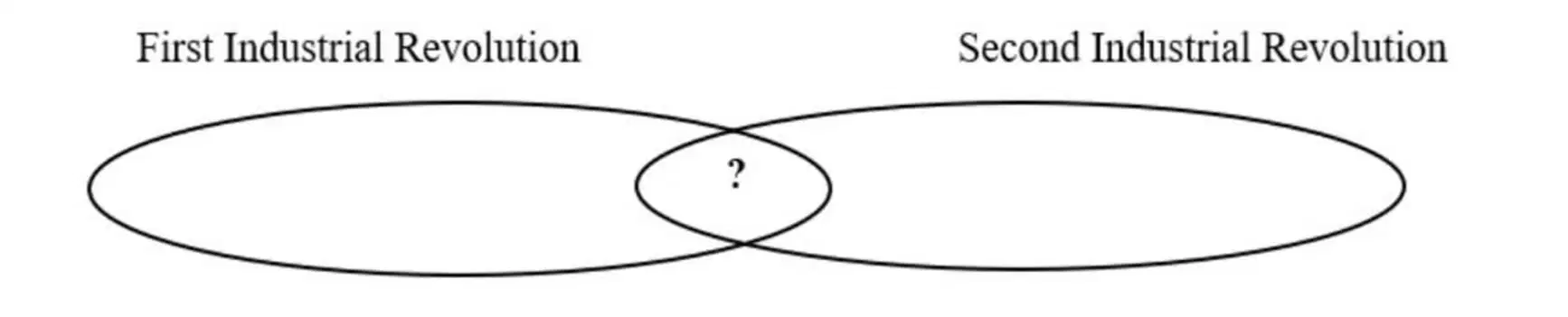
What statement completes the graph?
People migrated from cities to farm areas
Increase in rural living
New technology improved production
Steel and Electricity promoted growth
How was the Second Industrial Revolution different from the First Industrial Revolution?
Invention of electricity led to greater production in the workplace
Enormous number of people returned to lives on farms as technology advanced
Industrial production stalled due to lack of oil causing a decline
Labor shortages created by immigration created delays in production
How were Americans influenced by the growth of railroads during the Second Industrial Revolution?
Led to shortage of raw materials for factories and farms
Stimulated the construction of steamships to trade up/down rivers
Created growth in cities, production, and first true national market
Caused cotton, rice, and wheat productions to move from Southeast to West
In the late 1800s, how did railroad monopolies create economic hardships for farmers?
By claiming productive land for business leaders to develop
By charging high prices to ship agricultural goods to market
By separating farmers from profitable markets in western cities
By isolating farmers from technological developments in eastern cities

The political cartoon pictured below is titled "Modern Colossus of (Rail) Roads," and was drawn in 1879. It depicts Cornelius "the Commodore" Vanderbilt and the sign reads "all freight leaving the seaboard MUST pass here and pay any tolls we demand." as he holds the reins attached to the trains, tracks and the railroad station.
Use the cartoon and your knowledge of U.S. history to answer the question below.
What does this convey about his control of the Railroads?
Vanderbilt, along with two assistants, has most of the control in railroad shipping operations
Vanderbilt has total control of the entire railroad operation. Thus, he can do with it whatever he wants
Vanderbilt controls the prices of railroad shipping but has little involvement in the action operations
Vanderbilt owns most of the railroads but has little involvement of any kind

Which policy describes this diagram?
Horizontal Integration
Vertical Integration
Trust
Monopoly
Business leaders whose means of amassing a personal fortune contributed positively to the country in some way, are known as philanthropists.
Robber Baron
Captain of Industry
Communist
Social Darwinist
Who created a workable electric light bulb?
Thomas Alva Edison
Alexander Graham Bell
Henry Bessemer
George Westinghouse
What were labor conditions like in factories during the Industrial Revolution?
Safe and well-regulated
Harsh and dangerous
Flexible and employee-friendly
Governed by strong labor unions
Brought the Florida East Coast Railroad to the state of Florida to help drive tourism and connect Jacksonville & St. Augustine to Miami.
JP Morgan
Henry Plant
Warren Buffett
Which inventions were created during the Second Industrial Revolution?
Telegraph
Wright Brothers’ Airplane
Moving Assembly Line
Automatic Dishwasher
Rotary Blade Lawnmower

