
NEW
Font size
 Worksheets
Melanin Module 1 Quiz Review Genetic Puzzles
Total questions: 40
Worksheet time: 31mins
Alleles symbolized by an uppercase letter (R).
recessive
dominant

The pair of alleles an individual has for a trait.
Genotype
Phenotype
Chromotype
Karyotype
Term that means "different genes."
Homozygous
Heterozygous
Choose the heterozygous genotype.
Hh
hh
HH
Choose the homozygous recessive genotype.
Hh
hh
HH

Genotype codes for the physical expression of a trait. This is called ___________.
phenotype
holotype
karyotype
allotype
AA
BB
Homozygous
Heterozygous
Bb
Homozygous
Heterozygous
One mouse parent has black fur. One mouse parent has white fur. These colors describe the mouse's _________.
phenotype
genotype
health
Which answer choice below is an example of a GENOTYPE?
black
FF
mouse
Which example below is a RECESSIVE allele?
F
f
black

This is a pedigree that follows blue eyes which is a recessive trait. What is the phenotype of the mother (circle) in generation 1?
Brown
Blue
1 blue, 1 brown
On a pedigree how do we know if they have the trait?
Not shaded
Shaded


Shaded people are homozygous recessive! What is the genotype for person III-3?
Shaded people are homozygous recessive! What is the genotype for person II-4?

In the Punnett square, what is the probability for white fur?

(Click the picture to see it without the text)

According to the Punnett Square, what is the probability of an offspring being white?


What genotype would go in box 4?


What is the probability of heterozygous offspring?
25%
50%
0%
100%
What is the cell process called that produces sex cells?
Mitosis
Meiosis
Photosynthesis
Cellular Respiration
Allows for variety in offspring (babies)
In which type of reproduction do the sperm and egg cell join?
asexual
sexual
Asexual reproduction has
1 parent
2 parents
Asexual reproduction creates offspring that are
genetically identical to the parent
different from the parent
different from each other
formed by 2 parents

What type of reproduction is shown in the picture?
asexual
sexual
artificial

The process on the right is:
Right: meiosis
Right: cloning
Right: meiosis
Right: mitosis
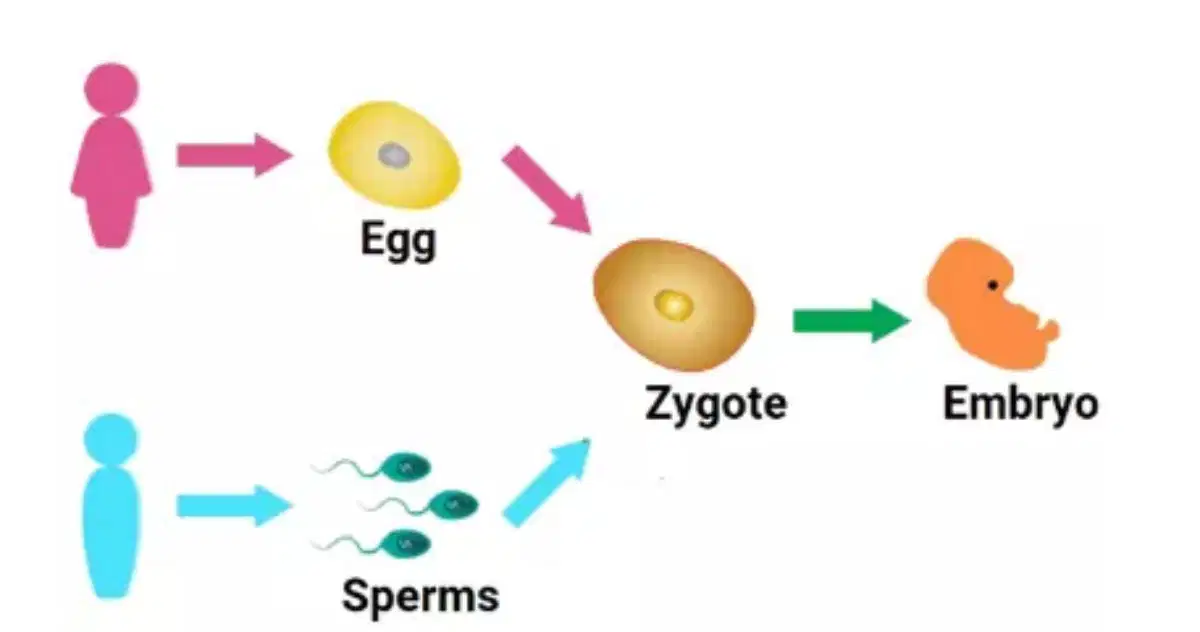
What type of reproduction is shown here?
Asexual
Sexual
Mitosis

Is this a male or female?
Male
Female
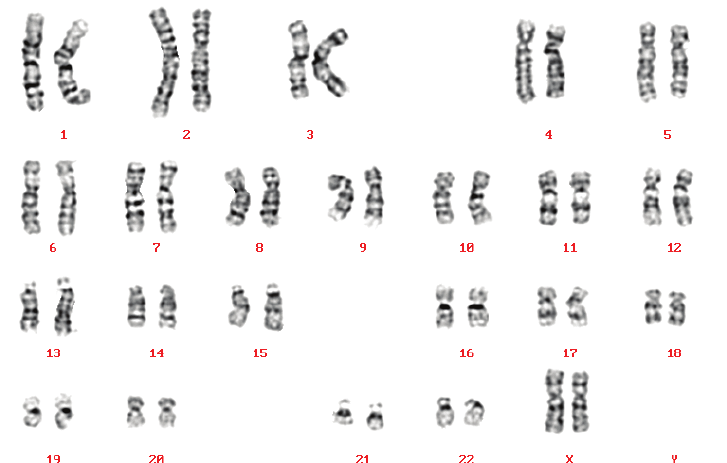
By looking at the chromosomes how can you tell that this person is biologically female?
Because there are two X chromosomes
Because there are more chromosomes than in a male
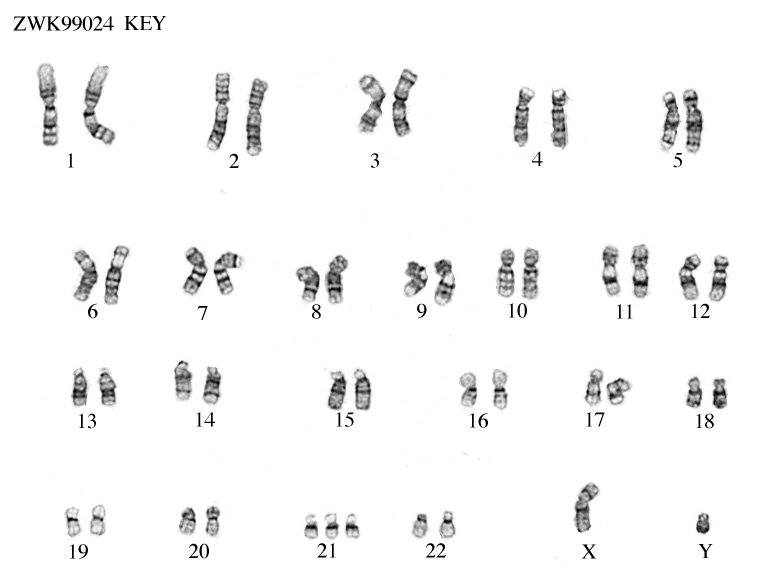
Can you identify the disorder?
There is only one X
7 is shaped like a hockey stick
There's an extra 21
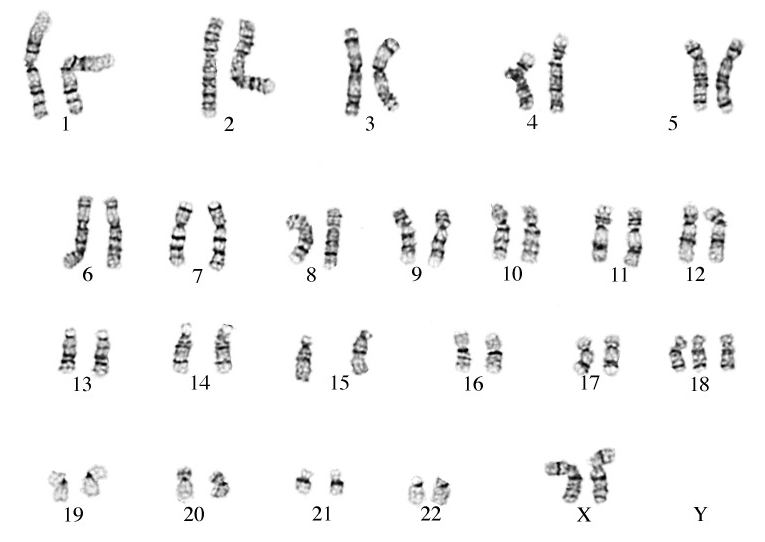
Can you identify the disorder?
Chromosomes 1 and 2 are bent
There is no Y chromosome
This persons chromosomes are normal
There are 3 of chromosomes 18

