
 Worksheets
Grade 7 Wave Unit Test Revision
Total questions: 173
Worksheet time: 3hrs 4mins
Sound is a form of energy produced by ______________.
Vibrations
Distances
Prisms
Forces
Sound waves travel the FASTEST through _____________.
Gases
Liquids
Solids
An object that does not vibrate cannot produce
Sound
Light
Heat
Electricity
A place where no sound exists is...
in the air.
under water.
in a vacuum.
all of the above
Why do we see lightning before we hear the thunder?
Our eyes trick us.
Light travels faster than sound.
they're two separate things.
________ describes how LOUD a sound is.
Amplitude
Frequency

____________ is determined by sound's frequency
Compression
Pitch
A sound with a high frequency has a _____ pitch. A sound with a ____ frequency has a low pitch.
high, low
low, high
medium, high
high, medium
______________ sounds have a larger amplitude
Quiet
Loud
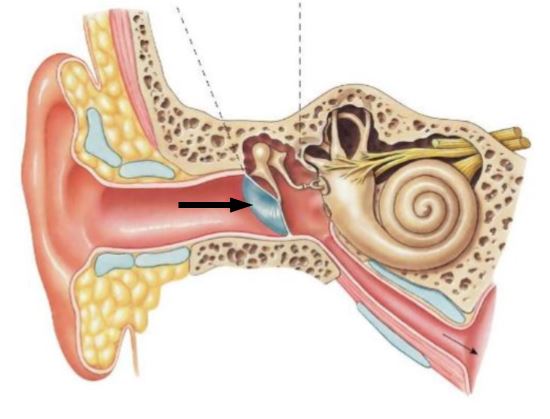
What is this?
Ear Drum
Ear Canal
Nerve
Cochlea
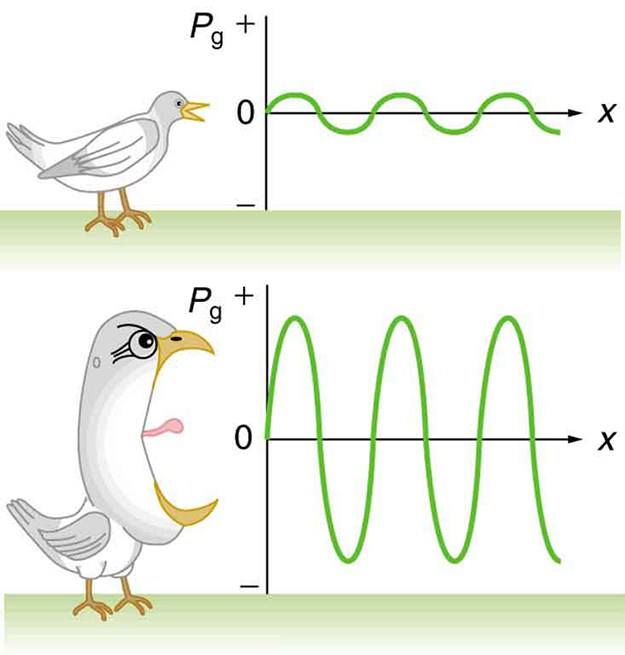
Which of the following sound wave produces the highest pitch of sound?


Choose the correct statements. (2 answers)
P - The loudness increases
Q - The pitch decreases
R - The loudness decreases
S - The pitch increases

Diagram shows 3 types of sound waves generated from speaker. Which of the following statements is true?
P has a higher pitch than Q
Q has a higher pitch than R
R has the highest pitch
P, Q and R have the same pitch

Which waveform has the lowest frequency?
(a)
(b)
(c)
(d)
(e)
Frequency is measured in the unit of
Ampere (A)
Hertz (Hz)
Mole (mol)
Meter (m)
The human ear can only sense within the frequency range of _____.
20 Hz to 20,000 Hz
1,000 Hz to 100, 000 Hz
Vibrational frequencies beyond 20,000 Hz is called _____.
infrasonic frequencies
ultrasonic frequencies
It determines the s loudness or volume of a sound wave.
frequency
amplitude
A high amplitude sound means _____ sound, and a low amplitude sound means _____ sound.
softer, louder
louder, softer
louder, louder
softer, softer
On the decibel scale, an increase of 1 dB means that sound intensity is increased by a factor of _____.
2
5
10
100
How much louder is a 40 dB sound compared with a 30 dB sound
one time
ten times
hundred times
thousand times
In which of these places could you NOT hear sound?


In which material do sound travels the fastest?


Which of these sounds is the loudest?


The vibrating loudspeaker cone makes the air molecules next to it move _______________.
back and forth
up and down
True or False: Sound waves are faster than light.
False
True

What does 1 represent?
time
speed
amplitude
wavelength

What is the function of the ridges on your outer ear?
They prevent germs from entering your middle ear.
They direct sound into your middle ear.
They prevent loud noises from damaging your inner ear.
They filter out very high and low-frequency sounds.

How are sound waves like ripples in a pond?
They are both types of electromagnetic radiation.
They travel faster in water than they do in the air.
They radiate outward from a central point.
They have the same wavelengths.

How is your eardrum like a real drum?
It produces sound.
It vibrates.
It is frequently struck by the bones in your middle ear.
It is hollow.

What is unique about the hammer, stirrup, and anvil?
They are the smallest bones in your body
They are the only bones in your body that move
They are the only bones located in your head
They are the only bones that cannot be broken

If your inner ear lacked nerve fibers, what might happen?
Sound would be unable to travel to your brain.
Your eardrum would be unable to vibrate.
Your hammer could not tap against your anvil.
Sound waves could not enter your ear.

Place the following events in sequence: A) Your eardrum begins vibrating; B) Electrical impulses travel along nerve fibers; C) The hammer, anvil, and stirrup begin moving
B, C, A
A, B, C
B, A, C
A, C, B

Which word best describes the auditory (ear) canal?
Filled with water
Hollow
Lined with sensitive nerve fibers
Vibrating

Which part is where vibrations are turned into nerve impulses?
E
H
C
I

The auditory canal is at
I
B
D
H
Sound is best described as
a frequency
vibrations in air
vibrations in the eardrum
nerve impulses heading to the brain
One of the components of a sound is pitch. Pitch is determined by the _____ of a sound wave.
amplitude
complexity
frequency
depth
The ________ ear collects sounds waves and transmits them to the ________ ear, which contains auditory ossicles.
superficial; deep
outer; middle
inner; middl
middle; inne
outer; inner

The auditory nerve sends signals to the ....
cochlea
ear drum
brain

The picture shows 4 sound waves on an oscilloscope. Which has the highest pitch?
A
B
C
D
The picture shows 4 sound waves on an oscilloscope. What can you say about A?
It is a very low pitched sound
It is a very high pitched sound
It is a very quiet sound
It is a very loud sound
The picture shows 4 sound waves on an oscilloscope. Which 2 have the smallest amplitude?
A
B
C
D
Which statement is true of sound waves. Select 2 answers.
They are made by objects vibrating
They are detected because they make our ear drum vibrate
They are transverse waves
They travel faster in air than in water.
What is the height of a wave called?
Peak
Wavelength
Amplitude
Frequency
Sound waves are caused by the (a) of particles
The distance between 2 crests or troughs
wavelength
amplitude
frequency
wave speed
The speed of sound is about...
30 m/s
300 m/s
30 000 m/s
300 00 0m/s

A
B

A
B
Select the correct answer: Ultrasound are...
sounds that only dolphins can produce
sounds that have a frequency above 20 000Hz
sounds that only superheroes can hear
sounds that are below 20 000Hz
__________ is when a wave bounces off a surface
reflection
absorption
transmission
diffraction

How would you describe this cup?
opaque
translucent
transparent
A white surface absorbs all the color of light.
TRUE
FALSE
Materials that do not let any light pass through them.
opaque
transparent
transluecent
reflective material
Matter that transmits light is _______________.
opaque
transparent
transluscent
reflective material
What is the best description of an opaque material?
no light passes through the material
some light passes through the material
all light passes through the material
What is the best description of a transparent material?
no light passes through the material
some light passes through the material
all light passes through the material
What is the best description of a translucent material?
no light passes through the material
some light passes through the material
all light passes through the material

What type of object is shown in the picture?
opaque
transparent
translucent

What type of object is the glass in the glasses considered?
opaque
transparent
translucent

What type of object is a mirror considered?
opaque
transparent
translucent


The image shows an object that is __________.
transparent
translucent
opaque

The image shows an object that is __________.
transparent
translucent
opaque

The image shows an object that is __________.
transparent
translucent
opaque


These bottles are
transparent
translucent
opaque

These milk jugs are
transparent
translucent
opaque
Electromagnetic radiation that you can see
Sound
Light
Temperature
Photons

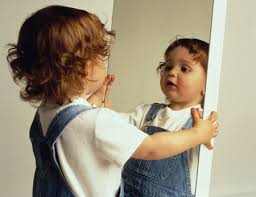
What is the best explanation for Mickey seeing himself in the mirror?
refraction
absorbed
reflection
flipped


In the diagram, which letter represents the angle of incidence?
A
B
C
D
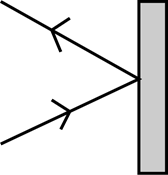
In the illustration, the light ray striking the object is-

Which diagram shows the correct image of the key in a plane mirror?
Characteristics of a image formed by a plane mirror. Check all that applies.
inverted
same size as the object
laterally inverted
real

What type of reflection will this image produce?
Regular Reflection
Diffuse Reflection

An object was placed in front of the plane mirror as shown in the given picture. How will its image formed in plane mirror look like ?


What is a stream of light called?
A) Ray
B) Beam
C) Twilight
D) Sunlight

Which diagram represents diffuse reflection?
A
B
C
D

Given that the angle of incidence = 30 degrees
a. Draw a ray diagram, labelling clearly the normal, incident ray, angle of incidence, reflected ray and angle of reflection accurately.
Which is the correct diagam?
In order to see a picture it must
produce light
reflect light
absorb light
To get the best reflection from a mirror you need
a very shiny surface to reflect lots of light
to stand right in front of it
to shine a bright light on it
it to produce light

If a capital letter R is seen in an ordinary mirror, what does it look like?

This reflection is
specular.
diffuse.

Type of mirror found in a bathroom...
Plane
Convex
Concave
The image appears to be _________________ from the mirror as the object.
nearer to
further away from
the same distance from
The image in the mirror is ________________ the object.
bigger than
smaller than
the same size as
You can see a reflection in the mirror which is known as ______________.
image
picture
object
shadow
You cannot see an image using a rough surface like paper. This is because light _____________ hitting the paper are _______________ in all directions.
rays, scattered
rays, absorbed
streams, scattered
streams, absorbed
The angle of incidence is ________________ the angle of reflection.
bigger than
equal to
smaller than
cannot tell

A student placed a pencil in a cup of water. The pencil appears broken because light
always travels in a straight line.
bends when it passes through water.
makes the water in the glass evaporate.
reflects the pencil on the water's surface.
When light passes at an angle to the normal from one medium into another in which its speed is higher
it is bent toward the normal.
it always lies along the normal.
it is unaffected.
it is bent away from the normal.
When light passes at an angle to the normal from one medium into another in which its speed is lower
it is bent towards the normal.
it always lies along the normal.
it is unaffected.
it is bent away from the normal.
flint glass n=1.70
barium glass n=1.60
crown glass n=1.523
water n=1.33
diamond n=2.45

Based on the image, as light passes from medium 1 to medium 2
light speeds up and bends towards the normal
light speeds up and bends away from the normal
light slows down and bends towards the normal
light slows down and bends away from the normal



As a light wave moves from a faster medium to a slower medium, its speed
does not change
slows down
speeds up
Choose all examples of refraction


Light refracts when:
It changes speed
It changes from a particle to a wave
Its density changes
It encounters a solid object
When light passes from a dense medium into a less dense medium
it is bent toward the normal.
it always lies along the normal.
it is unaffected.
it is bent away from the normal.
The color that reflects all visible light waves is:
White
Black
Green
Yellow

Light waves bending through a prism is an example of:
Reflection
Refraction
Absorption

A black shirt capturing light waves and making a person feel hot in the summer is an example of:
Reflection
Refraction
Absorption
The place where the optic nerve leaves the retina, where there are no light-sensitive cells is the ________________.
lens
cornea
blind spot
sclera
The tough, clear covering over the iris and pupil that helps protect the eye is the __________________.
retina
lens
sclera
cornea
The ______________ is a muscle that controls how much light enters the eye.
iris
pupil
cornea
blind spot
The layer of light-sensitive cells at the back of the eye that detects images focused by the cornea and the lens is called the ___________________.
blind spot
sclera
retina
optic nerve
The ________________ is the dark circle in the center of your iris that lets light into the inner eye.
retina
cornea
iris
pupil
The bundle of fibers that carry information from the retina to the brain is called the ____________________.
optic nerve
blind spot
vitreous humor
aqueous humor
A clear, flexible structure that makes an image on the eye's retina. The _______________ is flexible so that it can change shape, focusing on objects that are close up and objects that are far away.
lens
cornea
pupil
retina

Identify the part of the eye colored red in this diagram.
cornea
pupil
iris
sclera

Identify the part of the eye that the red circle is touching in the diagram.
vitreous humor
aqueous humor
lens
cornea


What type of wave is light?
electromagnetic
mechanical

Why does a banana look yellow?
it reflects yellow wavelengths of light and absorbs most other wavelengths
it absorbs yellow wavelengths of light and reflects most other wavelengths

When you see the color black...
All colors are reflecting
All colors are absorbed
The color blacl is reflecting
the color black is absorbed
Why does an apple look red?
because it absorbs red light and reflects white light
because it absorbs red light waves and reflects the others
because it absorbs all colors of light
because it reflects red light waves and absorbs the others
White light is made up of all of the colors of the rainbow
True
False
Black absorbs all light.
True
False
What color is produced when mixing cyan, yellow, and magenta inks (pigments).
White
Black
Blue
Green
What color of light do you get by combining red, green, and blue light?
Black Light
White Light
Ultraviolet Light
Infrared Light


What causes the light to refract as it passes from air to water?
a change in temperature of the light
a change in illumination of the light
a change in speed of the light
a change in brightness of the light

What does light travel fastest in?
solid
liqid
gas
vacuum

What is happening to the red light?
reflected
absorbed
refracted
What is happening to every color but red?
reflected
absorbed
refracted

What happens to light as it passes from air to the window?
Light changes speed but not direction
all light is reflected
all light passes through
light changes speed and direction

A leaf is green. What does this tell you about the light that is being absorbed?
The light is a UV ray.
The light is not a part of the light spectrum.
All colors are reflected except green.
All colors are absorbed except green

What type of wavelengths do ultraviolet rays have?
Short
Long
Alternating short and long
None

Which EM waves have the longest wavelength?
radio
x-rays
ultraviolet
gamma rays
Which EM waves have the shortest wavelength?
radio
x-rays
ultraviolet
gamma rays
Which EM waves are have the lowest frequency?
radio
none
infrared
x-rays
Which EM waves are have the highest energy & are the most dangerous?
radio
gamma rays
infrared
x-rays
Which color waves have the lowest frequency?
red
yellow
green
violet
Which color waves have the shortest wavelength?
red
yellow
green
violet

The picture below shows a ringing bell inside a vacuum jar. As air is pumped from the vacuum jar, the sound level of the ringing bell will decrease until it can no longer be heard.
This happens because air must be present in the jar in order for
sound to be transferred
electricity to flow through the wires
the rubber to seal the jar
the bell clanger to vibrate
What type of electromagnetic wave has a higher frequency than visible light and a larger wavelength than x-rays
Infrared
Gamma
visible
Ultraviolet
Electromagnet waves transfer ____________ without matter.
information
energy
x rays
medium

