
NEW
Font size
 Worksheets
2023 Annual Literacy Survey
Total questions: 20
Worksheet time: 10mins
According to the 2023 Annual Literacy Survey, what percentage of children and young people aged 8 to 18 in the UK read comics or graphic novels in their free time at least once a month?
40.7%
43.4%
50%
35%
What was the estimated market growth of comics in the UK in 2022?
Over £50m
Over £100m
Over £75m
Over £25m
What is the lowest level of reading enjoyment recorded since the beginning of the survey, according to Clark et al., 2023?
5.4%
43.4%
50%
40.7%
According to the 2023 Annual Literacy Survey, what percentage of children aged 8 to 11 read comics at least once a month?
40.5%
31.4%
32.1%
44.6%
What was the most popular format for reading comics among children and young people as per the survey?
On screen
Paper
Audio
Mixed media
Which age group has the highest percentage of comic readers according to the survey?
8 to 11 years
11 to 14 years
14 to 16 years
16 to 18 years
How did children and young people who read comics in their free time rate their reading enjoyment compared to those who didn't read comics?
58.6%
33.1%
86.0%
76.3%
What percentage of comic readers rated themselves as 'very good' or 'good' readers compared to those who didn't read comics?
86.0%
76.3%
58.6%
33.1%
According to the survey, what is one of the reasons why children and young people read comics?
They are accessible and engaging
They dislike other forms of reading
They have limited options
They are less engaging than other books
As of 2023, what percentage of children and young people aged 8 to 18 read comics or graphic novels at least once a month?
40.3%
42.3%
39.2%
31.4%
Which format was the most popular for engaging with comics among children and young people in 2023?
Digital only
Paper only
Both paper and digital
Audio comics
According to the 2023 data, which group had a higher percentage of comic readers in their free time, boys or girls?
Boys
Girls
Both had equal percentages
Data not specified
What percentage of girls aged 8 to 18 read comics at least once a month?
44.6%
49.7%
31.4%
42.3%
What is the percentage of children and young people aged 8 to 18 from non-free school meal (Non-FSM) backgrounds who read comics at least once a month?
42.3%
39.2%
31.4%
32.1%
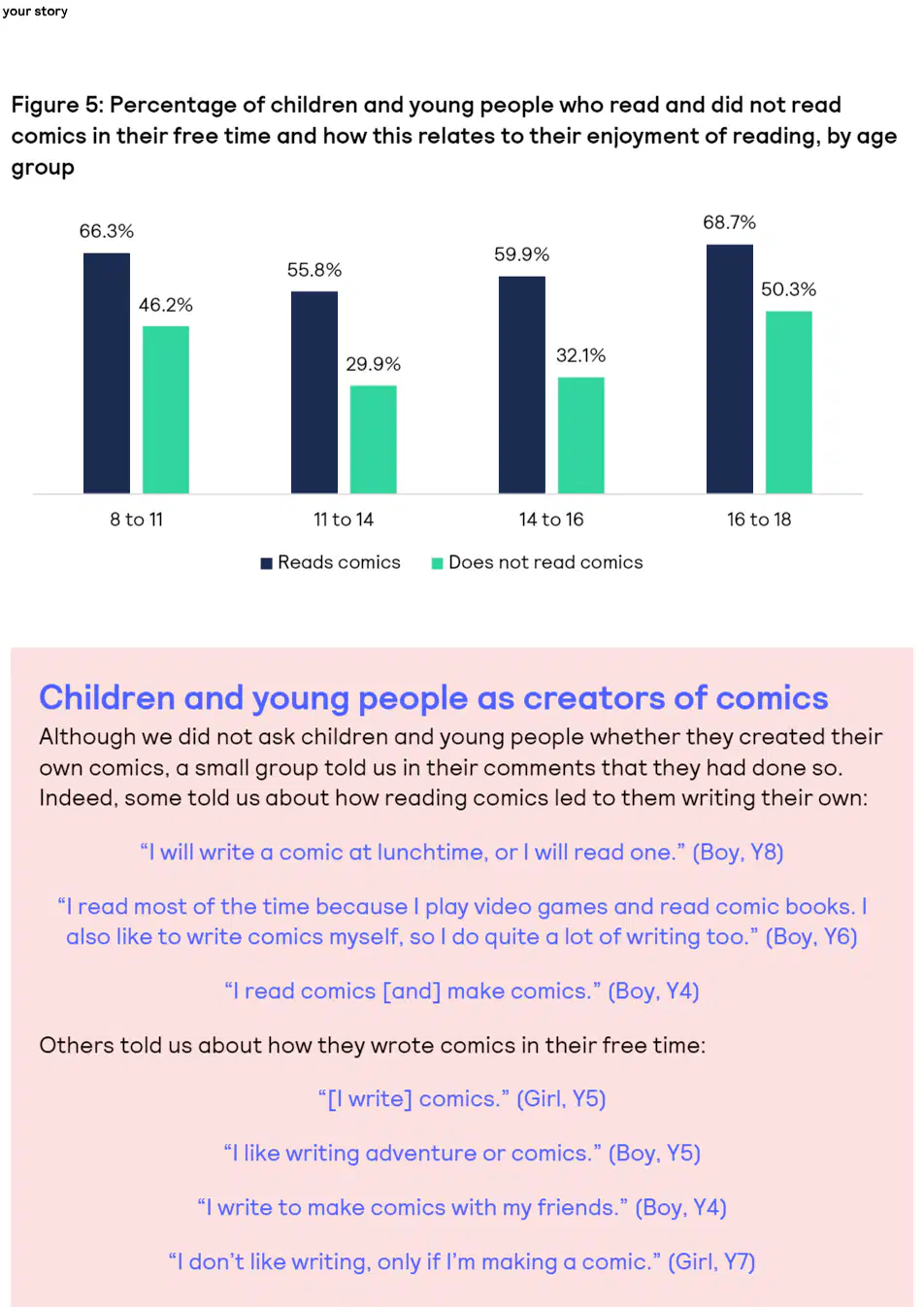
Which statement reflects a common activity among children who both read and create comics?
"I like writing adventure or comics."
"I don't like writing, only if I'm making a comic."
"I write to make comics with my friends."
All of the above
According to the text, how do comics benefit students with dyslexia?
They simplify complex narratives.
They require less reading.
They help with reading through parental support.
They are only visual with no text.
How do comics influence some students' interests in other cultures?
By providing detailed historical accounts
By encouraging travel to other countries
By featuring stories and action from other cultures like Japanese comics
By teaching foreign languages directly
What aspect of comics makes them particularly engaging for children, as mentioned in the text?
The educational content
The complex language used
The interesting and wacky adventures
The realistic illustrations
What additional benefit do children and young people gain from creating their own comics, as mentioned in the text?
It helps them in academic studies.
It allows them to express themselves creatively and relax.
It improves their physical health.
It increases their social media presence.
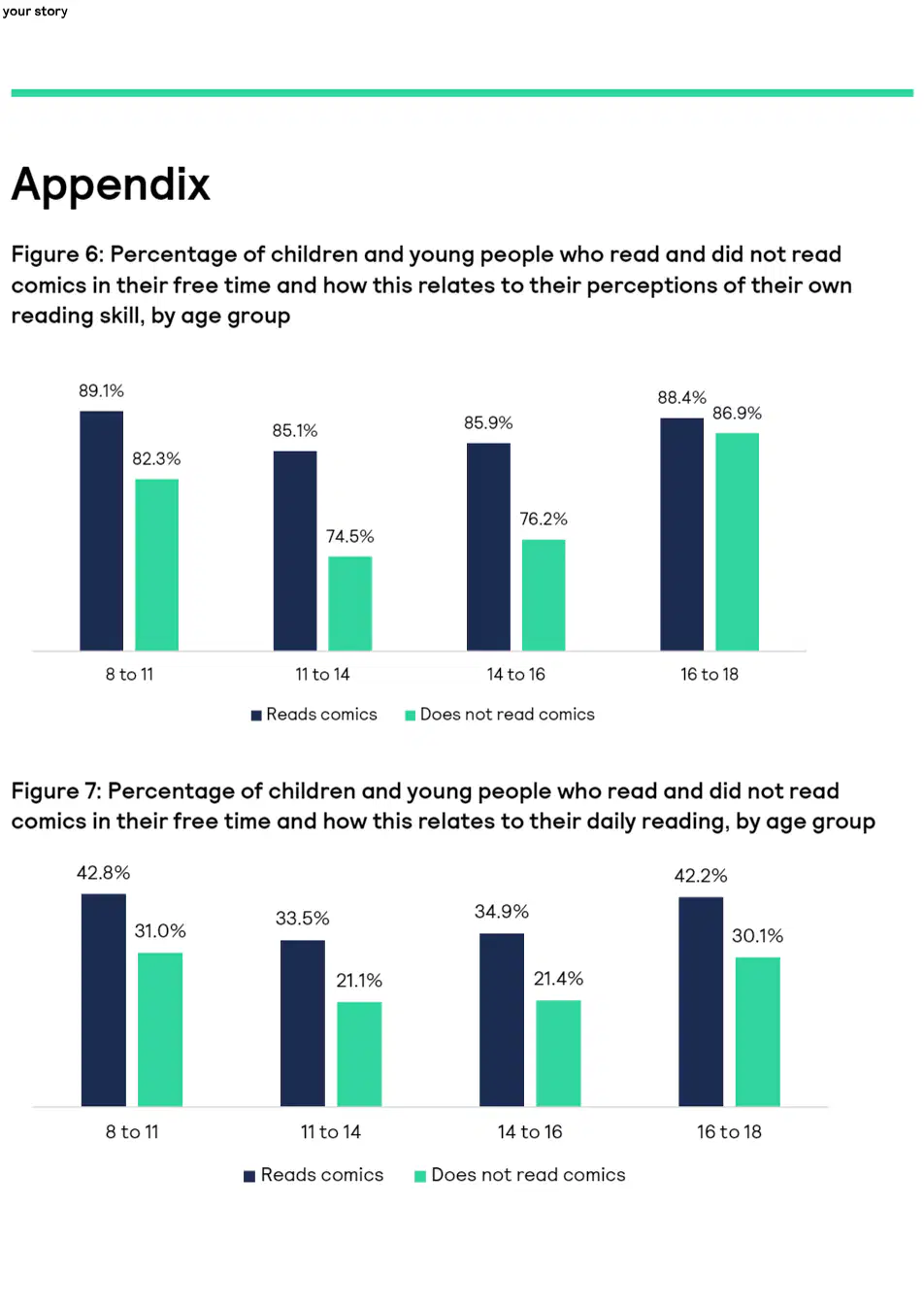
According to Figure 6, what percentage of children aged 8 to 11 who read comics believe they have good reading skills?
A) 82.3%
B) 89.1%
C) 85.1%
D) 74.5%

