
 Worksheets
Week 1 MCAS Review: Energy, Waves and Communication
Total questions: 73
Worksheet time: 4hrs 12mins
Why is a microwave a correct example of an energy transformation?
does not require energy.
It destroys energy
It changes the form of energy.
it creates its own energy
What energy transformations occur in a television?
electrical energy to motion and light energy
electrical energy to sound and motion energy
electrical energy to light and sound energy
electrical energy to heat and motion energy
What energy transformation takes place in a light bulb?
Light energy changes into heat energy.
Light energy changes into electrical energy.
Electrical energy changes into light energy.
Chemical energy changes into heat energy.

Which form of energy is mostly produced in this transformation?
Kinetic
Heat

Identify the energy transformation
Kinetic to sound
stored to electrical
sound to kinetic
heat to sound
Which object is an example of a device that converts electrical currents into heat energy?
a candle
the sun
a freezer
a toaster
What energy conversion takes place in a solar oven?
Sound energy to light
Electrical energy to heat
Light energy to motion
Light energy to heat
Which energy source has to be burned to release its energy?
Sunlight
Gravity
Coal
Water
The switches and lights are part of a circuit. When the switch is on, the circuit is (a) and the lights shine.
A student riding a bicycle observes that it moves faster on a smooth road than on a rough road. This happens because the smooth road has
less gravity
more gravity
less friction
more friction
A type of energy that can be detected by the eye; travels in a straight line and is part of the electromagnetic spectrum.
Light Energy
Heat Energy
Sound Energy
Electrical Energy

What energy transformation takes place in a light bulb.
Electrical - Light - Heat
Mechanical - Sound
Mechanical - Light
Electrical - Sound
An example of a circuit using electric current to make light energy is a
flashlight
electromagnet
lantern
radio
A material that stops or slows the flow of energy is a(n) ___________.
solar cell
battery
insulator
conductor
Which is an example of kinetic energy?
a parked car
a train rolling down a track
a rock at the top of a cliff
a flashlight battery
Emily and her science lab partner made a complete circuit by attaching a lightbulb to some wires and a battery. Which best describes the flow of energy in the complete circuit?
lightbulb, wire, battery, lightbulb
battery, wire, lightbulb, battery
battery, lightbulb, battery, lightbulb
wire, battery, wire, battery
Which is a device that produces electric current by spinning an electric coil between the poles of a magnet?
generator
magnetic engine
switch
battery
Energy can change from one form to another. Which can change kinetic energy into electrical energy?
a switch
an eletromagnet
a transformer
a generator

Transmit
to take in
bounce back
to allow light to pass through

Which of the following materials does ALL light travel through?
wax paper
wood
metal
glass

The following pictures shows
refraction of light
scattering of light
reflection of light
absorbing of light
A mirror, still water, and aluminum would all reflect light.
True
False
We can only see objects because...
A light source illuminates the object
Our eyes illuminates the objects
The objects illuminate themselves
Light comes from all of the following EXCEPT ______
sun
light bulbs
our eyes
lasers

What do eyes need in order to see?
Air.
Something to look at.
Nothing.
Light.
A student was looking at a picture book in a room that had no light entering from the outside. Suddenly, the lights went out. Could the student still see the picture?
No because he closed his eyes
Yes because there was more light to reflected into his eyes
Yes because he closed his eyes
No because there was no light to reflect off the picture into his eyes

Look at this picture! How does the light travel?
light travels from the book to lamp, then it reflects off to his eyes.
light travels from his eyes to the book, then it reflects off to his lamp.
light travels from the lamp to the book, then it reflects off to his eyes.
light travels from the lamp to the eyes, then it reflects off to his book.

What word is a synonym for change?
transformation
conversion
transfer
rotation
Which waves can carry matter?
None - waves carry energy
Mechanical Waves
Transverse Waves
What is a wave?
a repeated pattern of motion that transfers energy
a repeated pattern of motion that transfers matter
a repeated pattern of motion that transfers energy and matter
What types of code uses two signals?
binary code
alphabet code
radio waves
a series of dots and dashes that make up letters and words
hieroglyphics
morse code
pictographs
binary code
a collection of 1’s and 0’s that can be sent as electronic signals
hieroglyphics
morse code
pictographs
binary code
a device that allows information to travel all over the world along wires
pixel
scytale
morse code
telegraph
each dot that when put together makes a picture
pixel
scytale
morse code
telegraph
Which statement describes a wave?
Water moves up and down when it is disturbed.
Water moves out of a bucket when the bucket is overfilled.
Water moves in a circle when it goes down a drain.
Water moves through a pipe when a faucet is turned on.
What do waves carry from place to place?
Energy, but not matter or particles
Energy and matter or particles
Matter or particles not energy
Neither energy nor matter or particles
Students want to study how water waves move in their classroom. Which of the following is the most important feature in the design of their investigation?
Making sure there is enough water to dissolve salt.
Adding food coloring to dye the water blue.
Making the water move in regular patterns.
Build models of toy boats.
What is the definition of a wave?
Cool splashes in the ocean
When you're at a game and everyone's hands go up
Flow or transfer of energy in the form of movement
Flow or transfer of people in the form of movement
To transmit means to
go to lunch
send
go west
call
To put information in digital code form is to
computerize
scramble
GPS
digitize
Waves transfer _________.
Energy
Matter
Candy
Boats
What might happen to an object sitting on top of a speaker if loud music is played through the speaker?
Absolutely nothing would happen to the object.
The object could move due to the vibrations of the sound.
The object could appear a different color because the sound is absorbed.
The object could stop the sound from being transmitted out of the speaker because sound cannot travel through a solid.
How does sound travel?
in waves
only through the air
through magnets
as thermal energy

Images are made of millions of tiny dots called:
Morse code
binary
bits
pixels

A clear, bright image has:
lots of pixels
very few pixels
lots of data
binary code

a pattern of dots and dashes, each one making up a letter or number
Morse code
binary code
pixels
bits
When you send a text message to the friend, what happens first after you have typed your message?
the phone encodes the letters of your message using ones and zeros
the phone sends an analog wave representing your message to another phone
the phone produces an electromagnetic wave with constant amplitude and frequency
the phone decodes the zeros and ones and converts them into letters

Individuals who are blind, use this code to read.
Braille
ASL
Binary Code
Morse Code
Semaphore

This code communicates using flags over distances.
Braille
ASL
Binary Code
Morse Code
Semaphore

Lifeguards on the beach send messages to each other using flags. The picture shows the flag signals for the letter M and the letter C.
How is the flag system like a radio system?
Both systems send signals that are decoded by a receiver.
Both systems receive sound waves converted into a signal.
Both systems use digital signals in a short range from an antenna.
Both systems change digital signals into analog information.

What is the pattern of motion of this type of wave?
Back & Forth
Up & Down
There is no pattern

What is the pattern of motion for this type of wave?
Back & Forth
Up & Down
There is no pattern
A pattern is ______.
The place where something comes from.
Something we observe to be similar over and over again.
A pattern of motion that travels away from a source.
The ability to make things move or change.
A source is ______.
The place where something comes from.
Something we observe to be similar over and over again.
A pattern of motion that travels away from a source.
The ability to make things move or change.
A wave is ______.
The place where something comes from.
Something we observe to be similar over and over again.
A pattern of motion that travels away from a source.
The ability to make things move or change.
Energy is motion is called _____.
Potential Energy
Sound Energy
Kinetic Energy
Light Energy
Select the word that means: to share information?
pattern
communicate
explanation
transfer
the ability to make things move or change
amplitude
communicate
energy
transfer
Sara got a confusing message that said "Hgrwan." What step of communication did she not do correctly?
Encode
Send
Receive
Decode
A ball rolls to the bottom of a hill. Why is this NOT an example of a wave?
It does not transfer energy
It transfers energy
It does not transfer matter
It transfers matter

Which message says "I am home"?



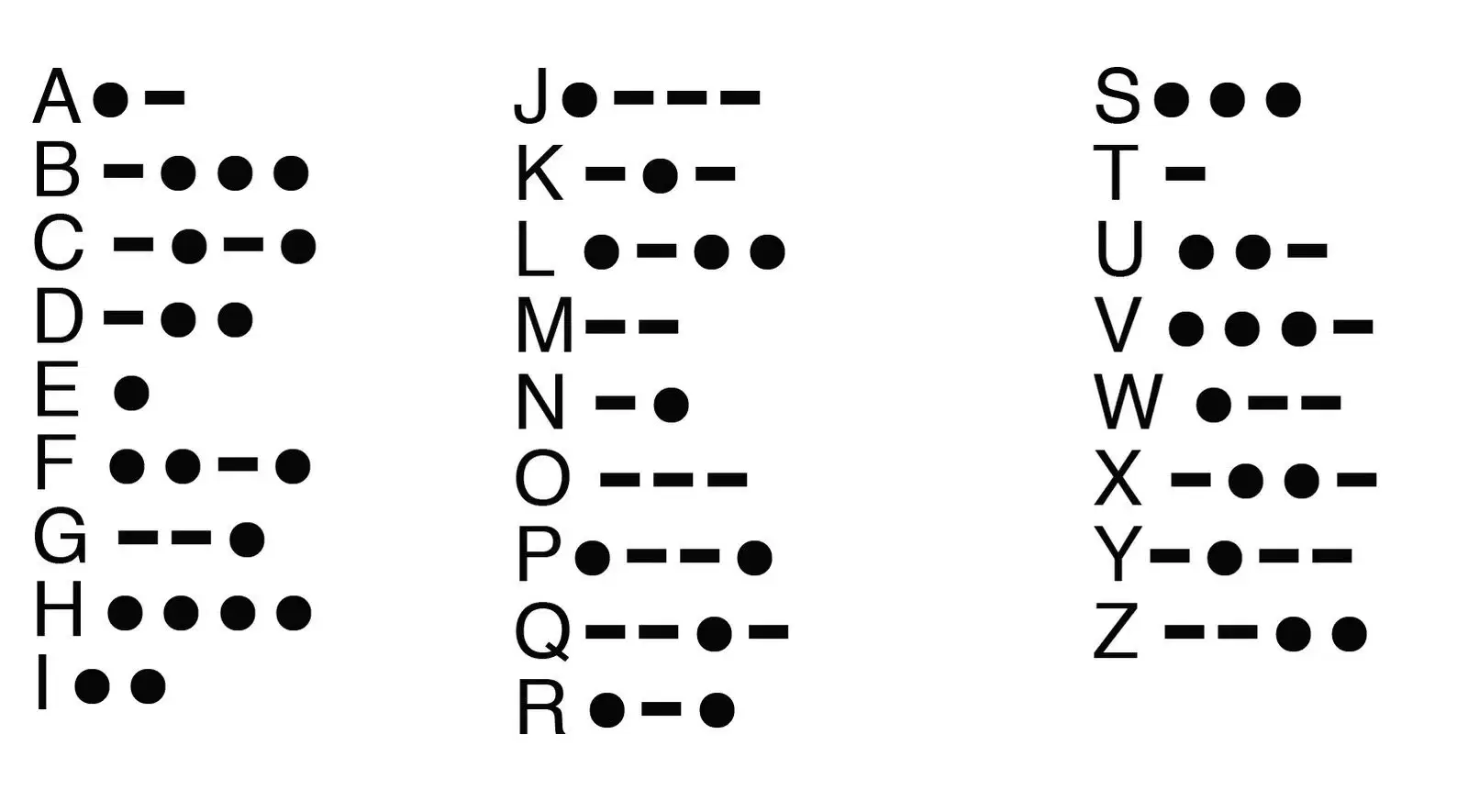
Which code says "help"?
.... . .-.. .--.
.-- .... -.--

Which code says "read me"?
⠗⠑⠁⠙ ⠍⠑
⠓⠑⠇⠏ ⠍⠑
⠎⠉⠓⠕⠕⠇

