
Font size
 Worksheets
SCREADY Reading Review Quizizz
Total questions: 100
Worksheet time: 57mins
The sequential order of events within a narrative.Exposition, Rising Action, Climax, Falling Action, Resolution
Personification
Plot
Protagonist
Play
The physical location and/or time of the narrative or events of the narrative. Setting can be developed directly through description or can be inferred through context clues, word choice, and dialogue of characters.
Alliteration
Analogy
Setting
Schema
The view, belief, or message that is an underlying message of the narrative. It is not directly stated but is left up to the reader to determine it from what has been read.
Chronological Order
Rising action
Falling action
Theme
A string of events that builds up from the conflict, which then moves toward the climax.
Rising action
Resolution
Indirect Characterization
Antagonist
A series of events occurring after the climax that bring the story to a conclusion.
conflict
Falling action
Rising action
Denouement
The conclusion of the story and the completion of the action.
First person point of view
Third person omniscient point of view
Resolution
Direct Characterization
The author takes the point of view of a character providing personal thoughts or feelings and shares what other characters do and say. This is the "I" narrator.
Alliteration
Simile
Symbol
First person point of view
Author can follow all characters around and all times and knows thoughts and feelings of all characters.
Third person omniscient point of view
Direct Characterization
setting
Idiom
Author follows one character around and knows all things about this character.
Analogy
Third person limited point of view
Symbol
Foreshadow
The primary or main character in a piece of literature, but may not be the hero or heroine
Protagonist
Climax
Flashback
Symbol
A character or force (nature, society, a person) that may oppose the protagonist in a piece of literature.
Personification
Antagonist
Analogy
Flashback
The use of language in which the consonant sounds are repeated, generally at the beginning of a word or within words.
Antagonist
First person point of view
Protagonist
Alliteration
The use of words, phrases, or other language structures that change the literal meaning of the words used. Uses the literal or ordinary words and constructs them in an imaginary way to add beauty, strength, or a different context to the structure.
Third person limited point of view
Indirect Characterization
Symbol
Figurative language
Idioms
the sequence of events in a literary work, film, story, or other narrative
an author's reference to a familiar story, such as a Greek myth, a classic piece of literature, or one of Aesop's fables
broad statement about what several people or things have in common
an expression whose meaning cannot be understood from the usual meaning of the words
Stories that are usually made for the theatre, emotion is mainly shown through dialouge
Drama
Fable
Historical Fiction
Horror
Fictional stories that are funny and full of excitement; can be in all genres
Horror
Realistic Fiction
Humor
Fable
Stories that while not acuatlly happening, can happen and follow the rules of real life
Fable
Historical Fiction
Realistic Fiction
Horror
A legend of some sort, usually involves the gods or natural phenomenons.
Poetry
Science Fiction
Mythology
Short Story
Story that is too short to provide real context
Poetry
Tall Tale
Short Story
Fable
A fictional story that gives both the characters and reader a feeling of fright or dread
Science Fiction
Horror
Fable
Realistic Fiction
Fictional story that usually exists in the future or different planets
Legend
Mythology
Science Fiction
Fairy Tale
Can be stories, songs or myths, and are passed down from word of the mouth
Fiction
Folklore
Poetry
Mythology
Stories that are not real or based on fact
Fable
Tall Tale
Poetry
Fiction
A fictional story with settings and characters of somewhat alternate dimensions, is not real
Fantasy
Mythology
Historical Fiction
Fable
Story about fairies or other magical creatures, usually for children.
Fairy Tale
Historical Fiction
Science Fiction
Realistic Fiction
A story that is sometimes about a real or folk hero, includes both facts and imagination
Humor
Horror
Mystery
Legend
Story with fictional characters and events in a historical setting.
Historical Fiction
Mythology
Fable
Fiction
Fiction dealing with the solution of a crime or the unraveling of secrets.
Fairy Tale
Tall Tale
Humor
Mystery
Informational text dealing with an actual, real-life subject.
Speech
Drama
Tall Tale
Nonfiction
TRUE/FALSE: The CONCLUSION paragraph gives the reader an ENDING to the paper.
True
False
What is a claim?
the claim is to state your facts
the claim is not knowing what you are talking about
the claim is another word for central idea in an argument. It is the position a person takes based on a topic
the claim is another word for taking away in an argument. It is based on the narrative of a topic.
What two paragraphs in your essay should look somewhat similar and have mostly the same information?
Body Paragraph and Conclusion
Body Paragraph and Introduction
Introduction and Conclusion
Body Paragraph 1 and Body Paragraph 2
Which of these phrases would be good to use to cite text evidence?
In conclusion,
In my opinion,
According to the text,
In other words,
What is the purpose of an argumentative essay?
To persuade or convince the reader
To entertain the reader
To tell an interesting story
To give information about a topic
Your conclusion paragraph should:
Summarize your reasons
Restate your claim
End with a strong statement that shows you are correct
End with "This is the end of my essay."
Include spelling and grammar errors
1. What is a topic?
the writer's opinion about a text
the general subject of a text
the details that explain the text
a retelling of the most important ideas
This type of writing considers similarities and differences.
description
chronological order & sequence
cause & effect
compare & contrast
In this type of writing the reader will find words/phrases such as a difficulty is, challenge, or solve.
problem & solution
chronological order & sequence
cause & effect
compare & contrast
This type of writing shows the order something did or is supposed to happen in
cause & effect
chronological order & sequence
problem & solution
compare & contrast
The Space Needle was built in 1962 in Seattle, Washington for the World's Fair. It is 607 feet tall from the ground to the aircraft warning beacon at the very top. Visitors can ride an elevator to the observation deck at 520 feet. They can also dine in a revolving restaurant near the top of the needle.
Compare & Contrast
Description
Problem & Solution
Sequence
I do my chores each Saturday. First, I fold the laundry and put it away. Then I sweep and mop the kitchen floor. After that, I empty all the garbage cans and the recycling. Finally, when all of my chores are finished, I can go outside to play.
Compare & Contrast
Description
Problem & Solution
Sequence
The Vancouver Island marmot is a kind of large rodent that lives high in the mountains of Vancouver Island in Canada. Climate change and logging have caused a large decrease in their population. Scientists believe that there are less than a hundred left of them in the wild.
Compare & Contrast
Description
Cause & Effect
Sequence

This is an example of a(n)
illustration
photograph
graph
table
Captions can be placed with which of the following?
photographs
illustrations
headings
To find out what page the second chapter of a textbook falls on, I would look at the
index
table of contents
title
glossary
Informational texts are usually
fiction
nonfiction
Which resource would be BEST for learning the pronunciation of a word?
thesaurus
glossary
encyclopedia
dictionary


The _____ identifies what the topic of an article or book will be about.
Subheading
Glossary
Title
Photograph
A ______ shows what something looks like in real life.
Subheading
Diagram
Illustration
Photograph

An author would use this diagram to
Compare and contrast adult brain with a child's brain
Identify the parts and areas within a human brain
Explain how the Occipital lobe is the biggest part of the brain
Show the reader where the brain is located within the human body
What does the term credible mean?
biased information
thesis statement
trustworthy and reliable
filled with opinion
When evaluating a source, you should look at
how current the information is.
what types of ads are available to watch.
how many people read the information.
the pictures to be sure they match the information.
Which of the following URLs is considered most reliable?
.com
.net
.org
.gov
Choose the one that is NOT a reliable source.
Newspaper
Book
Organization website
Customer review
How can you tell if an author is credible?
They have a college degree.
They publish their credentials (qualifications)
They have their own website.
There is no way to tell this information.
All online sources are considered credible.
True
False
Errors in basic spelling and grammar are signs of a less credible source.
True
False
What type of website stands for a school or university ends in:
.org
.uni
.com
.edu
portrait of George Washington painted when he was President
primary
secondary
2003 book about George Washington's military career
primary
secondary

A photograph is a...
primary source
secondary source

A phone recording/ video is a...
primary source
secondary source

A photoshopped version of a piece of art or photograph is a...
primary source
secondary source

A biography is a ...
primary source
secondary source

A history textbook is a...
primary source
secondary source

A fossil is a...
primary source
secondary source

An original art piece is a...
primary source
secondary source

An autobiography (book written by the person about themselves) would be a...
Primary Source
Secondary Source
What makes you a "first-hand" witness of something?
Hearing about it from a friend
Reading about it in a book
Actually being there and seeing it for yourself
A family is shipwrecked and stuck on an island with wild animals.
Character v. Character
Character v. Self
Character v. Nature
Character v. World/Society
A teenager can't stop playing video games long enough to finish their homework.
Character v. Character
Character v. Self
Character v. Nature
Character v. World/Society
Dr. Martin Luther King Jr. fought for civil rights and equality
Character v. Character
Character v. Self
Character v. Nature
Character v. World/Society
Joanna did not raise her hand when the teacher asked if there were any questions. She was afraid her question would sound silly, and she could not remember if the teacher had already covered the information she didn’t understand.
Internal
External
Tommy was late to the concert since the road was flooded and he had to take a detour. What type of conflict is this?
Internal
External
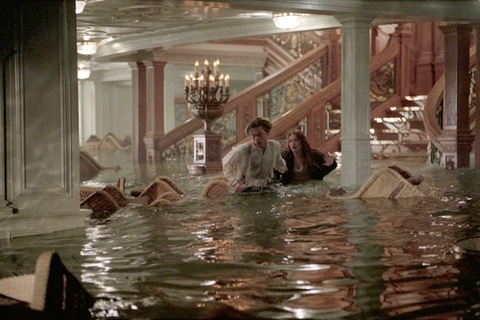
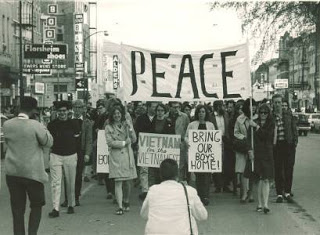
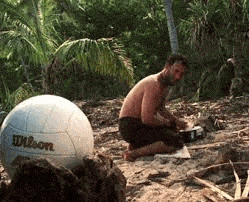
Nancy is tempted to steal money from her employer to feed her hungry children.
Man vs. Man
Man vs. Nature
Man vs. Self
Man vs. Society
A husband and wife disagree about where to spend the holiday.
Man vs. Self
Man vs. Society
Man vs. Nature
Man vs.Man
4. The books on the shelf belong to Amin and his friends. They are (a) .
Grandmother taught ___ a lot about gardening.
me
I
they
their
On Sunday, ____ went to see the new addition.
us
we

