
 Worksheets
Q4 Extra Credit
Total questions: 105
Worksheet time: 2hrs 3mins
What is the oxidation state of H in H2?
+2
+1
0
None of the above
-4
-1
+4
+1
+2
-1
+4
-2
The sum of the oxidation numbers in SCN- is equivalent to
0
-1
+1
+3
The sum of the oxidation numbers in Na2CO3 is equivalent to
0
-2
+1
-1
What is the oxidation number of iodine in KIO3?
0
-1
+5
+1
-3
+4
-2
+3
0
+2
-2
+4
Cr2O72-?
-2
+2
+6
+12
Oxidation number of O in the compound H2O2:
0
-1
-2
+2
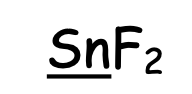
Give the oxidation number for the underlined atoms below.
+4
-4
+2
-2
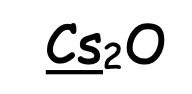
Give the oxidation number for the underlined atoms below.
-2
+2
+1
-1
Determine the oxidation number of the red underlined element.
NaCl
+1
-1
-2
0
Determine the oxidation number of the red underlined element.
NH4+
+3
-1
-3
0
Determine the oxidation number of the red underlined element.
AlPO4
+5
-3
-5
-1
oxidation number Cu2+ is ...
-1
0
+1
+2
oxidation number Na+ is ...
0
+1
+2
+3
oxidation number Mg is ...
0
+1
+2
+3
What is the oxidation state of H in H2?
0
+1
-1
-2
What is the oxidation number of Na+
+1
-1
+2
0
Identify which reactant is oxidized and which is reduced in the following reaction.
2Al(s) + 3Cu2+(aq) →2Al3+(aq) + 3Cu(s)
Al is oxidized and Cu2+ is reduced.
Cu2+ is oxidized and Al is reduced.
Both Al and Cu2+ are oxidized.
Both Al and Cu2+ are reduced.
Identify which reactant is oxidized and which is reduced in the following reaction.
2Cr3+(aq) + 3Zn(s) →2Cr(s) + Zn2+(aq)
Cr3+ is oxidized and Zn is reduced.
Cr3+ is reduced and Zn is oxidized.
Both Cr3+ and Zn are oxidized.
Both Cr3+ and Zn are reduced.
Identify which reactant is oxidized and which is reduced in the following reaction.
2Au3+(aq) + 3Cd(s) →2Au(s) + 3Cd2+(aq)
Au3+ is oxidized and Cd is reduced.
Au3+ is reduced and Cd is oxidized
Both Au3+ and Cd are reduced.
Both Au3+ and Cd are oxidzed.
Which change indicates oxidation?
Cu becomes Cu2+
Sn4+ becomes Sn2+
Fe2+ becomes Fe
Which change indicates oxidation?
Sn4+ becomes Sn2+
Cr3+ becomes Cr6+
Fe3+ becomes Fe
Which change indicates reduction?
Cu becomes Cu2+
Sn4+ becomes Sn2+
Ag becomes Ag+
Which change indicates reduction?
Fe becomes Fe2+
Fe2+ becomes Fe
Ag becomes Ag+
Identify the following reaction as an oxidation reaction or a reduction reaction.
Fe2+ → Fe3+ + e-
Oxidation Reaction
Reduction Reaction
Neither a Reduction or an Oxidation Reaction
Identify the following reaction as an oxidation reaction or a reduction reaction.
Fe3+ + e- → Fe2+
Oxidation Reaction
Reduction Reaction
Neither an Oxidation Reaction or a Reduction Reaction
Cl2 + 2e- --> 2Cl - is an example of:
a chemical reaction
redox
oxidation
reduction
Mg → Mg2+ + 2e–
Mg gains 2 electrons
Mg2+ loses 2 electrons
Mg loses 1 electron
Mg loses 2 electrons
In a reaction, copper is reduced; its number of electrons has:
Increased
Decreased
Remained Constant
Varies Randomly
Oxidation is the _________ of electrons.
loss
gain
sharing
transfer
Reduction is the ___________ of electrons.
loss
gain
sharing
transfer
4Fe + 3O2 --> 2Fe2O3
Iron
Fluorine
Oxygen
Fe →Fe2+ + 2e-
Pb4+ + 2e- →Pb2+
2O-2 →O2 + 4e-
Fe + 3e- →Fe3+
Mg → Mg2+ + 2e–
Mg gains 2 electrons
Mg2+ loses 2 electrons
Mg loses 1 electron
Mg loses 2 electrons

N
H
O
S

N
H
O
S
In a reaction, copper is reduced; its number of electrons has:
Increased
Decreased
Remained Constant
Varies Randomly
2Ca(s) + O2(g) --> 2CaO(s), calcium is __________
Reduced
Synthesized
Oxidized
None of the above
What is the oxidation state of Cr in CrO42- ?
+6
+2
-2
+8
which element, if any, is oxidized?
Zinc
Hydrogen
Oxygen
None
Fe →Fe2+ + 2e-
Pb4+ + 2e- →Pb2+
2O-2 →O2 + 4e-
Fe + 3e- →Fe3+
4Fe + 3O2 --> 2Fe2O3
Iron
Fluorine
Oxygen
which element, if any, is oxidized?
Zinc
Hydrogen
Oxygen
None
Given the cell reaction:
Ca(s) + Mg2+(aq) → Ca2+(aq) + Mg(s)
Which substance was oxidized?
Ca(s)
Mg2+(aq)
Ca2+(aq)
Mg(s)
Which half-reaction correctly represents oxidation?
Sn2+ + 2e– → Sn0
Sn4+ + 2e– → Sn2+
Sn2+ → Sn0 + 2e–
Sn2+ → Sn4+ + 2e–
4Fe + 3O2 --> 2Fe2O3
Iron
Fluorine
Oxygen
Acids have a ______ pH and a _________ pOH
low, high
high, low
An acid will not have a pOH
Which of these solutions is an acid?
Dish Soap: pH of 12
Tomato Soup: pH of 4
Baking Soda: pH of 9
Drain Cleaner: pH of 14
Ammonia has a pOH of 2. Ammonia is __________.
an acid
a base
an element
a metal
An acid
is a substance that releases H+ ions when dissolved in water
is a substance that does not release any ions when dissolved in water
is a substance that releases OH- when dissolved in water
releases an equal amount of OH- and H+ ions when dissolved in water

The picture below shows the relative concentrations of H+ and OH- in a solution. Is the solution an acid or a base?
acid
base
Water has a neutral because
it has more H+ ions than OH-
it has more OH- ions than H+
it does not produce any ions
it has an equal amount of H+ and OH- in solution
A solution has a pH of 7.0. What would happen to the pH if OH- ions were added?
pH would go up
pH would go down
pH would stay the same
None of these

If the [H+] of a solution is 1 x 10⁻² M the pH is
2
12
-2
1

If the [H3O+] of a solution is 1 x 10⁻⁸ M the [OH-] is
1.0 x 10⁻⁶ M
1.0 x 10⁶ M
1.0 x 10⁻⁸ M
1.0 x 10⁸ M
Find the pH of a 0.000841 M solution of sodium hydroxide
3.07
9.88
10.92
11.23
What is the pOH of a 0.0124 M HCl solution?
1.91
12.09
1.61
12.39


Cl-
How do Bronsted-Lowry conjugate acid-base pairs differ?
differ by one H+
Differ by one OH-
Differ by two H+
Differ by some number of H+
Which of the following correctly identifies an acid-base pair?
HCl, NaOH
H2CO3 , CO32-
H3O+ , OH-
NH4+, NH3
Which of the following correctly identifies an Acid-Base Pair?
HH4+ , OH-
H2O , OH-
CaCO3 ,CaCl2
HNO3 , H2SO4

What is NH4+ classified as?
Acid
Base
Conjugate Acid
Conjugate Base
Which of the following word pairs correctly completes the sentence below? _______ are corrosive substances characterized as having a strong smell, a sour taste, and are able to give up a H+ ion.
Acids
Amphoteric Compound
Bases
Electrolyte
An Arrhenius base:
donates H+
accepts H+
produces H+
produces OH-
Which of the following show an acid and its conjugate base pair (in that order)
H2SO4, SO42-
OH-, H2O
NH4+, H2O
H2CO3, HCO3-

Given the reaction above, which compound is the acid?
NH3
HCl
NH4+
Cl-

Given the reaction above, which compound is the conjugate base?
NH3
NH4+
Cl-
What is NH4+ classified as?
Acid
Base
Conjugate Acid
Conjugate Base
The conjugate acid of HCO3- is ___ and the conjugate base of HCO3- is ___.
Label the acid, base, conjugate acid and conjugate base.
acid
base
conjugate acid
conjugate base
Click on the acid.
Click on the base.
Click on the conjugate base.
Click on the conjugate acid.
What is NH4+ classified as?
Acid
Base
Conjugate Acid
Conjugate Base
In the equation below, what is the conjugate base?
HBr + H2O ↔ Br- + H3O+
HBr
H2O
Br-
H3O+
What is the conjugate base of HCl in the following reaction?
HCO3-
HCl
H2CO3
Cl-
Match the following
Mg(OH)2(s)+ 2HCl(aq)→MgCl2(aq)+2H2O(l).
Mg(OH)2
base
HCl
acid
MgCl2
conjugate base
H2O
conjugate acid
Match the following
CH3CO2H(aq) + H2O(l) ⇌ CH3CO2−(aq) + H3O+(aq)
CH3CO2H
acid
H2O
base
CH3CO2−
conjugate base
H3O+
conjugate acid
Match the following
Ba(OH)2(aq) + 2HNO3(aq)→Ba(NO3)2(aq) + 2H2O(l)n
HNO3
acid
Ba(OH)2
base
Ba(NO3)2
conjugate base
2H2O
conjugate acid
Match the following
HOCl(aq)+H2O(l)⇌OCl−(aq)+H3O+(aq)n
HOCl
acid
H2O
base
OCl−
conjugate base
H3O+
conjugate acid
Match the following
CH3CO2H(aq)+H2O(l) ⇋ CH3CO2−(aq) + H3O+(aq)
CH3CO2H
acid
H2O
base
CH3CO2−
conjugate base
H3O+
conjugate acid
Match the following
CH3CO2H(aq)+H2O(l) ⇋ CH3CO2−(aq) + H3O+(aq)
CH3CO2H
acid
H2O
base
CH3CO2−
conjugate base
H3O+
conjugate acid

