
 Worksheets
Q4 Review-Constitution & Laws
Total questions: 50
Worksheet time: 45mins
The Great Compromise consisted of a bicameral legislature.
TRUE
FALSE
The Great Compromise consisted of equal representation in the House of Representative.
TRUE
FALSE
The Great Compromise consisted of equal representation in the Senate.
TRUE
FALSE
The Great Compromise, consisted of a unicameral legislature.
TRUE
FALSE
The Great Compromise consisted of Proportional Representation in the House of Representatives based on population.
TRUE
FALSE
The Great Compromise consisted of Proportional Representation in the Senate based on population.
TRUE
FALSE


The Preamble of the United States Constitution, states which of the following.......
Individual states should keep and maintain the U.S. militatry.
Government exists to protect the rule of the president and other elected offficials.
The U.S. Constitution should never be adjusted or changed.
The purpose of the U.S. government is to be led by and protective of the people.
This group supported the Constitution as it was written.
Federalists
Antifederalists
This group supported strong central (national) government
Federalists
Anti-Federalists
This group supported stronger state governments
Federalists
Anti-Federalists
Who said this quote - "Your only remedy is such a national government as will make the country respectable; such a supreme government as can boldly meet the supremacy of proud and self-interested nations."
A Federalist
An Anti-Federalist
Who said this quote - “When the government fears the people, there is liberty. When the people fear the government, there is tyranny.”
A Federalist
An Anti-Federalist
The Federalists and Anti-Federalists argued about
The passage of the Northwest Ordinance
Going to war against Britain
Whether or not to declare independence
Ratification of the Constitution
Which group feared that the president might behave like a king?
Federalists
Anti-Federalists
Promoted the creation of a strong, centralized, national government.
Federalists
Anti-Federalist
Both Groups
Neither Group
Insisted upon the creation of national system of taxation to finance the federal government.
Federalists
Anti-Federalists
Both Groups
Neither Group
Gained widespread support among common Americans and rural, farming communities.
Federalists
Anti-Federalists
Both Groups
Neither Group
In an effort to limit central government, this group endorsed a strict interpretation of the Constitution.
Federalists
Anti-Federalists
Both Groups
Neither Group
“A president can quickly declare himself king under this new government plan. I have had my fill of kings—they offer nothing positive to the people of this great new country.”
Federalist
Anti-Federalist
Both Groups
Neither Group
“The United States is simply too large to have a strong central government! People will not know their leaders, and leaders will not know the concerns of the different regions.”
Federalist
Anti-Federalist
Both Groups
Neither Group
“My biggest criticism of the new plan for government is that a strong national government can trample the rights of a man quickly and easily.”
Federalist
Anti-Federalist
Both Groups
Neither Groups
“Gentleman, it will not be possible for the federal government to overpower the state governments because in a federal system, central government and state governments must work together.”
Federalist
Anti-Federalist
Both Groups
Neither Group
“After so recent a triumph over British despots…it is truly astonishing that a set of men among ourselves should have effrontery to attempt the destruction of our liberties.”
Federalist
Anti-Federalist
Both Groups
Neither Group
What series of essays were written by Hamilton, Jay, and Madison to convince people to ratify the Constitution?
Federalist Papers
Common Sense
Antifederalist Papers
The American Crisis
The Antifederalists wanted
a strong central (national) government
weak state government
weak central (national) government
to deny the Bill of Rights
These group of people were called the ______ and they didn't support the ratification of the Constitution
Federalists
Whip Party
Independent Party
Antifederalists
The Antifederalists wanted
a strong central (national) government
weak state government
weak central (national) government
to deny the Bill of Rights
Which principle is included in the U.S. Constitution?
commerce clause
rule of law
confederalism
elastic clause
"Rule of Law" protects individual _____________.
opinions
rights
businesses
dictatorships
Checks and Balances means...
Power is divided among the different branches of government.
The government has rules for legal proceedings.
Citizens have a way to enforce their rights.
Citizens feel safe during daily activities.
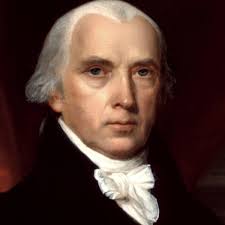
Who is known as the "Father of the Constitution"?
George Washington
Alexander Hamilton
James Madison
Benjamin Franklin
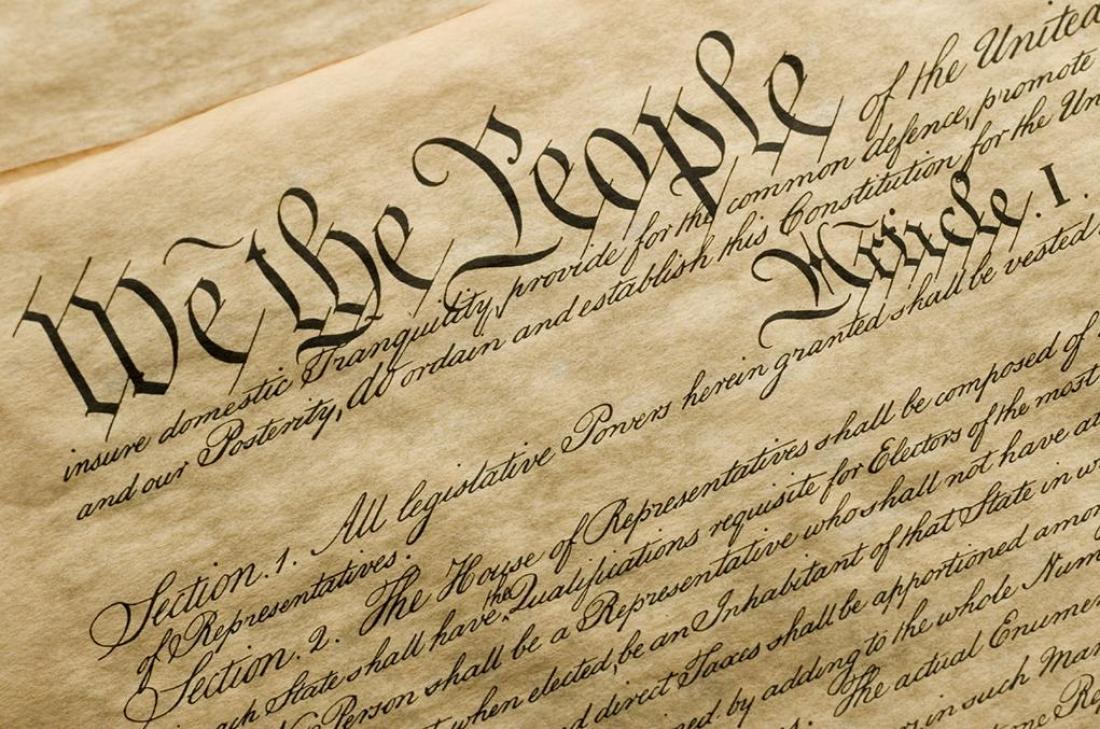
How did the Federalists and Anti-Federalists "compromise" to ratify (approve) the U.S Constitution?
The added the Bill of Rights (First 10 Amendments)
They outlawed cruel and unusual punishment.
Ensured due process of the law.
The Federalists threatened the Anti-Federalists to war.
Federalist Paper #51, written by James Madison, is about
The Judicial branch
The nature of a republic government
Factions, Majorities and Minorities
Separation of Powers & Checks and Balances
Who said this quote - “When the government fears the people, there is liberty. When the people fear the government, there is tyranny.”
A Federalist
An Anti-Federalist
Who said this quote - "Your only remedy is such a national government as will make the country respectable; such a supreme government as can boldly meet the supremacy of proud and self-interested nations."
A Federalist
An Anti-Federalist
What branch is responsible for creating the nations laws?
Executive
Legislative
Judicial
What Constitutional Principle is The Process of A Bill Becoming a Law ?
Individual Rigths
Checks and Balances
Federalism
Republicanism
What is another name for the Legislative Branch?
The President
The Cabinet
The Congress
The Executive Office

