
 Worksheets
5.E.1.1 - 5.E.1.3 Weather
Total questions: 156
Worksheet time: 2hrs 57mins
An instrument that measures temperature is a ______
thermometer
barometer
rain gauge
sun lamp
water that falls from clouds as rain, snow, sleet, or hail
precipitation
climate
humid
runoff
the present state of the atmosphere
climate
weather
thermosphere
groundwater
when a liquid changes to a water vapor or gas it is called __________.
condensation
evaporation
precipitation
transpiration
The process in which a gas turns into a liquid when it touches a warmer surface is _______.
condensation
liquidation
evaporation
transpiration
When air moves from land to water this is called a __________.
wind
sea breeze
air breeze
land breeze
When air moves from water to land this is called a __________.
land breeze
sea breeze
atmospheric pressure
wind
A front is where two different temperatures of _______ meet.
land
boundaries
precipitation
air
A _______ occurs when cold air is replacing warm air in the atmosphere.
occluded front
cold front
warm front
sea breeze
A ________ occurs when warm air is replacing cold air in the atmosphere.
mild front
cold front
evaporation
warm front
A ___________ is when a warm front and a cold front push against one another.
warm front
cold front
mild front
stationary front
Which correctly describes El Nino?
An unusual cooling of water in the eastern Pacific Ocean
A cold current in the atmosphere that flows across the United States
An unusual warming of water in the eastern Pacific Ocean
A warm ocean current that flows across the United States
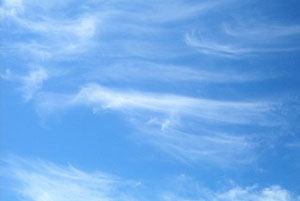
Which BEST describes cirrus clouds?
Big, dark clouds that bring rain and thunder
Low gray clouds that cover the whole sky
Puffy, white clouds seen in sunny weather
High, wispy clouds made up of ice crystals
Which tool measures air pressure?
Thermometer
Wind vane
Anometer
Barometer
Which statement is correct?
NC's weather mostly comes from the west due to earth's rotation and the jet stream
NC's weather mostly comes from the east due to earth's rotation and the jet stream
NC's weather mostly comes from the west due to the equator's drastic temperature changes
NC's weather mostly comes from the North due to the polar magnetism
The amount of moisture in the air is called:
Barometric pressure
Wind
Temperature
Humidity
A cold front will move through Raleigh late Wednesday afternoon. Which type of weather conditions will Raleigh most likely experience during that time?
cooler temperatures Tuesday, clear skies late Wednesday, and warm temperatures on Thursday
warmer temperatures Tuesday, clear skies late Wednesday, and cooler temperatures on Thursday
warmer temperatures Tuesday, stormy weather late Wednesday, and cooler temperatures on Thursday
cooler temperatures Tuesday, stormy weather late Wednesday, and warmer temperatures on Thursday

This chart shows the current weather data for four cities.
Which city is most likely to experience precipitation?
City W
City X
City Y
City Z
On a hot summer day, cumulus clouds grow taller and darker. Which type of weather will most likely occur?
clear skies
a hurricane
a thunderstorm
several snowy days
Blake’s afternoon baseball game should start soon, but he is worried that it will be cancelled due to the weather. The sky is overcast with cumulonimbus clouds. Which will most likely happen to Blake’s baseball game?
It will be played as expected because the clouds will leave the area soon.
It will be played in the afternoon because it will hail for the rest of the day.
It will be postponed until evening because there will be an afternoon thunderstorm.
It will be cancelled and rescheduled for the next day because it will rain for the rest of the day.
Sandy wanted to take pictures of cirrus clouds at school; however, the morning weather report indicated a low-pressure system over her area. Why will Sandy have to wait to see cirrus clouds?
because low-pressure systems generally bring cool, dry air
because low-pressure systems generally bring fair weather
because low-pressure systems generally do not bring clouds
because low-pressure systems generally bring rainy weather
During recess, Max observed mostly cirrus clouds in the sky. Which describes the weather conditions he can most likely expect to see for the next two hours?
fair
rainy
snowy
windy
Which conditions are needed for a hurricane to form?
warm, dry air rising over warm areas on the land
. warm, dry air rising over warm areas in the ocean
warm, moist air rising over warm areas on the land
warm, moist air rising over warm areas in the ocean
Which weather pattern has the most influence on the weather in North Carolina?
polar easterlies
polar westerlies
prevailing easterlies
prevailing westerlies
Which is most responsible for moderating weather along the North Carolina coast?
La Niña
the Jet Stream
the Gulf Stream
prevailing westerlies
On a hot summer afternoon, the wind speed increases and large dark clouds begin to form. Which weather conditions are most likely to occur?
clear skies
low winds
freezing rain
thunderstorms
Which is most responsible for moderating weather along the North Carolina coast?
La Niña
the Jet Stream
the Gulf Stream
prevailing westerlies
What is the day to day changes of temperature, precipitation, wind and air pressure?
(a)
What is the long term pattern over a period of time of an area?
(a)

On a hot summer day, cumulus clouds grow taller and darker. Which type of weather will most likely occur?
clear skies
a hurricane
a thunderstorm
several snowy days
Which is true about sea breezes?
They form when both the land and the ocean have cooler temperatures.
They form when both the land and the ocean have warmer temperatures.
They form because the land warms up more quickly than the cooler ocean waters.
They form because the ocean warms up more quickly than the cooler land masses.
Which correctly compares low- and high-pressure weather systems?
A low-pressure system usually brings cool dry air and clear skies, while a high-pressure system brings clouds and precipitation
A low-pressure system usually brings clouds and precipitation, while a high-pressure system brings cool dry air and clear skies
A low-pressure system usually brings warm dry air and clear skies, while a high-pressure system usually brings warm moist air and precipitation
Which of these actions causes wind?
rotation of Earth on its axis
movement of air from water to land
air passing Earth as it revolves around the Sun
uneven heating of Earth’s surface
Which type of weather is usually associated with a cumulus cloud?
fair
humid
foggy
stormy
On a cold winter day with temperatures below 32°F, the local meteorologist records falling air pressure. Which type of weather will most likely occur?
a snowstorm
rain
clear skies
a thunderstorm
Which best explains why El Niño could cause an increase in precipitation in California?
Cooler ocean water causes the air to cool, which allows for more condensation to occur in the United States.
Warmer ocean water allows for warm air to be blown toward the United States and cause droughts
Cooler ocean water causes the air to cool, and brings high air pressure to the United States.
Warmer ocean water allows for warmer, wet air to travel east toward the United States.

The map below is used to predict the weather.
Students in which city will MOST likely want to wear a raincoat the next day?
Denver
Houston
New York City
Seattle
Chris noticed a high-pressure system in the weather forecast for Monday and Tuesday. Which type of weather conditions are most likely for those two days?
clear and sunny
cold and stormy
cloudy and rainy
warm and stormy
A cold air mass is moving toward a warm air mass, and nimbostratus clouds are observed in the sky. Which weather conditions are most likely?
a cool, sunny day
a cool, rainy day
a warm, sunny day
a warm, rainy day
Which instrument is used to determine air pressure?
thermometer
psychrometer
anemometer
barometer
Which best describes the effect on weather in an area if low clouds cover the sky during the daytime?
cooler temperatures
warmer temperatures
warmer temperatures
increased driving visibility

The map below shows several major cities in North Carolina.
During the winter, which city most likely has the warmest average temperature?
Charlotte
Greensboro
Raleigh
Wilmington
A cold front will move through Raleigh late Wednesday afternoon. Which type of weather conditions will Raleigh most likely experience during that time?
cooler temperatures Tuesday, clear skies late Wednesday, and warm temperatures on Thursday
warmer temperatures Tuesday, clear skies late Wednesday, and cooler temperatures on Thursday
warmer temperatures Tuesday, stormy weather late Wednesday, and cooler temperatures on Thursday
cooler temperatures Tuesday, stormy weather late Wednesday, and warmer temperatures on Thursday

Mrs. Anderson gave her class a quiz about the Gulf Stream. The first question asked students to draw the path of the current. Four of the maps are below.
Which student drew the path correctly?
Tomas
Cecily
Humberto
Zavia
Which best explains why a storm that affects an area in the western United States may affect an area in the easter United States a few days later?
The jet stream winds blow storms from east to west.
The jet stream winds blow storms from west to east.
Cool Gulf Stream water causes storms to form in the east.
Warm Gulf Stream water causes storms to form in the west.
Which best describes the cause of day-to-day weather changes?
the rotation of Earth
the size of Earth
moving air masses
action of the winds
Which is most responsible for the movement of weather systems across the United States?
the Gulf Stream
the prevailing westerlies
the southeast trade winds
the jet stream
Students report that the sky in their area has mostly cirrus clouds. What are most likely the weather conditions in the area?
rainy
cold
windy
fair
On a June day, a warm, moist air mass slowly passes over a colder air mass in North Carolina. What will most likely happen next?
Rain will fall.
Cirrus clouds will form.
Skies will clear.
Atmospheric pressure will rise.
Which best describes a hurricane?
a low-pressure weather system
a high-pressure weather system
a cold front
a stationary front
Which instrument is best used to predict weather changes?
a hygrometer
an anemometer
a thermometer
a barometer
What is the difference between weather and climate?
Weather happens over a long period of time and climate is what is happening outside today.
Weather is what is happening outside today and climate is the average weather over a long period of time in a certain area.
They mean the same thing.
What affect does the sun NOT have on our weather?
Causes temperature changes.
Makes the wind blow.
Makes the stars shine at night.
Helps to create clouds.
The heating and rising of air and the cooling and sinking of air causes which of the following?
wind
rain
tides
erosion
The amount of moisture in the air is called...
wind
hail
humidity
temperature
Which type of cloud produce thunderstorms?
cumulus
stratus
cumulonimbus
cirrus
Which is NOT a type of precipitation?
hail
fog
sleet
snow
Hail is formed during...
thunderstorms
snow storms
tsunamis
light rain showers
Low air pressure usually means...
sunny weather
rainy weather
partly cloudy weather
hot weather
Hurricanes can also be called...
tropical cyclones
tsunamis
thunderstorms
tornadoes
A barometer is a tool that measures...
wind speed
rainfall
temperature
air pressure
Select the four major cloud types
Cirrus
Stratus
Cumulus
Cumulonimbus
Altostratus
Water or ice that falls from the sky in the form of rain, hail, snow, or sleet is called _____.
precipitation
condensation
evaporation


The tropical rainforest is located in a tropical climate. The tundra area of the North Pole is in a polar climate. Why does the air in a tropical climate hold more water than air in the polar climate?
Polar climates get more sunlight.
Polar climates have ice instead of water.
Warm air holds more water vapor.
Tropical climates have more rivers.
Which tool measures air pressure?
anemometer
barometer
thermometer
rain gauge

In the water cycle, what comes after condensation?
precipitation
evaporation
collection
The air pressure in the northern part of a region is high. The air pressure in the southern part of the region is low. Which describes the most likely wind direction between these two locations? (SC.5.E.7.3)
northeast
southeast
north
south


What is a large group of tiny droplets of water or ice crystals that float in the air?
cloud
rain
water vapor
In the water cycle, what comes after precipitation?
condensation
evaporation
collection

Which type of cloud is pictured?
Cirrus
Cumulus
Cumulonimbus
Stratus
Deserts are not likely to have afternoon rainstorms. What is the reason?
Low humidity
Low wind speeds
High air pressure
High temperatures
What does a barometer do?
It measures elevation.
It measures humidity.
It measures wind speed.
It measures air pressure.
What is rain that freezes before it hits the ground?
hail
sleet
snow
freezing rain
When do convection currents form?
When air temperatures are different.
When air temperatures are less than 0°C.
When air temperatures are greater than 100°C.
When air temperatures are the same.
A forecaster predicting the weather for an area would find which of the following most helpful?
average yearly precipitation
today's barometric pressure
temperature changes in one month
how often natural disasters occur
What is the state of the atmosphere at a given time and place called?
climate
weather
circulation
alitutude
What is the rising and sinking of matter in a circular pattern due to differences in temperature called?
topography
sea breeze
convection current
glacier
Tropical, temperate, and polar describe climate zones due to
latitude
rainfall amount
temperature
snowfall amount
The amount of moisture in the air is called
barometric pressure
temperature
humidity
wind
Which of the following land features affects weather?
mountains
swamps
deserts
all of these
The latitude of a region has the greatest effect on which of the following?
climate zones
elevation
precipitation
time zones
Precipitation includes:
rain, snow, and air.
frost, clouds, and blizzards.
snow, sleet, and hail.
rain, wind, and snow.
A television news report displays this table showing the conditions in a city.
Barometric (Air) Pressure
low
Temperature
77°F
Based on this information, what kind of weather is most likely happening in this city?
snow
rain
very dry and warm
cloudy and very cold

Look at this line diagram. From which direction is the wind blowing?
southwest
northwest
southeast
northeast
The air pressure in the northern part of a region is high. The air pressure in the southern part of the region is low. Which describes the most likely wind direction between these two locations?
northeast
southeast
north
south
Look at the info.
Location
Portland,
Oregon
high temperature
78°F
low temperature
70°F
current temperature
74°F
wind
1 mph SE
air pressure
low
humidity
21%
Which best describes the current weather conditions in Portland, Oregon?
cold, dry, and cloudy
warm and rainy
cold and snowy
warm and sunny, with few clouds
What is the main reason it is less likely to snow along the coast of North Carolina than it is in central North Carolina?
Because the coast is closer to the equator than central NC.
Because the Atlantic Ocean keeps the temperatures at the coast warmer than the teamperatures in central NC.
Because the winds on the coast blow harder than the winds in central NC.
Because central NC is at a higher elevation than the coast .
A student notices that it is hot and humid, and there are cumulus clouds in the sky.The cumulus clouds get much taller and larger throughout the day. What type of weather is most likely to happen?
fog
steady light rain
steady light wind
thunderstorn
Which are most responsible for absorbing heat energy from the sun and transferring it around Earth?
glaciers and deserts
atmosphere and ocean currents
volcanoes and hurricanes
rain forests and mountain ranges
If a stationary front is over an area, what kind of weather is the area most likely experiencing?
rainy weather
hot weather
clear weather
cold weather
What is the most likely result if the wind in NC changes directions and begins to blow from the south?
Temperatures will get cooler
A cold front will move into the state
The jet stream will move across the state
Temperatures get warmer
How does the Gulf Stream affect a hurricane that is approaching the coast of NC?
The Gulf Stream carries cold waters from the north, forcing the hurricanes to stay south
The Gulf Stream carries warm tropical water that warms the air, causing the hurricane to gain strength
The strong winds of the Gulf Stream push the hurricane up the coast.
The cool air of the Gulf Stream causes the hurricane to lose strength
Which change in weather conditions would most likely affect wind speed?
Change in humidity
Change in precipitation
Change in air pressure
Change in temperature
Which describes how the wind blows during the day near the ocean?
Warmer air over the ocean moves toward the colder air over the land.
A land breeze causes wind from the ocean to move toward the land
Colder air over the ocean moves toward the warmer air over the land.
A sea breeze causes wind from the land to move toward the ocean.
What usually results when a warm front collides with a cold front?
cirrus clouds
calm winds
hot, dry conditions
precipitation
In the summer, which weather condition usually results from rapidly falling barometric pressure?
dry weather
stormy weather
cooler weather
sunny weather
What type of clouds usually produce thunderstorms?
cumulus
cumulonimbus
cirrus
stratus
What is most likely to occur during a 24 -hour weather cycle at the beach?
Changes in the climate
Changes in the water cycle
Changes in the wind direction
Changes in the jet stream
Why do NC weather systems typically come from the west?
Because Earth's rotation moves the jet stream from west to east.
Because the Gulf Stream moves in a circular motion in the Atlantic Ocean.
Because the elevation of the western US is higher than the elevation of the eastern US
Because the strong winds fron the tropical zone move the water currents from west to south.
James observes a barometer on a clear day.The barometer shows that the air pressure is quickly dropping. What weather will most likely be the result of the drop in the air pressure?
cloudy and rainy
dry and hot
cold and sunny
clear and calm

The table shows the average monthly temperatures and precipitation for Portland, Oregon. Which describes the weather for Portland, Oregon?
cooler and wetter in the winter
warmer in the winter and cooler in the summer
warmer and wetter in the summer
cooler and drier in the winter

