
 Worksheets
Reading Quiz - Intensivo
Total questions: 4
Worksheet time: 1hrs 13mins
Detroit: then and now
A message from Life co-author, Helen Stephenson
The American city of Detroit has an interesting history. It reminds me of the rise and fall of ancient empires that we studied in history classes at school. I remember reading about its decline, so I was pleasantly surprised to read that it’s becoming a ‘good news’ story now.

The city of Detroit, in the USA, was once compared to Paris. It had a broad river, smart streets and historically important architecture. Then, in the 20th century, it became ‘Motor City’. For a time, most of the world’s cars were made here. There was regular work and a good salary in the motor industry. A worker at one of the car factories could own a home, plus a boat, maybe even a holiday cottage. Some say America’s middle class was born in Detroit – new highways certainly made it easy for workers to move from the city centre to the suburbs in the 1950s. But in the early years of the 21st century, Detroit became America’s poorest big city.
In less than five decades the once lively Motor City lost more than half its population. It became known as a city that was failing, full of ruined buildings, extensive poverty and crime. Newspapers and magazines told stories of derelict homes and empty streets. Photographers went to Detroit to record the strange beauty of buildings and city blocks where nature was taking over again. What went wrong in Detroit?
The city is now 69th among US cities for the number of people per square mile. The population fell for several reasons. Partly, it was because people moved to the suburbs in the 1950s. Then there were the shocking riots in 1967, which scared more people away from the city. Then there was the dramatic fall in car manufacture as companies like General Motors and Chrysler faced huge difficulties. And finally, in 2008, came the global financial crisis. Many of Detroit’s people are poor – half of the city’s families live on less than 25,000 dollars a year.
In 2013, the city did something unusual: it declared itself bankrupt. It was the largest city bankruptcy in US history, at approximately 18-20 billion dollars. Now that the city is free of debt, it has money to do some of what needs to be done. It has replaced about 40,000 streetlights so that places feel safer. The police arrive in answer to calls in less than 20 minutes now, instead of the hour it used to take. And about a hundred empty houses are demolished each week to make space for new buildings. With the nation’s biggest city bankruptcy behind it, Detroit is also attracting investors and young adventurers. The New Economy Initiative gave grants of 10,000 dollars to each of 30 new small businesses. It seems that every week a new business opens in Detroit – grocery stores, juice bars, coffee shops, even bicycle makers. Finally, the city is working again.
Glossary
derelict (adj) in ruins because of lack of care
riot (n) violent actions by a group of angry people
bankrupt (adj) unable to continue to function because you cannot pay the money that you owe
Keywords:
broad (adj) very wide
call (n) a request to come to help someone made using a telephone
fall (n) an instance of something becoming smaller in size or amount
grant (n) money given to a person or organisation to help them achieve a goal
industry (n) a business that is involved in producing goods
nature (n) all the natural things in the world, like plants and animals
shocking (adj) extremely bad and upsetting
smart (adj) fashionable and well presented
square mile (n) an area of land that measure one mile on all four sides
strange (adj) unusual or unexpected
What is the purpose of the glossary in the passage?
To provide definitions for words such as 'derelict', 'riot', and 'bankrupt'
To summarize the main points of the passage
To offer a list of recommended books for further reading
To analyze the historical context of Detroit
What major factors contributed to the decline of Detroit in the 20th century?
Rapid population growth
Expansion of the motor industry
Bankruptcy and extensive poverty
Government investments in infrastructure
What are some of the current efforts to revitalize Detroit?
Replacing streetlights
Building new highways
Reducing police response times
Supporting new small businesses
What signs of recovery is Detroit showing?
Improving infrastructure
Attracting investors
Supporting new businesses
All of the above
What are some factors discussed in the passage that contributed to the rise and fall of Detroit?
Growth of the motor industry
Population increase
City's bankruptcy
Technological advancements
The first year of life
A message from Life co-author, Helen Stephenson
If you have any experience of babies, then you know that they develop very quickly. Every week you see huge changes in their bodies and what they have learned to do. But I’d love to know what babies are thinking about, wouldn’t you? And I’d love to understand more about how a baby’s brain works.

A newborn baby can see, hear and feel. By the age of five, a child can talk, ride a bike and invent imaginary friends. How does this development happen? We don’t understand the way language, thinking and planning develop very well. Now scientists are using new technology to ‘see’ into children’s brains. And they are discovering new information about the way a baby’s brain develops.
A study in 2010 showed that the experiences a child has in their first few years affect the development of the brain. It showed that children who received more attention often had higher IQs. The brain of a newborn baby has nearly a hundred billion neurons. This is the same number as an adult’s brain. As they grow, a baby receives information through the senses of sight, hearing, smell, taste and touch. This information creates connections between different parts of the brain. At the age of three, there are a hundred trillion connections.
One experiment looked at images of babies’ brains while they were listening to different sounds. The sounds were in different sequences. For example, one sequence was mu-ba-ba. This is the pattern ‘A-B-B’. Another sequence was mu-ba-ge. This is the pattern ‘A-B-C’. The images showed that the part of the brain responsible for speech was more active during ‘A-B-B’ patterns. This shows that babies can tell the difference between different patterns. This experiment is interesting because sequences of words are important to grammar and meaning. Compare two sentences with the same words in a different order: ‘John killed the bear’ is very different from ‘The bear killed John.’ So babies are starting to learn grammatical rules from the beginning of life.
Researchers also know that babies need to hear a lot of language in order to understand grammar rules. But there is a big difference between listening to television, audio books or the internet, and interacting with people. One study compared two groups of nine-month-old American babies. One group watched videos of Mandarin Chinese sounds. In the other group, people spoke the same sounds to the babies. The test results showed that the second group could recognise different sounds, however the first group learned nothing. The scientist, Patricia Kuhl, said this result was very surprising. It suggests that social experience is essential to successful brain development in babies.
Glossary:
neuron (n) a type of cell that carries messages from your brain to other parts of your body
Keywords:
feel (v) to notice something that is near you or is happening to you
hear (v) to be aware of a sound in your ears
hearing (n) the ability to hear
listening (n) the act of giving something your attention using your ears
see (v) to notice things with your eyes
sight (n) the ability to see
smell (v) to notice something with your nose; (n) the ability to notice something with your nose
speech (n) the ability to speak
taste (v) to be able to experience the flavour of something with your tongue; (n) the ability to taste something
touch (v) to feel something by putting your hand or finger on it; (n) the ability to feel something with your hand or finger
What does the text suggest about babies in their first year of life?
They develop slowly
They show huge changes in their bodies and abilities
They remain stagnant
They regress in development
Why is social experience essential to successful brain development in babies?
To help them learn to walk
To help them understand grammar rules
To improve their memory
To enhance their sense of taste
How can the experiences a child has in their first few years impact the development of their brain and IQ?
How do neurons receive information in a newborn baby's brain?
Through the senses of sight, hearing, smell, taste, and touch
Through the sense of sight only
Through the sense of hearing only
Through the sense of smell only
What are scientists using new technology to 'see' into?
Adults' brains
Animals' brains
Children's brains
Plants' roots
Wild weather
A message from Life co-author, Helen Stephenson.
British people are famous for always talking about the weather, but there’s a good reason for this. The British Isles is located in a place where two huge weather systems meet. This means our weather can change many times in just one day! Although we are used to this, strange things have been happening in recent years. In fact, this is the same for many other places around the world. Most people seem to have experienced weather that was hotter, wetter, drier or wilder than normal. This article, based on an article by Peter Miller from the September 2013 issue of National Geographic Magazine, looks at what is happening to our weather.
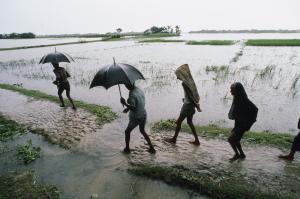
What is happening to our weather?
What is ‘extreme’ weather? Why are people talking about it these days? ‘Extreme’ weather is an unusual weather event such as rainfall, a drought or a heat wave in the wrong place or at the wrong time. In theory, they are very rare. But these days, our TV screens are constantly showing such extreme weather events. Take just three news stories from 2010: 28 centimetres of rain fell on Rio de Janeiro in 24 hours, Nashville, USA, had 33 centimetres of rain in two days and there was record rainfall in Pakistan.
The effects of this kind of rainfall are dramatic and lethal. In Rio de Janeiro, landslides followed, burying hundreds of people. In Pakistan, the floods affected 20 million people. Meanwhile, other parts of the world suffer devastating droughts. Australia, Russia and East Africa have been hit in the last ten years. And then there are unexpected heat waves, such as in 2003 in Europe. That summer, 35,000 deaths were said to be heat-related.
So, what is happening to our weather? Are these extreme events part of a natural cycle? Or are they caused by human activity and its effects on the Earth’s climate? Peter Miller says it’s probably a mixture of both of these things. On the one hand, the most important influences on weather events are natural cycles in the climate. Two of the most famous weather cycles, El Niño and La Niña, originate in the Pacific Ocean. The heat from the warm ocean rises high into the atmosphere and affects weather all around the world. On the other hand, the temperature of the Earth’s oceans is slowly but steadily going up. And this is a result of human activity. We are producing greenhouse gases that trap heat in the Earth’s atmosphere. This heat warms up the atmosphere, land and oceans. Warmer oceans produce more water vapour – think of heating a pan of water in your kitchen. Turn up the heat, it produces steam more quickly. Satellite data tells us that the water vapour in the atmosphere has gone up by four percent in 25 years. This warm, wet air turns into the rain, storms, hurricanes and typhoons that we are increasingly experiencing.
Climate scientist, Michael Oppenheimer, says that we need to face the reality of climate change. And we also need to act now to save lives and money in the future.
Keywords:
air (n) the mixture of gases that is around the Earth and that we breathe
atmosphere (n) the air around the Earth
climate (n) the general weather conditions that are typical of a place
cycle (n) a series of things that are repeated again and again
death (n) the end of life
drought (n) a long period of time without rain
event (n) something that happens, especially something important or unusual
heat (n) the quality of being warm, or the temperature of something that is warm
hit (v) to have a bad effect on someone or something
lethal (adj) extremely dangerous and causing death
rainfall (n) the amount of rain that falls
steam (n) the hot mist that forms when water boils
What is the main focus of the passage titled Wild weather?
Effects of extreme weather events on people and the environment
Types of extreme weather events
Historical data on extreme weather events
Preventive measures for extreme weather events
What text structure is used to discuss the different types of extreme weather events?
Cause and Effect
Chronological Order
Comparison and Contrast
Problem and Solution
What does 'lethal' mean?
Harmless
Safe
Dangerous
Beneficial
What text structure does the passage use to explain extreme weather events?
Compare and Contrast
Chronological Order
Cause and Effect
Problem and Solution
What does the passage define as 'extreme' weather?
Normal weather events
Unusual weather events in the right place and time
Unusual weather events in the wrong place or at the wrong time
Predictable weather patterns
Sylvia Earle
A message from Life co-author, Helen Stephenson
I remember learning at school that about three-quarters of the Earth’s surface was covered in water. I thought this was amazing. It was too big an idea for me to understand. On the other hand, I grew up quite close to the sea. I was very familiar with the view of the sea on the horizon. Later, when I grew up, I didn’t like living in places that were too far from the sea, and, in fact, I have lived my whole life (apart from a brief period) in coastal places. I have, sadly, got used to seeing polluted coastlines, but I still find it hard to imagine that we can really destroy the oceans. This article talks about that idea.
Sylvia Earle: National Geographic Explorer-in-Residence
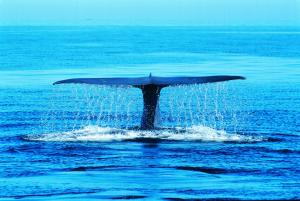
Sylvia Earle was called a "Hero for the Planet" by Time magazine. She’s an oceanographer, explorer, author, and lecturer.
Sylvia Earle is one of the world's most famous marine scientists and a National Geographic Explorer-in-Residence. She loves to go diving in the ocean. She has spent a lot of her life both in and under the waves. Earle has led more than a hundred expeditions and she set a record for solo diving in 1,000-metre deep water. In total, she has spent more than 7,000 hours underwater.
Earle describes the first time she went to the ocean: ‘I was three years old and I got knocked over by a wave. The ocean certainly got my attention! It wasn’t frightening, it was thrilling. And since then I have been fascinated by life in the ocean.’
In the past, Earle was the chief scientist of the National Oceanic and Atmospheric Administration in the USA. Now one of her jobs is with Google Earth’s Ocean. Earle’s special focus is on developing a global network of areas on the land and in the ocean. This network will protect and support the living systems that are important to the planet. She explains why this is important: ‘When I first went to the Gulf of Mexico in the 1950s, the sea looked like a blue infinity. It seemed to be too large and too wild to be damaged by the action of people. Then, in a few decades, not thousands of years, the blue wilderness of my childhood disappeared. By the end of the 20th century, about 90 percent of the sharks, tuna, turtles, whales and many other large creatures had disappeared from the Gulf. They had been there for millions of years.’
Some people don’t understand why the ocean is so important to life on Earth. Earle explains that ‘the ocean is the foundation of our life support system. The ocean is alive. The living things in the ocean generate oxygen and take up carbon. If we don’t have the ocean, we don’t have a planet that works.’
The Gulf of Mexico has had many problems, especially after the Deepwater Horizon Oil disaster of 2010, but Earle says, ‘In 2003 I found positive signs in clear, deep water far from the mouth of the Mississippi River. It was full of life. Large areas of the Gulf are not damaged. Protecting the most important places will be good for the future of the Gulf and for all of us.’
Keywords:
carbon (n) a chemical element that is present in all animals and plants and in coal and oil
creature (n) any living thing that is not a plant
deep (adj) a long way down from the surface to the bottom of something
diving (n) the sport or activity of working or looking around underwater, using special breathing equipment
generate (v) to produce something
marine (adj) relating to the sea or to animals and plants that live in the sea
ocean (n) one of the five very large areas of sea on the Earth's surface
oxygen (n) a colourless gas that exists in large quantities in the air. All plants and animals need oxygen in order to live.
planet (n) a large round object in space that moves around a star. The Earth is an example of a planet.
take up (phr-v) if something takes up air, food or liquid, it uses it in its body. Plants use carbon to live.
wave (n) a line of higher water that moves on the surface of the sea which is caused by the wind or tide making the water rise and fall
wild (adj) natural and not used by people
wilderness (n) a large natural area of land or sea that is not used by people
1 Who does Sylvia Earle currently work with?
the US government
an oil company
2 When did she first go to the Gulf of Mexico?
when she was three
in 2003
in the 1950s
What percentage of animal life had disappeared from the Gulf of Mexico by the year 2000?
20 percent
50 percent
90 percent
When was there a big oil disaster in the Gulf of Mexico?
2000
2003
2010
What does she say about her first experience of the sea?
She was afraid of the waves.
She enjoyed it very much.
She was too young to remember it.
Which statement is NOT true?
Not everybody agrees that the sea is very important.
The ocean is essential to life on Earth.
We get resources we need from the sea.

