
 Worksheets
Neuro and Endocrine Quiz
Total questions: 108
Worksheet time: 1hrs 2mins
The brainstem includes the:
medulla oblongata, pons, and thalamus.
medulla oblongata, midbrain, and hypothalamus.
pons, midbrain, and medulla oblongata.
medulla oblongata, pons, and cerebellum.
The association of sensation with emotion occurs in the:
hypothalamus.
thalamus.
medulla oblongata.
cerebellum.
The functions of the spinal cord include:
the primary reflex center.
carrying motor impulses to the brain.
carrying sensory impulses away from the brain.
integrating conscious commands.
An efferent neuron carries impulses in the direction opposite that of:
a motor neuron.
a sensory neuron.
an afferent neuron.
a sensory or afferent neuron.
Which structure is part of the diencephalon?
Midbrain
Hypothalamus
Medulla oblongata
Pons
Which nervous system makes up part of the autonomic nervous system?
Parasympathetic nervous system
Sympathetic nervous system
Both parasympathetic and sympathetic nervous systems
None of the above
Which nervous system dominates the control of effector organs under normal, everyday conditions?
Parasympathetic nervous system
Sympathetic nervous system
Both parasympathetic and sympathetic nervous systems
As part of which nervous system do postganglionic neurons release norepinephrine?
Parasympathetic nervous system
Sympathetic nervous system
Both parasympathetic and sympathetic nervous systems
None of the above
Which nervous system is also called the craniosacral nervous system?
Parasympathetic nervous system
Sympathetic nervous system
Both parasympathetic and sympathetic nervous systems
None of the above
Some of the neurons in this structure function as endocrine glands:
hypothalamus
thalamus
cerebellum
medulla oblongata
The conjunctiva:
is a mucous membrane covering part of the eye.
opens and closes to regulate the light entering the eye.
is the colored part of the eye.
is the clear part of the sclera.
The pupil:
is a mucous membrane covering part of the eye.
opens and closes to regulate the light entering the eye.
is the colored part of the eye.
is the clear part of the sclera.
The inner ear consists of three spaces, which are the:
perilymph, vestibule, and the cochlea
endolymph, vestibule, and the cochlea
vestibule, semicircular canals, and the cochlea
vestibule, semicircular canals, and the endolymph
The sense of balance occurs in the:
ossicles
semicircular canals
vestibule
semicircular canals and the vestibule
The specific organ of hearing is called the:
cochlea
semicircular canal
organ of Corti
tympanic membrane
The sense of taste is classified as a:
proprioceptor
chemoreceptor
mechanoreceptor
thermoreceptor
The six primary taste sensations are:
sweet, salty, fruity, metallic, umami, bitter
sweet, salty, metallic, bitter, sour, umami
sweet, metallic, sour, umami, fruity, salty
umami, sweet, fruity, bitter, sour, metallic
The olfactory receptors:
also assist in the sense of taste
are able to respond to four primary odors
are not sensitive because of the location of the receptors
also assist in the sense of sight
Which of the following sensations is generated by a general sense organ?
Touch
Taste
Equilibrium
Both touch and equilibrium
Which of the following is not considered one of the layers of the eye?
Retina
Sclera
Iris
Choroid
Which of the following is not part of the vascular layer of the eye?
Iris
Cornea
Ciliary muscle
Pupil
What kind of receptors sense taste and smell?
(a)
The endocrine system consists of glands that:
release chemicals into ducts
release chemicals carried by the blood
The anterior pituitary secretes:
TSH
oxytocin
ADH
TSH, oxytocin, and ADH
Follicle-stimulating hormone (FSH):
is produced by the posterior pituitary gland
is called the ovulating hormone
ADH:
is released by the hypothalamus.
is made by the pituitary gland.
increases the amount of water reabsorbed by the kidney.
decreases the amount of water absorbed by the kidney.
Aldosterone has its effects mainly on the cells of the:
intestine.
stomach.
liver.
kidney.
Androgens, which are similar to testosterone, are:
secreted by the inner zone of the adrenal cortex.
secreted by the middle zone of the adrenal cortex.
secreted by the outer zone of the adrenal cortex.
not secreted by the adrenal cortex.
Epinephrine:
is released by the inner zone of the adrenal cortex.
reinforces the effects of the parasympathetic nervous system.
is released in response to stress.
is released by the outer zone of the adrenal cortex.
Glucagon:
is released by pancreatic beta cells.
accelerates liver glycogenolysis.
causes a drop in blood glucose levels.
decreases liver glycogenolysis.
The ovary secretes:
FSH.
estrogen.
LH.
FSH and LH.
The hormone that has the opposite function of calcitonin is:
parathyroid hormone.
T3.
T4.
insulin.
Aldosterone has an impact on the concentration of which substance in the blood?
Glucose
Potassium
Sodium
The hormone that seems to influence how fat is metabolized in the body is:
leptin
ANH
ADH
melatonin
The hormone that helps regulate the body’s internal clock is:
leptin
ANH
ADH
melatonin
Diabetes insipidus is caused by a hyposecretion of:
insulin
glucagon
aldosterone
ADH
The most important regulator of the amount of sodium in the body is:
kidney
small intestine
large intestine
skin
Aldosterone:
increases sodium reabsorption by the kidney
increases water reabsorption
increases the water volume in extracellular fluid
increases sodium reabsorption by the kidney, water reabsorption, and water volume in extracellular fluid
The term used to describe a blood sodium level of more than 145 mEq/L is:
hyponatremia.
hyperkalemia.
hypernatremia.
hypercalcemia.
Regulates the “fight-or-flight” response.
Pia mater
Norepinephrine
Cranial nerves
Spinal nerves
Dura mater
What hormone is secreted by beta cells of pancreatic islets?
(a)
High Potassium
Hypercalcemia
Hyperkalemia
Hyponatremia
Hypernatremia
Hypocalcemia
Blood potassium levels of more than 5.1 mEq/L
(a)
Blood sodium level below 136 mEq/L
(a)
Blood calcium levels rise above normal limits
(a)
What is the social bonding hormone secreted by posterior pituitary gland?
(a)
Which parts of the brain control personality/reasoning, and coordinating movement and balance? (SELECT ALL THAT APPLY)
Frontal Lobe
Parietal Lobe
Temporal Lobe
Occipital Lobe
Cerebellum
Which part of the brain is responsible for controlling involuntary actions such as heartbeat and breathing?
Frontal Lobe
Temporal Lobe
Brainstem
Cerebellum
Which part of the brain is involved in spatial reasoning and navigation?
Temporal Lobe
Occipital Lobe
Parietal Lobe
Frontal Lobe
The central nervous system is composed of the brain and:
Heart
Spinal cord
Lungs
Kidneys
The "little brain" at the rear of the brainstem, which plays an important role in balance, is the:
Cerebrum
Cerebellum
Medulla
Pons
The brainstem consists of the midbrain, pons, and:
Cerebellum
Medulla oblongata
Thalamus
Hypothalamus
Which part of the brain is involved in the regulation of basic survival functions such as heart rate and breathing?
Cerebrum
Cerebellum
Brainstem
Hippocampus
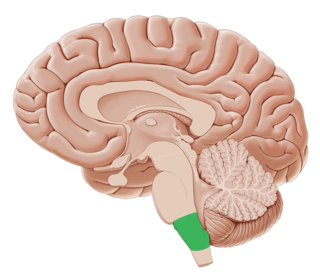
The three parts of the brain stem.
Midbrain, pons, and medulla oblongata.
Pons, Medulla Oblongata, and Cerebrum
Brain Stem and Corpus Callosum
Midbrain, Pons, and Hypothalamus
What is the largest part of the human brain?
Cerebrum
Hypothalamus
Brainstem
Thalamus
What are the two parts of the nervous system?
Central nervous system
Brain
Senses
Peripheral nervous system
Which is NOT a sense organ?
ears
fingers
tongue
hair

The cerebrum part of your brain controls_____.
balance
posture
five senses
involuntary actions

The cerebellum part of your brain controls_______.
balance
posture
the five senses
involuntary actions

The brain stem controls_______.
balance
posture
the five senses
involuntary actions
Which section of the brain helps regulate heartbeat and respiration?
Diencephalon
Cerebrum
Brain stem
Cerebellum
Which part of the brain stem connects with the spinal cord?
Medulla oblongata
Midbrain
Pons
Which division of the autonomic nervous system prepares the body for action in an emergency?
Sympathetic system
Parasympathetic system
Which activities of the body are controlled by the autonomic nervous system?
Voluntary
Involuntary

Pictured is a human brain. What part of the brain is labeled with the #1?
cerebrum
cerebellum
brain stem
diencephalon

Pictured is a human brain. What part of the brain is labeled with the #5?
cerebrum
cerebellum
brain stem
diencephalon
The photoreceptors that responsible for giving us fine details and color vision in bright light are...?
rods
cones
sticks
stones
The brain and the spinal cord make up which of the following divisions of the nervous system?
Peripheral
Central
Somatic
Autonomic
Sympathetic
Another name for motor neurons is
efferent neurons.
afferent neurons.
somatic neurons.
sympathetic neurons.
parasympathetic neurons .
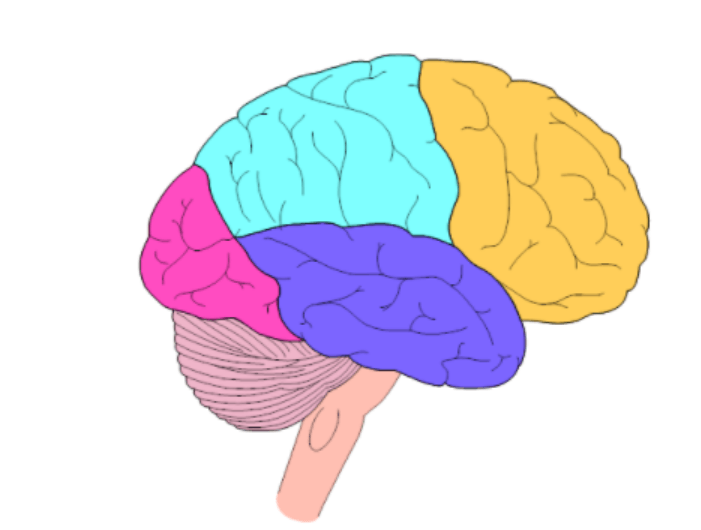
What lobe is bright pink in this picture?
Frontal
Parietal
Temporal
Occipital


What structure is in the picture? (it sits on top of the brain stem)
brain stem
thalamus
hypothalamus
cerebrum
cerebellum

What structure is in the picture? (its between the thalamus and the pituitary gland)
brain stem
thalamus
hypothalamus
cerebrum
cerebellum
What receptor reacts to physical forces?
Chemoreceptor
Mechanoreceptor
Electroreceptor
Thermoreceptor
What is a thermoreceptor?
Responds to body position
Responds to changes in temperature
Responds to physical forces including touch and pressure
Responds to squirrels running outside
What receptor detects pain?
Thermoreceptor
Mechanoreceptor
Proprioceptor
Nocioreceptor
Facial
Trigeminal
Glossopharngeal
Hypoglossal
Bell's Palsy causing weakness or paralysis of facial muscles would be associated with which cranial nerve?

Which of the following cranial nerve controls the movement of the eyeball, the opening of the eyelid, pupillary dilation, and lens accommodation?
Optic
Oculomotor
Vagus
Trigeminal
Which of the following does not effect the eyes
Optic
Trochlear
Vagus
Abducens

optic nerve
oculomotor nerve
trochlear nerve

In order to observe the cranial nerves, you must look at what view of the brain?
superior
inferior
anterior
posterior

Cranial nerve # 10 is..............
facial
accessory
vagus
hypoglossal
abducens

Cranial nerve #5 is..........
trochlear
facial
abducens
trigeminal
vestibulocochlear

Cranial nerve # 2 is.............
oculomotor
optic
olfactory

Cranial nerve # 7 is .............
facial
trigeminal
abducens
vestibulocochlear
vagus

There are more (categories) ________________cranial nerves.
sensory
motor
mixed

Cranial nerve # 12 is.............
vagus
hypoglossal
vestibulocochlear
glossopharyngeal
accessory

Cranial nerve #1 is..............
olfactory/sensory
olfactory/motor
olfactory/mixed

Cranial nerves #'s 2 and 8 are both categorized as.........
sensory
motor
mixed

Cranial nerves #'s 7 and 9 are both categorized as ......
sensory
motor
mixed
Cranial nerves #'s 4 and 6 are both categorized as ......
sensory
motor
mixed

Motor neurons are referred to as .........
both afferent and efferent nerves
afferent nerves
efferent nerves