
 Worksheets
Spring 2024 Final Exam Ultimate Review
Total questions: 260
Worksheet time: 4hrs 9mins
incomplete dominance
People with Type AB blood have two dominant alleles, IA and IB. Since the two alleles are equally dominant, they are called
sex-linked alleles
Hemophilia is more common in males than in females because
A baby has type AB blood. What could the genotypes of the baby’s parents be?


The Figure 3 pedigree shows a disease found equally in males and females. All children who had the disease had at least one parent who also had the disease. The gene coding for the disease is ________.

Codominance
When two alleles are dominant resulting in both being fully expressed in a heterozygous individual.....
Incomplete Dominance
Codominance
When neither allele is completely dominant and neither is fully expressed in a heterozygous individual, which results in a mix/blend of the two alleles
Codominance

This image is an example of
sex-linked traits

This image is an example of
sex-linked traits

A calico cat shows both the traits for orange fur and black fur. What kind of allele expression is this?
Codominance
Independent assortment
The different forms/versions of a gene are called

A woman with curly hair and a man with straight hair produced a child with wavy hair. This is an example of _______.
Incomplete dominance
Codominance
Complete dominance
Sex-linked traits
A , B, and O are all codominant.
Who is more likely to have an X-linked recessive trait like colorblindness or hemophilia?
Males
Females
Both males and females

What type of inheritance is determined by multiple genes and results in a range of traits?
Monogenic inheritance
Incomplete dominance
Polygenic inheritance
Multiple Alleles

Examples include skin color and height (the individual's phenotype exists somewhere along a spectrum)
polygenic inheritance
multiple alleles
linked genes
incomplete dominance
Colorblindness is a recessive X-linked disorder.
Which genotype represents a male with normal vision?
XN YN
Xn Yn
XN Y
Xn Y
There are multiple alleles for the ABO blood group. Why are only two of these alleles present in any one individual?
Each parent contributes only one allele for the ABO blood group to the offspring.
There are not enough nucleotides in a red blood cell to produce a third allele.
Each allele in the ABO group must be dominant or recessive
Blood group alleles are not segregated during meiosis.
If a person has type O blood, the phenotype is O. What can the genotype be?
IBIB or IBi
IAIA or IAi
IAIB
ii
If a person has type AB blood, the phenotype is AB. What can the genotype be?
IBIB or IBi
IAIA or IAi
IAIB
ii
If a person's genotype is AABbCc for height. How many genes do they have for this trait?
6
3
4
1
Which blood type(s) can receive blood from anyone?
A
B
AB
O
The blood type that is the universal donor because anyone can receive it is _______.
A
B
O
AB
Which of the following are possible human blood types? (Select all that apply.)
A
B
C
O
AB
Blood type is determined by the proteins on the surface of red blood cells.
True
False
The proteins found on the surface of red blood cells that determine blood type are called __________.
antibodies
antigens
marker proteins
antibiotics
Match the following. Hemophilia is a sex-linked recessive trait passed down on the X chromosome. XH = Healthy (no hemophilia), Xh = hemophilia
Healthy male
XHY
Female with hemophilia
XhXh
Healthy female (Carrier)
XHXh
Male with hemophilia
XhY
Healthy female (NOT a carrier)
XHXH
In fruit flies, eye color is a sex-linked trait. Red (R) is dominant to white (r).
Which genotype shows a female fly with white eyes?
XRXr
XRXR
XrXr
XrY

XBXb
XbXb
XbY
XBY
(a) are more likely to have an x-linked recessive trait because males have only (b) X chromosome. Females can be (c) of an X-linked recessive trait because they can be (d) for the trait since they have (e) X chromosomes.

What is the term for a trait that allows an organism to survive better in its environment?
variation
adaptation
homologous structure
vestigial structure
The combined alleles/genes of all individuals in a population is called
The connection between fitness and adaptation is --
fitness leads to the formation of an adaptation
adaptations lead to fitness
an organism must be "fit" to develop an adaptation
there is no connection

Which one INCREASES genetic variation in a population?
genetic drift
bottleneck effect
gene pool
gene flow

The difference in the physical traits of an individual from those of other individuals in a group is called a(n) --
genotype
mimicry
mutation
variation

Over time, adaptations can lead populations to experience --
environmental changes
genetic changes
geological changes
extinction

In natural selection, the selective agent which determines who survives is --
humans
mutations
homologous structures
the environment


The ability of the cottontail rabbits living in a particular area to survive and reproduce would be called --
artificial selection
speciation
fitness
descent with modification

Which of the following is an example of a vestigial structure?
the wings of a red-tailed hawk
the hind (back) limbs of a cat
the fins of sharks
the pelvic bone in a whale or snake


If you compared the amino acid sequence of two organisms that are closely related you would find --
very few differences in the amino acid sequence
You can't compare the amino acid sequences of two different organisms
many differences in the amino acid sequence

Why are mutations a significant part of natural selection and evolution?
mutations occur when a population needs a new trait to survive
mutations are the source of new alleles (variations) in the gene pool of a population
mutations occur more often when a population is very small
mutations are the main reason for the extinction of a population

Which of the following describes a group of similar organisms that can reproduce and create fertile offspring?
individual
population
species
fossil
more offspring are produced than can survive
____________ affects the genetic makeup of the population and reduces genetic variation because of a catastrophic event (tsunami, tornado, etc.)
gene flow
embryology
competition
genetic drift (bottleneck effect)

True or False. One of the reasons Charles Darwin developed the theory of evolution was to explain the large biodiversity found on the planet today compared to million of years ago.
Which image shows disruptive selection?


On a population growth curve, natural selection is best seen when the population --
is in the lag phase
has plenty of resources available
has reached carrying capacity
is in the exponential growth phase

The pelvic bone of whales is not needed for movement within the water. This is an example of a(n) ______________ structure.
vestigial
analogous
homologous

The forelimbs of mammals have similar anatomy because these groups descended from a recent common ancestor. Their bone structure is an example of a(n) ______________ structure.
vestigial
analogous
homologous

Which group of animals has claws or nails?
hagfish, perch, chimpanzee, pigeon
hagfish, salamander
lizard, pigeon, mouse, chimpanzee
salamander, lizard, pigeon, mouse
Which trait separates a perch from a salamander?
jaws
lungs
claws or nails
fur, mammary glands

The diagram shows light- and dark-colored beetles that live on a tree.
Which result is most likely to occur to the beetle population due to predation over time?
The number of light-colored beetles in the population will increase.
There will be more dark-colored beetles than light-colored beetles.
The number of light-colored beetles will decrease.
The dark-colored beetles will move to a different type of tree.

Scientists can determine relatedness among organisms by comparing partial amino acid sequences. The table shows four partial amino acid sequences from four organisms.
Which two organisms are the MOST closely related?
Organism 1 and Organism 2
Organism 2 and Organism 3
Organism 3 and Organism 4
Organism 1 and Organism 4

Click on the image to see the question.
F
G
H
I
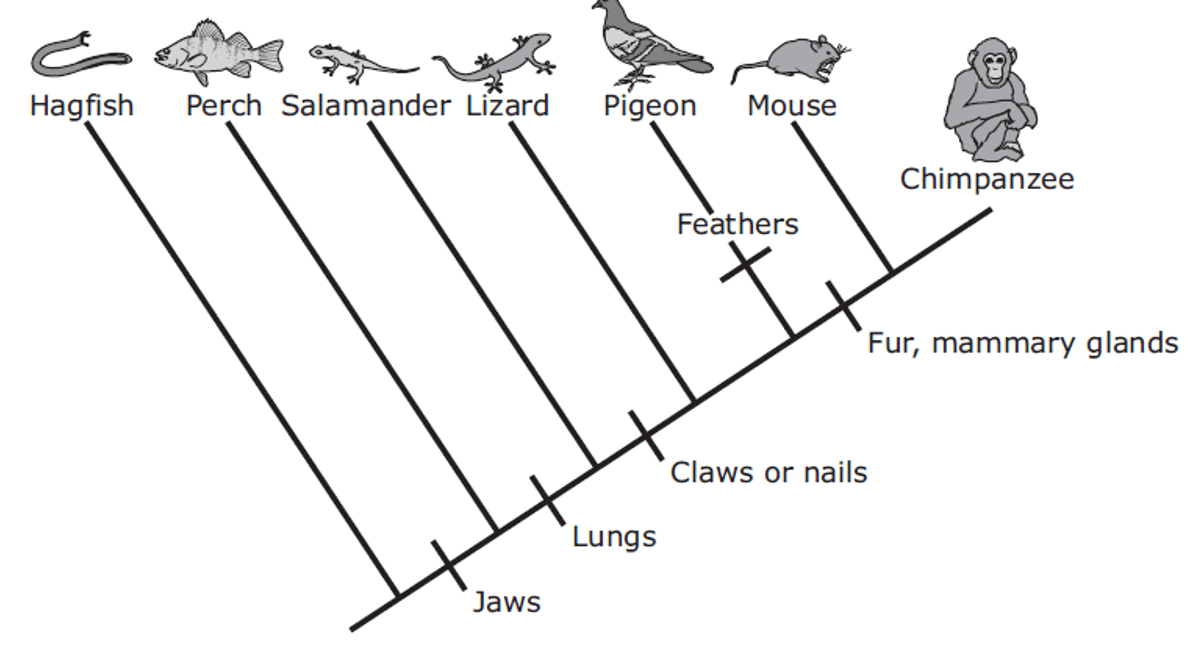
All the animals to the right of the salamander would have the common characteristic of...
Fur
Claws or nails
Lungs
Jaws

What is the common ancestor of species A, B, C, D, E?
1
2
3
4
A phylogenetic tree shows the evolutionary history of species and displays the common ancestors shared among species. Species that are more closely related have a more recent common ancestor.
Which of the following species are most closely related?
C and D
A and C
B and C
D and E

Which group of animals on this phylogenetic tree is most closely related to birds?
Saurischian dinosaurs
Ornithischian dinosaurs
Crocodiles
None of these groups are related to birds

The butterfly diagram on the right (diagram b) refers to which model of evolution?

The hypothesis that evolution occurs slowly over a long period of time is represented by the _____________ model of evolution.
speciation
punctuated equilibrium
gradualism
microevolution

Describes a pattern of long, stable periods of no change (stasis) interrupted by brief periods of rapid change
convergent evolution
gradualism
punctuated equilibrium
adaptive evolution

Which fossils are the oldest and why?
B, C - because they are closest to the top
A, B - because they are closest to the bottom
A, B, C - because they are all found in rock layer 2
A, B- because they are found closest to the top

The organisms in rock layer C and rock layer D lived in an aquatic (water) environment. The organism in layer A does not look like it lived in the water. What is the most likely explanation for this?
The organism in layer A died on land and was carried to the water
The organisms in layer C and D did not live in the same location as the organism in layer A.
The organism in layer A lived on Earth after the organisms in layer C and D. The environment changed over a long period of time. It used to be under water, but it is not anymore.
If finches with large beaks and finches with small beaks increase in a population while finches with average sized beaks decrease, which pattern of natural selection has occurred?
Robins typically lay four eggs. If more than four eggs are produced, then the baby chicks cannot be properly fed/nourished. On the other hand, producing less than four eggs decreases the probability that any baby chicks will survive. This is an example of
stabilizing selection
disruptive selection
directional selection
Environmental factors that limit the growth of a population (such as food, water, space, and predators) are called ______________
carrying capacity
limiting factors
competitive factors
mutations
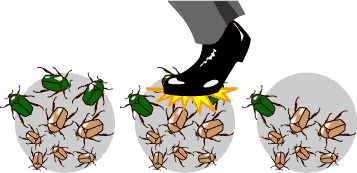
Someone steps on some bugs and randomly removes their alleles from the population. This is an example of
gene flow
genetic drift
speciation
allele frequency
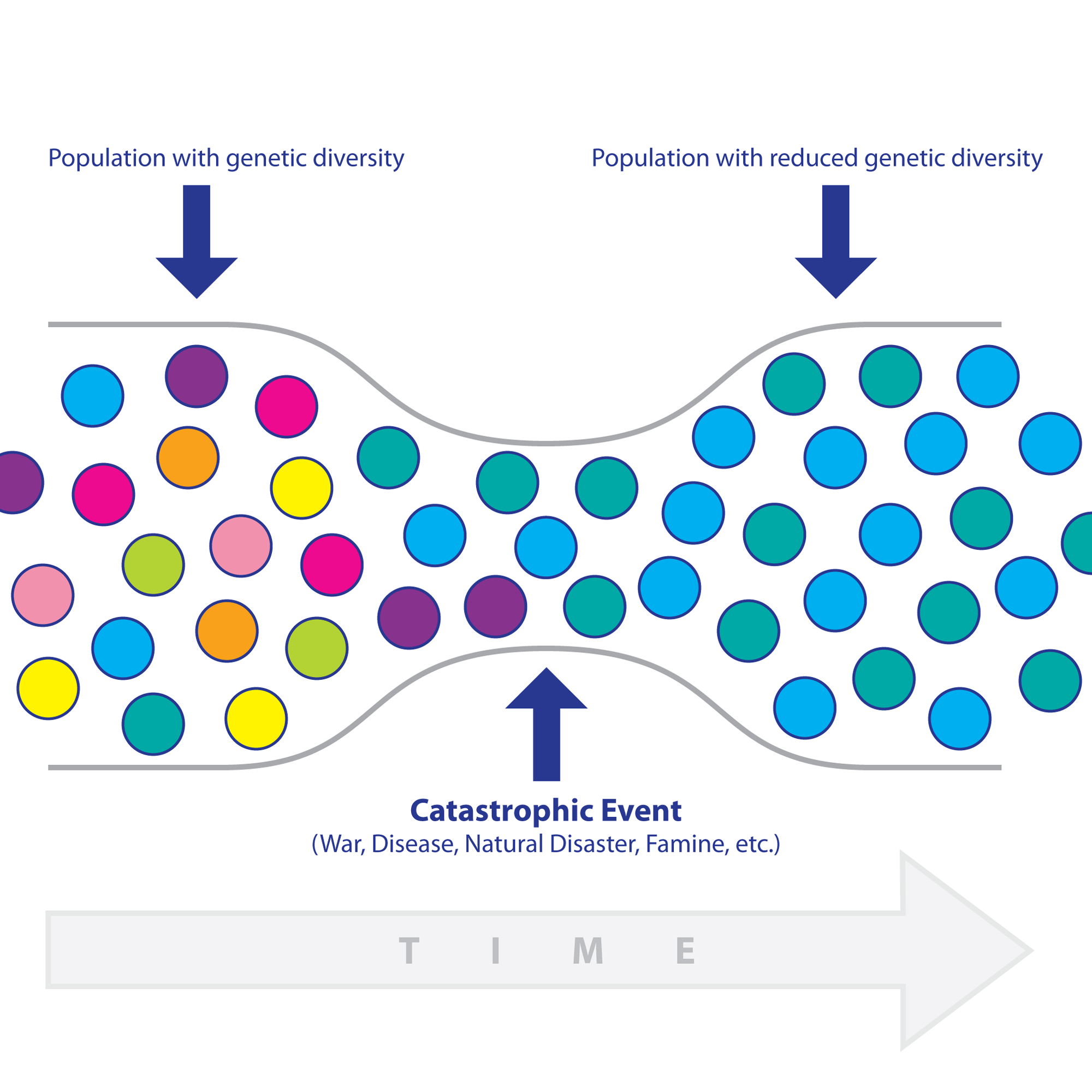
A drastic reduction in the size of a population that results from a major event (e.g., a natural disaster) and changes allele frequencies is called
the bottleneck effect
the founder effect
the gene flow effect
the Thanos effect
A few deer wander out of their native woods into a completely new park where no deer have ever been before. They go on to create an entirely new population. This is an example of ______________.
the founder effect
extinction
gene flow
the bottleneck effect
Hardy-Weinberg Equilibrium is a condition in which populations of organisms do not evolve because there are no evolutionary pressures. Which of the following is included in the five assumptions of Hardy-Weinberg Equilibrium? Select all that apply.
No mutations
Natural selection does occur
Random mating
Small population
No migration

The 3 butterflies in the top right of the image left the original population and started a new population. This is an example of:
gene flow
founder effect
bottleneck effect

A population of purple flowers on one side of a river transports pollen to a population of blue flowers of the same species on the other side of the river. This is an example of ______________.
Gene Flow
Genetic Drift
Natural Selection
Extinction

Using biogeography evidence, which two cat species are probably most closely related?
D and B
C and E
A and C
D and C
What is the main difference between gene flow and genetic drift?
Gene flow DECREASES genetic variation in a population, while genetic drift INCREASES genetic variation.
Gene flow DECREASES the size of the gene pool, while genetic drift INCREASES the size of the gene pool.
Gene flow changes allele frequencies in the gene pool, while genetic drift DOES NOT change allele frequencies.
Gene flow INCREASES genetic variation in a population, while genetic drift DECREASES genetic variation.

Based on the figure, which antibiotic inhibited/stopped the growth of the bacteria the most?

zone of conjugation
If you take antibiotics, the non-resistant bacteria die while the resistant bacteria survive and pass their antibiotic resistance trait to their offspring. This is an example of...
DNA replication
natural selection
meiosis
a virus
Bacteria develop antibiotic resistance through ______________.
mutations & artificial selection
mutations & natural selection
mitosis &
meiosis
apples and bananas
The ability for bacteria to survive the effects of antibiotics.
Which of the following are causes of antibiotic resistance? Select all that apply.
Using antibiotics incorrectly, such as to treat viruses
Overuse of antibiotics in livestock farming
Patients not finishing their antibiotic treatment
Over-prescribing antibiotics/using antibiotics when not necessary


Archaebacteria and Eubacteria are two kingdoms which contain organisms that are
Unicellular
Multicellular
Both unicellular and multicellular

Archaebacteria and Eubacteria
Which two kingdoms have organisms that can make their own food (autotrophic)?
Plantae and Animalia
Fungi and Plantae
Protista and Plantae
Eubacteria and Fungi
What is the genus name for Canis lupus?
Canis
lupus
both are the genus name

Choose the correct way to write the scientific name for a human:
homo sapien
Homo Sapien
Homo sapien
Homo Sapien

Molds and yeasts all belong to the Kingdom _______.
Archaebacteria
Fungi
Eubacteria
Protista
The scientific name for an organism is made from the:
class and family name
genus and species name
domain and kingdom name
kingdom and phylum name
Domain, Kingdom, Family, Order, Class, Phylum, Kingdom, Species
unique
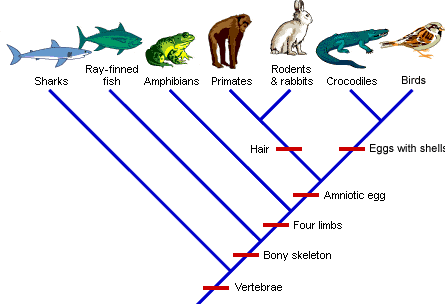
Ray-finned fish
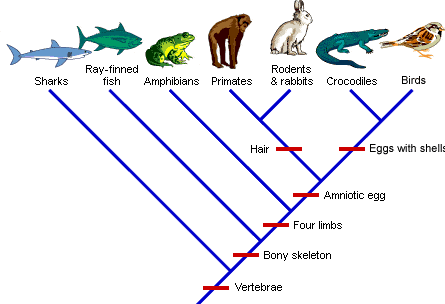
Which two organisms have eggs with shells?
Primates & Birds
All organisms that have a nucleus but do not fit into the plant, fungi, or animal kingdoms are:
viruses
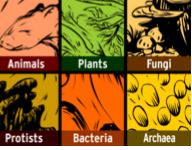
Which kingdoms are eukaryotic?
Archaebacteria and Animalia
Eubacteria and Archaebacteria
Protista, Fungi, Plantae, and Animalia
Eubacteria, Protista, and Plantae

Which phrase best describes the classification of these two organisms?
same kingdom, same species
same kingdom, different species
different kingdoms
different kingdoms, same species
Which of the following organisms are LEAST closely related?
organisms that share a class
organisms that share a family
organisms that share a genus
organisms that share a species

Look at the image. At what level do the bears and the fox diverge?
order
family
class
genus
Which 2 organisms have the MOST characteristics in common?
2 organisms in the same kingdom
2 organisms in the same genus
2 organisms in the same class
2 organisms in the same family
Organisms that are in the same ___________ can have fertile offspring.
class
family
species
genus

Which two organisms are the most closely related?
American badger and leopard
coyote and gray wolf
European otter and leopard
coyote and american badger
Which of the following is a rule for writing scientific names?
capitalize all letters
lowercase letters for the genus name only
capitalize the first letter of the genus name
capitalize the first letter of both genus and species names

Why do scientists use a standardized, universal system of naming organisms (Binomial Nomenclature)?
They want to make it easy to spell the names of organisms.
To avoid confusion; there are several common names for the same organism in different parts of the world
Common names are too difficult to remember.
Common names are always like the scientific name.

Which level of classification is more specific? In other words, which level has more organisms in common?
Order or Family
An organism's scientific name is Canis lupus. Which of the following organisms is most closely related?
Homo sapien
Canis familiaris
Puma concolor
Panthera leo

Based on the image, what is the scientific name of a panther?
Felidae panthera
Pardus panthera
Panthera pardus
Felidae pardus
The standardized system for naming organisms developed by Carolus Linnaeus is called ________.
dichotomous key
binomial nomenclature
taxonomic nomenclature
binomial key

A dichotomous key for insects is given. To what order does an insect with two pairs of scaly wings belong?
Coleoptera
Heteroptera
Diptera
Lepidoptera
In the scientific naming system, the first letter of the _____________ name is capitalized, and the ______________ name is written in all lowercase.
genus, species
species, genus
Which of the following species are the most DIFFERENT from one another?
Human & Chimpanzee
Horse & Zebra
Gorilla & Zebra
Gorilla & Chimpanzee
Which group of animals has claws or nails?
hagfish, perch, chimpanzee, pigeon
hagfish, salamander
lizard, pigeon, mouse, chimpanzee
salamander, lizard, pigeon, mouse
Scientists can determine relatedness among organisms by comparing partial amino acid sequences. The table shows four partial amino acid sequences from four organisms.
Which two organisms are the MOST closely related?
Organism 1 and Organism 2
Organism 2 and Organism 3
Organism 3 and Organism 4
Organism 1 and Organism 4
Organize the following characteristics into the appropriate categories depending on whether they describe the kingdom Fungi, the kingdom Plantae, or both.
Eukaryotic
Multicellular
Non-motile
Heterotrophic
Autotrophic
Cell wall
Cell wall composed of chitin
Cell wall composed of cellulose
Organize the following characteristics into the appropriate categories depending on whether they describe the kingdom Eubacteria, the kingdom Protista, or both.
Contains unicellular organisms
Contains both motile and non-motile organisms
Contains autotrophs and heterotrophs
Prokaryotic
Eukaryotic
E. Coli
Contains organisms WITH a nucleus
Cyanobacteria
Contains organisms WITHOUT a nucleus
Algae
Euglena
Organize the kingdoms into the appropriate categories.
Eubacteria
Archaebacteria
Protista
Fungi
Plantae
Animalia
Which of the following is the correct order of organization in living things from most basic (simple) to most complex?
organism, cell, tissue, organ, organ system
organ system, organ, tissue, cell, organism
cell, tissue, organ, organ system, organism
cell, organ, tissue, organism, organ system
Organisms that are able to move on their own are ___________.
myopic
membrane-bound
motile
non-motile
Halophiles, thermophiles, and methanogens are single-celled, prokaryotic organisms that live in extreme environments, such as volcanoes, the stomachs of cows, and the Dead Sea. These organisms belong to the kingdom _____________.
Archaebacteria
Eubacteria
Protista
Fungi

Use the dichotomous key to identify this white wildflower.
Starflower
Chickweed
Common strawberry
Bowman's root

Identify Organism B.
Class Bivalvia
Class Gatropoda
Phylum Annelida
Order Teuthida
Identify Organism A.
Order Teuthida
Order Octopoda
Phylum Annelida
Class Bivalvia
Which of the following features do viruses and cells BOTH have? Select all that apply.
genetic material (nucleic acids)
organelles
proteins
capsid

The projections on the surface of this virus allow the virus to —
Helper T cells
Killer T cells
Memory B cells
Unlike bacteria, viruses...
can reproduce only in living cells (host cells)

Place the steps in the correct order by listing the letters in the proper sequence:

the destruction of the host cell by lysing/bursting the cell open and releasing the new viruses
the interference of the cell’s life functions by the new viruses, which cause cell death
Which organism lives in many herbivore intestine and aids in the digestive process?
If a grazing animal unable to digest cellulose did not have this symbiotic microorganism, what might happen to the animal?
Memory cells are responsible for the secondary immune response being...
send for T cells to guide the attack against the antigen
attack T cells
activate the helper T cells
What is the role of the Helper T cells?
they act as the "front lines" of the immune system military; they are the first cells to detect and destroy the pathogen
they act as the "general" of the immune system military; they direct the other immune cells to protect the body from the pathogen
they produce antibodies
decrease the flow of blood
raise body temperature to destroy/slow down the production of pathogens
raise body temperature to increase the production of pathogens
stimulate the digestive system
Helper T cells
Killer T cells
Non-specific defenses against foreign invaders/pathogens include all of the following EXCEPT
fever
invading Helper T cells
The primary immune response is much faster.
The number of antibodies produced in the primary response is greater.
In the secondary immune response, the antigen is disabled in a shorter amount of time.
There is no difference between the two immune responses.
the HIV attaches to and destroys Helper T cells (CD4s)
Place the events in the specific immune response shown below in the correct order.
A. Killer T cells attack antibody-tagged pathogen.
B. Macrophages alert Helper T cells.
C. B cells are alerted to make antibodies.
D. Memory B cells create a record of the pathogen.
E. Macrophages detect and eat an invading pathogen.
STEPS OF THE SPECIFIC IMMUNE RESPONSE:
1. (a) begin engulfing and destroying invading pathogens.
2. (b) are alerted by macrophages that the body is under attack.
3. Helper T cells trigger (c) to begin producing antibodies to neutralize the specific invader/pathogen.
4. (d) attack and kill antibody-tagged pathogens.
5. (e) are developed so that the immune system can quickly get rid of the pathogen if it infects the body again.
Which of the following makes up the immune system's first line of defense? Select all that apply.
Memory B cells
Skin
Mucus
Cilia
Stomach acid
The immune system's second line of defense is know as the _________________ response.
inspirational
inflammatory
specific
antigen
Which of the following is part of the immune system's second line of defense? Select all that apply.
Skin
Fever
Phagocytes (White blood cells)
Killer T cells
Viruses that undergo the (a) cycle produce a quick onset of symptoms. This is due to the fact that the viral genetic material replicates rapidly inside the host cell, leading to the production of many new viruses that (b) the host cell as they are released from it.
Match each immune cell to the correct description.
First defender in the specific immune response that engulfs pathogens and alerts/activates Helper T cells
Macrophage
The general of the immune system military that directs other immune cells to respond to the pathogen
Helper T cell
Produces specific antibodies to disable pathogens
Plasma B cell
Kills/destroys antibody-tagged pathogens and infected cells
Killer (cytotoxic) T cell
Keeps a record of a specific pathogen so that the body can respond quickly to treat infection if the same pathogen returns
Memory B cell
(a) act as the bridge that connects macrophages to the other specific immune response cells.
Which of the following is a way to obtain active immunity? Select TWO answers.
Recovering from an illness/infection
Receiving a vaccine
A mother passing antibodies to her baby through breastfeeding
Hugging someone who is immune
Which of the following is a way to gain passive immunity?
Recovering from an illness/infection
Receiving a vaccine
A mother passing antibodies to her baby through breastfeeding
Hugging someone who is immune
(a) , protists, and fungi all consist of (b) that break down dead organisms, providing (c) for the growth/development of new organisms.
Many bacteria have symbiotic relationships with other organisms, meaning that they help other organisms survive. Which of the following is a way that bacteria benefit humans?
Bacteria in the digestive system help break down food into molecules we can use to fuel our bodies; they also produce important vitamins.
Bacteria in the circulatory system help carry oxygen throughout our bodies.
Bacteria in the respiratory system help carry carbon dioxide out of our bodies
Bacteria in the nervous system help transmit signals between the brain and spinal cord.
Plant hormones serve as chemical messengers between cells and tissues. Auxin is a plant hormone that causes the cells on the shady side of a plant shoot to elongate, causing the plant to grow towards the sunlight. The response enabled by auxin is known as —

The epidermis ("skin") of the leaf
S
Which plant part is depicted in the image?
Roots
Stem
Leaf
Flower

Photosynthesis occurs in this layer of the leaf

Contains tubes for transport of materials like water and sugar
Plants that live in cold, dry environments typically have what types of leaves?
broad leaves with large surface areas
thin, needle-like leaves with a waxy coating
wide, prickly leaves
big leaves with colorful flowers
In nonvascular plants such as moss and other bryophytes, water is transported through _____________
Which plant hormone stimulates the growth of stems and fruits?
Auxin
Cytokinin
Gibberellin
Which plant hormones stimulate cell elongation and help plants grow upright against gravity?
Protists are believed to be the ancestors of all plants. What trait separates the ancient nonvascular plants from the photosynthetic protists (Algae)?
Only plants have cell walls composed of cellulose
All plants are multicellular; most protists (algae) are unicellular
Only plant cells contain chlorophyll
Only plant cells contain a nucleus with DNA

Look at the four different types of plants in Figure 1. Which plants have vascular tissue? SELECT ALL THAT APPLY.
Which group or groups of plants produce(s) spores on the undersides of their leaves for reproduction?
Plant A only
Plant A and B
Plant C only
Plant A and D
Which group or groups of plants produce(s) seeds enclosed in an ovary (fruit)?
Plant A only
Plant D only
Plant B and C
Plant A and D
Which group or groups of plants produce(s) seeds for reproduction?
Plant A only
Plant B and C
Plant C only
Plant A and D
Plant A is an example of which plant group?
Bryophytes (Mosses)
Pteridophytes (Ferns)
Gymnosperms
Angiosperms
Plant B is an example of which plant group?
Bryophytes (Mosses)
Pteridophytes (Ferns)
Gymnosperms
Angiosperms
Plant C is an example of which plant group?
Bryophytes (Mosses)
Pteridophytes (Ferns)
Gymnosperms
Angiosperms
Plant D is an example of which plant group?
Bryophytes (Mosses)
Pteridophytes (Ferns)
Gymnosperms
Angiosperms


Look at Figure 1. Which plants can reproduce sexually in environments WITHOUT the help of water?


Look at Figure 1. Which plant or plants produce(s) naked (unprotected) seeds in cones?
Plant C and D

Which part of the flower is the male reproductive structure that produces pollen?
Stigma
Anther
Ovary
Petal
Which part of the flower is the sticky female reproductive structure that collects pollen?
Stigma
Anther
Ovary
Petal

Which gymnosperm structure shown in Diagram 5 is responsible for pollen production?
Both structures produce pollen
Neither structure produces pollen
The chemical formula for photosynthesis would have which two REACTANTS?
Vascular plants such as ferns, gymnosperms, and (a) all have true roots, stems, and (b) . Within these structures are tubes that transport (c) , minerals, and food throughout the plants. These tubes make up the plants' (d) .
In vascular plants, the main functions of the roots include absorbing (a) and minerals, storing excess food, and (b) the plant in the soil. The water and minerals absorbed by the roots travel through the (c) to the leaves. The leaves contain (d) that open and close to regulate water loss and allow for the exchange of carbon dioxide and oxygen. The leaves use carbon dioxide, water, and sunlight to perform (e) .
In vascular plants, the leaves use carbon dioxide, water, and sunlight to make food for the plant through a process called (a) . In this process, the leaves create two products: oxygen and (b) . Once these products are made, the food/sugar is transported from the leaves to other parts of the plant through the (c) .
Roots, stems, and leaves contain an outer protective layer of cells called the epidermis. The epidermis contains epidermal cells covered in a waxy, waterproof film (called a cuticle) to help prevent water loss. The epidermis also contains guard cells that surround openings on the leaves called stomata that regulate gas exchange. The functions of the epidermis are most similar to the functions of which two human organs?
skin and lungs
heart and brain
skin and stomach
liver and kidneys
How do the fruits produced by angiosperms help the plants reproduce?
The fruits are sweet, which attracts animals to eat the fruits and spread the seeds through their feces.
The fruits are lightweight, which allows the seeds to be carried and dispersed by the wind.
The fruits are hollow, which allows them to float and be carried away by water.
The fruits contain spores which stick to insects that spread the spores to different plants for fertilization.
What is the chemical formula for glucose?
C₆H₁₂O₆
CO₂
O2
H₂O

Which organelle is responsible for making food (glucose) using sunlight?
Cell Membrane
Nucleus
Chloroplast
Mitochondria

Which type of plant tropism response is shown in the clip? [Hint: Even though the plant is on its side, the stem grows upward (against Earth's gravitational force)].
Phototropism
Gravitropism / Geotropism
Thigmotropism
Hydrotropism
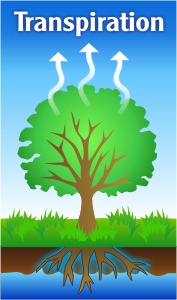
Transpiration is -
the movement of water through a plant from the stem down to the roots
Which of the following characteristics would help a plant living in a hot, dry climate prevent water loss through transpiration?
having only a few small leaves
having many large leaves
having small roots
having colorful flowers
Vascular plants contain a root system and shoot system. The root system contains the roots. What does the shoot system contain?
The parts of the plant above the ground, including the stem and leaves
The fungi growing on the roots
The pollen and seeds
The fruits and spores
Why are mosses and ferns considered primitive plants? (Primitive = simple, characteristic of an early stage in the evolutionary development of a species)
They produce pollen and seeds for reproduction.
They need water to reproduce (the sperm need water to reach the eggs).
They are both extinct.
They absorb and move water through vascular tissue.

Fibrous root systems have __________
a long and thick primary root and smaller secondary roots that come out of it.
roots that grow above the ground and anchor the plant in place.
a widespread bunch of small, thin roots that are of equal or nearly equal size.

Examine the leaf. Would you expect this plant to be classified as a dicot or monocot? Why?
Monocot, because the leaf has parallel veins
Dicot, because the leaf has branched/netted veins
Dicot, because the leaf has parallel veins
Neither

This flower has six petals. In which flowering plant group does this plant belong?
Monocot
Dicot
Tricot
None of the above.

Which of these lists the descriptions in the correct order of ecological succession on Surtsey?
Which of these statements best explains the process of energy conversion that takes place during cellular respiration?

How much energy is passed from one trophic level to the next?
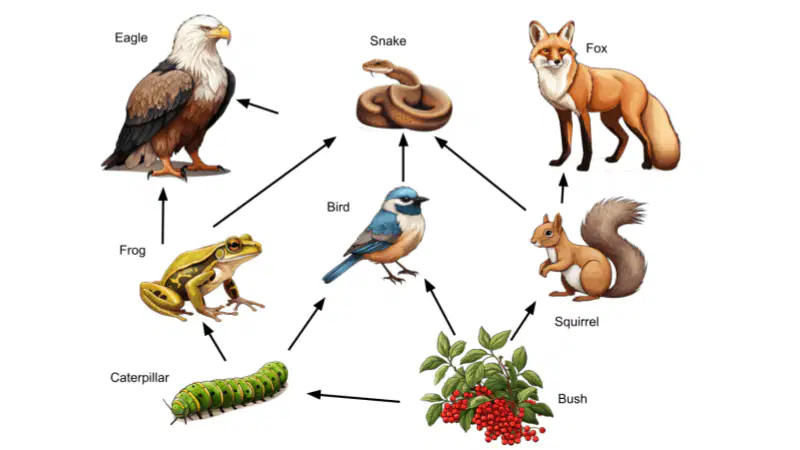
Organisms may be classified as consumers (heterotrophs) or producers (autotrophs).
In the image, which organism would be classified as a producer?
Snake
Caterpillar
Squirrel
Bush


The acacia ant nests and feeds in the plant’s hollow thorns. The ant helps protect the bullshorn acacia by attacking insects and grazing animals that come near the plant. The relationship between the acacia ant and the bullshorn acacia is an example of which of the following?


The carbon cycle includes processes that release carbon into the atmosphere and places that act as carbon reservoirs which store carbon. The diagram below shows both major processes that release carbon and major carbon reservoirs.
Which of the following disruptions would cause an excess output in the carbon cycle?

What organelle is labeled with the letter V, and which cycle occurs here?
chloroplast; Kreb's Cycle (cellular respiration)
mitochondrion; Calvin Cycle (photosynthesis)
mitochondrion; Kreb's Cycle (cellular respiration)
chloroplast; Calvin Cycle (photosynthesis)

What is Y, and what products are produced in this organelle?
CARBON CYCLE - Label the parts of the Carbon Cycle
Combustion (Burning fossil fuels)
Respiration
Photosynthesis
Decomposition (Fossil fuel formation)

CARBON CYCLE - Carbon dioxide is produced and released into the atmosphere by animals and plants through (#2 and #3 in the diagram) _____________________.
photosynthesis
decomposition
combustion
cellular respiration
NITROGEN CYCLE - Reorder the steps for how nitrogen cycles through an ecosystem.
Pure nitrogen (N2) in the atmosphere is converted into nitrates by nitrogen-fixing bacteria
Plants absorb nitrates from the soil, which helps them grow.
Animals eat plants and produce waste (poop).
Denitrifying bacteria convert nitrates back into pure nitrogen (N2) by decomposing dead animals and other organic matter.

CARBON CYCLE - How does carbon move from the abiotic/non-living part of the biosphere (the atmosphere) to the biotic/living part of the biosphere?
Cellular respiration
Photosynthesis
Combustion (burning fuels)
Erosion

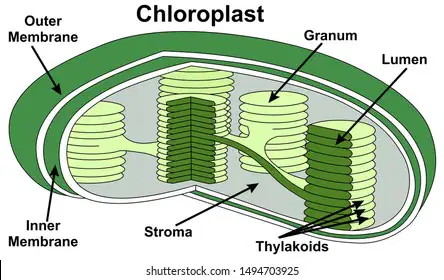
Photosynthesis occurs in the chloroplasts of plant cells. Which phase of photosynthesis occurs in the grana (stacks of discs) of the chloroplast, and what is the product of this process?
Light-dependent reactions, oxygen
Calvin cycle (Light-independent reactions), glucose
Kreb's cycle, ATP
Glycolysis, pyruvate
Photosynthesis occurs in the chloroplasts of plant cells. Which phase of photosynthesis occurs in the stroma of the chloroplast, and what is the product of this process?
Light-dependent reactions, oxygen
Calvin cycle (Light-independent reactions), glucose
Kreb's cycle, ATP
Glycolysis, pyruvate



parasitism


In this food web, the lizard and the hawk have this relationship
parasitism
In ecological succession, what do we call the first species that populates/colonizes a new area?
Foreign Species
Pioneer species
Intraspecies
Climax community
A series of progressive changes in the composition of an ecological community over time
Climax Community
Evolutionary Succession
Ecological Succession
Species Richness
An area that was previously occupied by living things is destroyed by a natural disaster such as a wildfire or a hurricane. The soil is left behind, which allows small plants to grow and eventually leads to the recolonization of the area following the disturbance. Which type of ecological succession is occurring?
Pioneer species
Primary succession
Tertiary succession
Secondary succession
Newly exposed or newly formed rock is colonized by living things for the first time. Lichens, a pioneer species, grow on the newly exposed/formed rock, breaking the rock down to form soil. As more soil is formed, other producers start to populate the area. After hundreds of years, the area possesses a stable community of species known as a climax community. Which type of ecological succession is occurring?
Pioneer species
Primary succession
Secondary succession
Tertiary succession

What is the correct order of ecological succession shown in this figure?
C, B, A, D
C, A, B, D


Match each organism with the correct trophic level.
Producer
Grass
Primary Consumer
Squirrel
Secondary Consumer
Insect-eating Bird
Apex Predator
Mountain Lion
Decomposer
Bacteria