
 Worksheets
Cell Cycle, Mitosis, Meiosis
Total questions: 23
Worksheet time: 27mins
Label each of the cells below with which phase of mitosis they are in.
Cytokinesis
Metaphase
Anaphase
Telophase
Label the phases of Mitosis on the image shown. They are NOT in order.
Anaphase
Prophase
Interphase
Telophase
Metaphase

Prophase: Chromatin condenses.

Interphase: Resting phase between mitosis cycles.

Metaphase: Chromosomes align in the middle.

Anaphase: Chromosomes are pulled apart.

Telophase: Chromosomes are pulled to opposite end and two nuclei form.
Match the following descriptions to the correct phase of Mitosis and Cell Division
DNA condenses and organizes into chromosomes and are visible; the nuclear envelope dissolves and spindle fibers are formed
Prophase
The chromosomes line up at the equator of the cell
Metaphase
Chromosomes centromeres separate and move toward opposite "poles" of the cell. Chromosomes separate into chromatids
Anaphase
The nucleus divides and the nuclear memebrane reforms around the two sets of chromatids
Telophase
One cell will be come two and a cell plate in plant cells form and a cleavage furrow occurs in animal cells
Cytokinesis
If there are 46 chromosomes in each human somatic (body) cell, how many chromosomes are there in each daughter cell following cytokinesis?
23
46
92
It varies

This diagram shows the cell cycle.Which of the following activities occur in the S phase? (a)

The end result of mitosis is (one or two?) (a) daughter cells that are genetically (identical or unique?) (b)
What is the end result of mitosis?
An undifferentiated stem cell
4 genetically unique haploid cells
2 genetically identical diploid cells
2 genetically unique daughter cells

Which of these would best fill in the chart for "B"?
0 chromosomes
23 chromosomes
46 chromosomes
69 chromosomes

Which of these best describes why your mitosis must occur every time?
Mitosis triples the number of chromosomes to give new cells a better chance of survival.
Deletion of chromosomes through mitosis is essential to maintain a species in the future.
Mitosis forms sperm and eggs which must have half then number of chromosomes as the original.
In order to maintain genetic continuity, it is important that mitosis create new cells with the same number of chromosomes as the original cell.

Multicellular organisms use cell division, mitosis, for growth and the maintenance and repair of cells and tissues. Single-celled organisms may use cell division as their method of reproduction. Regardless of the reason for mitosis, the process ensures genetic continuity. What is the step in the cell cycle that ensure genetic continuity?
DNA replication
Cytoplasmic division
Translation and transcription
Cell growth, preparing for mitosis
90% of a cells life is spent in this phase, and it is the longest phase of the cell cycle.
interphase
telophase
metaphase
anaphase

A human body (somatic) cell usually has how many chromosomes?
If the diploid number of carrots is 18, the haploid number is
The result of meiosis is: (a)

What process, and which type of resulting cells are represented? (a)
What are homologous chromosomes?
Pairs of chromosomes with different genes on each.
Pairs of chromosomes with the same genes on each.
Pairs of chromosomes with no genes.
Pairs of chromosomes with the wrong genes on each.
Which part of meiosis produces diversity in gametes? (a)

The exchange of genetic information that insures that every gamete is unique is referred to as
mitosis
meiosis
reduction division
crossing over

Sea turtles have 56 chromosome in their somatic cells. How many chromosomes are in their gametes?
28
56
112
46
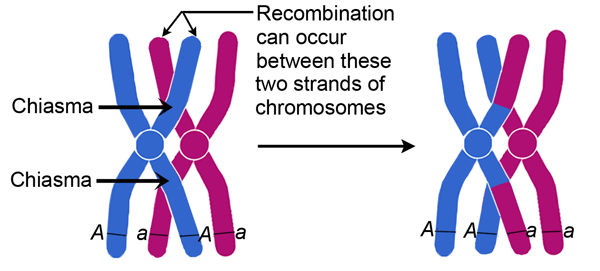
Why are the processes of "crossing over" and "independent assortment" important events during meiosis?
They result in identical sex cells.
They double the chromosomes number.
They result in the same number of chromosomes.
They produce new combinations of genes on the chromosomes.

