
 Worksheets
Southeast Asia End of Unit - Economies
Total questions: 30
Worksheet time: 15mins
Name
Class
Date
1.
What is a "service" in the context of economics?
a)
a natural resource
b)
a type of software
c)
a physical product that can be stored and used
d)
an action that cannot be held or touched
2.
What drives economic choices and decisions in society?
a)
an unlimited supply of natural resources
b)
technological advancements
c)
communist governments
d)
scarcity of resources and unlimited wants
3.
What does scarcity mean in economics?
a)
A situation where resources exceed wants and needs
b)
The abundance of resources available in nature
c)
Having a limited supply of resources to meet unlimited wants and needs
4.
What are considered resources in economics?
a)
capital, machines, and labor
b)
people's wants and needs
c)
Only natural resources like water and minerals
d)
Only human resources and intellectual property
5.
What does economics primarily study?
a)
The study of geographical features and their influence on culture
b)
The study of historical events and their impact on society
c)
The study of political systems and governance
d)
The study of the choices people make to satisfy their wants and needs with limited resources
6.
Which of the following best describes the role of supply and demand in a market economy?
a)
It determines the literacy rate of the country
b)
It influences prices of goods and services
c)
It does not impact the economy
7.
"Regulation" in economics means...
a)
How hard people work in an economy
b)
How hard it is to get materials for a business
c)
The amount of government control in an economy
8.
"Distribution" in economics refers to....
a)
How resources/ goods are accessible or made available to people
b)
Giving people an equal amount of money to start a business
c)
Having strict government control over taxes from selling goods
9.
"Production" in economics refers to....
a)
How a good is made
b)
Determining what goods to make
c)
Determining what materials and machines to use
d)
All of these are true
10.
"Opportunity Cost" refers to...
a)
How much tax is for a product
b)
What is "costs" a consumer to choose to buy a particular good
c)
The price of a product
11.
Which question is NOT something that a country must answer when developing an economy?
a)
What goods and services will be produced?
b)
How will the goods and services be produced?
c)
Where will the goods and services be produced?
d)
Who will consume/use the goods and services?
12.
Most countries in Southeast Asia have this type of economy.
a)
Mixed
b)
Traditional
c)
Command
d)
Market
13.
This economy answers the three economic questions based on supply and demand, and goods and services are determined by what the people want.
a)
Command
b)
Market
c)
Traditional
14.
This economy answers the three economic questions by basing their economy on customs and beliefs of the past.
a)
Command
b)
Market
c)
Traditional
15.
Which country has the worlds fastest growing economy?
a)
Chile
b)
India
c)
Japan
d)
China
16.
A country with a command economy usually has this type of government.
a)
Democracy
b)
Republic
c)
Oligarchy
d)
Communist
17.
What type of economies do most democratic countries have?
a)
Pure Market
b)
Pure Command
c)
Traditional
d)
Mixed
18.
How does a command economic system answer the three economic questions?
a)
The citizens make all economic decisions
b)
The government makes all economic decisions
c)
The people make decisions based on traditions of their ancestors
19.
Which country has the MOST government regulation?
a)
South Korea
b)
North Korea
c)
India
d)
China
e)
Japan
20.
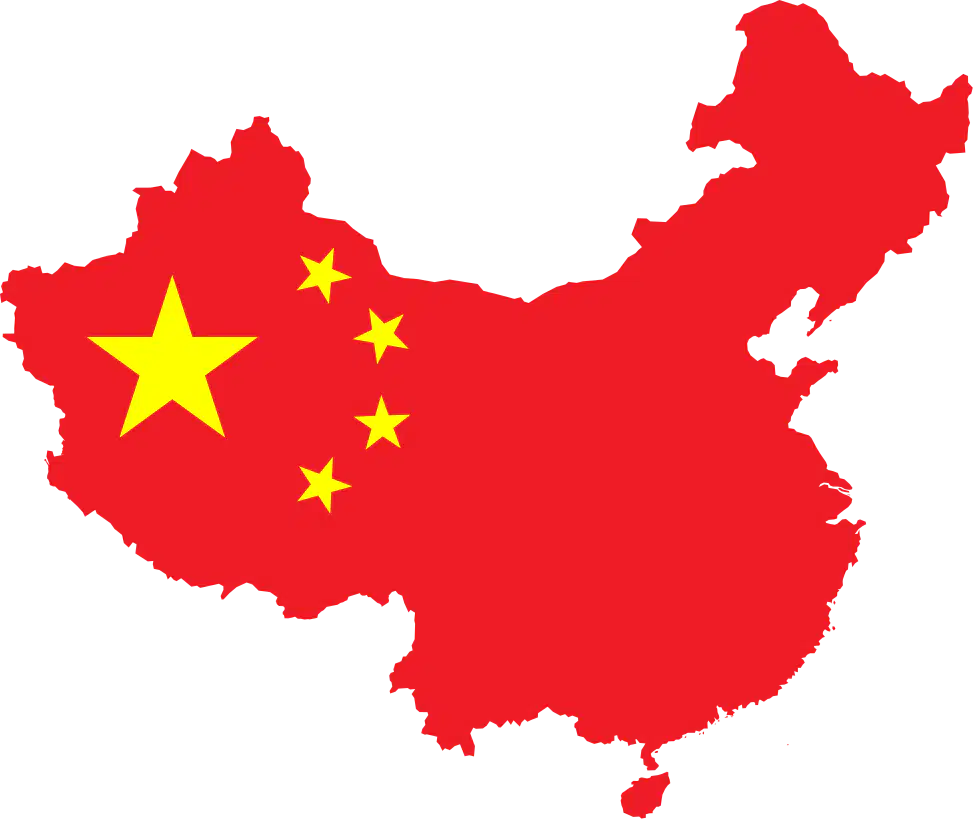
Some countries like China are moving away from a command economy because
a)
They want to experience economic growth
b)
They want to have more freedom in their economic decisions
c)
So private companies can grow and increase
d)
All of the above
21.
Which is NOT a service?
a)
Snow removal
b)
Dog walker
c)
T-shirt made by a friend
d)
Haircut
22.
A tax or duty to be paid on a particular class of imports or exports.
a)
Regulation
b)
Tariff
c)
Trade
d)
Tax
23.
What does it indicate if a country's economy leans towards a market economy?
a)
It is a mixed economy with more government involvement
b)
It is a mixed economy with more economic freedom for citizens
c)
It is a mixed economy with equal government and citizen involvement
24.
There are economies that are "pure market "and "pure command".
a)
False
b)
True
25.
In a truly free market economy, the government would not be involved in the economy at all.
a)
True
b)
False
26.
An economic regulation is...
a)
A rule or law to maintain safety for workers in an industry
b)
A rule or law to keep goods and services safe for citizens
c)
A rule or law to protect workers rights and maintain fair working conditions
d)
All of the above
27.
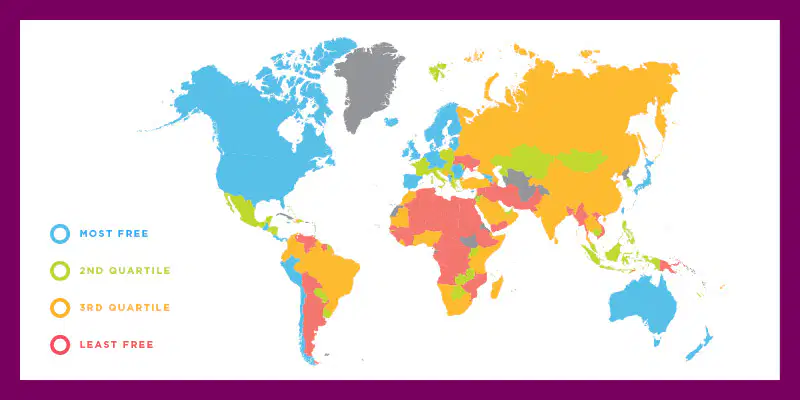
According to the map below, what continent has the least "free" economies?
a)
Asia
b)
South America
c)
North America
d)
Africa
28.
A person who takes an economic risk by creating their own business from the ground up is considered an
a)
Enterpriser
b)
Endevor
c)
Entrepreneuer
d)
Entrust
29.
Why do most countries refuse to trade with North Korea?
a)
A. North Korea has an extremely strict government
b)
B. North Korea has new and innovative products
c)
C. North Korea has a history of aggression
d)
Both A and B
e)
Both A and C
30.
Based on what you have learned bout economies, which type of economic system is best for growth?
a)
Command
b)
Mixed
c)
Market
d)
Traditional
100 %

