

wayground logo

Free Printable Worksheets

Font size

S
M
L
XL
Worksheets

Civil War Review

Total questions: 83

Worksheet time: 55mins

Name
Class
Date
1.
Atlanta's military importance to the Confederacy was that it was the 
a)
capital of the Confederacy.
b)
most populated city in the Confederacy.
c)
industrial and transportation center of the Confederacy.
d)
home to the largest number of slaves in the Confederacy.
2.
What Union general led the northern army on its "March to the Sea" and saw to it that much of Georgia's capital resources were destroyed?
a)
Robert E. Lee
b)
Ulysses S. Grant
c)
William T. Sherman
d)
Thomas "Stonewall" Jackson
3.

What did the Emancipation Proclamation do?

a)

It freed all slaves in states fighting against the Union.

b)

It freed all slaves in the United States

c)

It put Ulysses S. Grant in charge of all Union forces.

d)

It allowed slaves to fight in the Confederate army.

4.

What was the impact of Sherman’s “March to the Sea”?

a)

It convinced the South that they could win the war.

b)

It convinced President Lincoln to issue the Emancipation Proclamation.

c)

It forced Robert E. Lee to evacuate Georgia.

d)

It left a path of destruction from Atlanta to Savannah that crippled the Confederacy.

5.

How was the Emancipation Proclamation a concession to the South?

a)

all slaves would be freed.

b)

only male slaves would be freed.

c)

The South could keep their slaves if they stopped fighting.

d)

The slaves could decide if they wanted to remain on the plantations.

6.

The MOST LIKELY reason General William T. Sherman wanted to control the rail lines running through Atlanta, Georgia, during his "Atlanta Campaign" was because he wanted to

a)

prevent residents of the city from fleeing to the North.

b)

cut off the flow of supplies to the Confederate army.

c)

use the rail lines to quickly transport his troops.

d)

extend the rail lines into the northern states.

7.

This Civil War-era illustration is showing

a)

Grant's victory at Shiloh.

b)

Sherman's "March to the Sea".

c)

Scott's victory at Gettysburg.

d)

the Union blockade of the South.

8.

11 southern states seceded from the the Union and formed their own country called... (Select all answers that apply)

a)

C.S.A.

b)

The Confederacy

c)

The Union

d)

The Confederate States of America

9.

Another name for the United States of America.

a)

C.S.A.

b)

The Confederacy

c)

The Union

d)

The 13 colonies

10.

A strategy in which the North used its superior navy to prevent the South from shipping cotton to England and France in return for weapons and other supplies. Georgia ports at Savannah, Brunswick and Darien were blocked by Union ships.

a)

Union blockade

b)

Sherman's March to the Sea

c)

The Atlanta Campaign

d)

Andersonville Prison

11.

An announcement by Abraham Lincoln to the southern, Confederate states in rebellion to surrender or their slaves would be freed. The document also recruited black soldiers into the Union and added ending slavery to the goals of the Civil War.

a)

The Declaration of Independence

b)

Emancipation Proclamation

c)

Proclamation of 1763

d)

The Charter of 1732

12.

This was the second bloodiest battle of the Civil War with over 34,000 casualties and the largest battle ever fought in Georgia. It was a Confederate victory.

a)

Battle of Chickamauga

b)

Battle of Kettle Creek

c)

Sherman's March to the Sea

d)

Siege of Savannah

13.

Sherman's army implemented the Union's total war philosophy, creating a path of destruction from Atlanta to Savannah that was 300 miles long and 60 miles wide, destroying Georgia's infrastructure: railroads, roads, cotton gins and mills, warehouses, anything that assisted in supplying Confederate troops.

a)

Battle of Chickamauga

b)

Atlanta Campaign

c)

Sherman's March to the Sea

d)

Union blockade

14.

The most notorious prisoner of war camp from the Civil War era. Built to hold only 10,000 Union prisoners of war in 1864, the camp's population tripled to over 30,000 at the peak of its occupancy. Due to horrible conditions, more men died (close to 13,000) here than at any other Civil War prison.

a)

Battle of Chickamauga

b)

Atlanta Campaign

c)

Sherman's March to the Sea

d)

Andersonville

15.

Why did the Union want to capture Atlanta?

a)

It was the capital of the Confederacy

b)

It was the location of the Confederate prisons

c)

It was an important step in the plan the recapture Chattanooga

d)

Its factories and railroads were important to the Confederacy

16.
What did President Lincoln hope to accomplish when he issued the Emancipation Proclamation? 
a)
He wanted to free slaves living in the North. d the Emancipation Proclamation? 
b)
He hoped to bring a quick end to the war and to preserve the Union. 
c)
He hoped to stop Sherman’s March through Georgia. Emancipation Proclamation? 
d)
He hoped to gained support from England to help in the war and preserve the Union. n>
17.
The Civil War began when
a)
Lincoln was elected president.
b)
the Confederates fired on Fort Sumter in Charleston Harbor
c)
South Carolina seceded from the Union.
d)
Union troops attacked Confederate troops at Bull Run in Virginia.
18.
Sherman’s march through Georgia ended in
a)
Andersonville Prison.
b)
North Carolina.
c)
Savannah
d)
Atlanta
19.
Why was Georgia the “heart of the Confederacy”? 
a)
The fishing was great along the Chattahoochee River
b)
It was the largest city
c)
It was a strategic location that supplied the south with its railroad network
d)
It had the best restaurants for soldiers.
20.

. Which battle took place September 18 – 20, 1863, and was a Confederate victory. This battle is also known as the largest battle fought in Georgia?

a)

Battle of Atlanta

b)

Battle of Ezra Church

c)

Battle of Chickamauga

d)

Battle of Peachtree Creek

21.

The Union strategy during the Civil War which incorporated a plan to blockade Southern ports and capture the Mississippi River was known as?

a)

The U.S. Blockade

b)

Operation Squeeze

c)

The Anaconda Plan

d)

The Confederate Snake Plan

22.

Why did thousands of Union soldiers die in Andersonville?

a)

most died trying to escape

b)

most died in an attack by Union forces

c)

most died in an attack by Confederate forces

d)

Most died from disease and starvation due to overcrowded, unsanitary conditions
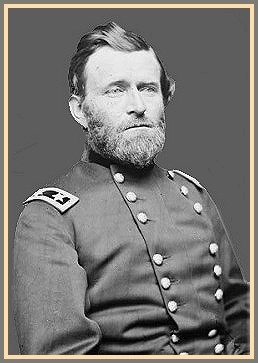
23.
The Union General that forced General Lee to surrender at Appomattox.
a)
Fort Sumter
b)
Abraham Lincoln
c)
Robert E. Lee
d)
Ulysses S. Grant
24.
A book written by Harriet Beecher Stowe that described the cruelty of slavery.
a)
Gone with the Wind
b)
Across the Lines
c)
Uncle Tom's Cabin
d)
Gettysburg
25.
General Sherman's troops marched toward Atlanta to capture it because of Atlanta's railroad center and supplies.
a)
The Atlanta Campaign
b)
Sherman's March to the Sea
c)
John Brown's Raid on Harper Ferry
d)
Fort Sumter
26.
One of General Lee's most important generals who would stand like a "Stonewall" during battles and was accidentally killed by his own men.
a)
Jefferson Davis
b)
Thomas "Stonewall" Jackson
c)
Robert E. Lee
d)
Ulysses S. Grant
27.
War between people of the same country
a)
secede
b)
state's rights
c)
civil war
d)
slavery
28.
To break away from a group
a)
state's rights
b)
slavery
c)
Gettysburg
d)
secede
29.
The place where Confederate General Robert E. Lee surrendered his army to General Ulysses S. Grant.
a)
Fort Sumter
b)
Sherman's March to Sea
c)
Appomattox Court House
d)
Uncle Tom's Cabin
30.
Southern General from Virginia who led the South's largest army and lost a major battle at Gettysburg, Pennsylvania.
a)
Jefferson Davis
b)
Robert E. Lee
c)
Abraham Lincoln
d)
Ulysses S. Grant
31.
An abolitionist who tried to start a slave rebellion by attacking an armory at Harpers Ferry, VA.
a)
Fort Sumter
b)
Sherman's March to Sea
c)
state's rights
d)
John Brown's raid on Harpers Ferry
32.
Each state should be able to decide their issues for themselves and the Federal Government should not interfere.
a)
slavery
b)
state's rights
c)
secede
d)
Gettysburg
33.
President of the U.S. during the Civil War who issued the Emancipation Proclamation which freed slaves in the states that seceded.
a)
George Washington
b)
Thomas Jefferson
c)
Ulysses S. Grant
d)
Abraham Lincoln
34.
3 day battle that the South lost and is considered the turning point in the war
a)
Gettysburg
b)
Fort Sumter
c)
The Atlanta Campaign
d)
Uncle Tom's Cabin
35.
The 1st and only President of the Confederacy during the Civil War.
a)
Abraham Lincoln
b)
Robert E. Lee
c)
Ulysses S. Grant
d)
Jefferson Davis
36.
The place where Confederate cannons opened fire thus starting the Civil War
a)
Sherman's March to Sea
b)
Gettysburg
c)
Atlanta Campaign
d)
Fort Sumter
37.
General Sherman led his troops through Georgia toward Savannah and destroyed  things that Southerners needed for war.
a)
Sherman's March to the Sea
b)
Fort Sumter
c)
Gettysburg
d)
John Brown's Raid on Harpers Ferry
38.
Choose the best definition of the term "border state".  A border state is a state . . . 
a)
that had slaves but officially remained loyal to the United States. 
b)
that was on the border between Canada and the United States. 
c)
that was on the border between Mexico and the United States.
d)
that bordered one of the western territories. 
39.
Of the following, which is synonymous with the term, "Union".
a)
The slave states. 
b)
 The United States of America. 
c)
The free states. 
d)
 The border states. 
40.
Why were slaves an advantage for the South? They were an advantage because . . .
a)
slaves freed up more white men to go and fight since they knew that slaves would work their farms in their absence.
b)
 slaves could be used as soldiers. 
c)
slaves could be used as spies and report the movement of US soldiers.
d)
slaves knew the local terrain better than most whites. 
41.
Of the following, which one was an advantage held by the South during the war?  The South . . . 
a)
 had greater industrial resources than the North. 
b)
 had more transportation resources than the North. 
c)
was defending their own territory. 
d)
 could count on the support of Native Americans. 
42.
Of the following, which one is an advantage of the North during the Civil War?  The North . . .
a)
 had more military schools than the South did. 
b)
 had greater industrial resources. 
c)
knew the local terrain better than the South did. 
d)
could depend on Great Britain to help them defeat the South. 
43.
Where were the first shots of the Civil War fired?
a)
Richmond, Virginia 
b)
 Washington, DC. 
c)
Charleston Harbor, South Carolina 
d)
 Wilmington, North Carolina. 
44.
Which Union fort was bombarded for 34 hours before surrendering to the Confederates?
a)
Fort Pickens 
b)
 Fort Sumter 
c)
Fort Moultrie 
d)
Fort Wagner 
45.
Where did General Lee surrender?
a)
Atlanta, Georgia
b)
Appomattox Court House, Virginia
c)
Gettysburg, Pennsylvania
d)
Durham, North Carolina
46.
Two inequalities experienced by black soldiers during the Civil War included:
a)
Not being paid at all and not receiving any uniforms
b)
Not being paid equally and not being allowed to become officers
c)
Being beaten and killed by their Generals
d)
Being forces into slavery in the North
47.
The Emancipation Proclamation
a)
freed only Union Slaves
b)
allowed slaves to fight for the South
c)
freed only Confederate slaves
d)
freed Union and Confederate slaves
48.
The Union army gained control of the Mississippi River after winning the Battle of
a)
Antietam
b)
Appomattox
c)
Chancelorsville
d)
Vicksburg
49.
One Southern advantage during the Civil War was
a)
having more supplies
b)

having better leaders
c)
having more men
d)
having a stronger navy
50.
Which battle was considered a "turning point" of the Civil War?
a)
Shiloh
b)
Ft. Sumter
c)
Gettysburg
d)
Bull Run
51.
Which Union "victory" in Maryland had 23,000 casulties, otherwise known as the "bloodiest day" of the war?
a)
Second Bull Run
b)
Gettysburg
c)
Antietam
d)
Vicksburg
52.
In which battle did "Stonewall" Jackson earn his nickname by standing firm, then chasing his enemy off the field?
a)
Gettysburg
b)
Bull Run
c)
Chancellorsville
d)
Antietam
53.
What is total war?
a)
a military strategy that includes destroying the enemy's ability and will to fight
b)
a military strategy that includes flanking the enemy
c)
a military strategy put into effect by Southern Generals
d)
a military strategy put into effect by Southern Generals
54.
This woman was a nurse during the Civil War, and later founded the Red Cross.
a)
W. O. Hair Hall 
b)
 Clara Barton 
c)
Molly Pitcher 
d)
 Francis Spinner 
55.
When a navy tries to prevent its enemy from trading overseas they create
a)
 an embargo 
b)
 a cut-off attack 
c)
 a flank attack
d)
 a blockade 
56.
Had more men, weapons, and naval technology throughout the war
a)
 Union 
b)
Confederacy
57.
What is an ironclad?
a)
 a submarine 
b)
a treaty or agreement 
c)
 a cannon 
d)
 a ship covered by metal plates 
58.

What effects did the Civil War have on women and African Americans?

a)

Their situation got worse

b)

Their opportunities expanded

c)

They helped the Confederacy win

d)

Their rights were taken away

59.

What advantages did the Union have over the Confederacy?

a)

Better Generals

b)

Stronger allies

c)

Natives were on their side

d)

More people, more factories and food, more railroads

60.

How did Lincoln abolish slavery in ALL states?

a)

He ordered them free

b)

Congress passed the 13th Amendment

c)

He used the Declaration of Independence. "All Men are Created Equal"

d)

He did nothing

61.

How did the Union hope to damage Confederate trade and transportation during the Civil War?

a)

By patrolling rivers and the Gulf of Mexico

b)

By attacking railroads

c)

By blockading ports and controlling the Mississippi River

d)

By taking over Southern farms and factories

62.

Why was the surrender at Vicksburg crucial to the success of the Union campaign in the West?

a)

It allowed the Union to control the Mississippi River

b)

It allowed the Union to surround the Capital city

c)

It allowed the Union to Blockade important railroads

d)

It allowed the Union to occupy new territories

63.

The Republican party was established on the belief of

a)

Destroying the South

b)

Helping slavery spread

c)

Opposing slavery

d)

Going to war

64.

This 1857 ruling declared slaves are property and not citizens therefore they had no rights.

a)
Dred Scott v Sandford
b)
McCulloch v Maryland
c)
Emancipation Proclamation
d)
Worcester v Georgia
65.
What is the name for people who wanted to put an end to slavery?
a)
Underground Railroaders 
b)
Suffragists
c)
Bushwackers
d)
Abolitionists
66.

What battle was the single, bloodiest day in the Civil War?

a)

Bull Run

b)

Antietam

c)

Gettysburg

d)

Manassas

67.

Which battle is considered the turning point of the Civil War?

a)

Battle of Antietam

b)

Siege of Vickburg

c)

Appomattox Courthouse

d)

Battle of Gettysburg

68.

Who was the only elected president of the Confederate States of America?

a)

Ulysses S. Grant

b)

Robert E. Lee

c)

Jefferson Davis

d)

Abraham Lincoln

69.

Who was the commander of the Union Army after 1864?

a)

Robert E. Lee

b)

Ulysses S. Grant

c)

Abraham Lincoln

d)

Jefferson Davis

70.

Which of the following was the first all volunteer African American Company from Massachusetts?

a)

The 54th

b)

The Sons of Liberty

c)

The Avengers

d)

The Army of Northern Virginia

71.

Did Robert E. Lee want to secede?

a)

Yes

b)

No

72.

Did Robert E. Lee want to secede?

a)

Yes

b)

No

73.

George McClellan was liked by...

a)

The men in the army

b)

Congress and the President

74.

Why do you think both sides were equal combats?

4 lines
75.

What are some of the advantages of the Confederacy? (Check all that apply)

a)

They were fighting defensively

b)

Their economy boomed

c)

They were fighting on their homeland

d)

The upper South gave them more industrial might

76.

What are some of the disadvantages of the Union? (Check all that apply)

a)

Unfamiliar land

b)

More food rations

c)

Long supply lines

d)

Better railroads

77.

Who was the Union General during the Battle of The Wilderness?

a)

Abraham Lincoln

b)

Ulysses S. Grant

c)

Robert E. Lee

78.

What was the significance of the Battle of the Wilderness?

4 lines
79.

Which accomplishment could be added to this diagram?

a)

Commanded the U.S military in the West during the Indian Wars

b)

Led the Radical Republicans Congress during Reconstruction

c)

Was appointed general in chief of the Union Army during the War

80.

A biography on the military career of General Thomas "Stonewall" Jackson would include his involvement in which Civil War event.

a)

The first Battles of Bull Run and the Confederate victory at Fredericksburg

b)

The Union capture of Atlanta and the arch to the Sea through Georgia

c)

The campaigns in northern Virginia and the Confederate surrender at Appomattox Court House.

81.

Which of the following completes the diagram?

a)

President Lincoln's First Inaugural Address

b)

The Gettysburg Address

c)

The Emancipation Proclamation

d)

The Thirteenth Amendment

82.

Why did the Siege of Vicksburg affect the balance of power during the Civil War?

a)

Several important Confederate generals were killed.

b)

Union troops were pushing back across the Ohio River

c)

The Confederate territory was divided in half.

d)

Several casualties were inflicted on Union Forces.

83.

After General Robery E. Lee's surrender at Appomattox Court House, the main priority United States was to-

a)

elect a new president and vice president

b)

complete construction of the Capitol

c)

establish Union forts in the former Confederate states

d)

implement a plan to bring Confederate states back into the Union.
