
NEW
Font size
 Worksheets
Lighting - 2
Total questions: 40
Worksheet time: 20mins
a type of lamp where light is produced by the
heated wire filament. A filament is a thin piece of metal with high melting point
which glows or produce visible light with a current passing through.
a type of lamp where light is
produced by sending an electrical discharge through an ionized gas which can be
noble gas (argon, neon, krypton and xenon) or combination of these gases.
a type of lamp where light is produced by
passing the electric current through a semiconducting material (a diode) which
emits photons (light) through the principle of “electroluminescence”. It falls under solid-state lighting (SSL) lamps.
a newer type of lamp which
produces light by cathodoluminescence where a beam of electrons is made to hit a
fluorescent phosphor surface. This type of lamp is still in is development phase to
compete with LED lamps in terms of efficiency
Electron-stimulated Luminescence (ESL) lamps
Visible light is the only type of
electromagnetic radiation waves we can see where wavelength ranges from around ___nm to ___ nm
It describes how much power is converted to light. It refers to the amount of lumens
produced per watt. (lumens/watt)
lighting efficacy
It describe how much power is converted to light. refers to the percentage of power that
is converted into something useful (visible light, in the case of lighting) and is usually unitless
means a semiconducting device which only
allows flow of current in one direction only.
is basically a material with both
properties of a conductor and an insulator.
considers the color rendition, color temperature, dimming ability and distribution of light so it adds to the aesthetics of a designed area.
Quality of Light
trademarked program of U.S. Environmental
Protection Agency (EPA) and U.S. Department of Energy (DOE)
that promotes energy efficiency.
A type of glare caused by natural light.
blinding lights
discomfort glare
disability glare
blinding glare
A type of glare caused by Artificial light. reduces visibility or impairs visual performance, often accompanied by discomfort.
death glare
discomfort glare
disability glare
blinding glare
The immediate contiguous area in which a worker performs visual tasks (desk,
desk return, table that function as one task location, conference table shared by
several workers
Working Room
The surface on which the visual task is performed and at which the
illumination is specified and measured.
reference plane
work plane
A complete lighting unit consisting of a lamp or lamps, together with
parts designed to distribute the light, to position and protect the lamp(s), and to
connect the lamp(s) to a power supply; referred to as a “fixture.”
Luminaire
lighting bulb
lighting fixture
Device for redirecting the radiant energy of a lamp by reflecting it in a desired direction
Device for redirecting the radiant energy of a lamp in the desired direction
by refraction through a lens (e.g. Track Light)
efficacy
refractor
reflector
The most practical method of passive solar energy utilization in commercial buildings. Reduces lighting energy use and cooling load as well. Produce levels of illumination 50 times.
Diffusers, lenses and louvers to cover bulbs from direct view to
prevent glare and distribute light
Shielded
indirect
semi-direct
semi-indirect
Translucent or semi-transparent (see-through) covers made of glass or plastic; bottom or sides of light fixtures to control brightness
Clear, transparent glass, plastic covers; incorporates prisms and flutes to distribute light in specific ways
Baffles that shield the bulb from view and reflect light;
can be contoured to control light and decrease brightness.
louvers
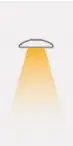
Which type of lighting system is this
direct
semi direct
indirect
semi indirect

Which type of lighting system is this?
indirect
direct
diffused
semi direct
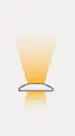
Which type of lighting system is this
Semi indirect
diffused
semi direct
direct
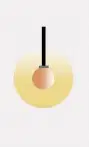
What type of lighting system is shown
direct
semi-direct
indirect
diffused
The least efficient of all lamps (efficacies of less than 20 lumens per watt).
More efficient than incandescent lamps (20 times longer life). More light is emitted by a 40-watt fluorescent tube than by a 100-watt incandescent bulb. Shape – tubular, straight tubes.
Fluorescent
Include mercury vapor, metal-halide, and high- and low-pressure sodium lamps High efficacy and, with appropriate color correction Utilized in almost any application, indoor or outdoor, that does not have critical color criteria
Distinctive blue-green light. Lamp life is extremely long (since the long life is predicated on their being left on for long periods of time, they are not suitable for applications that are subject to frequent switching). High mounting necessary to avoid glare and to permit adequate area
coverage. Used in street lights
Basically a mercury lamp with halides of metals, such as thallium, indium, or sodium,
added. The addition of these salts causes light to be radiated at frequencies other than
the basic mercury colors and increases efficacy. Color is much warmer than that of the mercury light. Used in Billboards
Light is a yellow-tinted color due to the sodium contained within them under high
pressure. Complementary white sources used in conjunction can make the color of this
light even more acceptable, and the most efficient light for plants
LOW-PRESSURE SODIUM LAMP
MERCURY VAPOR (M-V) LAMPS
METAL-HALIDE LAMP
HIGH PRESSURE SODIUM (HPS) LAMP
The most efficient source available, but inappropriate for general lighting because of its
distinctive deep yellow light output. Widely used for highway lighting, where the discernment of objects is the primary objective. Use for building’s exterior applications, inside warehouses, or as after-hours security lighting
HIGH PRESSURE SODIUM (HPS) LAMP
LOW-PRESSURE SODIUM LAMP
METAL-HALIDE LAMP
MERCURY VAPOR (M-V) LAMPS
Refers to a color temperature around 3000K, providing a yellowish-white light.
Denote a color temperature of around 4100 K.
Warm white
Cool white
designation is used specifically for T12 and other fluorescent lamps and has a color temperature of 4100k
LED
COOL WHITE
WARM WHITE
DAYLIGHT
The first countries in the world to announce plans to ban incandescent light bulbs (and to then replace them with more energy-efficient fluorescent bulbs) (2005)
Venezuela and Cuba
is the best material as a filament for an incandescent bulb
Who made the first working sodium lamp?
Arthur H. Compton

