
 Worksheets
British Literature Final 24
Total questions: 45
Worksheet time: 37mins
What are the genres of Anglo-Saxon literature?
Poetry and Prose
Fiction and Non-Fiction
Comedy and Drama
Biography and Autobiography
What is "Beowulf" primarily about?
A king's journey
A warrior's adventures
A peasant's revolt
A merchant's travels
How were stories passed down during the Anglo-Saxon period?
Through written records
Through oral tradition
Through paintings
Through musical compositions
Which trait is characteristic of an epic hero?
Cowardice
Mediocrity
Nobility
Selfishness
What literary device is used in the phrase "Beloved Beowulf"?
Metaphor
Alliteration
Onomatopoeia
Hyperbole
What is the central conflict of Beowulf?
Man vs. Society
Man vs. Nature
Man vs. Man
Man vs. Supernatural
How does Chaucer use satire in The Canterbury Tales?
To depict historical events
To criticize societal norms
To describe landscapes
To praise characters
What literary device is being used when referencing "punished forever for the crime of Abel's death"?
Simile
Metaphor
Allusion
Personification
What is the lesson or moral of a story typically called?
Theme
Plot
Character
Setting
What is a genre of literature where the main characters often die?
Comedy
Romance
Tragedy
Fantasy
What is an Alibi?
A person's statement of their whereabouts at the time of a crime
A type of weapon used in mysteries
A detective's nickname
A plot twist in a story
What is a Motive?
A reason behind a character's actions
A clue left at a crime scene
The resolution of a mystery
A suspect's alibi
What is a Mystery?
A genre involving unsolved puzzles or crimes
A character in a detective story
A misleading clue
The final chapter of a novel
What is a Clue?
An item or information that helps solve a mystery
The title of a mystery novel
A suspect's confession
A detective's assistant
Mystery plots use suspense. What is suspense?
The intense feeling of waiting for an outcome
The main character in a thriller
A peaceful moment in a story
A humorous scene in a mystery
The most famous line of Hamlet is
"What's in a name..."
"To be or not to be, that is the question."
"Be strong my prince."
Romeo, Romeo... where for art thou Romeo?"
Who is Hamlet's good friend?
Claudius
Horatio
Bernardo
Fortinbras
The ghost reveals that Hamlet’s father died in what way?
Natural causes
Poison
Stabbed in his sleep
During battle with Fortinbras
In Frankenstein, who created the monster?
What happened when Dr. Frankenstein created the monster?
What is a scop?
An Anglo-Saxon poet
A Scandinavian king
A wealthy villager
A character created by Homer
Who is Grendel a descendant of?
Cain
Abel
Jeremiah
Wiglaf
Which of the following is an example of a simile?
The wind whispered through the trees.
She is as brave as a lion.
Time is a thief.
He has a heart of stone.
Which sentence below uses imagery?
She felt sad.
The golden sun dipped below the horizon, painting the sky with hues of pink and orange.
He is very tall.
The book was interesting.
Identify the mood in the following description: "The long, winding path was covered with a thick blanket of fog, and the only sound was the distant hooting of an owl."
Joyful
Mysterious
Excited
Humorous
What literary device is being used in the sentence: "The alarm clock screamed at me this morning"?
Metaphor
Simile
Personification
Hyperbole
Which of the following is NOT a characteristic of an epic hero?
an epic hero is more clever or smarter than most other men
an epic hero has a flaw or weakness that often causes his downfall
an epic hero is just a normal human like everyone else
an epic hero is willing to fight against monsters and even gods
___________ was among the first writers to show that English could be a respectable literary language.
William Shakespeare
King James
Geoffrey Chaucer
Homer
During which period in history did The Canterbury Tales take place?
. THE OLD ENGLISH (ANGLO-SAXON) PERIOD
(428-1066 CE)
Elizabethan Period
(1558-1603 CE)
THE MIDDLE ENGLISH PERIOD (1066-1450 CE)
CLASSICAL ROMAN PERIOD
(200 BCE-455 CE)
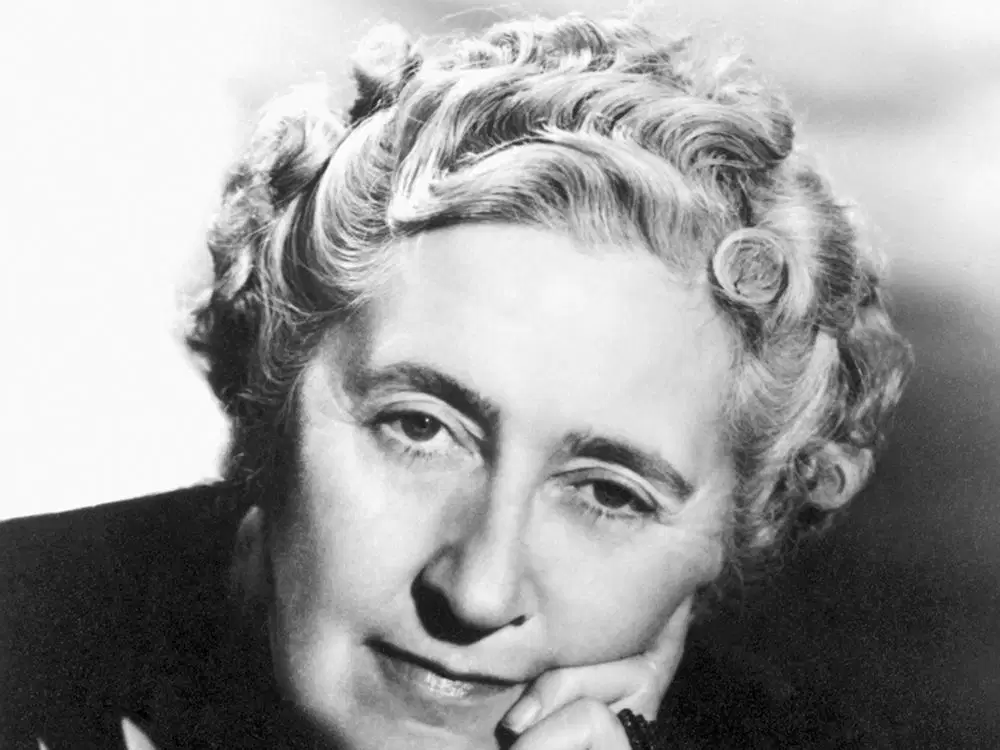
Are Hercule Poirot and Miss Marple two of the most popular literary detectives created by Agatha Christie?
Yes
No
Agatha Christie is the (a) author of all time.
Who has sold more books than Agatha Christie? Pick TWO.
Shakespeare
J K Rowling
Dan Brown (Da Vinci Code)
God (The Bible)
J. R. R. Tolkien
Christie and her husband travelled to the West many times.
True
False
What is the name of Christie’s most famous female detective character?
Miss Marple
Angela Lansbury
Nancy Drew
Veronica Mars
What is the name of Christie’s famous Belgian detective character?
Sherlock Holmes
Sam Spade
Hercule Poirot
Veronica Mars
A long dramatic speech delivered by a single character in a play. It is a vocalization of the character’s thoughts.
Soliloquy
Monologue
Prologue
Sonnet
A device often used in drama when a character speaks to him- or herself, relating thoughts and feelings, thereby also sharing them with the audience, giving off the illusion of being a series of unspoken reflections.
Monologue
Dramatic Irony
Verse
Soliloquy
An opening to a story that establishes the context and gives background details, often some earlier story that ties into the main one, and other miscellaneous information.
Prologue
Aside
Antagonist
Visual Delivery
The leading character or one of the major characters in a drama, movie, novel, or other fictional text.
Protagonist
Antagonist
Theatrical Elements
Aside
A person who actively opposes or is hostile toward the main character.
Protagonist
Antagonist
Vocal Delivery
Monologue
Women were not permitted to act in Shakespeare's time, and boys played the part of female roles.
True
False
Who wrote Frankenstein?

